
Scandinavia city breaks: 8 cities compared
In short
For a classic Nordic city break, Copenhagen and Stockholm are the first choice; for nature on the doorstep Oslo and Helsinki; for a medieval old town Tallinn; and for winter and the northern lights Tromsø, Rovaniemi and Reykjavík. The best time for the capitals is June to August: in July daytime highs range from 20.4 °C in Copenhagen to 21.9 °C in Stockholm.
Northern Europe is made for city breaks: the capitals are compact, sit on the water and almost always have nature right on the doorstep – skerries, fjords, forests or islands. Several of them are easy to link by train and ferry. On top of that there are three destinations far to the north that you are more likely to visit in winter: Tromsø, Rovaniemi and Reykjavík. Here are eight cities, what makes each one special, when to go and which ones to combine. Strictly speaking, only Denmark, Sweden and Norway make up Scandinavia; we include Finland, Iceland and Estonia as northern neighbours.
The short answer: which city for which trip
- Classic city break with design, food and a harbour: Copenhagen and Stockholm.
- City and nature in one: Oslo on its fjord and Helsinki with islands and saunas.
- Medieval old town: Tallinn in Estonia, reachable by ferry from Helsinki.
- Winter, snow and northern lights: Tromsø in northern Norway and Rovaniemi in Lapland.
- Volcanic island and nature trips: Reykjavík as a base for Iceland.
The 8 cities at a glance
| City | Country | Known for | Ideal stay | Best time |
|---|---|---|---|---|
| Copenhagen | Denmark | Nyhavn, Tivoli, cycling | 2–3 days | May–September |
| Stockholm | Sweden | Gamla stan, Vasa Museum, archipelago | 3 days | June–August |
| Oslo | Norway | Opera House, fjord, Vigeland Park | 2–3 days | June–August |
| Helsinki | Finland | cathedral, Suomenlinna, sauna | 2–3 days | June–August |
| Tallinn | Estonia | medieval old town | 2 days | June–August, Advent |
| Tromsø | Norway | northern lights, midnight sun | 3–4 days | September–March, June–July |
| Rovaniemi | Finland | Arctic Circle, Lapland in the snow | 3–4 days | December–March |
| Reykjavík | Iceland | Hallgrímskirkja, trips into the country | 3–4 days | June–August, winter for the aurora |
Best time: based on the climate data further down. From London, flights take approx. 2 hours to Copenhagen and Oslo, approx. 2.5 hours to Stockholm, approx. 3 hours to Helsinki, Tallinn and Reykjavík. For Tromsø and Rovaniemi you usually change in Oslo or Helsinki.
Base map: Natural Earth
Tromsø, Rovaniemi and Reykjavík lie so far north and west that they no longer fit on this map.
Copenhagen: harbour, design, bicycles
Copenhagen is the city for anyone going north for the first time. Colourful gabled houses line the old harbour of Nyhavn, and in the centre lies Tivoli, one of the oldest amusement parks in the world. Add Christiansborg Palace, the Renaissance castle of Rosenborg with the crown jewels and, on the waterfront, the Little Mermaid. Copenhagen is flat and built for cyclists – by bike you are often faster than by bus or metro. A popular day trip heads north to Kronborg Castle in Helsingør, known as the setting of Shakespeare's "Hamlet" and a UNESCO World Heritage Site.
 Copenhagen trip planDay by day, with map and tips
Stockholm: a city on islands
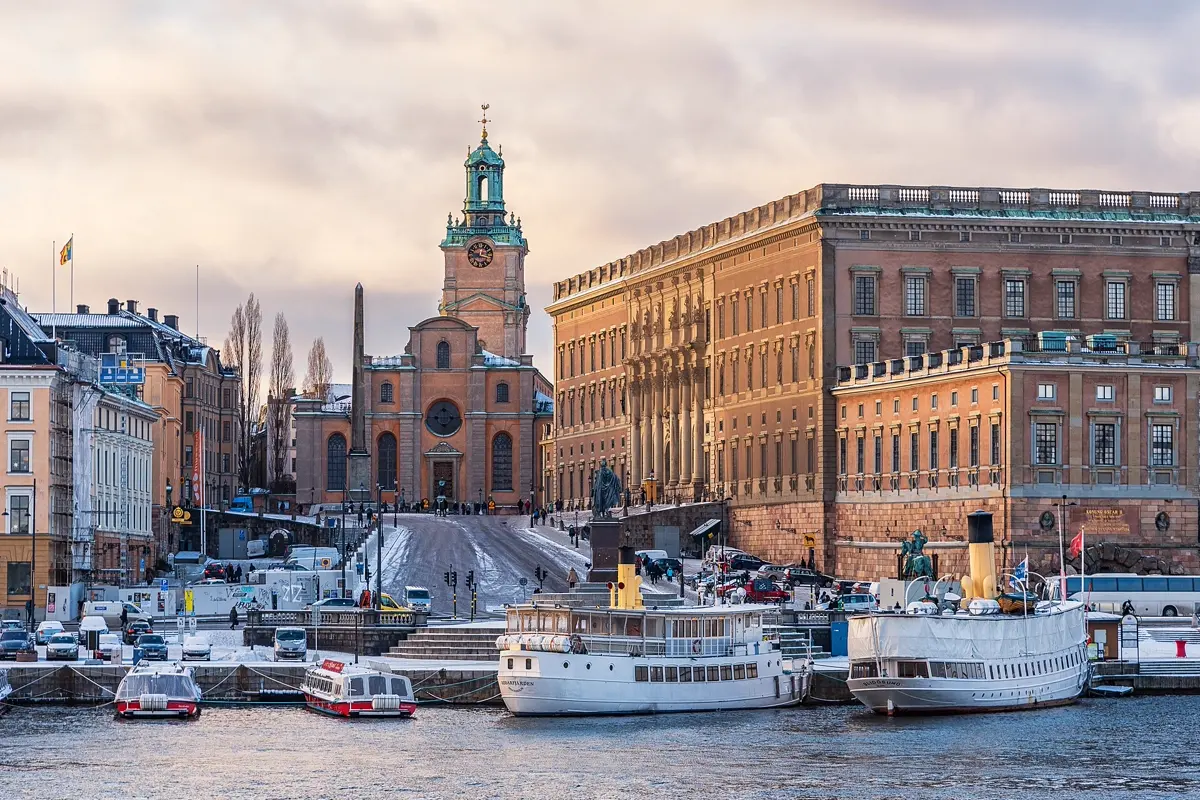
Stockholm is built on 14 islands, with water, bridges and parks in between. The old town of Gamla stan, with the Royal Palace and narrow lanes, is its heart. On the green island of Djurgården you find the Vasa Museum, with an almost completely preserved warship that sank on its maiden voyage in 1628, and Skansen, the oldest open-air museum in the world. To the south, the Södermalm district is popular for its cafés and viewpoints. Beyond the city begins the archipelago of tens of thousands of islands, served by regular boats – a must in summer. If you plan to visit many museums, take a look at the Stockholm Pass*.
 Stockholm trip planDay by day, with map and tips
Oslo and Helsinki: city and nature
Oslo lies at the head of the Oslofjord, surrounded by forests and hills. You can walk up onto the sloping roof of the Opera House by the water, with the Munch Museum right next to it. Vigeland Park holds more than 200 sculptures by Gustav Vigeland, and the Bygdøy peninsula has several museums on seafaring and folk culture. The metro takes you up to the Holmenkollen ski jump and into the forests – with cross-country trails in winter and hiking in summer.
Helsinki is bright, calm and shaped by the sea. The white cathedral rises above Senate Square, and by the harbour stand the red Uspenski Cathedral and the market square. A ferry takes you in a few minutes to the sea fortress of Suomenlinna, which spreads over several islands and is a UNESCO World Heritage Site. The Temppeliaukio rock church is carved straight into the granite. And then there is the sauna: Finnish sauna culture is on UNESCO's list of intangible cultural heritage, and Helsinki has public saunas right by the sea.
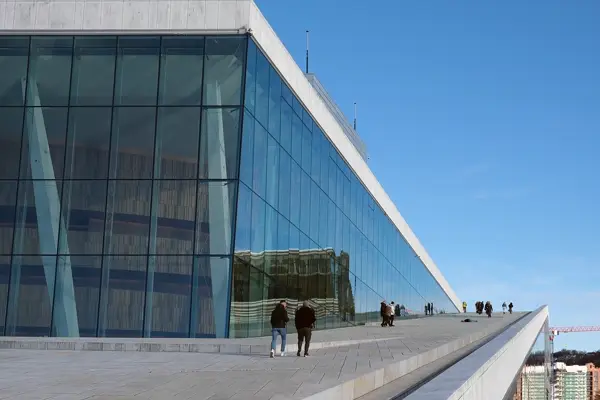
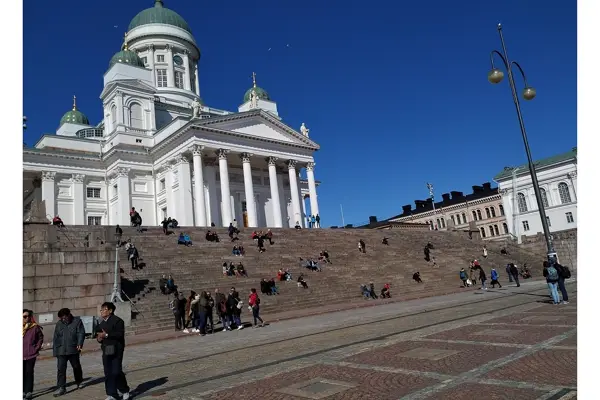
 Oslo trip planDay by day, with map and tips
 Helsinki trip planDay by day, with map and tips
Tallinn: the Middle Ages on the Gulf of Finland
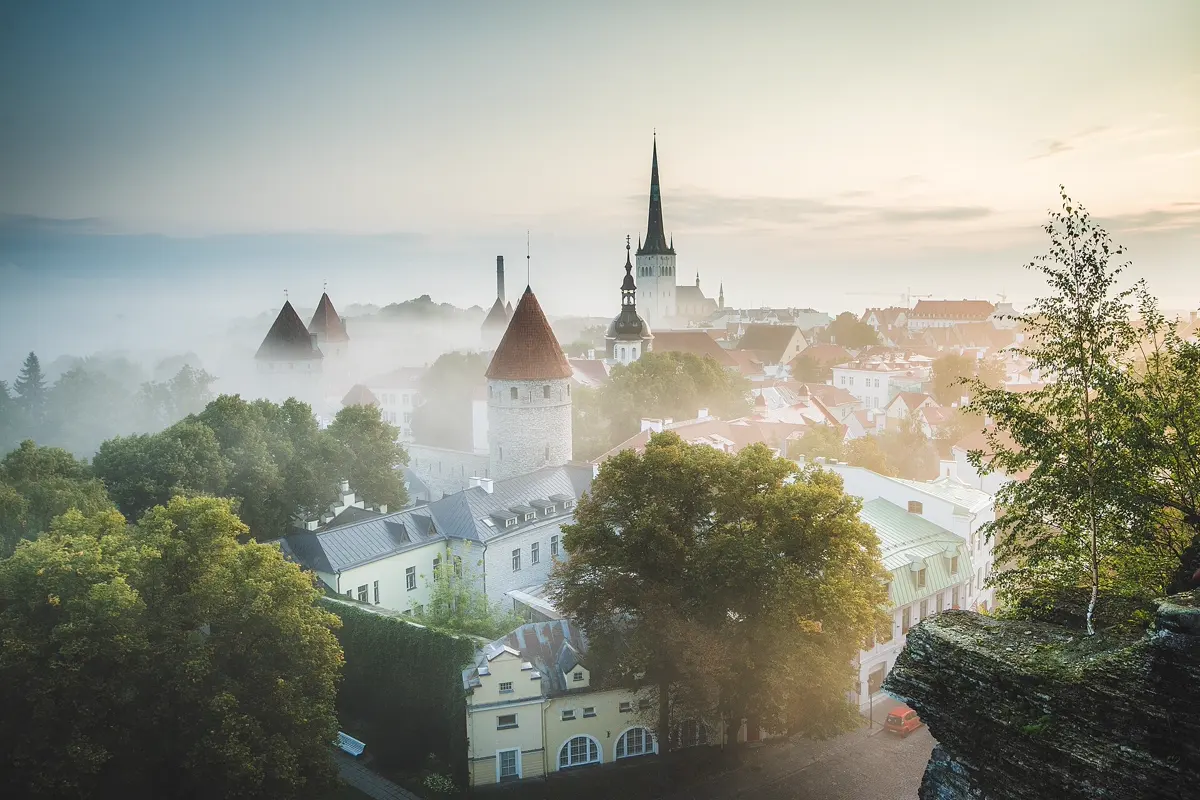
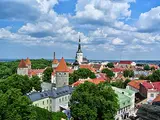
Tallinn has one of the best-preserved medieval old towns in northern Europe, and it is a UNESCO World Heritage Site. Around Town Hall Square stand merchants' houses, churches and lanes, enclosed by a city wall with many towers. From several viewpoints on Toompea hill you look out over the red roofs. Outside the old town, the park and Baroque palace of Kadriorg are worth a visit, as is the creative district of Telliskivi in old factory halls. Tallinn is small enough for two days and pairs perfectly with Helsinki. In Advent there is a Christmas market on Town Hall Square.
 Tallinn trip planDay by day, with map and tips
Tromsø and Rovaniemi: the far north
Tromsø lies around 350 km north of the Arctic Circle and is the largest city in northern Norway. From September to March most visitors come for the northern lights; from about mid-May to late July the midnight sun shines. In the city you will find the striking Arctic Cathedral and a cable car up the local mountain. You reach Tromsø by plane – there is no railway.
 Tromsø trip planDay by day, with map and tips
Rovaniemi is the capital of Lapland and lies on the Arctic Circle. In winter it is cold and usually snowy – in January nights average −13.0 °C. Rovaniemi is known for the Santa Claus Village on the Arctic Circle, for husky and reindeer sleigh rides and for the Arktikum museum about nature and life in the far north. A night train with sleeping cars runs here from Helsinki. Where and when you are most likely to see the aurora is covered in our article Where to see the northern lights in Europe.
 Rovaniemi trip planDay by day, with map and tips
Reykjavík: the capital at the edge of Europe
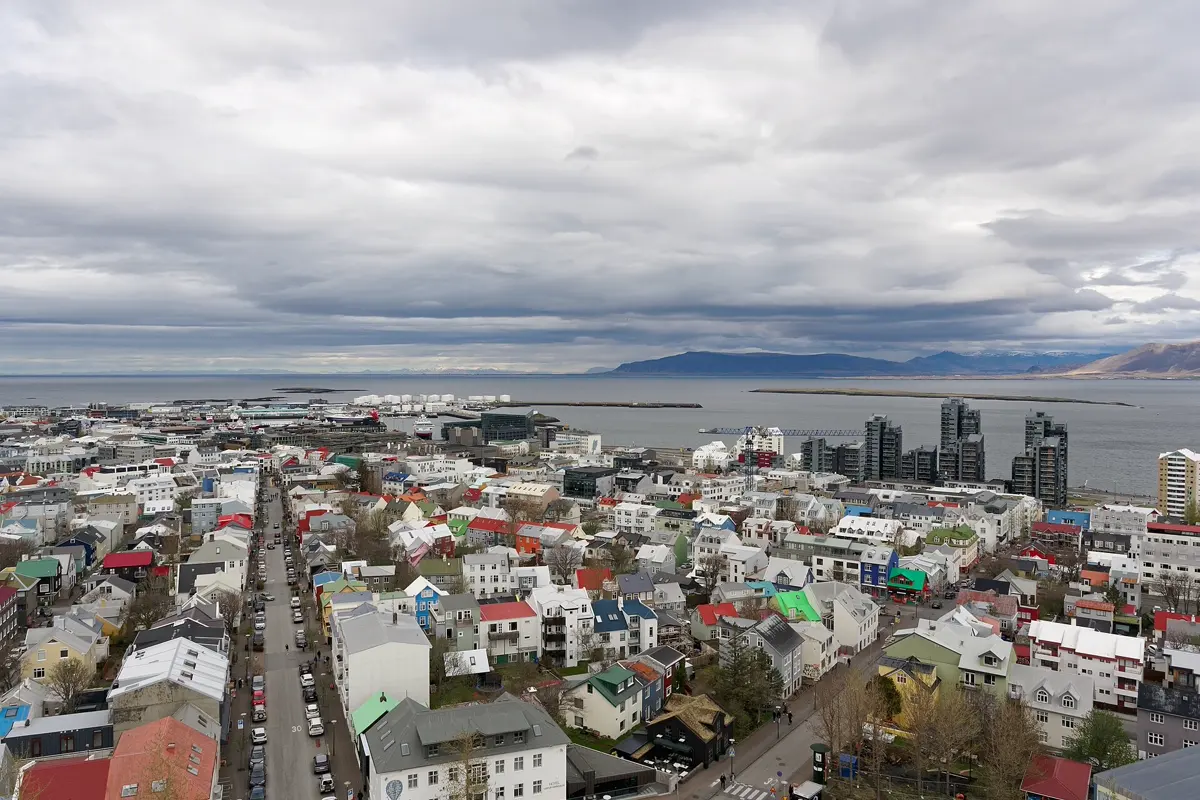
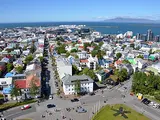
Reykjavík is a small, colourful capital whose landmark is Hallgrímskirkja – from its tower you look over the rooftops to the sea – with the Harpa concert hall by the harbour. Most people use the city as a base: the classic Golden Circle loop leads to Þingvellir National Park (a UNESCO World Heritage Site), the Geysir geothermal area and the Gullfoss waterfall. In summer the days are long; in winter many come for the northern lights. Excursions from Reykjavík* can be found at Tiqets, for example. If you want to see more of Iceland, our Iceland Ring Road itinerary has a route.
 Reykjavík trip planDay by day, with map and tips
Combining cities by train and ferry
Many of the northern capitals have long been linked by rail and sea – travelling between them without flying is very doable. Well-established connections:
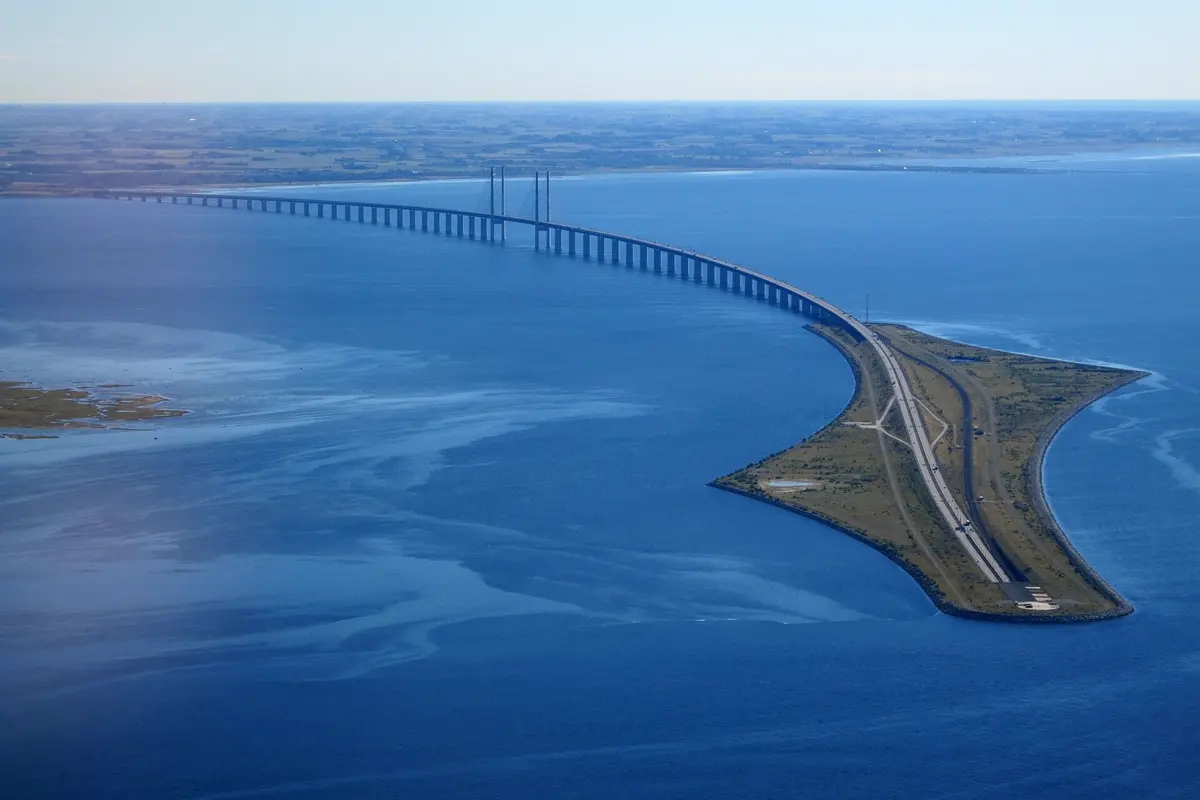
- Copenhagen – Malmö: by train across the Øresund Bridge to Sweden, as a day trip or as the first step towards Stockholm.
- Copenhagen – Stockholm: direct trains via Malmö, a comfortable day's journey.
- Stockholm – Oslo: a direct rail link through forests and past lakes.
- Oslo – Copenhagen: overnight by ferry through the Oslofjord, or by train via Gothenburg.
- Stockholm – Helsinki and Stockholm – Tallinn: large overnight ferries through the archipelago and across the Baltic. You sleep in a cabin and arrive in the morning.
- Helsinki – Tallinn: ferries across the Gulf of Finland in around two hours, with many departures a day – doable even as a day trip.
- Helsinki – Rovaniemi: night train with sleeping cars to Lapland.
You can search for train connections across several countries* at Omio, for example. Timetables change with the season – check with the operator before booking.
Three proven combinations:
- A long weekend: Helsinki and Tallinn, linked by ferry.
- One week: Copenhagen – Stockholm by train, on by overnight ferry to Helsinki, then a day in Tallinn.
- Ten days with a fjord: Copenhagen – Oslo by overnight ferry, then Oslo – Stockholm by train.
Tromsø and Reykjavík only fit into such a trip by plane; Rovaniemi can be added to Helsinki by night train.
Best time to go: summer in the south, winter in the north
For the five capitals of Copenhagen, Stockholm, Oslo, Helsinki and Tallinn, June to August is the best time: the days are very long, around midsummer it barely gets dark at night, and life moves outdoors to the water. May and September are quieter and often still pleasant. In winter the days are short and cold, but Christmas markets beckon in Advent, in Copenhagen above all at Tivoli.
For Tromsø and Rovaniemi it is the other way round: most people go from December to March for snow, sleigh rides and the northern lights. Reykjavík is mild all year, but summer is best for trips into the country.
| City | July: day | July: night | January: day | January: night |
|---|---|---|---|---|
| Copenhagen | 20.4 °C | 14.3 °C | 4.0 °C | 0.6 °C |
| Stockholm | 21.9 °C | 13.1 °C | 1.1 °C | −3.5 °C |
| Oslo | 21.2 °C | 12.9 °C | −0.5 °C | −6.0 °C |
| Helsinki | 20.5 °C | 13.7 °C | −1.1 °C | −5.9 °C |
| Tallinn | 21.2 °C | 13.6 °C | −0.8 °C | −5.0 °C |
| Tromsø | 16.8 °C | 10.1 °C | −4.0 °C | −8.7 °C |
| Rovaniemi | 19.7 °C | 11.7 °C | −7.0 °C | −13.0 °C |
| Reykjavík | 13.5 °C | 8.5 °C | 1.7 °C | −3.0 °C |
Temperature: averages 2015–2024 from the ERA5 reanalysis (via Open-Meteo), rounded. The values apply to a grid cell of about 25 km.
What stands out: in July the five capitals are almost equally warm, between 20.4 and 21.9 °C by day. In January they spread far apart – Copenhagen stays mild at 4.0 °C, while Oslo and Helsinki stay below zero by day. Even Rovaniemi reaches 19.7 °C on average in July, whereas Reykjavík remains cool in summer too. Rain falls everywhere all year round, with no distinct rainy season: in July Stockholm gets 68 mm on average, Oslo 112 mm.
How YesTrip helps
YesTrip has ready-made city plans for all eight cities that you can take over and adapt to your travel days. For a trip across several cities, you enter the stops and get a day-by-day plan with a map that groups the sights by neighbourhood. You also get the weather forecast for your travel days, a packing list matched to the weather and the local plugs, and, under "What's on?", festivals, markets and holidays during your trip. With the offline package you download the maps to your phone in advance. If you are travelling as a group, you share the trip and log shared expenses.
Practical tips
- Entry: Denmark, Sweden, Finland and Estonia are in the EU; Norway and Iceland are in the Schengen Area. Check your own government's travel advice for current entry rules.
- Mobile data: if your plan does not cover these countries, an eSIM* is an easy alternative; check what your provider offers first.
- Power: 230 volts with the two-pin European plug (types C and F); travellers from the UK need an adapter.
- Light: in summer it barely gets dark at night in the north – an eye mask helps. In winter the days are short, so plan sightseeing for the daylight hours.
* Ad – Partner link: if you book there, we earn a commission. Your price stays the same.
Free
Plan your trip in 30 seconds.
Tell YesTrip where and when – the app plans day by day with real places on the map, shows the weather, splits costs with your travel companions and guides you to the next stop on the go.
Frequently asked questions
Which Scandinavian city is best for a city break?
For a first city break, Copenhagen and Stockholm are the best choice, with a harbour, an old town, museums and good food. If you want nature on the doorstep, go to Oslo or Helsinki. Tallinn is ideal for a medieval old town, Tromsø and Rovaniemi for winter and the northern lights.
When is the best time to visit Scandinavia?
For the capitals, June to August, when the days are very long. In July average daytime highs range from 20.4 °C in Copenhagen to 21.9 °C in Stockholm. For Tromsø and Rovaniemi, winter from December to March is the main season.
Can you combine Helsinki and Tallinn in a weekend?
Yes, ferries link the two cities across the Gulf of Finland in around two hours, with many departures a day. Tallinn is even doable as a day trip from Helsinki, but one or two nights in each city is nicer.
How do you travel between the Scandinavian capitals?
By train and ferry. Copenhagen, Stockholm and Oslo are linked by rail, and Oslo and Copenhagen also by overnight ferry. Overnight ferries run from Stockholm to Helsinki and Tallinn, and ferries shuttle across the gulf between Helsinki and Tallinn.
How many days do you need for a Scandinavia city trip?
Two to three days are enough for a single capital. Copenhagen, Stockholm, Helsinki and Tallinn linked by train and ferry work well in about a week. For Tromsø, Rovaniemi or Reykjavík, plan three to four days so there is time for excursions.
Sources
- Open-Meteo Historical Weather API (ERA5), averages 2015–2024 – open-meteo.com
- UNESCO World Heritage: Kronborg Castle – whc.unesco.org
- UNESCO World Heritage: Fortress of Suomenlinna – whc.unesco.org
- UNESCO World Heritage: Historic Centre (Old Town) of Tallinn – whc.unesco.org
- UNESCO World Heritage: Þingvellir National Park – whc.unesco.org
- UNESCO: Sauna culture in Finland, intangible cultural heritage – ich.unesco.org
Researched with AI support and checked by our editors. Prices, opening hours and weather can change – please check before you go. YesTrip is not a travel agency. Published: .
More articles
 City breaks & rail
Alpine city breaks: 6 cities compared
For mountains right by the city, Innsbruck and Lucerne are the first choice; for old town and music Salzburg; for a lakeside city with … · 11 min read City breaks & rail
Asia city breaks: 6 cities compared
For a first city trip to Asia, Tokyo and Kyoto go well together (about 2 hours 15 minutes by Shinkansen), Seoul is the lively alternative, … · 10 min read City breaks & rail
Balkans city breaks: 9 cities compared
For sea and old towns, Split, Dubrovnik and Kotor are the first choice; for big-city life and nightlife Belgrade and Bucharest; for history … · 11 min read


