
Alpine city breaks: 6 cities compared
In short
For mountains right by the city, Innsbruck and Lucerne are the first choice; for old town and music Salzburg; for a lakeside city with museums Zurich; and for a relaxed capital Ljubljana. In July daytime highs range from 24.3 °C in Munich to 27.6 °C in Ljubljana, in December from 5.5 to 7.1 °C. Munich–Innsbruck–Salzburg is just over 4 hours of pure driving.
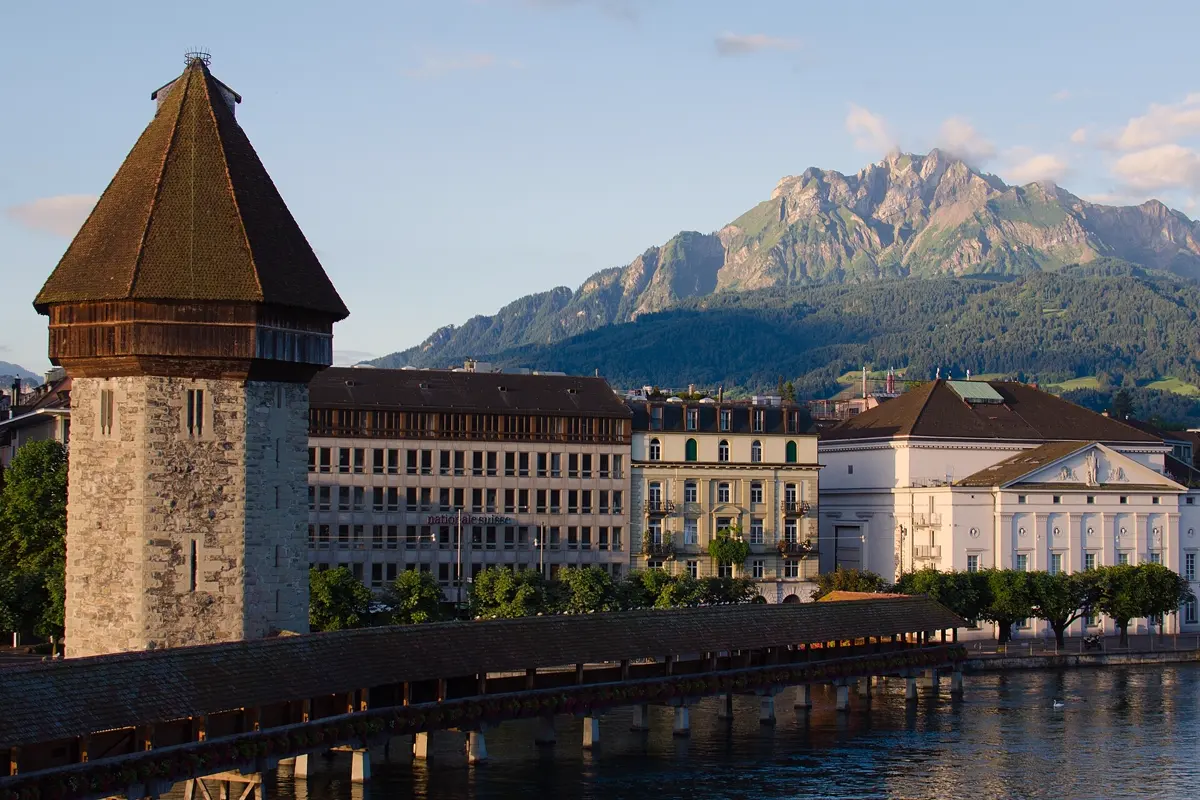
The Alps have cities where you can stroll through an old town in the morning and stand at over 2,000 metres by lunchtime – without a car, just by tram, cogwheel railway and cable car. Add lakes, castles, museums and, in winter, some of Europe's loveliest Christmas markets. Here are five Alpine cities plus Munich as the gateway to the mountains: what makes each one special, which mountains you can reach without a car, how to link them by train and when to go.
The short answer: which city for which trip
- Mountains right by the city: Innsbruck, where the cable car starts in the city centre, and Lucerne with Pilatus, Rigi and Lake Lucerne.
- Old town, music, Christmas market: Salzburg with Mozart's birthplace, a fortress and a baroque old town.
- Big city on a lake: Zurich with its lakeside promenade, museums and its own mountain, the Uetliberg.
- Relaxed capital with the Alps in view: Ljubljana, a car-free old town, a castle and day trips to Lake Bled.
- Gateway to the mountains: Munich – a big airport, good rail links and the Zugspitze within reach.
The 6 cities at a glance
| City | Country | Known for | Mountain without a car | Ideal stay |
|---|---|---|---|---|
| Lucerne | Switzerland | Chapel Bridge, lake | Pilatus, Rigi, Stanserhorn | 2–3 days |
| Innsbruck | Austria | Golden Roof, Nordkette | Nordkette, Patscherkofel | 2–3 days |
| Salzburg | Austria | Mozart, old town, fortress | Untersberg, Festungsberg | 2–3 days |
| Zurich | Switzerland | old town, lake, museums | Uetliberg, Felsenegg | 2 days |
| Ljubljana | Slovenia | castle, Triple Bridge, Plečnik | Vogel (Bohinj), Velika Planina | 2–3 days |
| Munich | Germany | beer gardens, museums, Oktoberfest | Zugspitze, Wendelstein | 2–3 days |
From London, flights to Zurich, Munich and Ljubljana take approx. 1.5 to 2 hours. Innsbruck and Salzburg have small airports with more connections in the ski season; many travellers fly into Munich or Zurich and continue by train.
Base map: Natural Earth
Lucerne: lake, Pilatus and Rigi
Lucerne sits where the Reuss flows out of Lake Lucerne, and few cities have their mountains so close to the front door. Its landmark is the wooden Chapel Bridge with its water tower; add the old town with painted façades, the Musegg Wall with its towers and the Lion Monument. The boats that take you to the valley stations of the mountain railways leave right by the station.
Pilatus is the city's mountain to the south. From Alpnachstad the world's steepest cogwheel railway climbs up, and from Kriens on the edge of the city there is a gondola and an aerial cableway. The cogwheel railway only runs in the warmer months – check the timetable on the official website. The classic round trip combines boat, cogwheel railway and cable car in one day; you can find excursion tickets in Lucerne* at Tiqets, for example.
Across the lake rises the Rigi: the railway from Vitznau is considered the first mountain railway in Europe, and other routes lead up from Arth-Goldau and by cable car from Weggis. The Stanserhorn is known for its cable car with an open upper deck. For a quiet day, a boat trip on the lake is enough.
 Lucerne trip planDay by day, with map and tips
Innsbruck: the cable car in the city
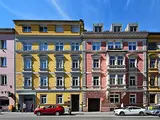
Innsbruck lies in the Inn valley, right below the steep Nordkette range. The old town with the Golden Roof, the Imperial Palace and the colourful houses along the Inn are quickly explored, and the city has hosted the Winter Olympics twice, in 1964 and 1976. The Bergisel ski jump with its modern tower is a viewpoint above the city.
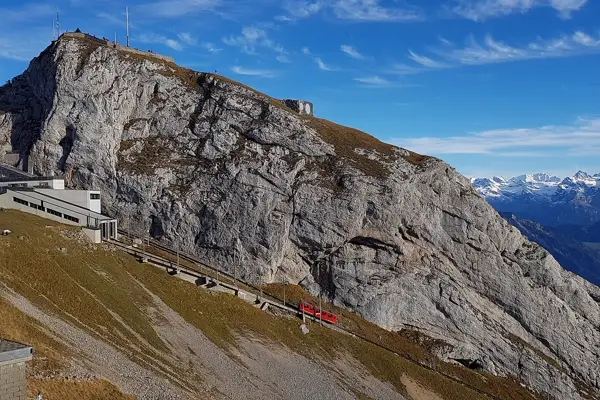
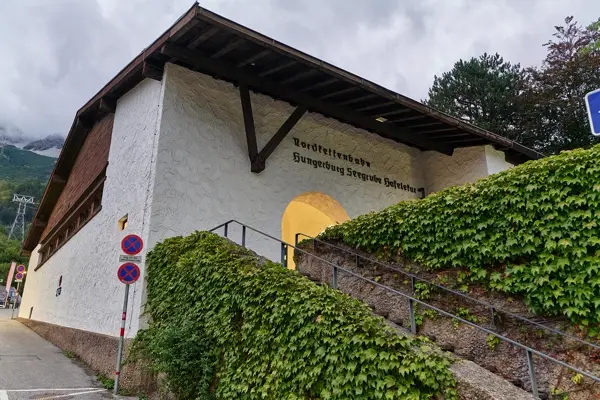
The highlight is the Nordkette cable cars: the Hungerburg funicular starts in the centre, and its stations were designed by the architect Zaha Hadid. From Hungerburg, cable cars continue to Seegrube and Hafelekar, with views over the whole Inn valley. On the south side of the city you reach the Patscherkofel by bus and cable car. In winter the lifts run for skiers, in summer for hikers – between seasons there are maintenance closures, so check the timetable first.
 Innsbruck trip planDay by day, with map and tips
Salzburg: old town, Mozart and the Untersberg
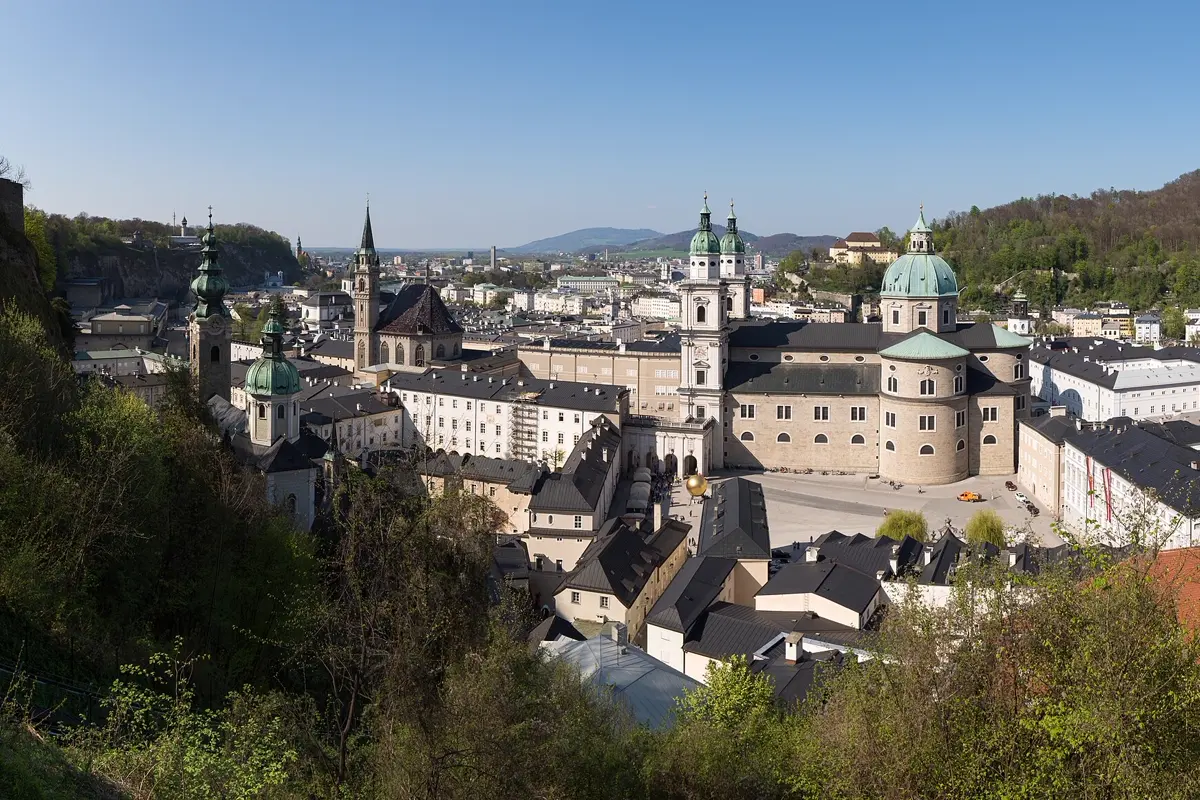
Salzburg is the city for old town and music. The baroque old town is a UNESCO World Heritage Site, Mozart's birthplace stands on Getreidegasse, and in summer the Salzburg Festival draws visitors from all over the world. Above it all rises the Hohensalzburg Fortress, one of the largest preserved castles in Central Europe; a funicular takes you up. Across the Salzach river lie Mirabell Palace and its gardens.
For the mountains, take the city bus to the valley station of the Untersberg cable car near Grödig, which carries you to the summit on the border with Bavaria. A popular day trip goes into the Salzkammergut: from St. Wolfgang a cogwheel railway climbs the Schafberg, though only from spring to autumn. Guest cards such as the Salzburg Card include public transport or cable cars where stated – check the official site for what is included.
 Salzburg trip planDay by day, with map and tips
Zurich: lakeside city with its own mountain
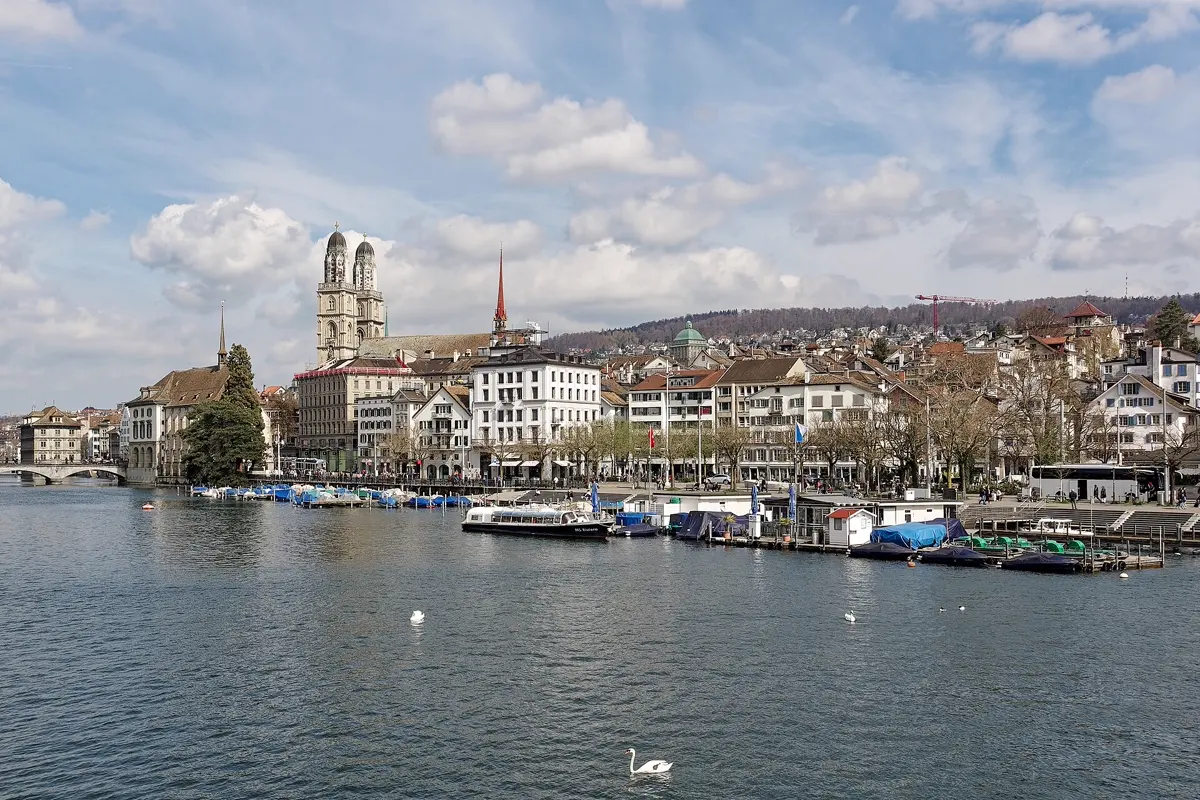
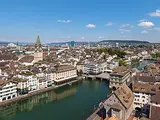
Zurich is Switzerland's largest city and the main gateway to the Swiss Alps – the airport has its own railway station. The old town lines both banks of the Limmat, with the Grossmünster and the Fraumünster with its Chagall windows. Along the lake run promenades and lidos, and in summer many people swim right in the city.
You reach the Uetliberg by S-Bahn from the main station; from the top you look over the city and the lake and, on clear days, as far as the Alps. A lovely ridge path continues to Felsenegg, from where a cable car descends to Adliswil. Boats cross Lake Zurich, and a classic day trip goes to the Rhine Falls near Schaffhausen.
 Zurich trip planDay by day, with map and tips
Ljubljana: capital with a view of the Julian Alps
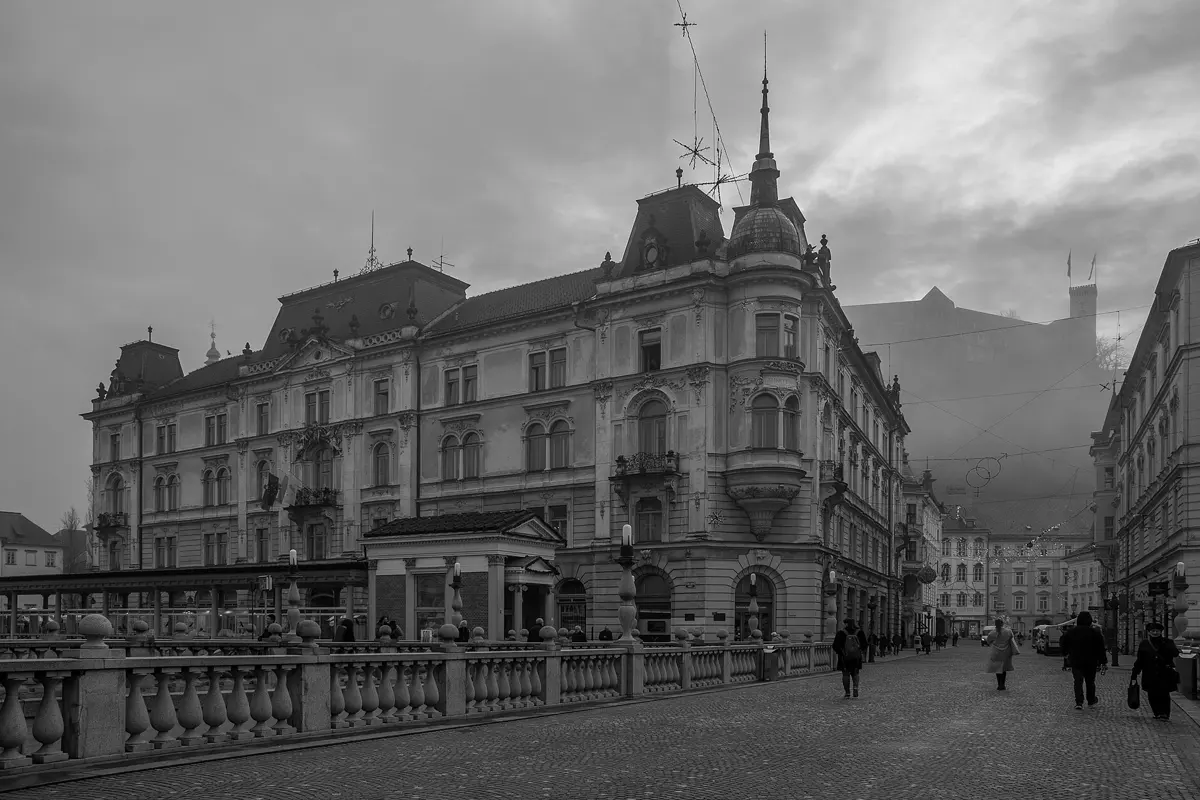
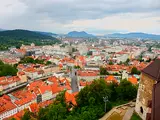
Ljubljana is the calmest city on the list. The old town along the Ljubljanica river is largely car-free, and its banks are full of cafés. Many of its bridges, squares and buildings are by the architect Jože Plečnik, including the Triple Bridge; his works in Ljubljana are a UNESCO World Heritage Site. A funicular takes you up to the castle.
The mountains are a little further away here than in Innsbruck or Lucerne, but easy to reach by bus and train. Lake Bled with the church on its island is the classic day trip. At Lake Bohinj a cable car climbs Vogel in the Julian Alps, and near Kamnik a cable car runs up to the high pasture of Velika Planina with its herders' huts. Both have seasonal breaks, so check the timetable first.
 Ljubljana trip planDay by day, with map and tips
Munich: the gateway to the mountains
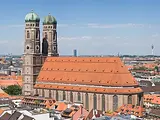
Munich is not in the Alps, but for many it is the best starting point. The airport has plenty of connections, trains leave the main station for Innsbruck, Salzburg and Zurich, and regional trains take you into the Alpine foothills in a little over an hour – to Lake Tegernsee, Lake Schliersee or Garmisch-Partenkirchen. From there a cogwheel railway climbs the Zugspitze, at 2,962 metres Germany's highest mountain; alternatively, take the cable car from Lake Eibsee. A cogwheel railway also runs up the Wendelstein.
In the city itself you have Marienplatz, the English Garden, beer gardens and major museums. Autumn brings the Oktoberfest, Advent the Christmas market on Marienplatz. If you land late, the easiest option is to be picked up, for example with a transfer from Munich airport* booked through Welcome Pickups.
 Munich trip planDay by day, with map and tips
Combining cities: best by train
The Alpine cities are linked by fast long-distance trains, often through spectacular valleys. The train is usually the better choice than a car here: no hunting for parking in the old towns, no vignette, and the mountain railways often start right at stations or bus stops. Well-known connections: Zurich – Lucerne in just under an hour, Munich – Salzburg in about 1.5 hours, Innsbruck – Salzburg in about 2 hours and Zurich – Innsbruck in about 3.5 hours. You can search train connections across several countries* at Rail Europe, for example.
Route 1: from Switzerland to Salzburg
| Leg | Distance | Pure driving time (car) |
|---|---|---|
| Lucerne – Zurich | 52 km | 0:42 h |
| Zurich – Innsbruck | 290 km | 3:34 h |
| Innsbruck – Salzburg | 184 km | 2:12 h |
| Salzburg – Munich | 144 km | 1:39 h |
A good week, about 670 km and just over 8 hours of pure driving: two Swiss cities, then over the Arlberg into Tyrol and on to Salzburg, flying home from Munich.
Route 2: Munich, Tyrol and on to Slovenia
| Leg | Distance | Pure driving time (car) |
|---|---|---|
| Munich – Innsbruck | 147 km | 2:00 h |
| Innsbruck – Salzburg | 184 km | 2:12 h |
| Salzburg – Ljubljana | 277 km | 3:11 h |
About 610 km and just over 7 hours of pure driving. You can also take the train from Salzburg to Ljubljana via Villach, but it takes much longer than the routes within Austria. All times are pure driving without breaks – allow about a third more. If you drive, you need a motorway vignette in Switzerland, Austria and Slovenia. You can compare hire cars in Munich* at Economybookings, for example; ask beforehand whether you may take the car across borders.
Good shorter combinations are Zurich and Lucerne (52 km, 0:41 h) over a long weekend, or Munich and Salzburg (144 km, 1:39 h).
Best time to go: summer for hiking, Advent for the markets
For hiking and all the mountain railways, June to September is best. That is when the lifts that pause in winter are running too, and the days are warm: in July average daytime highs range from 24.3 °C in Munich to 27.6 °C in Ljubljana. But summer is also the wettest season in the Alps – Lucerne averages 180 mm of rain in July, Salzburg 182 mm in May. Plan summit trips for the morning if you can.
| City | July: day | July: night | December: day | December: night |
|---|---|---|---|---|
| Lucerne | 24.7 °C | 16.2 °C | 6.3 °C | 0.6 °C |
| Innsbruck | 25.5 °C | 14.9 °C | 7.1 °C | −1.7 °C |
| Salzburg | 24.9 °C | 14.6 °C | 6.5 °C | −1.7 °C |
| Zurich | 25.1 °C | 15.4 °C | 5.7 °C | −0.3 °C |
| Ljubljana | 27.6 °C | 15.9 °C | 5.8 °C | −1.7 °C |
| Munich | 24.3 °C | 14.2 °C | 5.5 °C | −1.2 °C |
Temperature and rain: average of 2015–2024 from the ERA5 reanalysis (via Open-Meteo), rounded. The figures apply to a grid cell about 25 km wide and to the cities in the valleys, not the summits – it is much cooler up top.
Advent is cold but cosy: in December daytime highs range from 5.5 to 7.1 °C, with nights around freezing. That is when Salzburg, Innsbruck and Munich hold their well-known Christmas markets, and Zurich, Lucerne and Ljubljana decorate their old towns too. If you want to ski, Innsbruck has slopes right by the city. May, June and September are quieter – in September daytime highs are still around 20 °C, 21.5 °C in Ljubljana.
How YesTrip helps
YesTrip has ready-made plans for all six cities, which you can take over and adapt to your dates. For a trip through several cities you enter the stops and get a day-by-day plan with a map that groups the sights by neighbourhood. You also get the forecast for your travel days – useful for catching the clear day for the summit – a packing list that fits the weather and the plug sockets, and under "What's on?" the festivals, markets and holidays during your trip. With the offline package you download the maps to your phone in advance, handy where your data plan does not cover you. If you travel as a group, you share the trip and log shared expenses.
Before you go
- Entry: All six cities are in the Schengen Area. Check the current advice for each country on gov.uk.
- Mobile data: Austria, Slovenia and Germany are in the EU; Switzerland is not. Check what your plan includes before you go, or use an eSIM.
- Power: 230 volts. Austria, Slovenia and Germany use type C and F sockets, Switzerland type J. From the UK you need an adapter, and a Swiss one for Switzerland.
- On the mountain: Even in summer it can be cold and windy at the top. Pack a warm jacket, and check the weather and the cable car's webcams before you go up.
* Ad – Partner link: if you book there, we earn a commission. Your price stays the same.
Free
Plan your trip in 30 seconds.
Tell YesTrip where and when – the app plans day by day with real places on the map, shows the weather, splits costs with your travel companions and guides you to the next stop on the go.
Frequently asked questions
Which Alpine city is best for a city break?
For mountains right by the city, Innsbruck and Lucerne are the first choice, because the mountain railways start in the centre or can be reached by boat. Salzburg is ideal for old town and music, Zurich for a big city on a lake. Ljubljana is the calmest choice, and Munich the best starting point with a big airport.
Which mountains can you reach without a car?
From Lucerne you take the boat and cogwheel railway up Pilatus and the Rigi, and in Innsbruck the Nordkette cable car starts in the middle of the city. From Salzburg a bus takes you to the Untersberg cable car, and from Zurich the S-Bahn runs up the Uetliberg. From Munich the train goes to Garmisch-Partenkirchen, where the Zugspitze railway starts.
When is the best time for an Alpine city break?
For hiking and all the mountain railways, June to September; in July average daytime highs range from 24.3 °C in Munich to 27.6 °C in Ljubljana. For Christmas markets, Advent is ideal, with daytime highs between 5.5 and 7.1 °C. May and September are quieter.
Can you combine Salzburg and Innsbruck?
Yes, the two cities are about 2 hours apart by train, and by car it is 184 km and 2 hours 12 minutes of pure driving. Munich is only just over 1.5 hours' drive from Salzburg, which turns it into a trip through three cities.
Do the mountain railways run all year?
Not all of them. Some, such as the cogwheel railway up Pilatus or the Schafberg railway, only run in the warmer months, and others close for maintenance between the summer and winter seasons. The current operating times are in the timetable on each railway's official website.
Sources
- Open-Meteo Historical Weather API (ERA5), average 2015–2024 – open-meteo.com
- Driving times: OSRM routing on OpenStreetMap data – project-osrm.org
- UNESCO World Heritage: Historic Centre of the City of Salzburg – whc.unesco.org
- UNESCO World Heritage: The works of Jože Plečnik in Ljubljana – whc.unesco.org
- Pilatus railways and cable cars – www.pilatus.ch
- Rigi railways – www.rigi.ch
- Nordkette cable cars Innsbruck – www.nordkette.com
- Untersberg cable car Salzburg – www.untersbergbahn.at
- Bavarian Zugspitze Railway – zugspitze.de
- UK Foreign Travel Advice – www.gov.uk
Researched with AI support and checked by our editors. Prices, opening hours and weather can change – please check before you go. YesTrip is not a travel agency. Published: .
More articles
 City breaks & rail
Asia city breaks: 6 cities compared
For a first city trip to Asia, Tokyo and Kyoto go well together (about 2 hours 15 minutes by Shinkansen), Seoul is the lively alternative, … · 10 min read City breaks & rail
Balkans city breaks: 9 cities compared
For sea and old towns, Split, Dubrovnik and Kotor are the first choice; for big-city life and nightlife Belgrade and Bucharest; for history … · 11 min read City breaks & rail
Scandinavia city breaks: 8 cities compared
For a classic Nordic city break, Copenhagen and Stockholm are the first choice; for nature on the doorstep Oslo and Helsinki; for a medieval … · 10 min read


