
Countries that drive on the left: all 54 listed
In short
54 of 195 countries drive on the left, in Europe only the UK, Ireland, Malta and Cyprus. Japan, Thailand, India, Australia, New Zealand and South Africa join them. If you're used to the right: hire an automatic, don't drive straight after a long-haul flight, go clockwise at roundabouts and give way to the right.
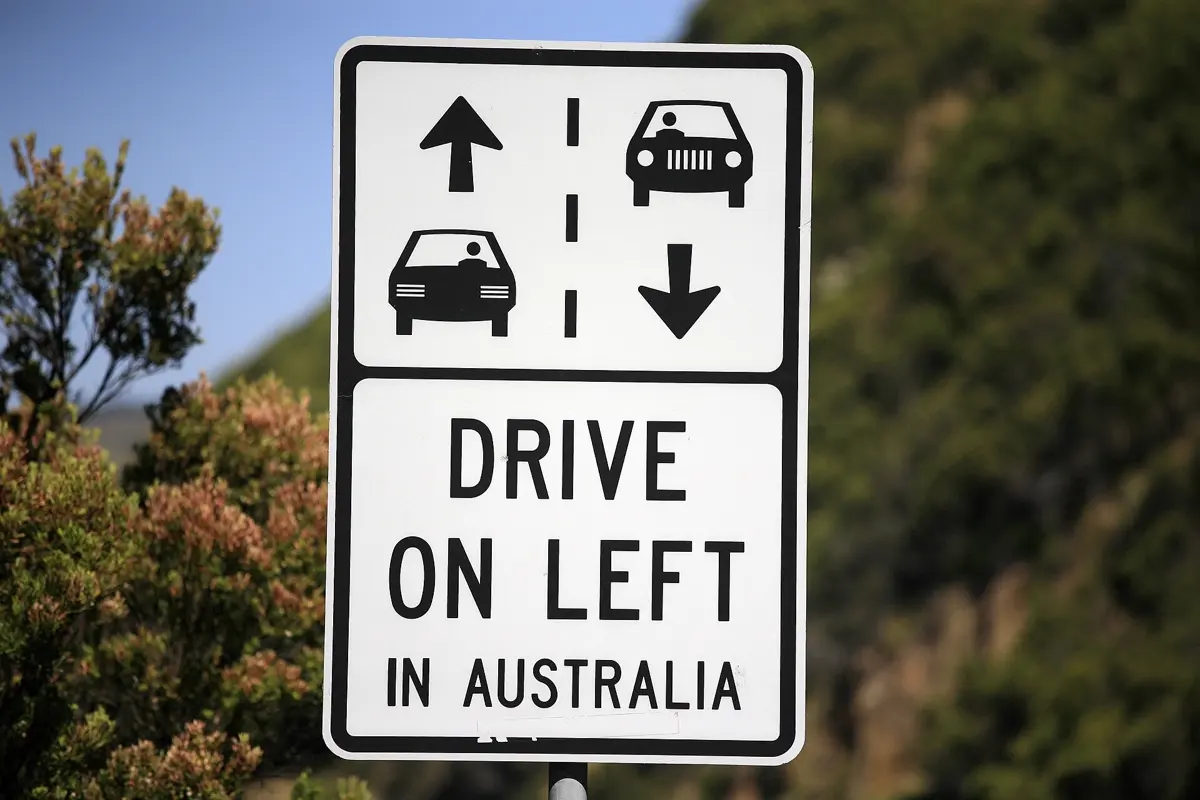
About one country in four drives on the left, and that includes many popular long-haul destinations. If you've grown up on the left in Britain, this list tells you where you can feel at home. If you learned to drive on the right, it tells you where you'll open the wrong door of the hire car. The page has two parts: the complete list, sorted by continent, and what really helps for your first drive. The list follows the country table in English Wikipedia, which counts 54 of the 195 UN-recognised countries. The driving advice comes from the tourism and road bodies of the countries themselves.
The list: all 54 countries
| Continent | Countries that drive on the left |
|---|---|
| Europe | Cyprus, Ireland, Malta, United Kingdom |
| Asia | Bangladesh, Bhutan, Brunei, East Timor, India, Indonesia, Japan, Malaysia, Maldives, Nepal, Pakistan, Singapore, Sri Lanka, Thailand |
| Africa | Botswana, Eswatini, Kenya, Lesotho, Malawi, Mauritius, Mozambique, Namibia, Seychelles, South Africa, Tanzania, Uganda, Zambia, Zimbabwe |
| Americas and Caribbean | Antigua and Barbuda, Bahamas, Barbados, Dominica, Grenada, Guyana, Jamaica, Saint Kitts and Nevis, Saint Lucia, Saint Vincent and the Grenadines, Suriname, Trinidad and Tobago |
| Oceania | Australia, Fiji, Kiribati, Nauru, New Zealand, Papua New Guinea, Samoa, Solomon Islands, Tonga, Tuvalu |
Territories without their own UN seat come on top: Hong Kong and Macau in China, the British overseas territories of Bermuda, the British Virgin Islands, the Cayman Islands, the Falkland Islands and the Turks and Caicos Islands, plus Jersey, Guernsey and the Isle of Man. The US Virgin Islands also drive on the left, the only US jurisdiction to do so.
| Continent | Countries |
|---|---|
| Africa | 14 |
| Asia | 14 |
| Americas, Caribbean | 12 |
| Oceania | 10 |
| Europe | 4 |
Two patterns are useful. Most countries on the list were once part of the British Empire. That's the quick mnemonic, though it isn't complete: Japan, Thailand, Nepal, Bhutan, Indonesia and Mozambique drive on the left too, without having been British colonies. And former left-hand countries such as Sweden (1967) and Iceland (1968) have switched. The most recent change went the other way, with Samoa moving to the left in 2009.
The one rule to remember
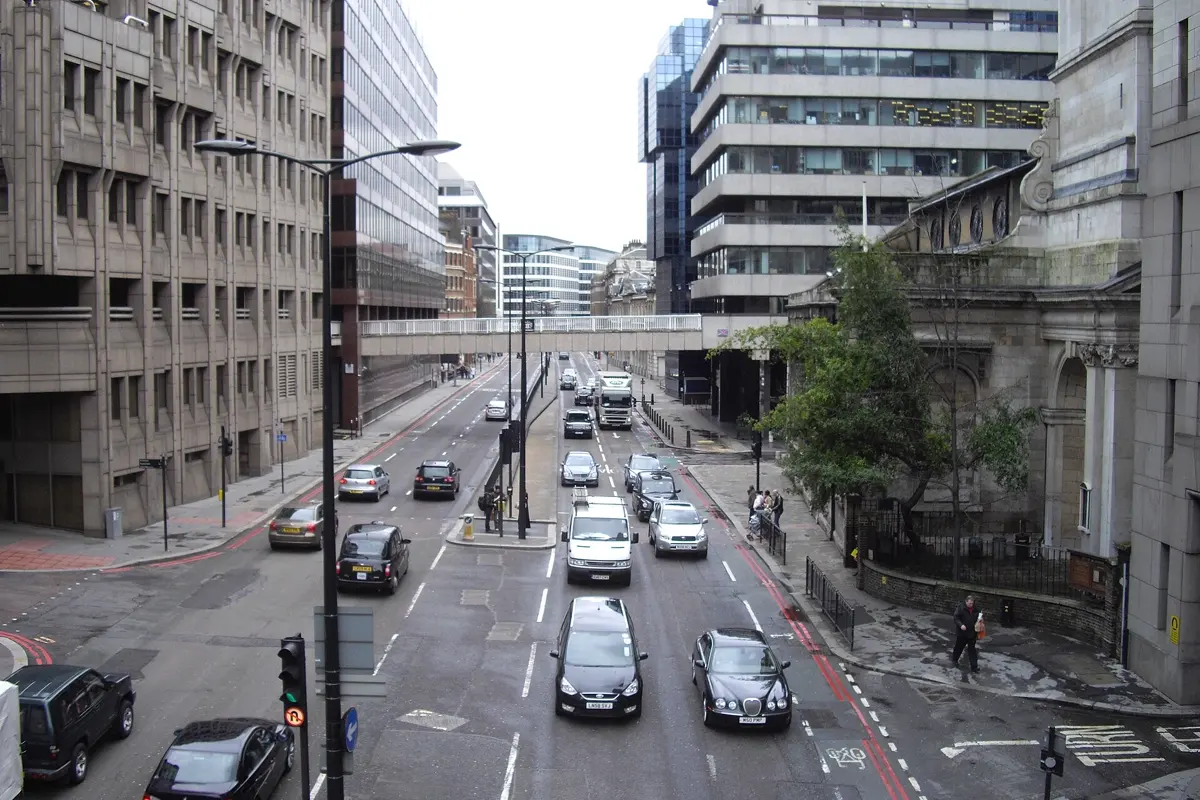
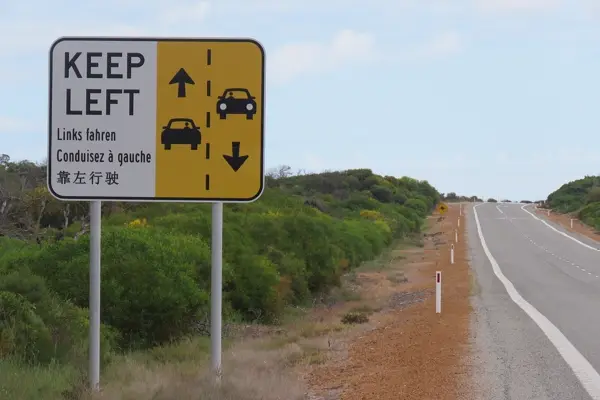
Tourism Australia puts it most simply: the driver belongs towards the centre of the road. Driving on the left, you sit on the right, with the centre line on your driver's side. It always holds and is easier to check than "am I on the correct side?" If the kerb is next to you, something's wrong.
What changes and what doesn't:
- The pedals stay put. Accelerator, brake and clutch are where you expect. According to Tourism Australia, indicators and wipers may be on the other side of the wheel. Switching on the wipers when you want to turn happens to almost everyone and is harmless.
- Hire an automatic. Tourism Australia recommends one explicitly for anyone not used to driving on the left, since it gives you one less thing to get used to. With a manual you also shift with your left hand.
- Roundabouts run clockwise. You enter turning left and give way to traffic from the right. Take your first ones slowly: you look the opposite way from what you're used to.
- As a pedestrian, look right first. Tourism Australia says right, left, then right again. Hardly anybody thinks of it, and in your first hour in town it matters more than anything behind the wheel.
Planning your first drive
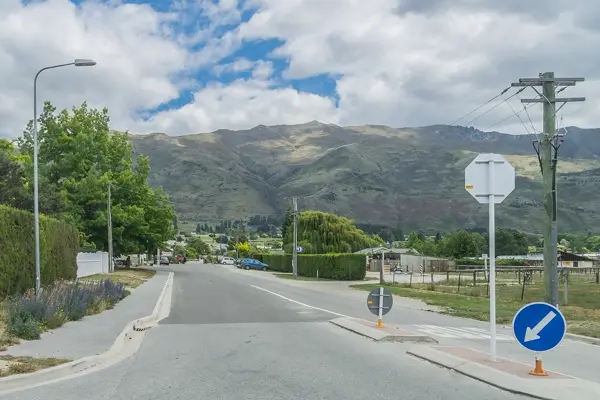
This is where you can prepare most, and a lot of it depends on the plan rather than on your driving.
Not straight after the flight. New Zealand's official Drive Safe site advises 24 to 48 hours' rest after arrival before you set off, and reminds you that jet lag can affect you even if you feel fine. So collect the car after your first night, in town, as How to avoid jet lag also recommends.
Short legs to begin with. Drive Safe suggests driving only one to two hours at a time, with regular breaks. So keep the first leg short and with no appointment at the end. How to divide up legs and breaks in general is in How to plan a road trip.
Enlist your passenger. Tourism Australia advises asking passengers to remind you of the side every time you set off and when turning at an intersection. It sounds excessive until you pull away after filling up, because the critical moments are those with little traffic: empty country roads, car parks, junctions. There's no car in front to follow.
Don't drive at night. In Australia, the tourism body warns against driving after dark in the outback, because animals like kangaroos are very hard to see. In the first few days, plan to arrive before sunset.
Check licence and units. Tourism Ireland asks for either a valid full national licence or an international driving permit. Northern Ireland uses miles and miles per hour, the Republic kilometres. It's the simplest mistake on a trip across both sides of the border. As our Ireland road trip shows, many western destinations are on narrow roads, so take your time. The rules for your destination are in your government's travel advice.
Hire cars: what changes on the left
For booking, only two things change on the left: pick an automatic and take a smaller car if you'll be on narrow roads. If you're used to the right, you sit on the unfamiliar side and misjudge the left edge of the car at first, which is exactly where the kerb and the wall are. Picking up in town rather than at the terminal also gives you a calmer start, where available. You can compare, for example, hire cars from Dublin*, hire cars in South Africa or hire cars in New Zealand.
Borders between left and right do exist, for instance between Thailand and Laos. With a hire car it rarely comes up, but check the rental terms on crossing borders in advance.
Coming from Britain the other way around? All the same rules apply in mirror image: you'll want an automatic on the Continent too, and the first roundabout in France will feel just as wrong.
How YesTrip helps on a road trip
YesTrip plans several destinations and days with a map. You decide how long the legs are, and can deliberately keep the first driving day short. The good-to-know section for each destination covers things like plugs and emergency numbers, and the app links to your home country's official travel advice for that country. The app won't warn you when you're on the wrong side; you book hire cars with the provider, and YesTrip never books anything itself.
* Ad – Partner link: if you book there, we earn a commission. Your price stays the same.
Free
Plan your trip in 30 seconds.
Tell YesTrip where and when – the app plans day by day with real places on the map, shows the weather, splits costs with your travel companions and guides you to the next stop on the go.
Frequently asked questions
How many countries drive on the left?
According to the country table in English Wikipedia, 54 of the 195 UN-recognised countries, plus territories such as Hong Kong, Macau and several British overseas territories. Including territories the number is notably higher; Wikipedia gives 75.
Which countries in Europe drive on the left?
Four: the United Kingdom, Ireland, Malta and Cyprus, plus Jersey, Guernsey and the Isle of Man. All other European countries drive on the right. Sweden and Iceland switched to the right in 1967 and 1968.
Why does Japan drive on the left?
Japan was never a British colony, and left-hand traffic was enacted there in law in 1924. Thailand, Nepal, Bhutan, Indonesia and Mozambique also drive on the left without having been part of the British Empire.
How do I get used to driving on the left quickly?
Hire an automatic, collect the car after a first night and start with short legs of one to two hours. Remember that the driver sits towards the centre of the road. Roundabouts run clockwise, and you give way to traffic from the right.
How does a roundabout work on the left?
Clockwise. You turn left to enter and give way to traffic from the right, as Tourism Australia describes.
Sources
- Wikipedia: Left- and right-hand traffic, country table – en.wikipedia.org
- Tourism Australia: Driving in Australia, a first timer's guide – www.australia.com
- Tourism Australia: road safety – www.australia.com
- Tourism Ireland: Driving in Ireland – www.ireland.com
- Drive Safe (New Zealand): arrival advice – www.drivesafe.org.nz
- UK government: driving abroad – www.gov.uk
Researched with AI support and checked by our editors. Prices, opening hours and weather can change – please check before you go. YesTrip is not a travel agency. Published: .
More articles
 Planning & packing
Cherry blossom Japan: when and where, by city
On 1991 to 2020 averages, cherry blossom opens in Tokyo on 24 March and reaches full bloom on 31 March, on 4 April in Kyoto, 13 April in … · 6 min read Planning & packing
Honeymoon destinations by month: 12 places
The right trip depends on your wedding month: January Maldives (27.9 °C, 74 mm of rain), March Cape Town (24.0 °C, 29 mm), June Amalfi Coast … · 7 min read Planning & packing
How many sights per day? A 3 to 4 rule of thumb
As a rule of thumb, 3 to 4 sights and one proper meal fit in a travel day if they're in the same area. A big museum counts double and an … · 7 min read


