
Cherry blossom Japan: when and where, by city
In short
On 1991 to 2020 averages, cherry blossom opens in Tokyo on 24 March and reaches full bloom on 31 March, on 4 April in Kyoto, 13 April in Sendai and 6 May in Sapporo. The 2027 forecast has not been published yet; the 2026 one arrived on 18 December 2025. Dates can shift by about ten days between years, so keep your route flexible from south to north.
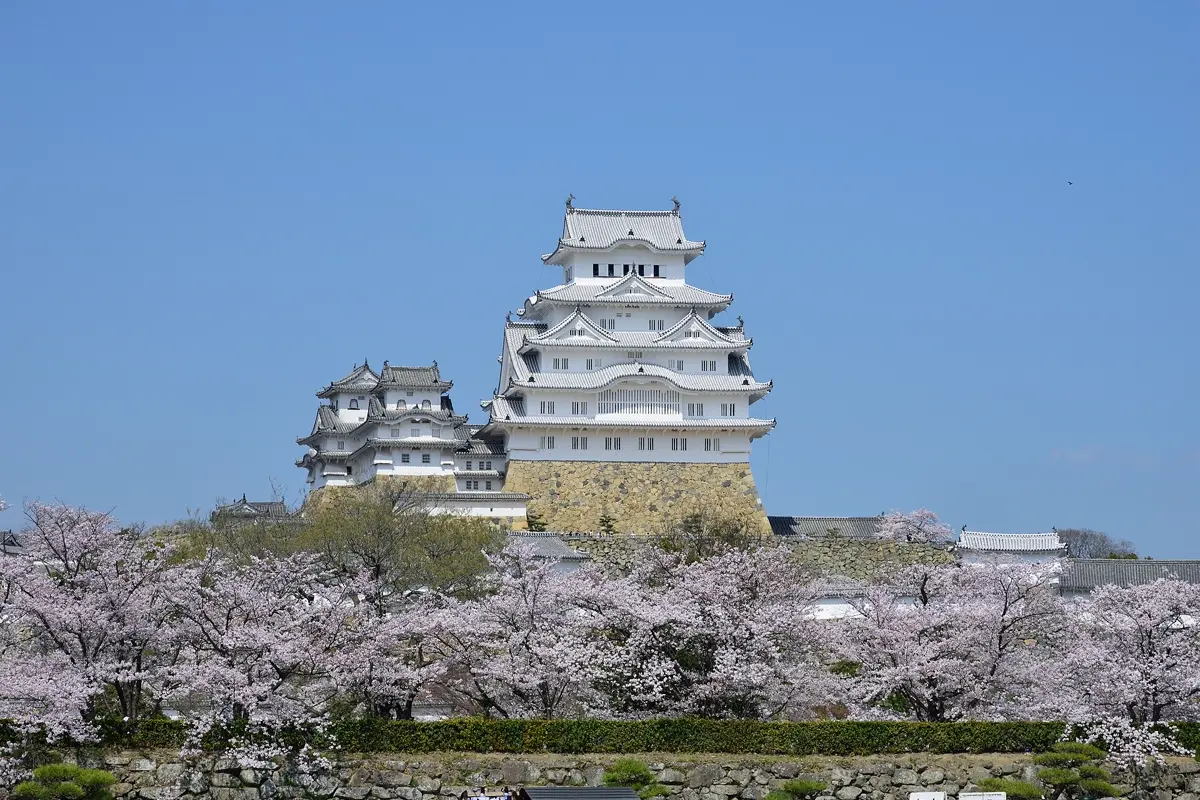
Everyone asks when cherry blossom will be in 2027, and nobody can honestly tell you yet. At the start of November 2026, the 2027 forecast has not been published. What you can already fix is the window, and 30 years of measurements give you a good one. The short answer: for Tokyo, Kyoto and Osaka, the last week of March and the first week of April are the safest. If you come earlier, head south; if you come later, head north.
When does it bloom where? Averages by city
| City | First bloom | Full bloom |
|---|---|---|
| Fukuoka | 22 March | 31 March |
| Tokyo | 24 March | 31 March |
| Nagoya | 24 March | 2 April |
| Hiroshima | 25 March | 3 April |
| Kyoto | 26 March | 4 April |
| Osaka | 27 March | 4 April |
| Kagoshima | 26 March | 5 April |
| Kanazawa | 3 April | 8 April |
| Sendai | 8 April | 13 April |
| Sapporo | 1 May | 6 May |
1991–2020 averages from the Japan Meteorological Agency (JMA). In Naha on Okinawa, the average first bloom is already 16 January.
Two things stand out. First, Tokyo comes before Kyoto even though Kyoto is further south, by about four days at full bloom. That is why the classic route of Tokyo first, Kyoto after works so well in blossom season. Second, Kagoshima, far to the south, is no earlier than Tokyo. "Further south means earlier" is only roughly true.
- Fukuoka 31 March
- Hiroshima 3 April
- Osaka 4 April
- Kyoto 4 April
- Nagoya 2 April
- Tokyo 31 March
- Kanazawa 8 April
- Sendai 13 April
- Hirosaki mid-April to early May
Base map: Natural Earth
Why the forecast matters, and when it arrives
Averages show the pattern, but a single year can differ a lot. Tokyo's first bloom in 2024 was 29 March, according to the Japan National Tourism Organization (JNTO). For 2026, the Japan Meteorological Corporation (JMC) forecast 19 March. These two years sit about ten days apart (an actual date against a forecast), enough to miss a one-week trip.
The JMC says it estimates each area from low autumn and winter temperatures, the trees' growth, cumulative temperatures and past data. Its first 2026 forecast came out on 18 December 2025, and the last, the 14th, in April 2026. So expect the 2027 one around December 2026, on its English page. JNTO also points to forecasts on its own pages. Plan around the window and adjust in February and March.
Wait for the forecast or decide now? You can pick your travel dates from the window already. Just keep the order of cities open, because that is the part you can still adjust once the forecast is out.
How to build the route, depending on when you fly
- Late March to early April: the classic window. Start in Tokyo and move on to Kyoto and Osaka after about four days. Our two-week Japan itinerary can be set up this way.
- Mid-March: you are early. Go south and look for early varieties; JNTO says the Kawazu cherries in Shizuoka bloom in February, about a month before most of Honshu.
- Mid-April: Tokyo and Kyoto are usually finished. Go to Sendai and further north. JNTO lists Kitakami Tenshochi in Iwate for mid to late April and Hirosaki Park in Aomori for mid-April to early May.
- Late April, early May: that leaves Hokkaido. JNTO lists Goryokaku Park for late April to early May.
In any single place the season is short, as JNTO says, and JMA averages put only 5 to 10 days between first bloom and full bloom. So don't sit still somewhere if the blossom hasn't started or has already gone.
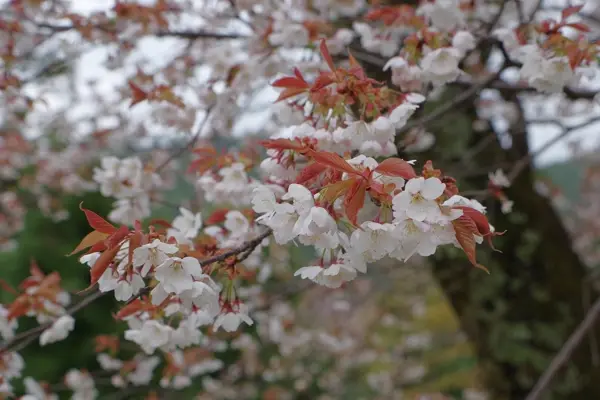
The best-known places
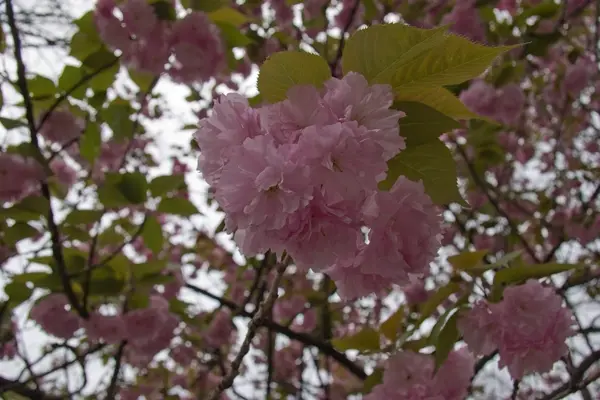
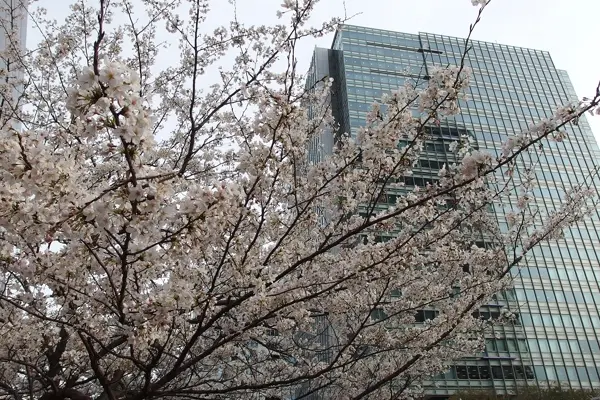
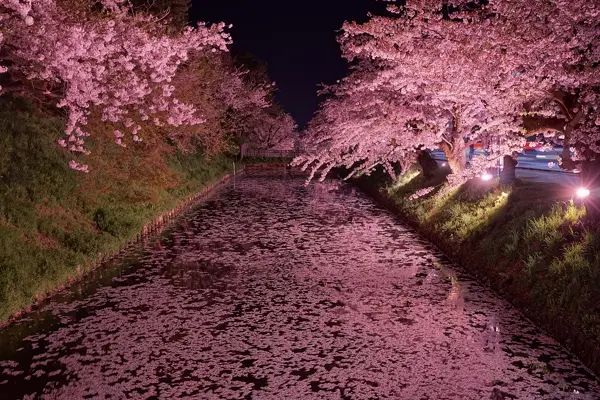
JNTO lists these for late March to early April: Ueno Park and Nakameguro in Tokyo, Kanazawa Castle, Mount Yoshino in Nara and Himeji Castle. Add Shinjuku Gyoen in Tokyo and many of Kyoto's temples. If you are short of time in the Kansai region, combine Himeji Castle and Mount Yoshino from a base in Kyoto or Osaka. Hirosaki has about 2,600 trees of more than 50 varieties, according to JNTO, and is one of the places that justify the trip north.
Many of these places get very busy at this time. For a day with fixed transport, a guided trip such as a cherry blossom day trip from Tokyo* on Klook can help. Nobody can guarantee you the blossom, though.
Hanami: how to behave
Hanami, sitting under the blossom, has its rules. JNTO sums them up:
- Space: first come, first served. Taking more room than you need or someone else's spot is considered very rude.
- Rubbish: public bins are scarce. Take yours home with you.
- Trees: never break off branches or pick flowers.
- Getting there: go by train or bus to the nearest stop, as parking and taxis are hard to find.

Weather in blossom season
In Tokyo, daily highs average 14.1 °C in March and 18.3 °C in April, with nights at 5.4 and 10.4 °C. Both months bring around 130 mm of rain (averages 2015–2024, ERA5 via Open-Meteo). So take a jacket and rain protection, and expect cool evenings under the trees. More in the best time to visit Japan.
Getting there and practical notes
The big cities have their own guides: how many days in Tokyo and how many days in Kyoto. If you land at Narita or Haneda, a transfer from Tokyo airport* can be arranged in advance. Our eSIM comparison for Japan lists the data plans. The UK Foreign Office has no advice against travel to Japan, and the German Foreign Office's partial warning covers only the designated evacuated areas around the Fukushima Daiichi nuclear plant; none of these routes go there. Entry rules are on the UK government's page.
How YesTrip helps
YesTrip has ready three-day plans for Tokyo, Kyoto and Osaka that you can bring together into one trip. When the forecast comes, change the order of the cities. The app shows the weather for your travel days, the packing list adjusts to it, and the offline package keeps the maps on your phone. The app doesn't replace the forecasts themselves; read those from the JMC or JNTO. YesTrip is free and a planner; you book with the provider.
 Kyoto trip planDay by day, with map and tips
* Ad – Partner link: if you book there, we earn a commission. Your price stays the same.
Free
Plan your trip in 30 seconds.
Tell YesTrip where and when – the app plans day by day with real places on the map, shows the weather, splits costs with your travel companions and guides you to the next stop on the go.
Frequently asked questions
When is cherry blossom in Japan?
On JMA averages for 1991 to 2020, full bloom is 31 March in Tokyo, 4 April in Kyoto and Osaka, 13 April in Sendai and 6 May in Sapporo. Individual years can differ by a week or more.
When will the 2027 cherry blossom forecast be published?
At the start of November 2026 it has not been published. The Japan Meteorological Corporation released its first 2026 forecast on 18 December 2025, and something similar can be expected for 2027. Updates follow until April.
How long does cherry blossom last in one place?
Not long. On JMA averages, 5 to 10 days pass between first bloom and full bloom, and JNTO also describes the season in a single location as short. Across the country, it runs from January on Okinawa to May on Hokkaido.
What is the best week for Tokyo and Kyoto?
The last week of March and the first week of April. The average full bloom dates of both cities fall in that window, with Tokyo on 31 March and Kyoto on 4 April.
What if I miss the blossom?
Keep moving. If you are too early, go south or look for early varieties such as the Kawazu cherries; if you are too late, go north to places like Sendai, Hirosaki or Hokkaido.
Sources
- JMA: average first bloom dates 1991–2020 – www.data.jma.go.jp
- JMA: average full bloom dates 1991–2020 – www.data.jma.go.jp
- Japan Meteorological Corporation: cherry blossom forecast, final 2026 edition and method – n-kishou.com
- The Star: JMC's first 2026 forecast on 18 December 2025 – www.thestar.com.my
- JNTO: places and typical blossom times – www.japan.travel
- JNTO: 2024 first bloom dates and forecast notes – www.japan.travel
- JNTO: hanami manners – www.japan.travel
- Climate data: Open-Meteo Historical Weather API, daily values 2015–2024 – open-meteo.com
- German Foreign Office: Japan travel advice – www.auswaertiges-amt.de
Researched with AI support and checked by our editors. Prices, opening hours and weather can change – please check before you go. YesTrip is not a travel agency. Published: .
More articles
 Planning & packing
Countries that drive on the left: all 54 listed
54 of 195 countries drive on the left, in Europe only the UK, Ireland, Malta and Cyprus. Japan, Thailand, India, Australia, New Zealand and … · 6 min read Planning & packing
Honeymoon destinations by month: 12 places
The right trip depends on your wedding month: January Maldives (27.9 °C, 74 mm of rain), March Cape Town (24.0 °C, 29 mm), June Amalfi Coast … · 7 min read Planning & packing
How many sights per day? A 3 to 4 rule of thumb
As a rule of thumb, 3 to 4 sights and one proper meal fit in a travel day if they're in the same area. A big museum counts double and an … · 7 min read


