
How to avoid jet lag: plan the first days right
In short
According to the CDC, the body adjusts by about 1 hour a day after flying east and about 1.5 hours a day after flying west. So 7 hours to Bangkok means roughly 7 days, and 5 hours to New York roughly 3.3. Plan an arrival day with no fixed appointments, put tickets on day 2 or 3 at the earliest, and don't drive straight after landing.
Jet lag advice mostly concerns the flight: drink water, wear an eye mask, get up and walk. That helps, but it isn't what decides how your holiday feels. What decides it is whether you've put the expensive museum slot on your first morning, when after several time zones you can barely keep your eyes open. So this page plans backwards from the destination: how long adjusting is likely to take, what direction changes, and which appointments belong on which day.
Why east is harder than west
The CDC Yellow Book, the US health agency's travel medicine reference, gives actual numbers: travelling west, the body clock shifts by about 1.5 hours a day; travelling east, by about 1 hour a day. The reason is that the body clock naturally runs slightly longer than 24 hours, so a longer day is easier for it than a shorter one.
That allows a rough calculation. The table divides the time difference in the northern winter by those rates. It's our arithmetic and not a medical forecast: people differ, and most feel noticeably better sooner. The NHS says generally that jet lag usually improves within a few days.
| Destination from London | Hours | Direction | Days to fully adjust (approx.) |
|---|---|---|---|
| Cape Town | 2 | East | 2 |
| New York | 5 | West | 3.3 |
| Los Angeles | 8 | West | 5.3 |
| Bangkok | 7 | East | 7 |
| Tokyo | 9 | East | 9 |
| Sydney | 11 | East | 11 |
Two things stand out. Eight hours west to Los Angeles costs less than seven hours east to Bangkok. And Cape Town, about 11.5 hours away, is almost free of jet lag because it lies nearly due south: flight length and jet lag are two separate things. You'll still be tired after a night on the plane, but by the next day that's over.
When it starts to count: the Yellow Book only speaks of jet lag from two time zones upwards. Spain, Greece or the Canaries need no planning at all.
How to set up the first days
The split below is our own rule of thumb, derived from the rates above. It applies from about five hours' difference.
| Day | What fits | What doesn't |
|---|---|---|
| Arrival | Walking around the hotel, staying outdoors, eating early | Fixed tickets, long museums, driving |
| Day 2 | One activity, close to the hotel | Two neighbourhoods, early tours |
| Day 3 | First fixed appointment | Day trip with an early start |
| From day 4 | Normal plan |
Flying east, mornings are the problem: you sleep until noon or drag yourself up. So put fixed appointments in the afternoon for the first days. Flying west, it's the other way round. You're wide awake at 5 am and finished by 8 pm. That is actually useful: the early morning is yours, so plan appointments before noon and don't book dinner late.
Timed tickets matter most. For a week in Japan, that means the museum or viewpoint you really want goes on day 3 or 4, not your first morning. If you don't fancy navigating the city after landing, you can pre-book an airport transfer in Tokyo*. How to get into the city without one is in Tokyo: Narita and Haneda to the city.
Pick up the hire car after the first night
If you're planning a road trip, don't take the car at the airport. New Zealand's official Drive Safe site advises allowing 24 to 48 hours after arrival before you set off, and reminds you that jet lag can affect you even if you feel fine. That goes double if you also have to get used to the other side of the road. Spend the first night in your arrival city and collect the car a day or two later. Which countries drive on the left is in Countries that drive on the left. A hire car in Japan* can be searched with a city pick-up instead of the terminal.
Light: what counts once you're there
Light at the right time is the strongest signal for your body clock, and you can plan for it without buying anything. The CDC describes:
- Flying east: bright light in the early morning, avoid light in the evening.
- Flying west: avoid bright light in the early morning, seek light in the evening.
In itinerary terms: flying east, your first walk belongs in the morning, as soon as you're awake, not on a rooftop at sunset. Flying west, you can have the sunset. The NHS adds: spend time outdoors during the day, don't sleep during the day, and go to bed at local time. Setting an alarm stops you sleeping through the day.
Before the flight and on board
Two to three days before: according to the CDC you can shift your sleep in advance, 1 hour earlier per day before flying east, 1 hour later before flying west. The NHS also stresses setting off rested; the night before departure is the wrong time for last-minute packing.
On board the NHS advises drinking plenty of water, limiting caffeine and alcohol, getting up to stretch, and only sleeping if it's night at your destination. An eye mask and earplugs help.
For sleeping pills or melatonin, please talk to a doctor. It depends on you and on any medication you take, and we make no recommendation.

Short trips: don't adjust at all
For very short trips the calculation flips. The CDC advises against adapting on trips shorter than two days, and the NHS considers it possible on trips of two to three days to keep your usual meal and sleep times. For a short business trip with one meeting, put that meeting in your normal waking hours.
On a week in Asia you can't do that, but something else pays off: planning the return. Going home from Tokyo or Bangkok you fly west, which by the rates above settles a little faster but still takes several days. Don't plan your first working day right after landing. On long journeys a stopover also helps, because it splits the jump in two; our stopover cities show where that works.
How YesTrip helps
The day plan in YesTrip shows each day separately with times and walking legs. If the AI suggests a full first day, move stops to later or tell it you want a quiet arrival day. During the trip, the Today view shows what's next. The forecast and public holidays for your travel days sit right next to the date. The app doesn't know your sleep pattern and doesn't calculate jet lag for you, though; you have to plan the quiet start yourself.
For the hours after landing it helps to have an eSIM for Japan* set up at home, so the map and plan work straight away; our eSIM price index compares providers. The daily-plan chapter of How to plan a trip gives you the basic structure, to which you only add the quiet first days, and Japan itinerary: 2 weeks is a concrete example of a long trip east.
* Ad – Partner link: if you book there, we earn a commission. Your price stays the same.
Free
Plan your trip in 30 seconds.
Tell YesTrip where and when – the app plans day by day with real places on the map, shows the weather, splits costs with your travel companions and guides you to the next stop on the go.
Frequently asked questions
How long does jet lag last?
The CDC Yellow Book gives adjustment of about 1 hour a day flying east and 1.5 hours a day flying west. For 6 hours' difference that works out at about 6 days east and 4 days west. The NHS says symptoms usually improve within a few days.
Why is jet lag worse flying east?
The body clock naturally runs slightly longer than 24 hours. A longer day, as when flying west, is therefore easier for it than a shortened day when flying east. The CDC gives 1.5 versus 1 hour of adjustment per day.
When can I drive after a long-haul flight?
Preferably not straight after landing. New Zealand's Drive Safe site recommends allowing 24 to 48 hours after arrival before setting off on a road trip. So collect your hire car in town, the day after you arrive.
Does shifting your sleep before the trip help?
The CDC describes it as an option: in the 2 to 3 days before travelling, go to bed 1 hour earlier per day before flying east, and 1 hour later per day before flying west. The NHS also stresses setting off rested.
What helps with jet lag on a very short trip?
On trips of under two days the CDC advises against adapting at all, and the NHS considers this possible for two to three days as well. Stick to your usual sleep and meal times and put important appointments in your normal waking hours.
Sources
- CDC Yellow Book: Jet Lag Disorder (adjustment rates, light, preparation, short trips) – www.cdc.gov
- NHS: Jet lag (symptoms, tips before, during and after the flight) – www.nhs.uk
- Drive Safe (New Zealand): arrival advice – www.drivesafe.org.nz
Researched with AI support and checked by our editors. Prices, opening hours and weather can change – please check before you go. YesTrip is not a travel agency. Published: .
More articles
 Planning & packing
Cherry blossom Japan: when and where, by city
On 1991 to 2020 averages, cherry blossom opens in Tokyo on 24 March and reaches full bloom on 31 March, on 4 April in Kyoto, 13 April in … · 6 min read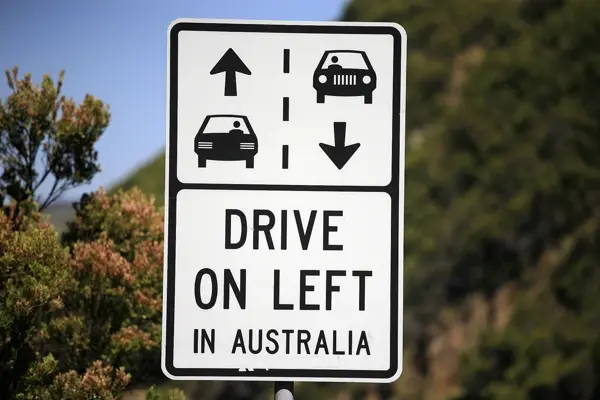 Planning & packing
Countries that drive on the left: all 54 listed
54 of 195 countries drive on the left, in Europe only the UK, Ireland, Malta and Cyprus. Japan, Thailand, India, Australia, New Zealand and … · 6 min read Planning & packing
Honeymoon destinations by month: 12 places
The right trip depends on your wedding month: January Maldives (27.9 °C, 74 mm of rain), March Cape Town (24.0 °C, 29 mm), June Amalfi Coast … · 7 min read


