
Best Eastern European city breaks: 9 cities compared
In short
The best Eastern European city breaks for a first visit are Prague, Kraków and Budapest; Wrocław, Gdańsk and Ljubljana are calmer, and Riga, Tallinn and Vilnius more Nordic. The best time is May to September: in September average daytime highs range from 16.1 °C in Tallinn to 21.0 °C in Prague. From London the flight takes about 2 to 3 hours.
Eastern Europe – or more precisely Central and Eastern Europe – has some of the most beautiful old towns on the continent, and many of them are a short flight away. Almost everyone knows Prague and Budapest, but the smaller cities such as Wrocław, Ljubljana or Vilnius are ideal for a long weekend: compact, lively and less crowded. Here are the best Eastern European city breaks – nine cities, what makes each one special, when to go and how long to stay.
The best Eastern European city breaks at a glance
| City | Known for | Ideal stay | Flight from London |
|---|---|---|---|
| Prague | Charles Bridge, castle, old town | 3 days | approx. 2 h |
| Kraków | market square, Wawel, Kazimierz | 3 days | approx. 2.5 h |
| Wrocław | market square, Cathedral Island, dwarfs | 2 days | approx. 2 h |
| Gdańsk | Main Town, harbour, Baltic Sea | 2–3 days | approx. 2 h |
| Budapest | Danube, parliament, thermal baths | 3 days | approx. 2.5 h |
| Ljubljana | old town on the river, Plečnik | 2 days | approx. 2 h |
| Riga | Art Nouveau, Central Market | 2–3 days | approx. 2.5 h |
| Tallinn | medieval old town | 2 days | approx. 3 h |
| Vilnius | baroque old town, Užupis | 2 days | approx. 2.5 h |
Flight times: typical direct flights from London, rounded.
- Prague Old town
- Kraków Wawel
- Wrocław Market square
- Gdańsk Harbour
- Budapest Baths
- Ljubljana Plečnik
- Riga Art Nouveau
- Tallinn Old town
- Vilnius Baroque
Base map: Natural Earth
Prague, Kraków, Budapest: the classics
Prague is the most visited city on the list – and you notice it. Charles Bridge, Prague Castle and Old Town Square with the astronomical clock are at their best early in the morning, before the groups arrive. Away from them it quickly gets quieter: in the Lesser Town, in the Vinohrady district or on Letná hill with its view over the Vltava.
 Prague trip planDay by day, with map and tips
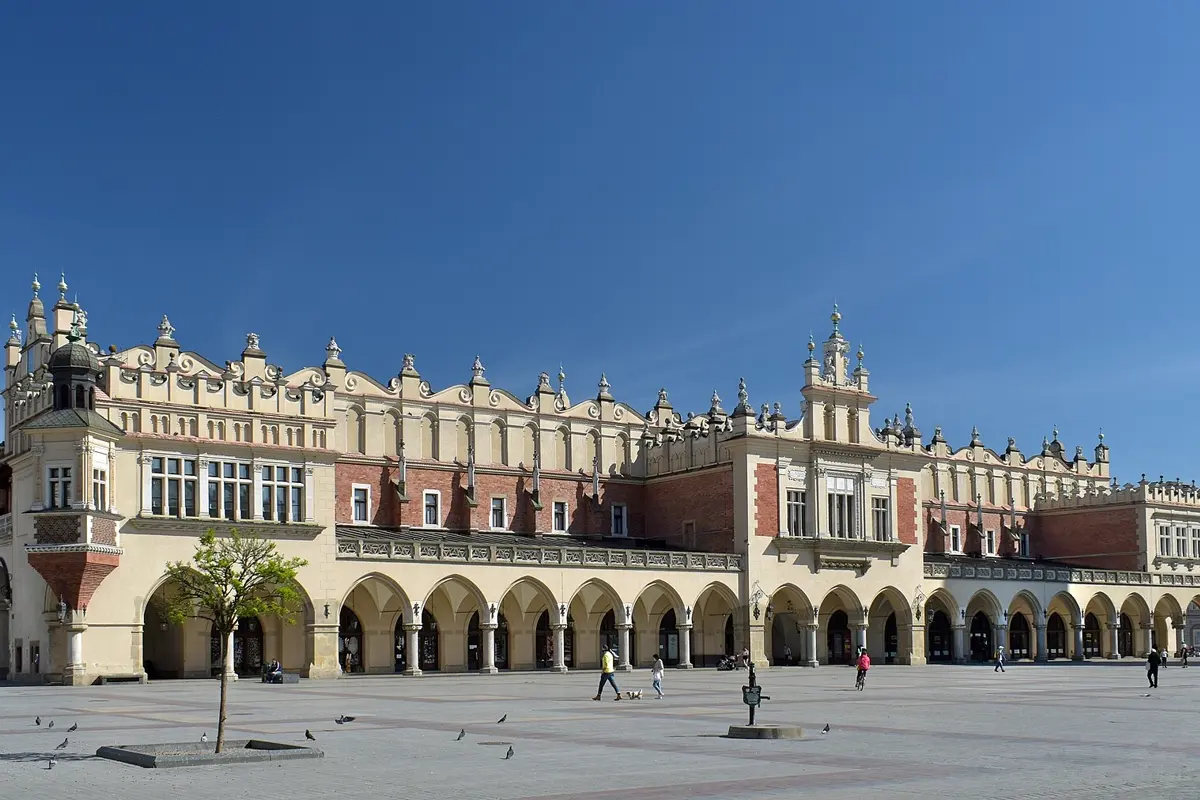
Kraków has one of Europe's largest medieval market squares, the Rynek Główny, with the Cloth Hall in the middle. Wawel Castle rises above the Vistula, and south of the old town lies the former Jewish quarter of Kazimierz with its cafés and bars. Many visitors combine the trip with a visit to the Auschwitz-Birkenau memorial or the Wieliczka salt mine; you can find guided tours from Kraków with pick-up* on Tiqets, for example. Allow half a day to a full day for each.
 Kraków trip planDay by day, with map and tips
Budapest is really two cities: hilly Buda with the Castle District and Fisherman's Bastion, and flat Pest with the parliament on the Danube and the ruin bars in the old Jewish quarter. Add the thermal baths such as Széchenyi or Gellért. If you arrive in the evening, the easiest way from the airport is a pre-booked pick-up, for example a transfer from Budapest airport* with Welcome Pickups.
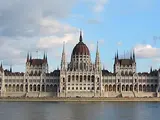 Budapest trip planDay by day, with map and tips
Wrocław, Gdańsk, Ljubljana: smaller and more relaxed
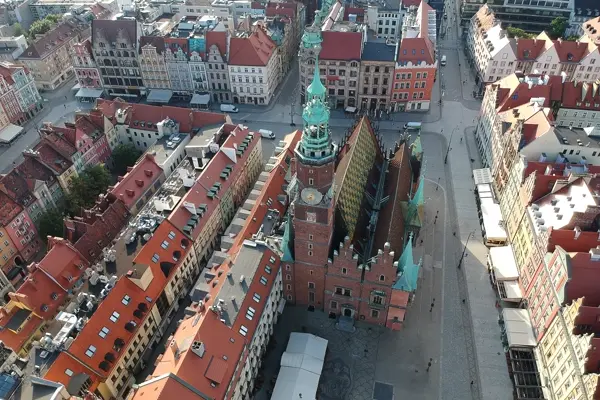
Wrocław is one of Poland's most beautiful cities and much less crowded than Kraków. The market square with its Gothic town hall is huge, and on Cathedral Island (Ostrów Tumski) the gas lamps are still lit by hand every evening. Small bronze dwarfs sit all over the city – hunting for them is fun for adults too. The Centennial Hall is a UNESCO World Heritage Site.
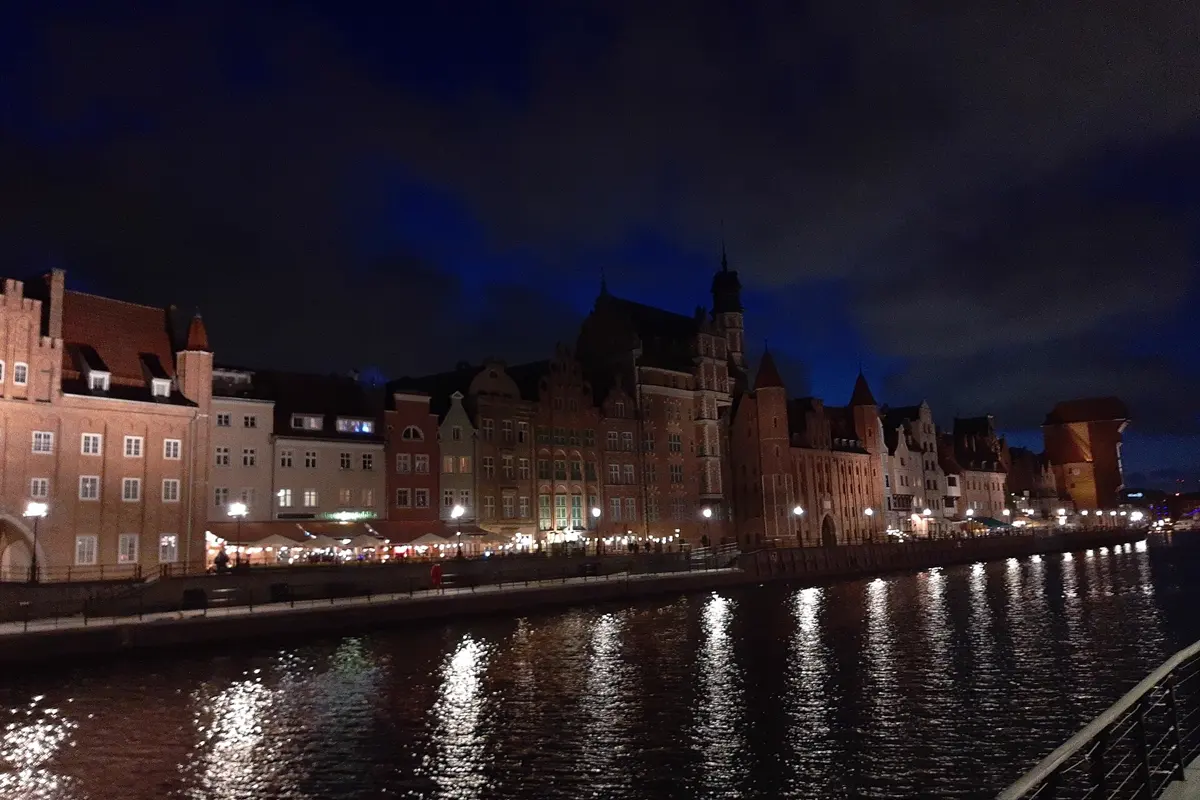
Gdańsk lies on the Baltic Sea. The rebuilt Main Town with Long Lane, Long Market and the medieval crane on the Motława is one of Poland's finest old-town ensembles, and St Mary's Church is one of the largest brick churches in the world. At the European Solidarity Centre you learn how the Solidarity trade union was born here in 1980. In summer, a suburban train takes you to the beach in Sopot.
 Gdańsk trip planDay by day, with map and tips
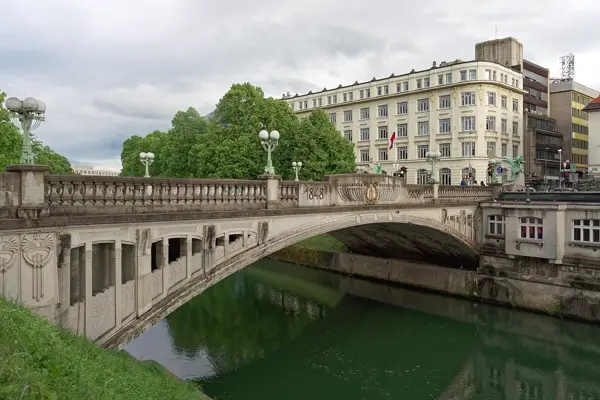
Ljubljana is the smallest capital on the list. The old town along the Ljubljanica river is largely car-free and shaped by the architect Jože Plečnik, whose works are a UNESCO World Heritage Site: the Triple Bridge, the market halls, the riverside promenades. The castle sits above it all. Two days are enough – or add a day at Lake Bled.
 Ljubljana trip planDay by day, with map and tips
Riga, Tallinn, Vilnius: the Baltics
The three Baltic capitals are the northernmost on the list, and all use the euro. Riga is the largest; besides the old town, it is the Art Nouveau district around Alberta Street that makes the city special. The Central Market is housed in former Zeppelin hangars.
 Riga trip planDay by day, with map and tips
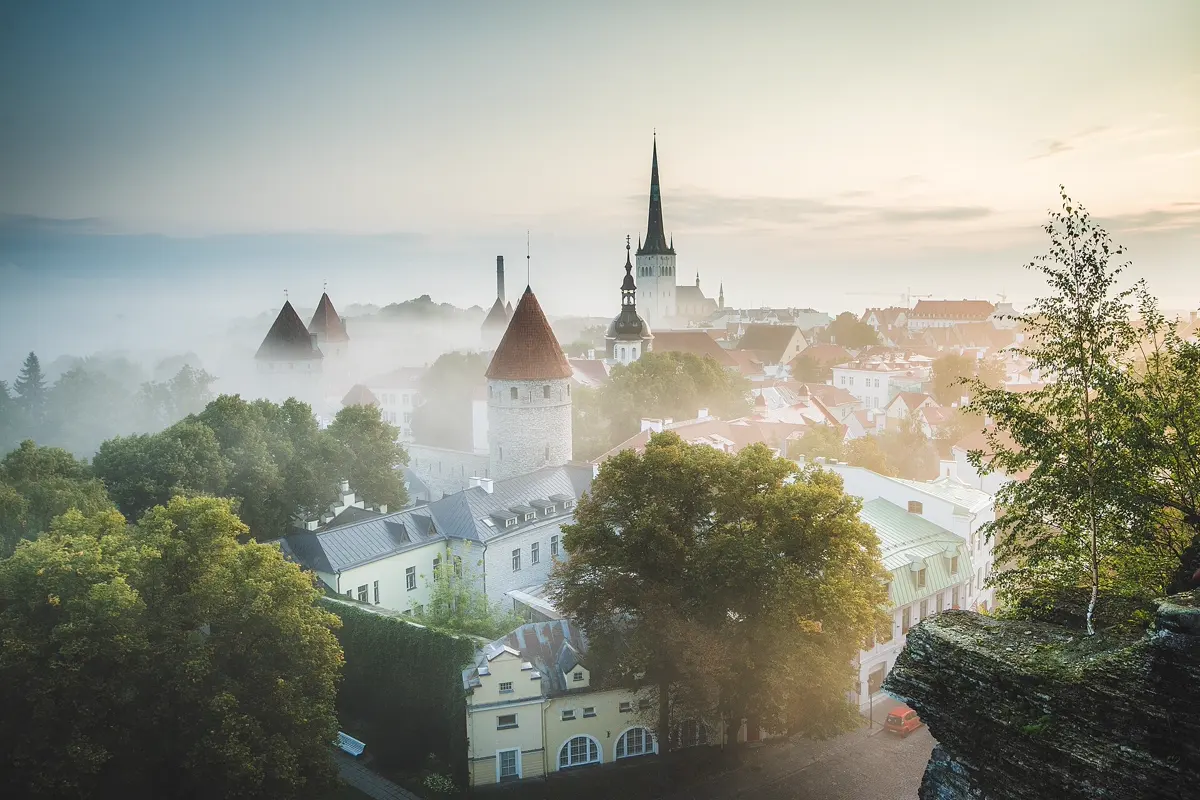
Tallinn has one of the best-preserved medieval old towns in northern Europe, with its city wall, towers and Toompea hill, from which you look over the roofs to the harbour. The ferry to Helsinki takes about two hours, so a day trip is easy.
 Tallinn trip planDay by day, with map and tips
Vilnius has one of the largest baroque old towns in Europe and is surprisingly green. From Gediminas Tower you look out over the church spires, and in the artists' quarter of Užupis the "constitution" of the self-proclaimed republic hangs on a wall. For a day trip, the island castle at Trakai is the obvious choice.
Best time to go: May to September
The best time for a city break in Eastern Europe is May to September. In the south – Budapest, Ljubljana, Prague – high summer is warm to hot, so May and September are the most pleasant months there. In the Baltics, summer is shorter and cooler, but the days in June are very long. From late November the Christmas markets draw visitors, for example in Prague, Wrocław, Kraków, Budapest, Tallinn and Vilnius – then you need warm clothes.
| City | May: day | May: night | September: day | September: night |
|---|---|---|---|---|
| Prague | 19.4 °C | 9.1 °C | 21.0 °C | 11.3 °C |
| Kraków | 18.8 °C | 8.8 °C | 20.2 °C | 11.2 °C |
| Gdańsk | 16.7 °C | 8.3 °C | 19.2 °C | 12.1 °C |
| Riga | 16.9 °C | 7.0 °C | 17.8 °C | 10.6 °C |
| Tallinn | 15.2 °C | 5.8 °C | 16.1 °C | 10.0 °C |
Temperature: averages 2015–2024 from the ERA5 reanalysis (via Open-Meteo), rounded. The values describe a grid cell of about 25 km.
September is slightly warmer than May almost everywhere, especially at night. In July the average daytime high rises to 26.1 °C in Prague and 24.9 °C in Kraków, while Tallinn stays at 21.2 °C.
Practical tips
- Money: Slovenia, Estonia, Latvia and Lithuania use the euro. Poland uses the złoty, Czechia the koruna and Hungary the forint. Cards are accepted almost everywhere.
- Entry: all nine cities are in the Schengen Area and the EU. Travellers from the UK need a passport.
- Mobile data: many UK phone contracts charge roaming in the EU; a travel eSIM is often cheaper.
- Combine cities: Kraków and Wrocław, Prague and Budapest, or Riga, Tallinn and Vilnius combine well into a longer trip. You can compare train and bus connections* on Omio, for example.
For more weekend cities, including in the west and south, see our overview of the best European city breaks.
How YesTrip helps
For seven of the nine cities – Prague, Kraków, Gdańsk, Budapest, Ljubljana, Riga and Tallinn – YesTrip has ready-made plans you can open and adapt. For Wrocław, Vilnius or any other city, enter the destination and your dates and you get a day-by-day plan with a map that groups the sights by neighbourhood. You also get the forecast for your travel days, a packing list that fits the weather and, under "What's on?", festivals, markets and holidays during your trip – handy if you are going for the Christmas markets.
* Ad – Partner link: if you book there, we earn a commission. Your price stays the same.
Free
Plan your trip in 30 seconds.
Tell YesTrip where and when – the app plans day by day with real places on the map, shows the weather, splits costs with your travel companions and guides you to the next stop on the go.
Frequently asked questions
What are the best Eastern European city breaks?
For a first visit, Prague, Kraków and Budapest are the classics, with large old towns and plenty to see. Wrocław, Gdańsk and Ljubljana are calmer and more compact. If you prefer something more Nordic, go to Riga, Tallinn or Vilnius.
When is the best time for a city break in Eastern Europe?
May to September. In September the average daytime highs range from 16.1 °C in Tallinn to 21.0 °C in Prague. In high summer Budapest and Prague can get hot, and in December the Christmas markets are the main draw.
How many days do you need for Prague, Kraków or Budapest?
Three days are ideal for Prague, Kraków and Budapest – in Kraków with half a day to a full day for a trip to Auschwitz-Birkenau or Wieliczka. For Wrocław, Ljubljana, Tallinn and Vilnius, two days are enough.
Which Eastern European countries use the euro?
Slovenia, Estonia, Latvia and Lithuania – so Ljubljana, Tallinn, Riga and Vilnius. In Poland you pay in złoty, in Czechia in koruna and in Hungary in forint.
Which Eastern European cities have good Christmas markets?
The Christmas markets in Prague, Wrocław, Kraków, Budapest, Tallinn and Vilnius are well known. Most open from late November. Expect temperatures around freezing.
Sources
- Open-Meteo Historical Weather API (ERA5), averages 2015–2024 – open-meteo.com
- UNESCO World Heritage: Historic Centre of Prague – whc.unesco.org
- UNESCO World Heritage: Historic Centre of Kraków – whc.unesco.org
- UNESCO World Heritage: Centennial Hall in Wrocław – whc.unesco.org
- UNESCO World Heritage: The works of Jože Plečnik in Ljubljana – whc.unesco.org
- UNESCO World Heritage: Historic Centre of Riga – whc.unesco.org
- European Union: countries using the euro – european-union.europa.eu
- UNESCO World Heritage: Historic Centre (Old Town) of Tallinn – whc.unesco.org
- UNESCO World Heritage: Vilnius Historic Centre – whc.unesco.org
Researched with AI support and checked by our editors. Prices, opening hours and weather can change – please check before you go. YesTrip is not a travel agency. Published: .
More articles
 City breaks & rail
Alpine city breaks: 6 cities compared
For mountains right by the city, Innsbruck and Lucerne are the first choice; for old town and music Salzburg; for a lakeside city with … · 11 min read City breaks & rail
Asia city breaks: 6 cities compared
For a first city trip to Asia, Tokyo and Kyoto go well together (about 2 hours 15 minutes by Shinkansen), Seoul is the lively alternative, … · 10 min read City breaks & rail
Balkans city breaks: 9 cities compared
For sea and old towns, Split, Dubrovnik and Kotor are the first choice; for big-city life and nightlife Belgrade and Bucharest; for history … · 11 min read


