
Best time to visit Rome, month by month
In short
The best time to visit Rome is April and May or late September and October, with average daytime highs of 19 to 27 °C. July and August are the hottest months at about 33 °C and almost without rain; November is the wettest month at 156 mm. Winter is mild by day, 12 to 14 °C, and the quietest season for the big sights.
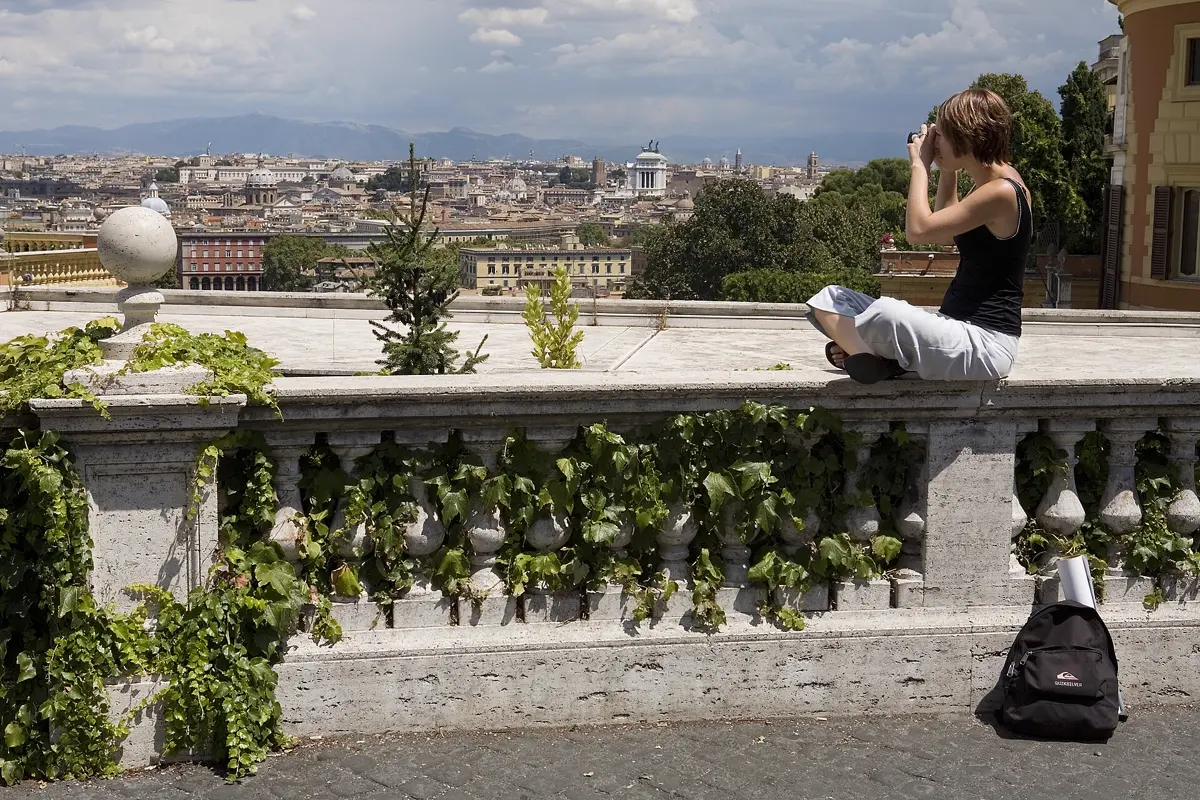
Rome is a city you explore on foot – between the Colosseum, the Pantheon and the Vatican, 15 to 20 km a day are quickly reached. That makes the weather more important than in most city breaks: in the summer heat, walking becomes hard work, while in spring and autumn the city is at its most beautiful. We analysed the weather of 2015 to 2024 for the centre of Rome: how warm does it get by day, how cool at night, and how much rain falls each month?
The short answer
For sightseeing, April, May, late September and October are best. Daytime highs are between 19 and 27 °C, the evenings are warm enough to sit outside, and the light on the ochre façades is soft. June is already summery at 29 °C. July and August are hot, at about 33 °C, and many Romans leave the city in mid-August. Winter is mild by day, 12 to 14 °C, rainier and the quietest time for the Vatican and the Colosseum.
Rome's climate: all 12 months
| Month | Day (avg. high) | Night (avg. low) | Rain per month |
|---|---|---|---|
| January | 12.3 °C | 3.8 °C | 71 mm |
| February | 14.3 °C | 5.0 °C | 77 mm |
| March | 16.3 °C | 6.4 °C | 95 mm |
| April | 19.4 °C | 8.8 °C | 67 mm |
| May | 23.3 °C | 13.0 °C | 78 mm |
| June | 29.1 °C | 17.6 °C | 44 mm |
| July | 32.9 °C | 21.0 °C | 21 mm |
| August | 32.4 °C | 21.0 °C | 34 mm |
| September | 27.1 °C | 17.0 °C | 109 mm |
| October | 22.4 °C | 13.3 °C | 123 mm |
| November | 17.1 °C | 9.2 °C | 156 mm |
| December | 13.6 °C | 5.2 °C | 106 mm |
Temperature and rain: average of 2015–2024 from the ERA5 reanalysis (via Open-Meteo) for the centre of Rome, rounded. The values describe a grid cell of about 25 km; on the stone squares of the old town, summer afternoons often feel hotter still.
Two things stand out. Rome has a real dry summer: in July only 21 mm of rain fall on average. And the wet season is autumn, not winter – from September to November it rains most, often as short, heavy downpours. Rain rarely lasts all day, but an umbrella belongs in the bag from September onwards.
Spring (March to May): the best season
From April, Rome is pleasant to walk in all day: 19 °C in April, 23 °C in May. The parks of the Villa Borghese and the orange garden on the Aventine are green, and in the evening the squares of Trastevere fill up. The catch: spring is also high season. Easter brings large crowds to St Peter's and the Vatican, and the dates change every year. Book tickets for the Vatican Museums and the Colosseum with a time slot well in advance. March is still changeable and cool at night, 6 °C on average, but quieter.
Summer (June to August): hot and dry
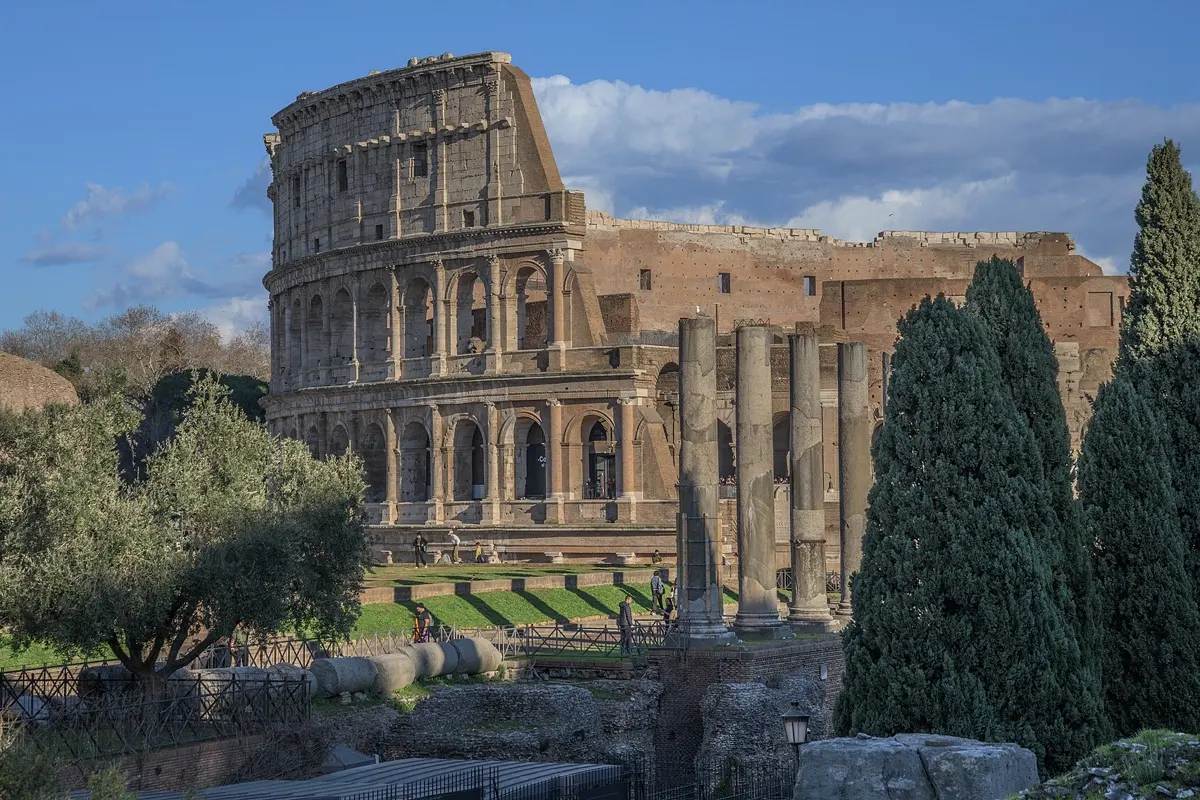
June is still a good month, at 29 °C with long, light evenings. July and August average 33 °C by day and 21 °C at night, with almost no rain. Sightseeing is possible, but needs a plan: the Colosseum and the Forum in the early morning, museums and churches at midday, a long lunch break, and the old town again in the evening. Drinking fountains, the nasoni, run with fresh water all over the city. Around 15 August (Ferragosto), many Romans are on holiday; some small restaurants and shops close for a few days, while the big sights stay open.
Autumn (September to November): the second best season
Late September and October are Rome at its best for many visitors: still 22 to 27 °C by day, warm sea air, fewer families than in summer. In October the rain increases – 123 mm on average, mostly in short showers. November is the wettest month at 156 mm, but at 17 °C by day still mild, and the queues at the big sights are much shorter.


Winter (December to February): mild and quiet
Rome's winter is mild by day, 12 to 14 °C, with frost only rarely at night. It rains a fair amount, especially in December. In return, you get the city with the fewest visitors of the year: shorter waits at the Vatican Museums, emptier piazzas, and Christmas in Rome, with nativity scenes in many churches and the Christmas market on Piazza Navona. January and February are the quietest months and often the cheapest for hotels.
Month by month: our recommendation
| When | Best for | Keep in mind |
|---|---|---|
| April, May | First visit, lots of walking | High season, Easter crowds, book early |
| June | Long evenings, warm days | Already hot at midday |
| July, August | Heat lovers, evening life | 33 °C, plan the day around the heat |
| September, October | First visit, warm evenings | More showers from October |
| November | Quieter sights, mild days | Wettest month |
| December to March | Museums, small budget | Cooler, rain possible |
 Rome trip planDay by day, with map and tips
How to plan the trip
From London a direct flight to Rome takes approx. 2.5 hours. Rome is one hour ahead of UK time. Three days are good for a first visit, four or five with a day trip – our article how many days in Rome has plans for each length. How to get into town from Fiumicino is in Rome Fiumicino to the city centre, and the rest of the country in the best time to visit Italy.
In spring and autumn, popular time slots at the Vatican Museums and the Colosseum sell out days ahead; tickets for the Colosseum and the Vatican Museums* can be compared on Tiqets. Travellers from outside the EU can use a travel eSIM for Italy* (Airalo) instead of roaming; our eSIM price index compares the prices per gigabyte.
In YesTrip you enter Rome and your dates and get a day-by-day plan with a map that keeps the walks short – with the forecast for your travel days and a packing list that matches the weather, from a sun hat in July to an umbrella in November. You can take over our ready-made plan and adapt it. YesTrip is free.
All other destinations in this series are in the overview best time to visit.
* Ad – Partner link: if you book there, we earn a commission. Your price stays the same.
Free
Plan your trip in 30 seconds.
Tell YesTrip where and when – the app plans day by day with real places on the map, shows the weather, splits costs with your travel companions and guides you to the next stop on the go.
Frequently asked questions
When is the best time to visit Rome?
April and May or late September and October. Daytime highs are then 19 to 27 °C, ideal for long walks between the sights. Spring is high season, so book tickets and hotels early.
How hot is Rome in summer?
In July and August the average daytime high is about 33 °C and nights stay around 21 °C, with hardly any rain. Plan outdoor sights for the morning and evening.
What is the rainiest month in Rome?
November, with an average of 156 mm, followed by October with 123 mm. Rain usually comes in short, heavy showers rather than all day.
Is Rome worth visiting in winter?
Yes. Days are mild at 12 to 14 °C, the big sights are much quieter than in spring, and hotels are often cheaper. Bring a rain jacket, especially in December.
When is Rome least crowded?
In January and February, and to some extent in November. Around Easter and in May the city is at its busiest.
Sources
- Open-Meteo Historical Weather API (ERA5), average 2015–2024 – open-meteo.com
- Copernicus ERA5 reanalysis (Hersbach et al. 2020) – cds.climate.copernicus.eu
- Turismo Roma: official tourism website of the City of Rome – www.turismoroma.it
- Vatican Museums: official website and tickets – www.museivaticani.va
Researched with AI support and checked by our editors. Prices, opening hours and weather can change – please check before you go. YesTrip is not a travel agency. Published: .
More best-time guides
 When to go
Best time to visit Zanzibar: dry and rainy season
The best time to visit Zanzibar is June to October: Stone Town then sees 27 to 30 °C by day and only 40 to 55 mm of rain a month from June … · 6 min read When to go
Best time to visit Sardinia, month by month
For a beach holiday in Sardinia, June to September is best, with daytime highs of 27 to 32 °C; in July Cagliari averages just 1 mm of rain. … · 9 min read When to go
Best time to visit Scotland: month by month
The best time to visit Scotland is May to September: Edinburgh then reaches 14 to 18 °C by day and the days are long. May and June are often … · 7 min read
All destinations: best time to visit and warm places by month


