
Best time to visit Zanzibar: dry and rainy season
In short
The best time to visit Zanzibar is June to October: Stone Town then sees 27 to 30 °C by day and only 40 to 55 mm of rain a month from June to September. January and February are hotter at 31 to 32 °C and also fairly dry. Avoid April and May, the long rains, when Stone Town gets 368 mm in April and the east coast around Paje 446 mm.
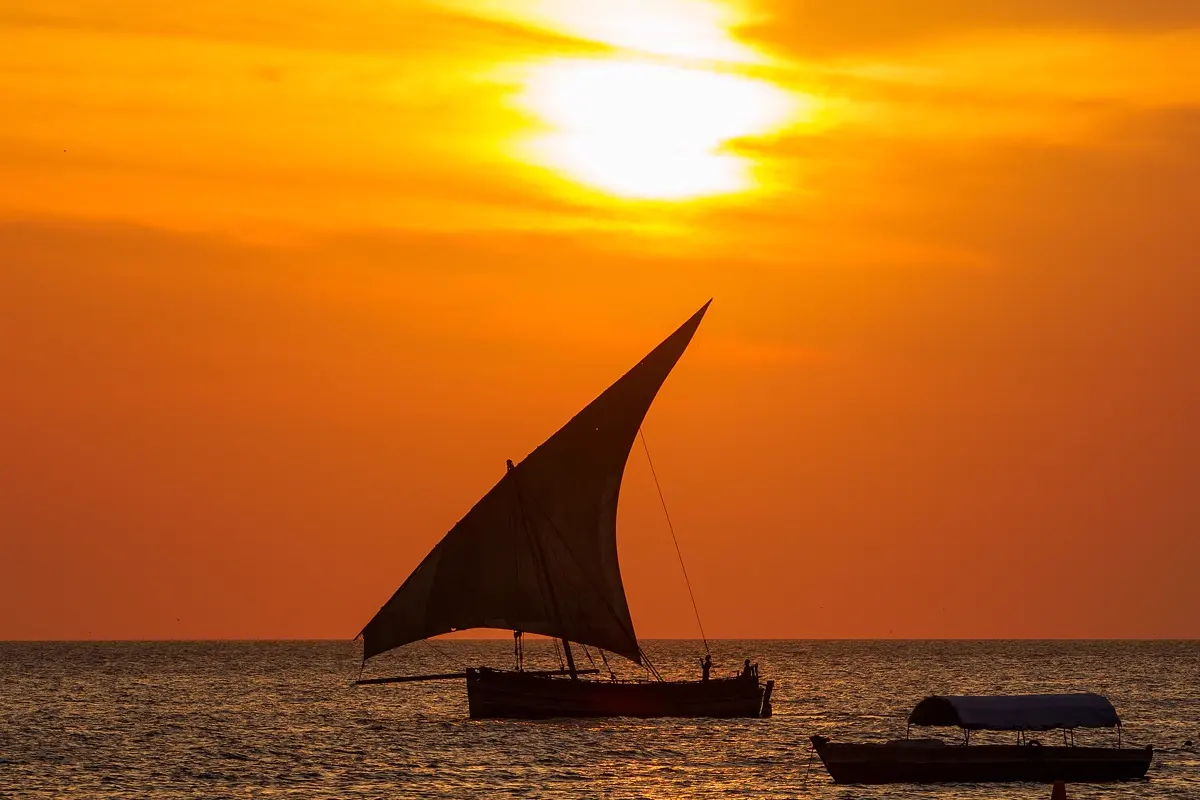
Zanzibar, the island off the coast of Tanzania, is warm all year: by day it is rarely below 27 °C, and the Indian Ocean is warm enough to swim in every month. The seasons are set by the rain. Tanzania has two rainy seasons – according to the UK travel advice, they generally run from the end of March to May and from October to mid-December. In between lie two drier periods: a long one from June to October and a shorter, hotter one in January and February. We analysed the weather from 2015 to 2024 for Stone Town on the west coast and Paje on the east coast.
The short answer
- Best time: June to October. Pleasantly warm at 27 to 30 °C by day, little rain, slightly cooler nights.
- Second dry season: January and February. Hot at 31 to 32 °C in Stone Town, humid, but fairly dry.
- Avoid: April and May, the long rains. April brings 368 mm to Stone Town and 446 mm to Paje.
- Short rains: November and early December – showers rather than days of rain, still a possible travel time.
Zanzibar's climate: all 12 months
| Month | Stone Town day | Stone Town night | Stone Town rain | Paje day | Paje night | Paje rain |
|---|---|---|---|---|---|---|
| January | 31.5 °C | 25.9 °C | 61 mm | 29.6 °C | 26.0 °C | 96 mm |
| February | 32.1 °C | 26.0 °C | 40 mm | 30.3 °C | 26.1 °C | 56 mm |
| March | 31.4 °C | 25.9 °C | 110 mm | 30.3 °C | 25.7 °C | 160 mm |
| April | 28.7 °C | 25.1 °C | 368 mm | 28.3 °C | 24.7 °C | 446 mm |
| May | 28.0 °C | 24.7 °C | 202 mm | 27.7 °C | 24.5 °C | 218 mm |
| June | 27.8 °C | 24.0 °C | 55 mm | 27.2 °C | 24.1 °C | 75 mm |
| July | 27.3 °C | 23.2 °C | 46 mm | 26.8 °C | 23.5 °C | 42 mm |
| August | 27.7 °C | 22.9 °C | 40 mm | 27.2 °C | 23.2 °C | 33 mm |
| September | 28.5 °C | 23.0 °C | 43 mm | 27.9 °C | 23.4 °C | 33 mm |
| October | 29.5 °C | 23.7 °C | 90 mm | 28.7 °C | 24.0 °C | 83 mm |
| November | 29.7 °C | 24.5 °C | 125 mm | 29.0 °C | 24.6 °C | 147 mm |
| December | 30.6 °C | 25.4 °C | 99 mm | 29.6 °C | 25.5 °C | 139 mm |
Temperature and rain: monthly averages 2015–2024 from the ERA5 reanalysis (via Open-Meteo), rounded. A grid cell is about 25 km wide and includes a lot of sea around the island, so treat the numbers as a rough guide. Individual rainy seasons can differ a great deal from the average: some years the long rains start early or are much weaker.
The temperature range is narrow: Stone Town is warmest in February at 32.1 °C and coolest in July at 27.3 °C. The nights are coolest from July to September at around 23 °C.
The rain chart shows the two rainy seasons clearly: a sharp peak in April and May and a smaller hump from October to December.
Zanzibar month by month
June to October: the main season
The cooler, dry season. From June to September Stone Town averages only 40 to 55 mm of rain a month, and the days are a pleasant 27 to 29 °C. The south-east trade winds blow steadily, which kitesurfers on the east coast around Paje appreciate. July and August are the busiest months, partly because many travellers combine Zanzibar with a safari on the mainland.
November and December: short rains
Rain returns in short showers, often in the afternoon. With 99 to 147 mm a month it is much wetter than in summer but far from the long rains. The Christmas holidays are popular nonetheless.
January to March: hot and humid
January and February are the hottest months at 31 to 32 °C in Stone Town and relatively dry, with 40 to 61 mm. The sea is often calm. In March it becomes more humid and the first heavier showers announce the long rains.
April and May: long rains
The wettest time of year: in April Stone Town averages 368 mm and Paje 446 mm. Downpours can last for hours, and according to the UK travel advice, heavy rain can cause flooding and make roads on the mainland impassable. Some beach hotels close for a few weeks. If you travel now, you get low prices and green landscapes, but should expect many rainy days.
West coast or east coast?
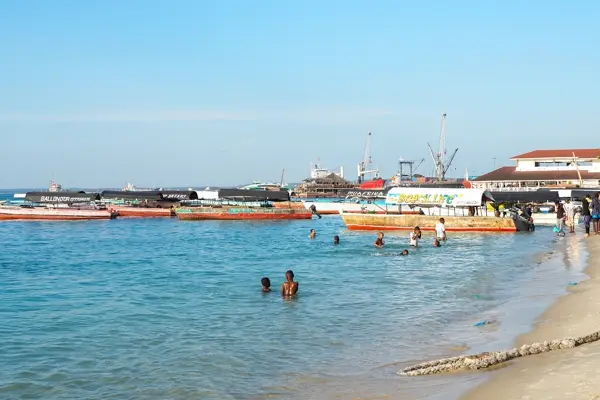
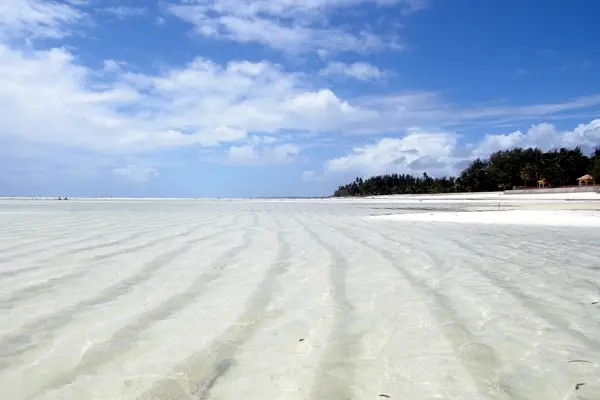
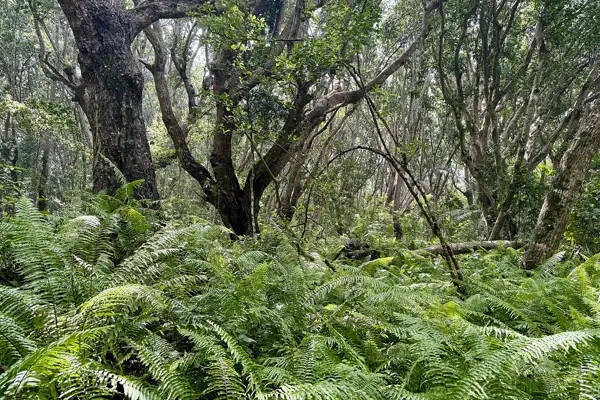
On the west coast, Stone Town is the historic centre and a UNESCO World Heritage Site, with narrow lanes, carved doors and the old fort. In the north around Nungwi the tides are less pronounced, so swimming is possible for most of the day. The east coast around Paje and Jambiani has long white beaches and a very wide tidal range: at low tide the sea withdraws far out, which shapes the day for swimmers. Between Stone Town and the east coast lies the Jozani Chwaka Bay National Park with its red colobus monkeys.

Zanzibar after a safari
Many travellers fly to Zanzibar after a safari in northern Tanzania or Kenya. The dry season on the mainland and on the island overlap from June to October, which makes these months the classic choice for a combined trip. In Kenya's Maasai Mara the wildebeest migration is usually from July to October – more in our best time to visit Kenya. For the drive from the airport to the east coast, an airport transfer* booked in advance saves negotiating on arrival.
Zanzibar is predominantly Muslim. During Ramadan, whose dates move about 11 days earlier each year, many restaurants outside the hotels are closed during the day; respectful clothing in Stone Town is expected all year.
How YesTrip helps with this trip
In YesTrip you plan Stone Town, the spice tours, Jozani and your days on the beach on one map, so you can see how far the east coast is from town. The forecast for your travel days warns of heavy rain, which is useful in the shoulder months, and the packing list suggests sun protection, light long clothing for Stone Town and a plug adapter. If you combine the island with a safari, you keep both parts in one trip and share it with your travel companions, including shared expenses.
Before you go
- Entry: Check the current visa and entry rules for British citizens on gov.uk before you travel.
- Time: Zanzibar is 3 hours ahead of the UK in winter and 2 hours in summer.
- Power: 230 volts; UK-style three-pin sockets (type G) are common.
- Mobile data: a travel eSIM* for Tanzania is usually much cheaper than roaming; our eSIM price index compares the prices per gigabyte.
More destinations by month: Best time to visit: where to go when.
* Ad – Partner link: if you book there, we earn a commission. Your price stays the same.
Free
Plan your trip in 30 seconds.
Tell YesTrip where and when – the app plans day by day with real places on the map, shows the weather, splits costs with your travel companions and guides you to the next stop on the go.
Frequently asked questions
When is the best time to visit Zanzibar?
June to October. Stone Town then has 27 to 30 °C by day and only 40 to 55 mm of rain a month from June to September. January and February are a second, hotter dry period at 31 to 32 °C.
When is the rainy season in Zanzibar?
There are two. The long rains from the end of March to May are the heaviest: Stone Town averages 368 mm in April and 202 mm in May. The short rains from about October to mid-December bring showers of 90 to 125 mm a month.
Is April a good time to visit Zanzibar?
Only if you accept a lot of rain. April is the wettest month, with 368 mm in Stone Town and 446 mm on the east coast around Paje. Prices are low and the island is green, but some beach hotels close for a few weeks.
How hot is Zanzibar?
Warm all year. Day highs in Stone Town range from 27.3 °C in July to 32.1 °C in February, and nights stay between 23 and 26 °C. The sea is warm enough for swimming in every month.
Can I combine Zanzibar with a safari?
Yes, and the dry season from June to October suits both. Many travellers spend the first part of their trip on safari in Tanzania or Kenya and end on Zanzibar's beaches; in Kenya's Maasai Mara the wildebeest migration is usually from July to October.
Sources
- Climate data: Open-Meteo Historical Weather API (ERA5), average 2015–2024 – open-meteo.com
- Copernicus ERA5 reanalysis (Hersbach et al. 2020) – cds.climate.copernicus.eu
- Weather forecasts and warnings: Tanzania Meteorological Authority – www.meteo.go.tz
- Rainy seasons and flooding: UK Foreign Travel Advice for Tanzania – www.gov.uk
- Stone Town of Zanzibar: UNESCO World Heritage Centre – whc.unesco.org
- Entry requirements for Tanzania: UK Foreign Travel Advice – www.gov.uk
Researched with AI support and checked by our editors. Prices, opening hours and weather can change – please check before you go. YesTrip is not a travel agency. Published: .
More best-time guides
 When to go
Best time to visit Sardinia, month by month
For a beach holiday in Sardinia, June to September is best, with daytime highs of 27 to 32 °C; in July Cagliari averages just 1 mm of rain. … · 9 min read When to go
Best time to visit Scotland: month by month
The best time to visit Scotland is May to September: Edinburgh then reaches 14 to 18 °C by day and the days are long. May and June are often … · 7 min read When to go
Best time to visit Switzerland: month by month
The best time to visit Switzerland for hiking, lakes and mountain views is mid-June to mid-September: Zurich reaches 23 to 25 °C by day and … · 7 min read
All destinations: best time to visit and warm places by month


