
Multi-city trip planner: how to plan a round trip
In short
For a multi-city trip, give each city at least two nights, count the first day in a new city as a travel day and fly into one city and home from the last. A classic example is 14 days Lisbon – Porto – Madrid – Barcelona: train, short flight, high-speed train. In YesTrip you add up to eight cities to one trip, the AI splits the days, and each day belongs to one city.

A trip through several cities is one of the best ways to see a region – and one of the easiest to overload. The hard part is not finding sights but the arithmetic in between: how many days per city, which days are lost to travel, and whether the train or the plane makes more sense for each leg. This guide explains how to split a multi-city vacation into days, how to plan the transfers, what a good multi-day planner should show you, and how YesTrip handles round trips – with a worked 14-day example from Lisbon to Barcelona.
The short answer
- Days per city: at least two nights in every city, three or four in big capitals. One night is a stopover, not a visit.
- Travel days: the first day in a new city is a travel day. Plan a half day there, not a full one.
- Legs: train for up to about four hours city centre to city centre, plane for longer legs or where there is no direct rail link, bus where it is the only direct option.
- Flights: fly into the first city and home from the last (an open-jaw ticket), so you never travel back the way you came.
- Planner: use one trip for the whole route, not one trip per city – so the days, the map, the tickets and the costs stay together.
How to split the days between cities
Start with the total number of days, then subtract before you add. Every change of city costs roughly half a day: check-out, getting to the station, the journey, check-in. On a 14-day trip with four cities that is three changes, so about one and a half days go to travel. That leaves twelve and a half days for the cities themselves.
Then weight the cities. A big capital with several major museums and distinct neighbourhoods needs three to four days; a smaller city with a compact old town is well served by two to three. Our city guides give concrete numbers, for example how many days in Lisbon, Porto, Madrid and Barcelona.
Three rules keep the plan realistic:
- No more than one change every two to three days. Moving every day sounds efficient but turns the trip into a sequence of stations.
- Put the longest stay at the end or the start. You arrive tired and leave early, so a longer first or last stop absorbs that.
- Leave one day open. Somewhere on the route you will want more time – a buffer day can go to whichever city you like most.
Transfers: train, bus or plane?
The right mode depends less on distance than on door-to-door time. A flight of one hour often becomes four or five hours with the way to the airport, security and the way into town. A train of three hours starts and ends in the centre.
| Leg | Typical choice | Why |
|---|---|---|
| Up to about 4 hours by rail | train | centre to centre, no security, the view counts as sightseeing |
| No direct rail link, long distance | short flight | the train would need several changes or most of a day |
| Only a road connection | long-distance bus | often the only direct option, but slower |
| Short hops with day trips on the way | hire car | flexible, but parking in old towns is hard |
For trains within one country, booking with that country's railway is usually simplest; for cross-border legs a comparison platform such as Omio shows trains and buses side by side*. On high-speed trains in Spain, France and Italy a seat reservation is required – with a normal ticket it is usually included. Our guide on how to book trains and buses in Europe explains the details.
Example route: Lisbon – Porto – Madrid – Barcelona in 14 days
This route combines two capitals and two port cities and uses three different ways of travelling. It works well in spring and autumn and avoids backtracking: you fly into Lisbon and home from Barcelona.
- Lisbon
- Porto
- Madrid
- Barcelona
Base map: Natural Earth
| City | Days | Arriving by |
|---|---|---|
| Lisbon | 4 | flight |
| Porto | 3 | train from Lisbon |
| Madrid | 3 | flight from Porto |
| Barcelona | 4 | high-speed train from Madrid |
Days 1–4: Lisbon. Arrival day plus three full days for the Alfama, Belém and the viewpoints, and if you like a day trip to Sintra. The first afternoon is enough for one neighbourhood.
Days 5–7: Porto. Direct trains run between Lisbon and Porto and take around three hours. By road the distance is about 314 km. Porto is compact: the Ribeira, the Douro bridges and the port cellars across the river in Vila Nova de Gaia fit into two relaxed days after the travel day.
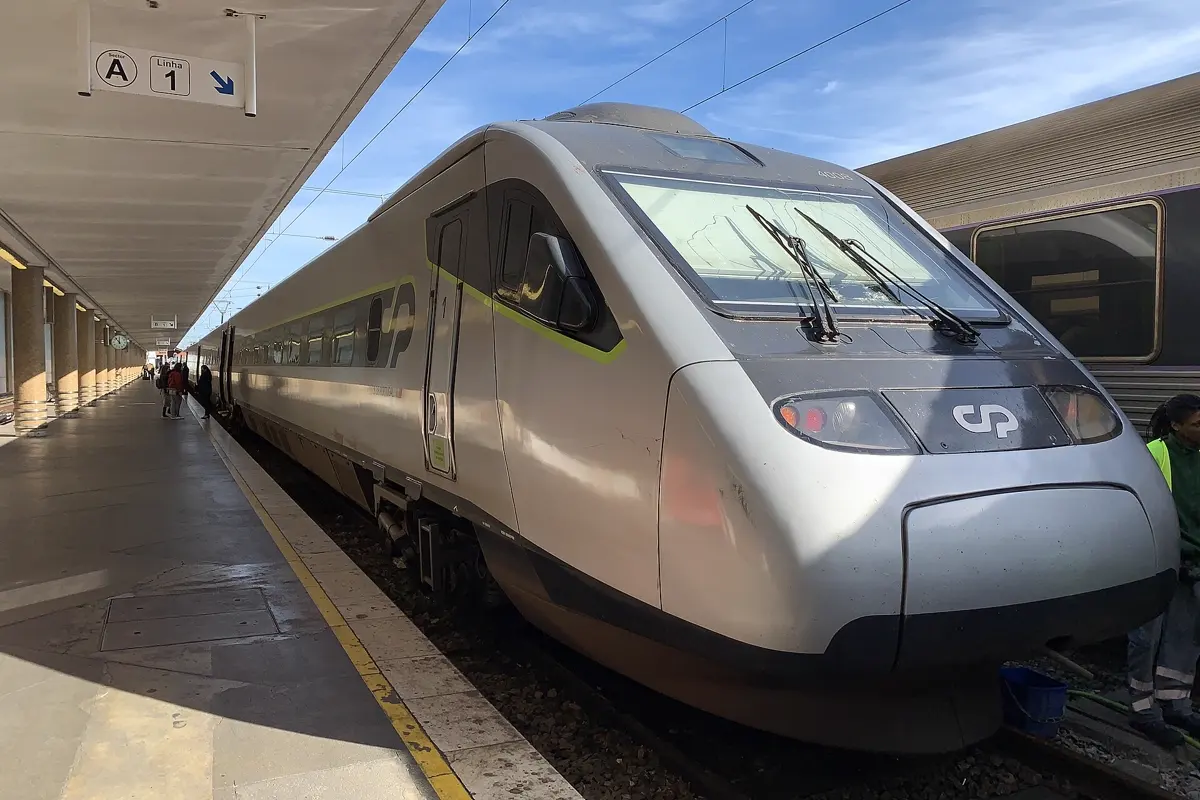
Days 8–10: Madrid. This is the leg where the plane wins. By road it is about 555 km and more than six hours of pure driving time (plan about a third more with breaks), and there is no direct high-speed train between Porto and Madrid. A direct flight takes ca. 1 hour. Long-distance buses connect the two cities as well, but take most of a day. In Madrid, plan one day for the big museums along the Paseo del Prado and one for the old centre and the Retiro park.
Days 11–14: Barcelona. Between Madrid and Barcelona several operators run high-speed trains, which take roughly two and a half to three hours. Barcelona gets the longest stay because the last day is a departure day: Gaudí's buildings, the Gothic Quarter, the beach and one evening without a plan.


Need mobile data in two countries? One eSIM for Europe is simpler than two local SIM cards; providers such as Airalo cover Spain and Portugal, for example with an eSIM for Spain*. More in our travel eSIM guide.
What a good multi-city planner should do
A multi-day itinerary is only easy to organise if the planner shows the trip the way you will experience it: day by day, city by city. Look for these things:
- One trip, several cities. The whole route lives in one plan, not in four separate trips you have to keep in sync.
- Days assigned to cities. You see at a glance which day belongs to which city and can move a day from one city to another.
- Travel days visible. The leg between two cities appears as a stop in the plan, with the time it takes.
- Distances inside each day. Each day shows how long you are on the move, so an overloaded day stands out.
- A map for the whole route. Before the trip you see the route; on the road you see the city you are in.
- Tickets and costs per trip. Train and flight tickets of every leg in one place, and the expenses of the whole trip together.
Several apps cover parts of this list. Stippl, for example, maps each stop and calculates distances, which suits road trips; Wanderlog combines an itinerary, a map and a budget. Our comparison of AI trip planner apps lists what each provider states officially.
How YesTrip plans a multi-city trip
In YesTrip a multi-city trip is a round trip: when you create a trip, you add more than one city – one city is a normal trip, two or more make it a round trip, up to eight cities per trip. Under "Days per city" you set how long you stay in each place with one day more or one day less, or you tap "Let AI split the days" and adjust the suggestion as you like.
Each day then belongs to one city, and the day headers say which. When the AI suggests the day plan, it places every stop of a day in or near that day's city and treats the first day in a new city as a travel day. Flights sit in the same list as sights, so the arrival and the first afternoon fit together; within each day you see the stops, how long you are on the move and the walking time between stops.

On the road, the Today view shows the next stop and the way there, wherever you are on the route. The offline package downloads the map of the trip's area before you go, and plan and tickets are stored on the device anyway. Expenses are tracked for the whole trip, so you see what the route cost in total and, travelling with others, who owes whom. If plans change, you can ask the AI in the trip chat to add or remove a city or shift the days. Flights, hotels and tours for every stop can be found in one search; you book directly with the provider, never through YesTrip.
YesTrip is free. The AI features use credits – 40 free credits every month – and the map, expenses and the offline package need none.
Other classic multi-city routes in Europe
- Central Europe by train: Berlin – Prague – Vienna – Budapest, with short legs between capitals. Details in our Interrail route ideas.
- Italy: Milan, Venice, Florence, Rome and Naples, all linked by high-speed trains.
- Portugal only: Porto, the Douro Valley, Lisbon and the Algarve work best by car; see our Portugal road trip.
* Ad – Partner link: if you book there, we earn a commission. Your price stays the same.
Free
Plan your trip in 30 seconds.
Tell YesTrip where and when – the app plans day by day with real places on the map, shows the weather, splits costs with your travel companions and guides you to the next stop on the go.
Frequently asked questions
What is the best app for planning a multi-city vacation?
Look for an app that keeps the whole route in one trip, assigns each day to a city and shows the travel days. YesTrip does this for free: you add up to eight cities to one round trip, the AI can split the days between them, and the day plan, map, tickets and expenses stay together. Stippl and Wanderlog are well-known alternatives with route and budget features.
How many days should I spend in each city on a multi-city trip?
Plan at least two nights per city and three to four nights in large capitals. Every change of city costs about half a day, so on a 14-day trip with four cities about one and a half days go to travel. Giving the first or last city the longest stay absorbs the arrival and departure days.
Should I take the train or fly between cities in Europe?
For legs of up to about four hours by rail, the train is usually faster door to door because it runs from centre to centre without security checks. Fly when there is no direct rail link or the train would take most of a day, as between Porto and Madrid. Buses are an option where they are the only direct connection.
How do I avoid backtracking on a multi-city trip?
Book an open-jaw trip: fly into the first city of your route and home from the last one. On the example route you fly into Lisbon and back from Barcelona, so every leg moves forward and no day is spent returning to the start.
Can YesTrip plan one day plan per city?
Yes. In a YesTrip round trip each day belongs to one city. When the AI suggests the plan, it places every stop of a day in or near that day's city and treats the first day in a new city as a travel day. You can then move, remove and add stops as in any other trip.
Which travel planners help organise multi-day itineraries easily?
Planners that show each day as its own block with stops, times and the distance between them make multi-day trips easy to organise, because an overloaded day is obvious at a glance. Wanderlog and YesTrip both organise places by day on a map; TripIt builds a timeline from forwarded booking e-mails instead of a day plan. YesTrip is free, shows per day how long you are on the move, and plans one day plan per city on a multi-city trip.
Sources
- Driving distances between Lisbon, Porto, Madrid and Barcelona: OSRM routing on OpenStreetMap data – project-osrm.org
- Map data: OpenStreetMap contributors – www.openstreetmap.org
- CP – Comboios de Portugal (trains Lisbon–Porto) – www.cp.pt
- Renfe (high-speed trains in Spain) – www.renfe.com
- Stippl: features – www.stippl.io
- Wanderlog: features – wanderlog.com
- YesTrip: features, FAQ and pricing – yestrip.app
- TripIt help centre: adding travel plans – help.tripit.com
Researched with AI support and checked by our editors. Prices, opening hours and weather can change – please check before you go. YesTrip is not a travel agency. Published: .
More articles
 Planning & packing
Cherry blossom Japan: when and where, by city
On 1991 to 2020 averages, cherry blossom opens in Tokyo on 24 March and reaches full bloom on 31 March, on 4 April in Kyoto, 13 April in … · 6 min read Planning & packing
Countries that drive on the left: all 54 listed
54 of 195 countries drive on the left, in Europe only the UK, Ireland, Malta and Cyprus. Japan, Thailand, India, Australia, New Zealand and … · 6 min read Planning & packing
Honeymoon destinations by month: 12 places
The right trip depends on your wedding month: January Maldives (27.9 °C, 74 mm of rain), March Cape Town (24.0 °C, 29 mm), June Amalfi Coast … · 7 min read


