
Portugal road trip: Porto to the Algarve
In short
The classic Portugal road trip takes 14 days from Porto into the Douro Valley, via Coimbra, Nazaré and Óbidos to Lisbon and Sintra, then through the Alentejo to Évora and down to the Algarve and Faro – about 1,000 km by hire car. The longest leg is Évora to Lagos at just over 3 hours of pure driving. The best months are May, June and September, with 23 to 26 °C in Lisbon.
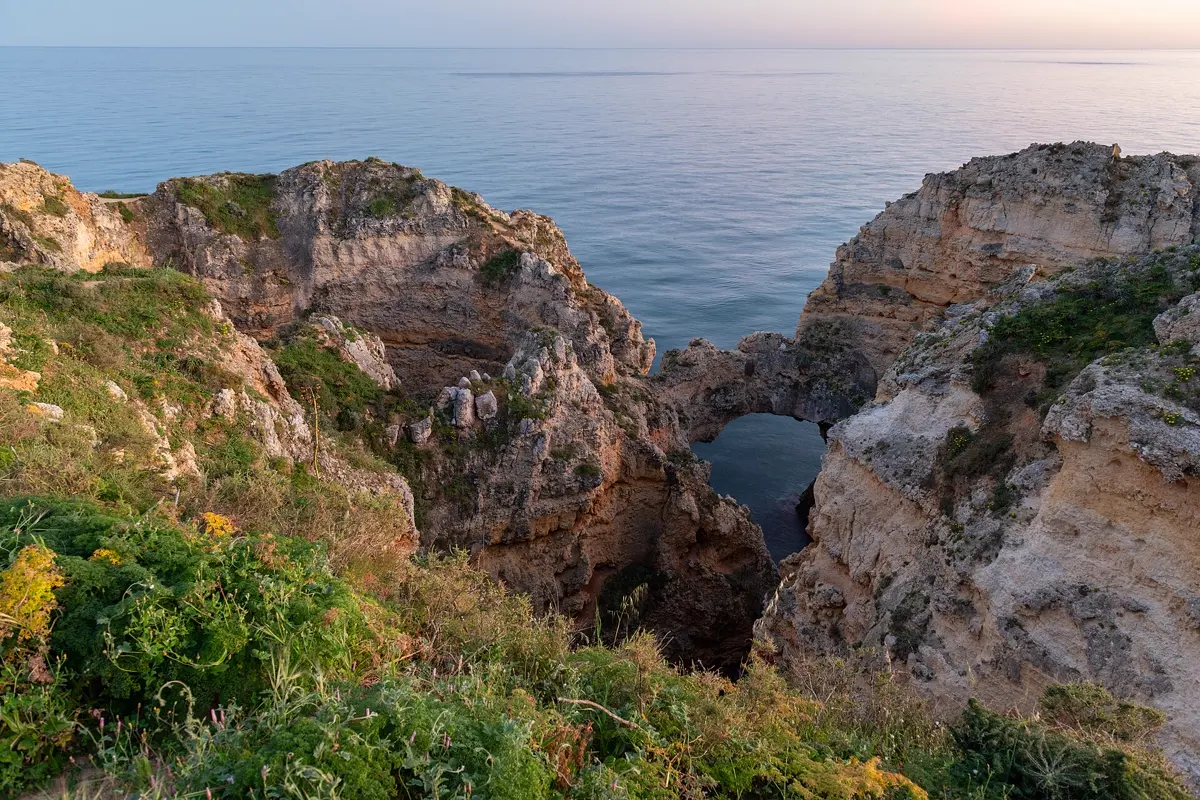
Portugal is long and narrow, which makes it ideal for a one-way road trip: fly into the north, fly out of the south. On the way lie two of Europe's finest cities, a wine region with terraces to the horizon, a university town, a fishing village and a walled hill town, the palaces of Sintra, the plains of the Alentejo and finally the rocky coves of the Algarve. This route takes 14 days, from Porto to Faro.
The route at a glance
| Day | Leg | Distance | Pure driving time |
|---|---|---|---|
| 1–3 | Porto | – | – |
| 4 | Porto → Pinhão (Douro Valley) | 125 km | approx. 1:35 h |
| 5 | Pinhão → Coimbra | 179 km | approx. 2:20 h |
| 6 | Coimbra → Nazaré → Óbidos | 152 km | approx. 1:50 h |
| 7 | Óbidos → Lisbon | 85 km | approx. 1:00 h |
| 8–10 | Lisbon, day trip to Sintra | – | – |
| 11 | Lisbon → Évora | 133 km | approx. 1:35 h |
| 12 | Évora → Lagos | 245 km | approx. 3:10 h |
| 13 | Algarve: Lagos and the coast | – | – |
| 14 | Lagos → Faro | 84 km | approx. 1:05 h |
Driving times: route calculation based on OpenStreetMap, without breaks. On the winding roads of the Douro Valley, in towns and with photo stops, add about a third.
- Porto
- Pinhão
- Coimbra
- Nazaré
- Óbidos
- Lisbon
- Sintra
- Évora
- Lagos
- Faro
Base map: Natural Earth
Days 1–3: Porto
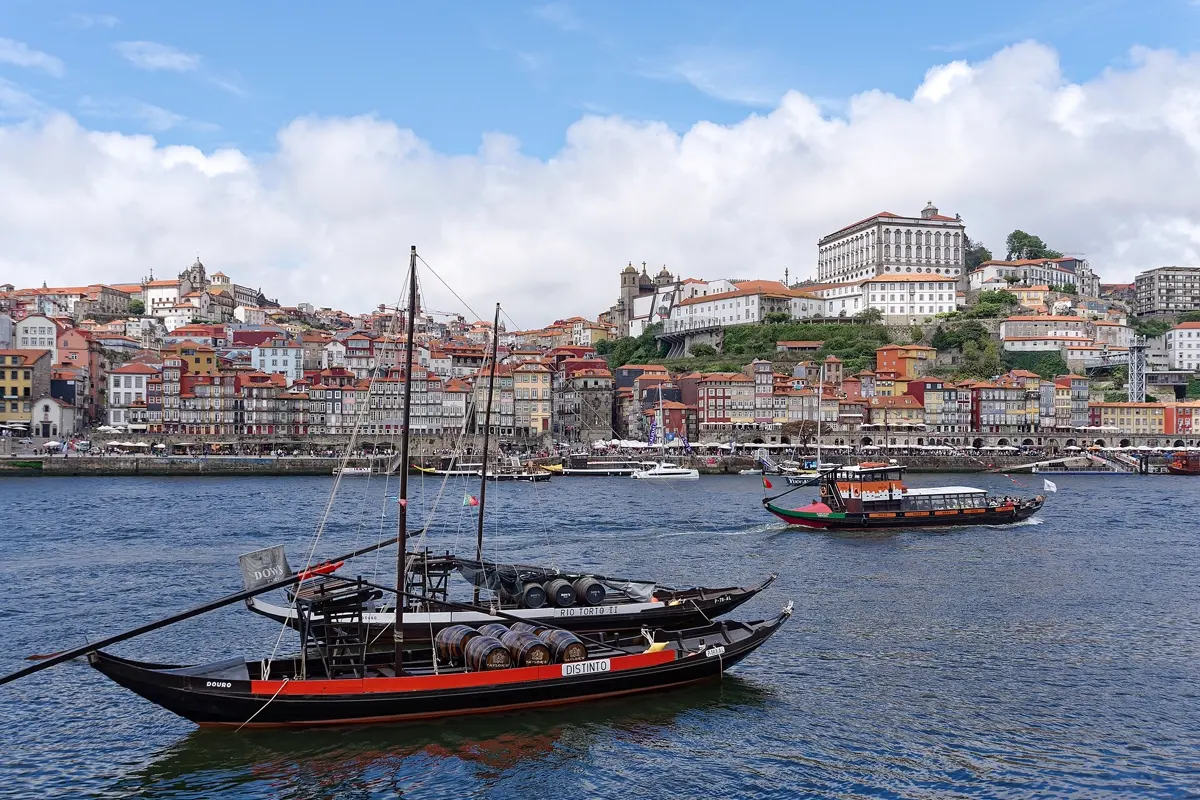
Porto is a good start: compact, steep and covered in tiles. By the river lies the Ribeira district, whose old town is a UNESCO World Heritage Site; the double-deck Dom Luís I bridge takes you across to Vila Nova de Gaia and its port wine lodges. Inside São Bento station, blue-and-white azulejos tell the country's history. Three days are enough for the city, a boat trip on the Douro and an evening by the Atlantic in Foz. You don't need the hire car in Porto – pick it up on the morning of day four.
Days 4–5: the Douro Valley and Coimbra
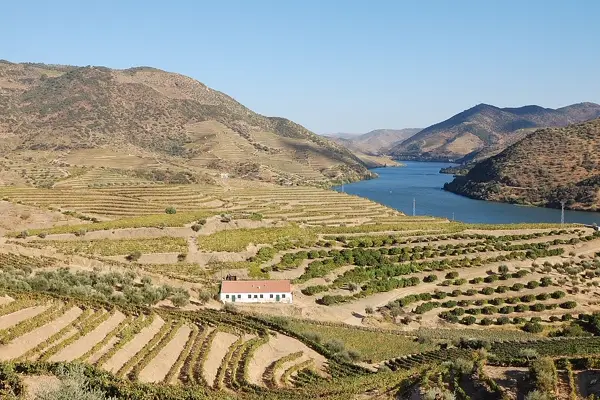
East of Porto begins the Douro Valley, one of the oldest demarcated wine regions in the world and a UNESCO World Heritage Site. Vine terraces climb the slopes while the river winds below. Your base for the night is Pinhão with its tiled railway station; quintas in the area offer wine tastings. The riverside N222 between Peso da Régua and Pinhão is especially beautiful.
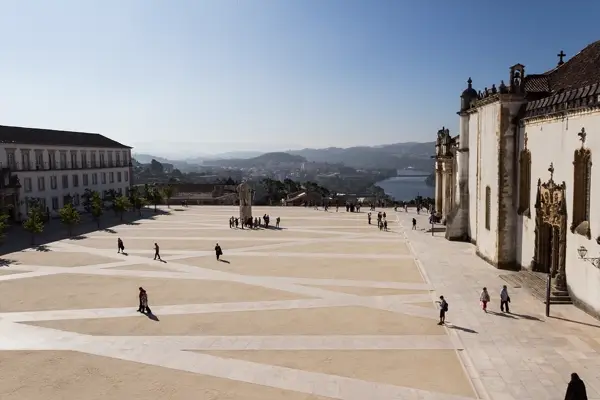
On day five you head south to Coimbra. The university on the hill is one of the oldest in Europe and also a World Heritage Site; the baroque Joanina Library is its best-known room. Steep lanes lead down through the old town to the Mondego river.
Days 6–7: Nazaré, Óbidos and Lisbon
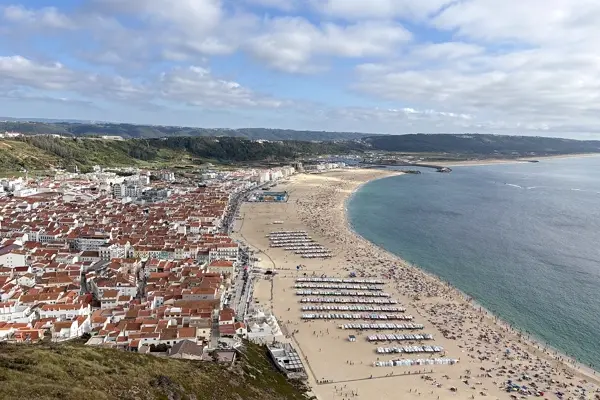
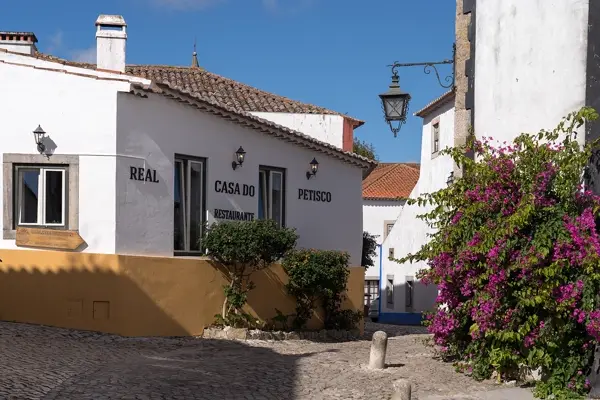
Nazaré is a fishing town with a long sandy beach. A funicular takes you up to the Sítio district with a view over the bay. To the north lies Praia do Norte, where some of the biggest waves ever measured are surfed in winter. A short detour leads to the monastery of Alcobaça, another World Heritage Site. Spend the night in the walled town of Óbidos – you can walk almost all the way round on the town wall, and in the evening it gets quiet once the day visitors have left.
On day seven it is only an hour to Lisbon. Return the hire car here: in the city it is a burden, and Sintra is easier by train.
Days 8–10: Lisbon and Sintra
Lisbon spreads over seven hills. In the Alfama narrow lanes lead to viewpoints over the Tagus, the old tram 28 rattles through the historic quarters, and in Belém stand the Jerónimos Monastery and the Belém Tower, both UNESCO World Heritage. We have a ready-made plan for your days in the city.
 Lisbon trip planDay by day, with map and tips
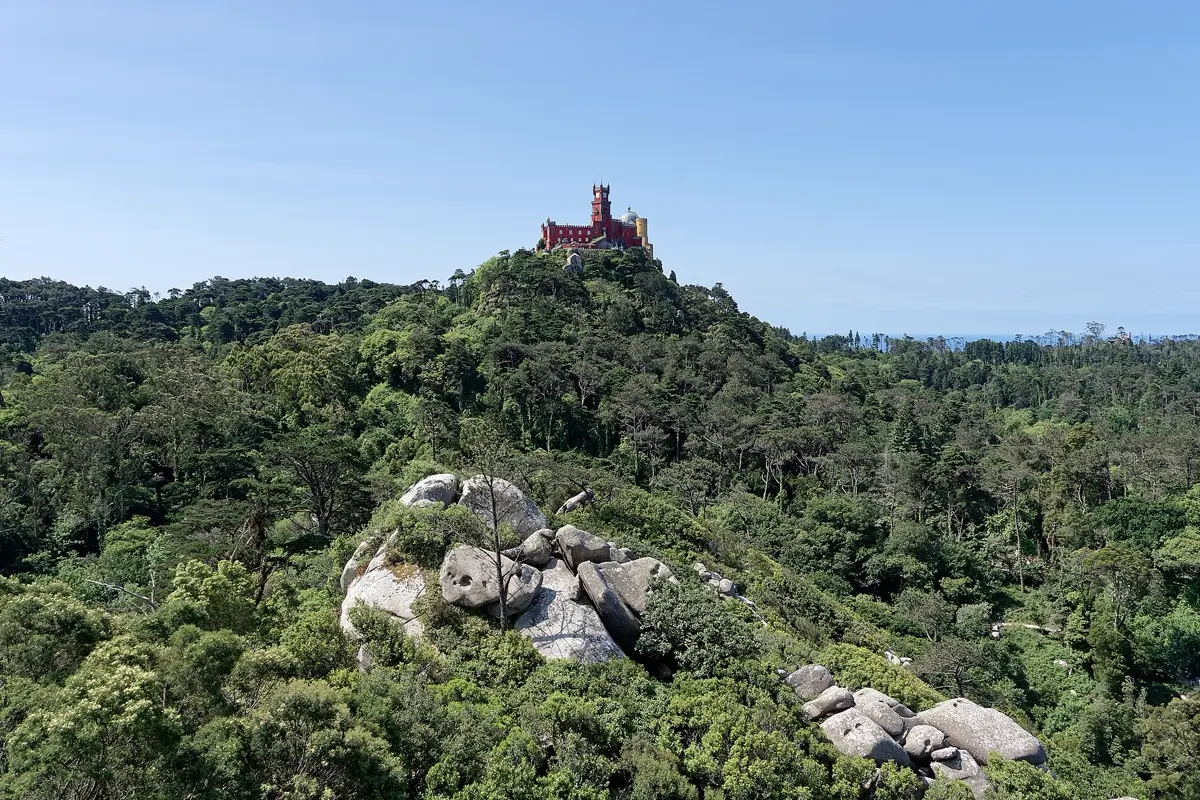
On day ten take the suburban train from Rossio station to Sintra. In the wooded hills stand the colourful Pena Palace, the Moorish Castle and the Quinta da Regaleira estate with its initiation well. The palaces have timed entry and sell out fast in summer – book tickets in advance.
Days 11–12: the Alentejo and Évora
For the south, pick up a new hire car in Lisbon. Across the Tagus you enter the Alentejo: wide plains, cork oaks, white villages. Évora has a well-preserved old town inside its walls that is a UNESCO World Heritage Site. In the middle of town stand the columns of a Roman temple, and in the church of São Francisco is the Capela dos Ossos, lined with bones.
Day twelve brings the longest leg, through the Alentejo to the Algarve – just over three hours of pure driving to Lagos.

Days 13–14: the Algarve
Around Lagos the Algarve shows its best-known side: cliffs of red-gold limestone, arches, grottoes and small coves. At Ponta da Piedade steps lead down to the water and boats go into the grottoes. Further east are Praia da Marinha and the Benagil cave, which you see from the water by boat or kayak. On the last day it is just over an hour to Faro airport.
Best time for a Portugal road trip
May, June and September are ideal: Lisbon is warm but not hot at 23 to 26 °C during the day, and it hardly rains. July and August are the driest months, but inland in the Alentejo it gets very hot and the Algarve is in peak season. From November to March it is mild but wetter – good for cities, less so for beach days.
| Month | Day (avg high) | Night (avg low) | Rain |
|---|---|---|---|
| January | 14.6 °C | 8.8 °C | 55 mm |
| February | 15.9 °C | 9.4 °C | 49 mm |
| March | 17.2 °C | 10.3 °C | 59 mm |
| April | 19.4 °C | 12.0 °C | 62 mm |
| May | 22.8 °C | 14.5 °C | 38 mm |
| June | 24.8 °C | 16.3 °C | 16 mm |
| July | 27.7 °C | 18.0 °C | 3 mm |
| August | 28.3 °C | 18.5 °C | 1 mm |
| September | 26.1 °C | 17.5 °C | 30 mm |
| October | 22.9 °C | 15.7 °C | 78 mm |
| November | 18.0 °C | 12.3 °C | 75 mm |
| December | 15.8 °C | 10.3 °C | 76 mm |
Climate in Lisbon: 2015–2024 averages from the ERA5 reanalysis (Open-Meteo), rounded. Porto and the north are a little cooler and much wetter, the Algarve a little warmer and drier.
Good to know before you go
- Tolls: Many motorways charge tolls, and some only have electronic toll points with no booth. Ask the rental company for a transponder so tolls are billed automatically.
- One-way rental: Picking up in Porto and returning in Faro usually costs a one-way fee. Alternative: two separate rentals, Porto–Lisbon and Lisbon–Faro, with your Lisbon days car-free in between.
- Parking: In the old towns of Porto, Lisbon, Coimbra and Óbidos parking is scarce. Choose accommodation with parking or park on the edge.
- Entry and money: Portugal is in the EU and the Schengen Area, and the currency is the euro. EU and EEA mobile plans roam like at home.
- Flight: A direct flight from London to Porto takes approx. 2 hours, from Faro back to London approx. 3 hours.
How YesTrip helps with this trip
Create a trip in YesTrip with the stops of this route: the app shows every place on the map, uses AI to plan your days in Porto, Lisbon and Sintra and shows the weather for your travel days. The packing list suggests clothing to match the forecast – a jacket for evenings in the north in May, sun protection for the Alentejo in summer. If you travel with friends you can share the trip and the expenses in the app, and the offline map helps in the Douro Valley. For Porto and Lisbon there are our ready-made city plans.
Free
Plan your trip in 30 seconds.
Tell YesTrip where and when – the app plans day by day with real places on the map, shows the weather, splits costs with your travel companions and guides you to the next stop on the go.
Frequently asked questions
How many days do you need for a Portugal road trip?
Fourteen days are ideal for the route from Porto to the Algarve with the Douro Valley, Coimbra, Lisbon, Sintra and Évora. Ten days work too, with two instead of three nights in Porto and Lisbon and without the Douro Valley.
When is the best time for a road trip in Portugal?
May, June and September. Lisbon then averages daily highs of 23 to 26 °C and only 16 to 38 mm of rain a month. In July and August it is very hot inland around Évora and busiest in the Algarve.
Do you need a car in Lisbon and Porto?
No. Both cities are better explored on foot and by metro, tram and train. That is why this route picks up the hire car after the days in Porto and returns it for the days in Lisbon.
Can you travel around Portugal by train?
Partly. Porto, Coimbra, Lisbon and Faro are well connected by train, and a suburban train runs to Sintra. For the Douro Valley, Nazaré, Óbidos and the Algarve coves, a car is much more flexible.
Sources
- Driving times: OSRM route calculation based on OpenStreetMap data – project-osrm.org
- Climate: Open-Meteo Historical Weather API (ERA5), averages 2015–2024 – open-meteo.com
- Alto Douro Wine Region: UNESCO World Heritage – whc.unesco.org
- Cultural Landscape of Sintra: UNESCO World Heritage – whc.unesco.org
- Historic Centre of Évora: UNESCO World Heritage – whc.unesco.org
- Electronic tolls in Portugal: Portugal Tolls – www.portugaltolls.com
Researched with AI support and checked by our editors. Prices, opening hours and weather can change – please check before you go. YesTrip is not a travel agency. Published: .
More articles
 Road trips & itineraries
Iceland road trip itinerary: Ring Road in 12 days
The classic Iceland road trip follows the Ring Road for 12 days from Reykjavík: Golden Circle, the south coast with Skógafoss and Vík, the … · 8 min read Road trips & itineraries
Ireland road trip: a 10-day itinerary
The classic 10-day Ireland road trip runs from Dublin via Glendalough and Kilkenny to Cork and Kinsale, around the Ring of Kerry, to the … · 7 min read Road trips & itineraries
Japan itinerary: 2 weeks by train
The classic two-week Japan itinerary runs by train from Tokyo via Hakone near Mount Fuji to Kyoto, Nara, Osaka and Hiroshima with the island … · 7 min read


.jpg)


