
How to plan a trip: step by step with checklist
In short
Plan a trip in this order: set the budget and dates, choose the destination and route, then book the flight or train first, accommodation second, car hire or rail tickets third and timed sight tickets last. Check passports at least six weeks ahead and pack by the forecast. Two to three nights per city is usually right.

Planning a trip often feels bigger at the start than it really is. Most of the uncertainty does not come from the destination but from the order: what do I book first, what can wait, what must I not forget? This guide walks through the planning in eight steps – from the budget to your first day on the ground. Each step has a short checklist to tick off, and at the end there is a timeline of when to book what. As an example we use a week in Portugal from Lisbon to Porto.
Step 1: Set your budget and travel style
Before you compare flights, decide how much the whole trip may cost. Split the budget roughly: getting there, accommodation, food, local transport, entry tickets and a buffer for the unexpected. Accommodation is usually the biggest item, and it depends heavily on the destination and the season – the same week can cost considerably more in high season than in spring or autumn.
Decide on your travel style too: one city at a relaxed pace or several places? Hotel, apartment or hostel? Rental car* or train? These decisions shape almost every booking that follows.
Step 2: Choose when and how long
The time of year decides the weather, the prices and the crowds. For most destinations in southern Europe, spring and autumn are a good compromise: pleasantly warm, fewer people and often cheaper accommodation than in July and August. Check school and public holidays as well – at home and at your destination. School holidays push up the price of flights and rooms.
For the length of your trip, a simple rule helps: plan two to three nights per city, three to four for big cities such as Paris, Rome or Lisbon. Every change of place costs half a day. If you want to see five places in a week, you will spend a large part of it on trains or in the car.
Step 3: Pick the destination and route
For a trip with several stops, look at the map before you book. The route should run in a line rather than zigzag. Check whether you can fly into one city and home from another – an open-jaw ticket* often saves you a whole day of travelling back.
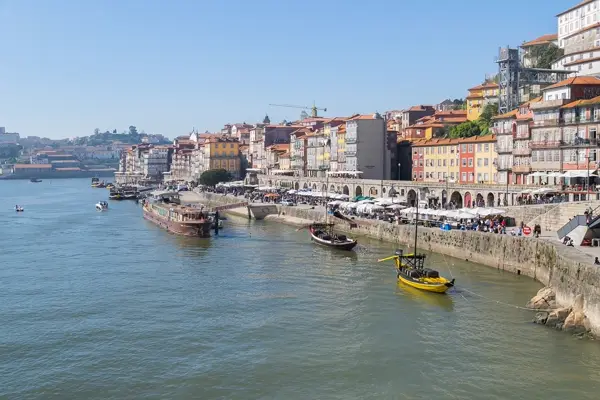
Our example: a week in Portugal, arriving in Lisbon and flying home from Porto. Lisbon gets three nights plus a day trip to Sintra, which you reach by suburban train. Then you take the train north*, with a stop in the university town of Coimbra, which lies on the railway between Lisbon and Porto, and finish with two to three nights in Porto.
Base map: Natural Earth

Step 4: Book in the right order
The order is the most important part of planning. Book first whatever is least flexible and varies most in price – usually getting there. Accommodation then follows the fixed dates, and only after that come car hire, tickets and tours*.
- Getting there: flight or train. With flights it pays to watch prices for a while instead of booking on day one.
- Accommodation: with free cancellation where possible, so you can still adjust the route later.
- Local transport: book car hire early in high season, train tickets as soon as the timetable is fixed.
- Timed tickets: well-known sights are often sold out days or weeks ahead.
- Restaurants and tours: only what really matters to you – the rest falls into place on the spot.
When to book what: the timeline
| What | When to book | Why |
|---|---|---|
| Book time off | before any other booking | no fixed dates, no bookings |
| Check or renew your passport | several months ahead | processing takes several weeks |
| Long-haul flight | several months ahead | choice and prices get worse later |
| Flight within Europe | a few weeks to a few months ahead | earlier during school holidays |
| Accommodation in high season | as soon as the dates are fixed | the best locations go first |
| Rental car | as soon as the dates are fixed, early in high season | fleets are limited |
| Discounted train tickets | as soon as sales open | cheap fares are limited |
| Timed sight tickets | a few days to weeks ahead | popular sights often sell out |
| eSIM, offline maps | in the week before you leave | set everything up at home |
These are rules of thumb. In the off-season you can often book at shorter notice; for public holidays and school holidays, book earlier.
Step 5: Documents, health and money
Check early which document you need. Many countries ask for a passport that is valid for a certain time beyond your stay – some require six months – and some need a visa or an electronic travel authorisation. Your government's official travel advice has the binding rules for your nationality.
Check what your health cover includes abroad, too: within the EU, EU citizens can use the European Health Insurance Card; for trips further away, ask your health insurer before you go.
Step 6: Sketch a rough day plan
A day plan does not need to fill every hour. It is enough to set one or two fixed points per day and group the rest by neighbourhood so that walks stay short. Put museums and big sights in the morning, when it is quieter, and keep your arrival day light – after travelling you usually manage less than you think. Having a bad-weather option in mind for each place helps more than a packed schedule.
Step 7: Packing
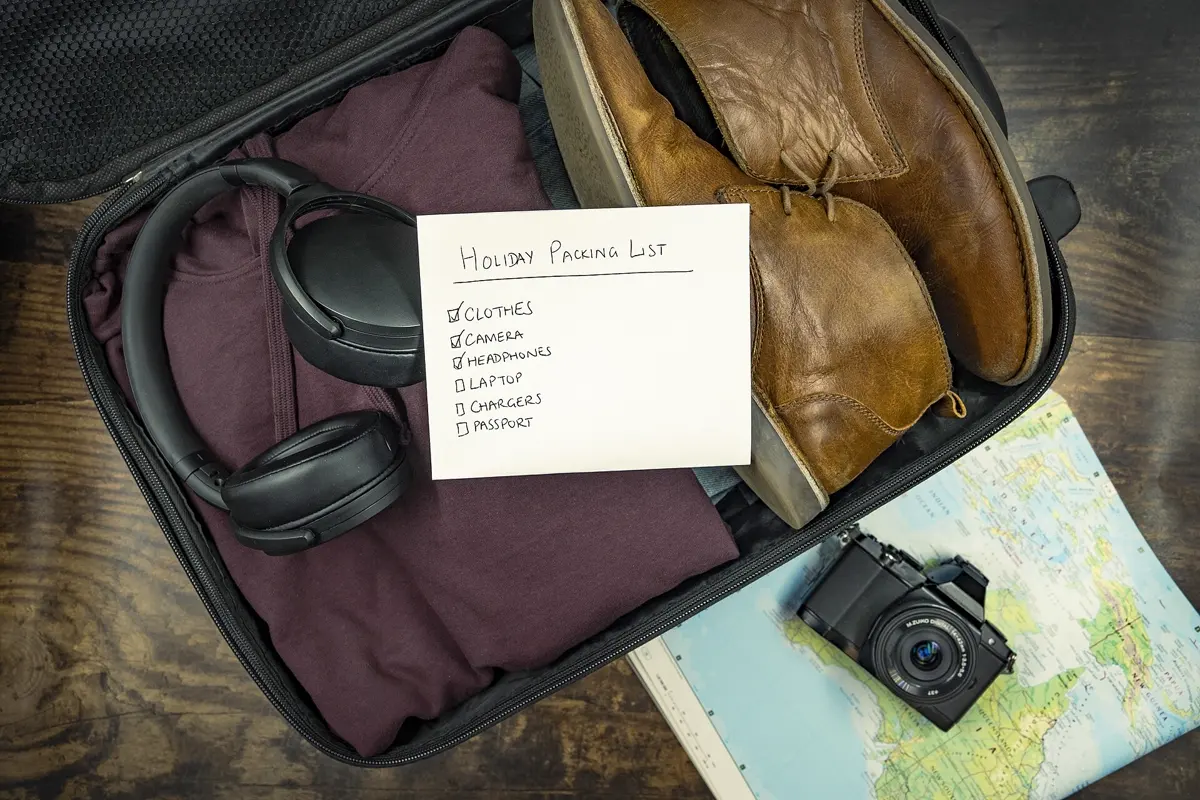
Pack for the forecast for your travel days, not for the cliché of the destination. Lisbon can be cool and rainy in spring. Check whether you need a plug adapter, and keep medicines, power bank and documents in your hand luggage. It helps to write the list a few days ahead and only tick it off the evening before you leave – that way you notice what is missing while you can still get it.
Step 8: On the road
A few habits help once you are there: download maps for offline use before you leave the hotel Wi-Fi. Log shared expenses straight away, not at the end. And check the next day briefly each evening – weather, opening times and how to get there. If you want mobile data without roaming charges, set up an eSIM at home.
How YesTrip helps at each step
YesTrip is a free trip planner that takes work off your hands in most of these steps – the planning decisions and the bookings are still yours.
- Destination and route: the map shows around 6,500 sights. For many cities there are ready-made city plans, for example Lisbon and Porto, which you can copy and adapt.
- Day plan: the AI turns your destination and travel dates into a day plan that groups the sights by neighbourhood. You can move, delete or add any stop.
- Getting there: you can set a price alert for flights and get notified when the price changes.
- Weather and packing: you see the forecast for your travel days, and the packing list suggests clothes for that weather and tells you whether you need a plug adapter.
- On the road: the map also works offline. If you travel with others, you share the trip and log shared expenses, so at the end it is clear who owes whom.
 Porto trip planDay by day, with map and tips
If you want to keep all this in a table, copy our travel itinerary template with a filled-in example.
* Ad – Partner link: if you book there, we earn a commission. Your price stays the same.
Free
Plan your trip in 30 seconds.
Tell YesTrip where and when – the app plans day by day with real places on the map, shows the weather, splits costs with your travel companions and guides you to the next stop on the go.
Frequently asked questions
In what order should you book a trip?
Book the journey there first, because flight and train prices vary most and they fix your dates. Then book accommodation, ideally with free cancellation, then car hire or train tickets for each leg, and finally timed tickets for the most important sights.
How far in advance should you plan a trip?
For a long-haul trip, start planning several months ahead, especially if you need a new passport, which takes several weeks to issue. For a European city break a few weeks are often enough; for school and public holidays, book earlier.
How many days should you spend in each city?
Usually two to three nights, and three to four for big cities such as Paris, Rome or Lisbon. Every change of place costs about half a day, so three to four stops per week is a sensible maximum.
What documents do you need for a trip?
Usually a passport, which some countries require to be valid for six months beyond entry, plus a visa or electronic travel authorisation depending on your nationality and destination. EU citizens can travel within the EU with a national ID card. Check your government's official travel advice for the current rules.
Can you plan a trip with AI?
Yes. An AI trip planner such as YesTrip creates a day plan with a map from your destination and travel dates, which you then adjust. Still check opening times and tickets on the official websites, because they change.
Sources
- GOV.UK: Foreign travel advice and entry requirements – www.gov.uk
- European Commission: European Health Insurance Card – employment-social-affairs.ec.europa.eu
- Your Europe: Travel documents for EU citizens – europa.eu
- Comboios de Portugal: trains Lisbon – Coimbra – Porto – www.cp.pt
Researched with AI support and checked by our editors. Prices, opening hours and weather can change – please check before you go. YesTrip is not a travel agency. Published: .
More articles
 Planning & packing
Cherry blossom Japan: when and where, by city
On 1991 to 2020 averages, cherry blossom opens in Tokyo on 24 March and reaches full bloom on 31 March, on 4 April in Kyoto, 13 April in … · 6 min read Planning & packing
Countries that drive on the left: all 54 listed
54 of 195 countries drive on the left, in Europe only the UK, Ireland, Malta and Cyprus. Japan, Thailand, India, Australia, New Zealand and … · 6 min read Planning & packing
Honeymoon destinations by month: 12 places
The right trip depends on your wedding month: January Maldives (27.9 °C, 74 mm of rain), March Cape Town (24.0 °C, 29 mm), June Amalfi Coast … · 7 min read


