
How many days in Osaka? Plans for 1–5 days
In short
Two days in Osaka cover the castle, Kuromon Market, Dōtonbori, Shinsekai, Sumiyoshi Taisha and the view from the Umeda Sky Building. Three days are ideal, adding a day trip to Nara. With 4 to 5 days, Osaka becomes a base for Kyoto, Kobe, Himeji or a day at Universal Studios Japan. The most pleasant months are April, May, October and November (17 to 23 °C by day).
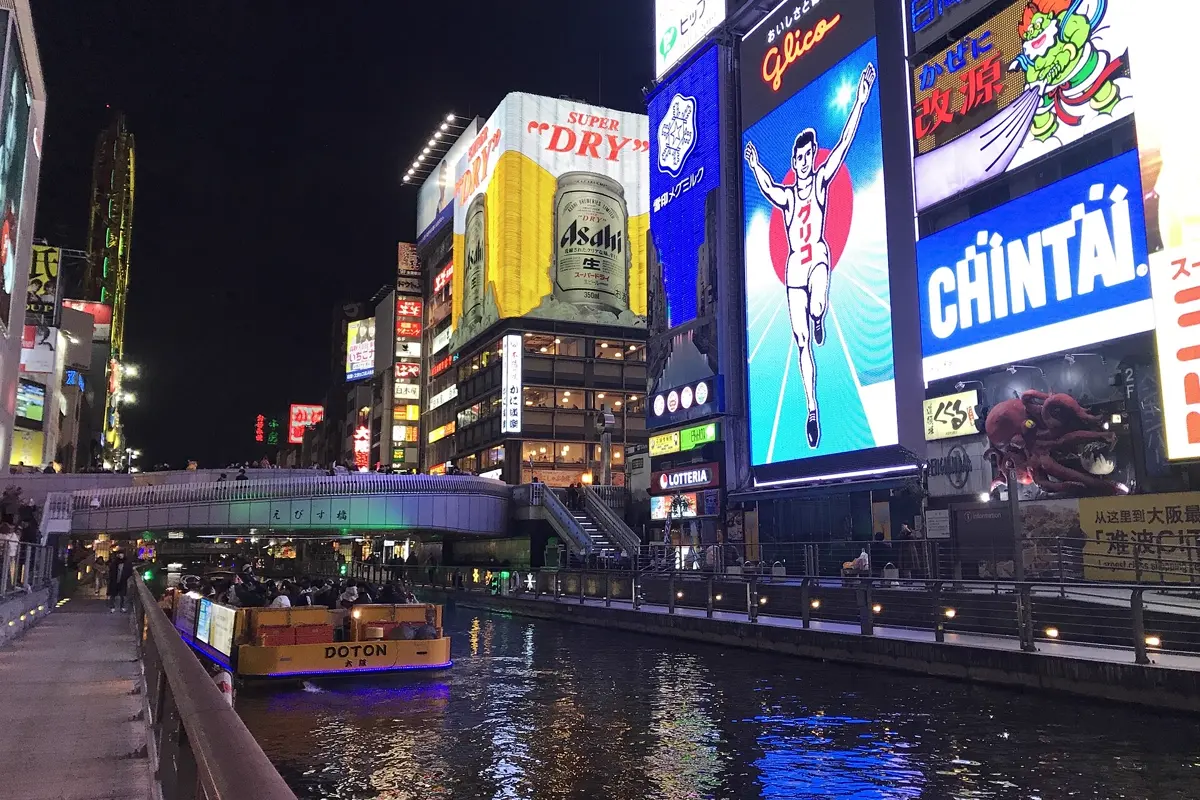
Osaka is Japan's third-largest city and the opposite of quiet Kyoto: neon signs over the canal in Dōtonbori, street food on every corner and a nightlife that runs late. Its real strength, though, is its position. Kyoto, Nara, Kobe and Himeji are all within about an hour by train, and Kansai Airport is on the doorstep. The short answer: 2 days for the city, 3 days are ideal with Nara, and with 4 to 5 days Osaka becomes your base for Kyoto, Kobe, Himeji or Universal Studios Japan.
How many days in Osaka? The overview
| Days | What you see | Best for |
|---|---|---|
| 1 day | Osaka Castle, Kuromon Market, Shinsaibashi, Hōzen-ji, Dōtonbori in the evening | a stopover after landing at Kansai Airport |
| 2 days | plus Sumiyoshi Taisha, Shitennō-ji, Shinsekai, the Umeda Sky Building | a first visit to the city |
| 3 days | plus a day trip to Nara | the ideal length |
| 4–5 days | plus Kyoto, Kobe, Himeji Castle or Universal Studios Japan | Osaka as a base for the Kansai region |
| 6+ days | plus Hiroshima and Miyajima, or a few nights in Kyoto | anyone travelling on through western Japan |
Two things help with planning. Osaka is a city for eating – the locals even have a word for it, kuidaore, eating yourself into ruin – so leave room in the day for long lunches and an evening of street food. And because so many day trips are close, many travellers book one hotel in Osaka for the whole Kansai part of their trip instead of moving every two days. If you are deciding between Osaka and Kyoto as a base: Osaka has more places to stay, more going on in the evening and fast trains in every direction; Kyoto is quieter and closer to its temples. Our article how many days in Kyoto covers the temples in detail.
One day in Osaka: the castle and Minami
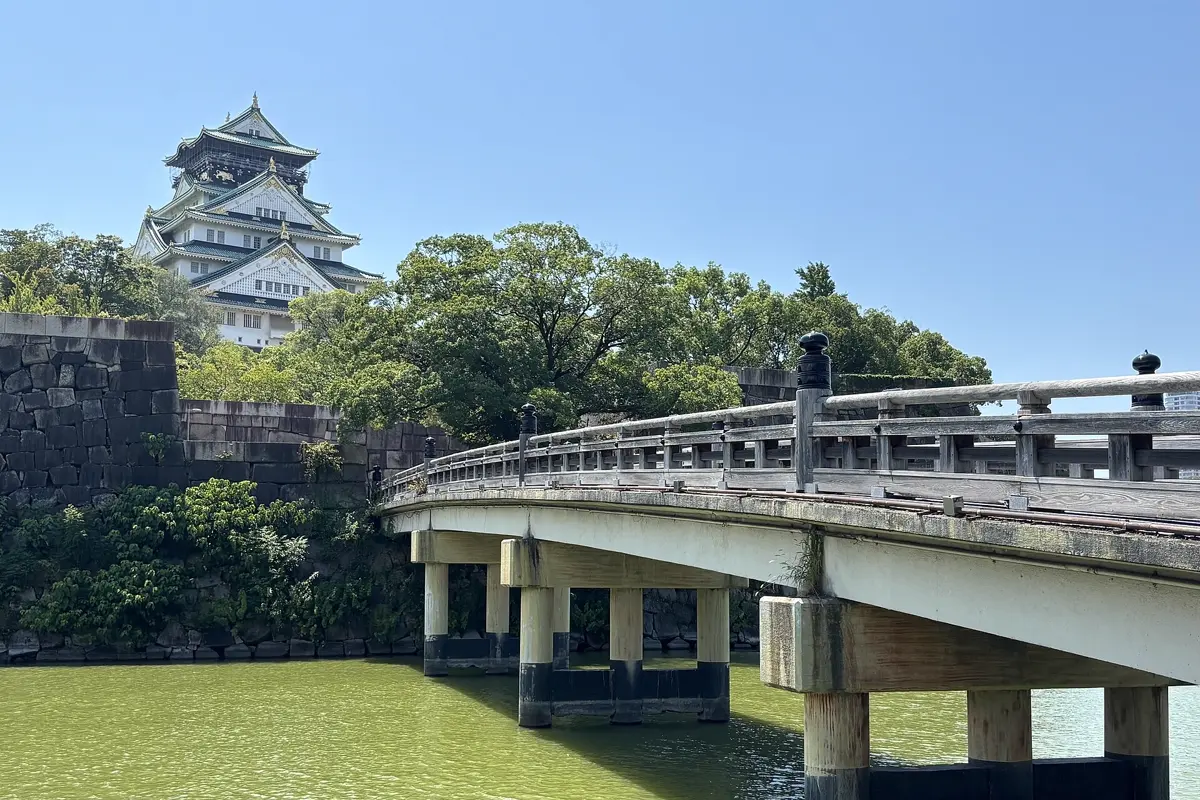
One day is enough for the Osaka most people picture. Start in the morning at Osaka Castle. The original castle was built in the late 16th century by Toyotomi Hideyoshi; today's main keep is a 1931 reconstruction with a museum inside. What really impresses are the huge stone walls and moats in the park around it. Next door, the Osaka Museum of History looks down onto the castle grounds from its upper floors.
At lunchtime take the subway south to Kuromon Market, a covered street of fish, seafood and fruit stalls where much of it is grilled and eaten on the spot. Walk up the covered shopping street Shinsaibashi-suji, find the small temple of Hōzen-ji, whose moss-covered statue visitors splash with water, and end the day in Dōtonbori. Under the neon signs along the canal, including the famous Glico runner, you try takoyaki and okonomiyaki from the stalls.
Two days in Osaka: shrines, Shinsekai and Umeda
The second day shows a different Osaka. Begin at Sumiyoshi Taisha, one of Japan's oldest shrines, with a steeply arched red bridge at the entrance; the old Hankai tram takes you on towards Tennōji. Shitennō-ji, founded in the 6th century, is one of the oldest Buddhist temples in Japan, with a five-storey pagoda in a courtyard ringed by a covered walkway.
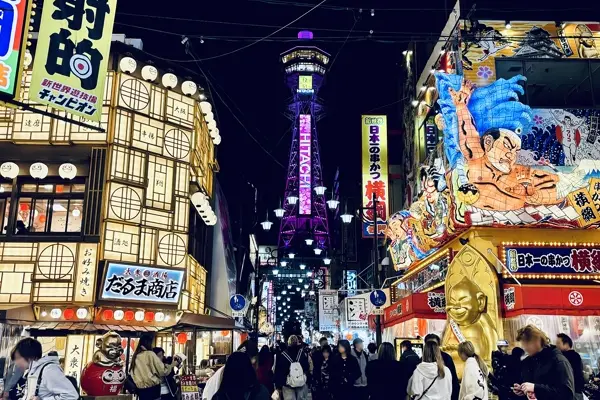
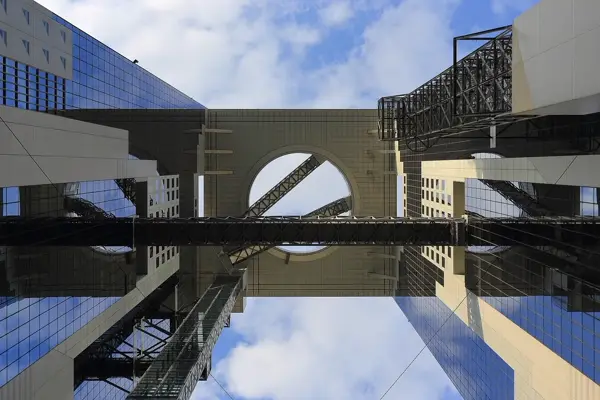
Lunch belongs to Shinsekai, an early 20th-century district of bright signs around the Tsūtenkaku tower, where kushikatsu – fried skewers – are the speciality. The rule at the counter: dip your skewer in the shared sauce only once. In the late afternoon, take the Midōsuji subway line north to Umeda and go up the Umeda Sky Building, two towers joined by an open-air observation deck at the top. At sunset the lights of the city come on below. Tickets for observation decks, food tours and cooking classes in Osaka* are on Klook.
Three days in Osaka: the ideal length
Three days give you the city and the most rewarding day trip. Our ready-made plan divides them like this:
- Day 1 – the castle and Minami: Osaka Castle, the Osaka Museum of History, Kuromon Market, Shinsaibashi-suji, Hōzen-ji and Hōzenji Yokochō, Dōtonbori in the evening.
- Day 2 – Sumiyoshi, Tennōji and Umeda: Sumiyoshi Taisha, Shitennō-ji, Tennōji Park, Shinsekai and Tsūtenkaku, sunset on the Umeda Sky Building.
- Day 3 – day trip to Nara: Kōfuku-ji, the deer of Nara Park, the Great Buddha of Tōdai-ji, the lantern path of Kasuga Taisha and a late lunch in the old merchant quarter of Naramachi.
Nara is under an hour from Osaka by train; from Namba, the Kintetsu line runs right into the centre of Nara, close to the temples. A rechargeable IC card works on the subway, JR and the private railways, so you rarely need a paper ticket.


Four to five days: Kyoto, Kobe, Himeji and Universal Studios
From the fourth day, Osaka shows why it is such a good base. Kyoto is only about 30 minutes away by train, so you can see Fushimi Inari and Kiyomizu-dera in a day and be back for dinner in Dōtonbori – though for Kyoto's full set of temples, three days of their own are better. Kobe, about half an hour west, is a relaxed harbour city between the sea and the Rokkō mountains, with a Chinatown and its famous beef.
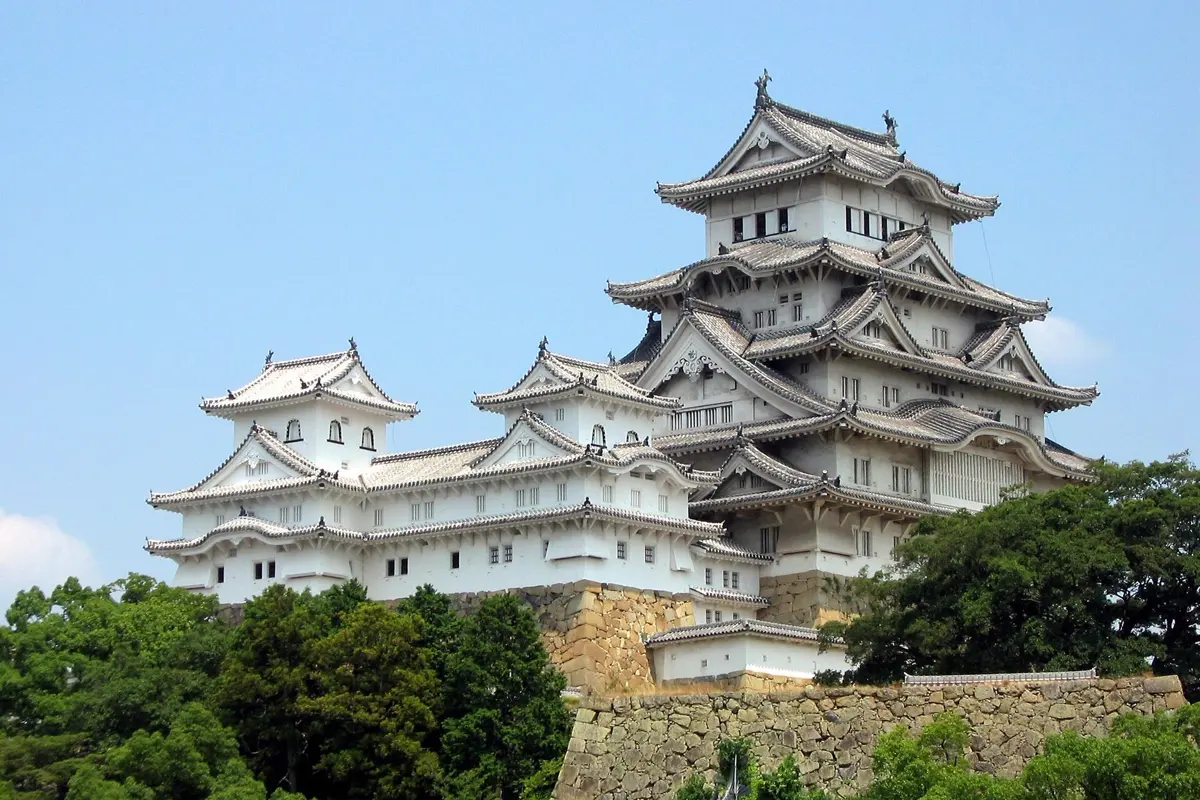
Himeji Castle, the white castle on the hill, is Japan's best-preserved feudal castle and a UNESCO World Heritage Site. From Shin-Osaka the shinkansen takes about 30 minutes, and JR special rapid trains about an hour. Combine it with Kobe on the way back for a full day.
For many visitors, one day goes to Universal Studios Japan in Osaka Bay, with its Harry Potter and Super Nintendo areas. It fills a whole day, and on busy days the park sells out, so buy tickets for a fixed date in advance through the official website. You can look up rail connections in the region on 12Go*, and find guided day trips to Nara, Kyoto or Himeji* on KKday.
Base map: Natural Earth
With six days or more, add Hiroshima and the island of Miyajima by shinkansen, or move on to Kyoto for a few nights. The classic route from Tokyo via Kyoto and Osaka to Hiroshima is in our two-week Japan itinerary, and if your trip starts in the capital, read how many days in Tokyo.
Where to stay in Osaka
The city has two centres, and both work well:
- Namba and Minami: Dōtonbori, Kuromon Market and the Kintetsu train to Nara on your doorstep. Loud and lively in the evening. The Nankai line from Kansai Airport ends here.
- Umeda and Kita: around the big stations, handy for trips to Kyoto and Kobe and for the shinkansen from Shin-Osaka. A little more business-like.
- Tennōji: quieter, with the park and temples nearby and good trains to Kansai Airport.
From Kansai Airport, the Nankai Rapi:t limited express reaches Namba in about 38 minutes according to the operator, and the JR Haruka express runs to Tennōji and Shin-Osaka. Bring some cash: small stalls and temples don't always take cards. For mobile data without roaming charges, get an eSIM for Japan* from Airalo before you leave; our eSIM price index compares the prices per gigabyte.
Best time to visit Osaka
| Month | Day (avg. high) | Night (avg. low) | Rain per month |
|---|---|---|---|
| Jan | 9.0 °C | 1.2 °C | 59 mm |
| Feb | 10.0 °C | 1.6 °C | 64 mm |
| Mar | 13.9 °C | 5.0 °C | 115 mm |
| Apr | 18.9 °C | 10.1 °C | 156 mm |
| May | 23.3 °C | 14.7 °C | 174 mm |
| Jun | 26.4 °C | 19.2 °C | 238 mm |
| Jul | 30.4 °C | 24.1 °C | 244 mm |
| Aug | 32.4 °C | 25.3 °C | 171 mm |
| Sep | 28.8 °C | 21.6 °C | 218 mm |
| Oct | 22.7 °C | 14.6 °C | 175 mm |
| Nov | 17.2 °C | 8.8 °C | 86 mm |
| Dec | 11.5 °C | 3.5 °C | 56 mm |
Averages 2015–2024 from the ERA5 reanalysis (via Open-Meteo), rounded.
Osaka is most pleasant in April and May and in October and November, with 17 to 23 °C by day. Late March to early April brings cherry blossom to the castle park, and November the autumn leaves. June and July are the rainy season, and in August the average daytime high is over 32 °C with warm, humid nights; typhoons are possible in late summer. Winter is cool and mostly dry, with daytime highs around 9 to 12 °C – a good time for food and museums. Every month compared with Tokyo and Kyoto: best time to visit Japan.
How YesTrip helps you plan
YesTrip has a ready-made three-day plan for Osaka: the castle and Minami, Sumiyoshi, Tennōji and Umeda, and a day trip to Nara. Each day has times, the stops are in walking order and the subway and train legs are noted. With one tap you copy the plan into the app and add days for Kyoto, Kobe, Himeji or Universal Studios; for those the AI creates a day plan for you. The app shows the weather for your travel days, the packing list thinks of an umbrella in the rainy season and the right plug adapter, and with the offline package you have the map without a connection. YesTrip is free.
 Osaka trip planDay by day, with map and tips
Whether Nankai or JR suits your hotel is covered in Kansai airport to Osaka.
* Ad – Partner link: if you book there, we earn a commission. Your price stays the same.
Free
Plan your trip in 30 seconds.
Tell YesTrip where and when – the app plans day by day with real places on the map, shows the weather, splits costs with your travel companions and guides you to the next stop on the go.
Frequently asked questions
How many days do you need in Osaka?
Two days are enough for the city: Osaka Castle, Kuromon Market and Dōtonbori on one day, Sumiyoshi Taisha, Shinsekai and Umeda on the other. Three days are ideal with a day trip to Nara. With four to five days, add Kyoto, Kobe, Himeji or Universal Studios Japan.
Is 1 day enough for Osaka?
For a first impression, yes: the castle in the morning, Kuromon Market and Shinsaibashi in the afternoon and Dōtonbori in the evening. Shinsekai, Umeda and the day trips need more time.
Is it better to stay in Osaka or Kyoto?
Osaka has more choice of hotels, more nightlife and good trains to Kyoto, Nara, Kobe, Himeji and Kansai Airport. Kyoto is quieter and closer to its temples. For a trip with many day trips, Osaka is the more practical base.
How many days for Osaka and Kyoto?
In five days, 2 days in Osaka and 3 in Kyoto work well. The cities are only about 30 minutes apart by train, so you can also keep one hotel and visit the other on day trips.
When is the best time to visit Osaka?
April, May, October and November, with 17 to 23 °C by day. June and July are the rainy season, August is hot and humid, and typhoons are possible in late summer. Winter is cool and mostly dry.
Sources
- Climate data: Open-Meteo Historical Weather API, daily values 2015–2024 – open-meteo.com
- Copernicus ERA5 reanalysis (Hersbach et al. 2020) – cds.climate.copernicus.eu
- Osaka Info, official travel guide of the Osaka Convention & Tourism Bureau – osaka-info.jp
- Osaka Castle Main Tower, official website – www.osakacastle.net
- Nankai Electric Railway: Kansai Airport access – www.nankai.co.jp
- Universal Studios Japan, official website – www.usj.co.jp
- UNESCO World Heritage: Himeji-jo – whc.unesco.org
- UNESCO World Heritage: Historic Monuments of Ancient Nara – whc.unesco.org
- Entry requirements for Japan: UK Foreign Travel Advice – www.gov.uk
Researched with AI support and checked by our editors. Prices, opening hours and weather can change – please check before you go. YesTrip is not a travel agency. Published: .
More articles
 How many days?
How many days in Baku? 3 with Gobustan
Two days are enough for Baku's old town, the Boulevard and the Heydar Aliyev Center. The third belongs to Gobustan, 64 km away, with more … · 6 min read How many days?
How many days in Funchal? 3, or 5+ for Madeira
Two days are enough for Funchal: the old town, the market, the cable car and the gardens at Monte. Day three goes to the mountains, with … · 6 min read How many days?
How many days in Kotor? 2 with Perast
Two days are enough for Kotor: the old town and about 1,300 steps to the fortress on the first, Perast and the island of Our Lady of the … · 6 min read


