
How many days in Tokyo? Plans for 2–7 days
In short
You need at least 3 days in Tokyo: one each for the old east with Asakusa and Ueno, the west with Shibuya and Shinjuku, and the centre around Ginza and the Imperial Palace. Four to five days are ideal, adding Kamakura (about 1 hour by train) or Nikkō and quiet districts such as Yanaka. The most pleasant months are April, May, October and November (17 to 23 °C by day).
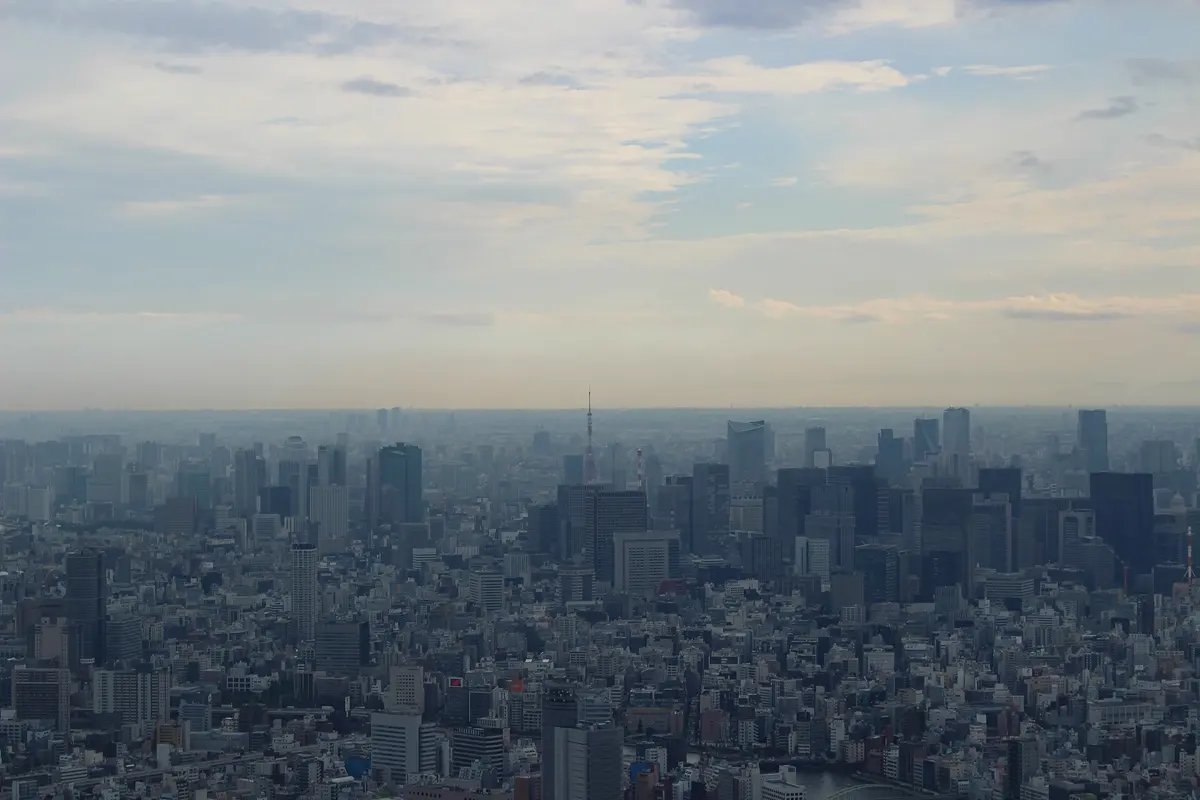
Tokyo is not a city you tick off in a weekend. The metropolis is huge, and instead of one centre it has many: Asakusa with the city's oldest temple, Shibuya and Shinjuku with their stations and towers, Ginza with its department stores. Then there is everything that comes with a long-haul trip: a long flight, a big time difference and day trips such as Kamakura and Nikkō within reach. The short answer: 3 days for the best-known districts, 4 to 5 days are ideal, and from 6 days there is time for Hakone, Mount Fuji or the train on to Kyoto.
How many days in Tokyo? The overview
| Days | What you see | Best for |
|---|---|---|
| 2 days | Asakusa, Ueno, Meiji Shrine, Shibuya, Shinjuku in the evening | a stopover, the start of a Japan trip |
| 3 days | plus Tsukiji Outer Market, Ginza, the Imperial Palace, Akihabara | all the city's classics |
| 4–5 days | plus a day trip to Kamakura or Nikkō, Yanaka, a museum day | the ideal length |
| 6–7 days | plus Hakone or the Fuji lakes, Yokohama, districts away from the big stations | a full week of Tokyo and around |
Worth knowing for planning: many museums in Tokyo close on one weekday, often Monday, and the Imperial Palace East Gardens are shut on some weekdays. Viewing decks such as Shibuya Sky are best booked in advance with a sunset time slot. And do not count the first day as a full one: direct flights from London to Tokyo take about 14 hours, and Japan is 8 hours ahead of the UK in summer and 9 in winter.
Two days in Tokyo: east and west
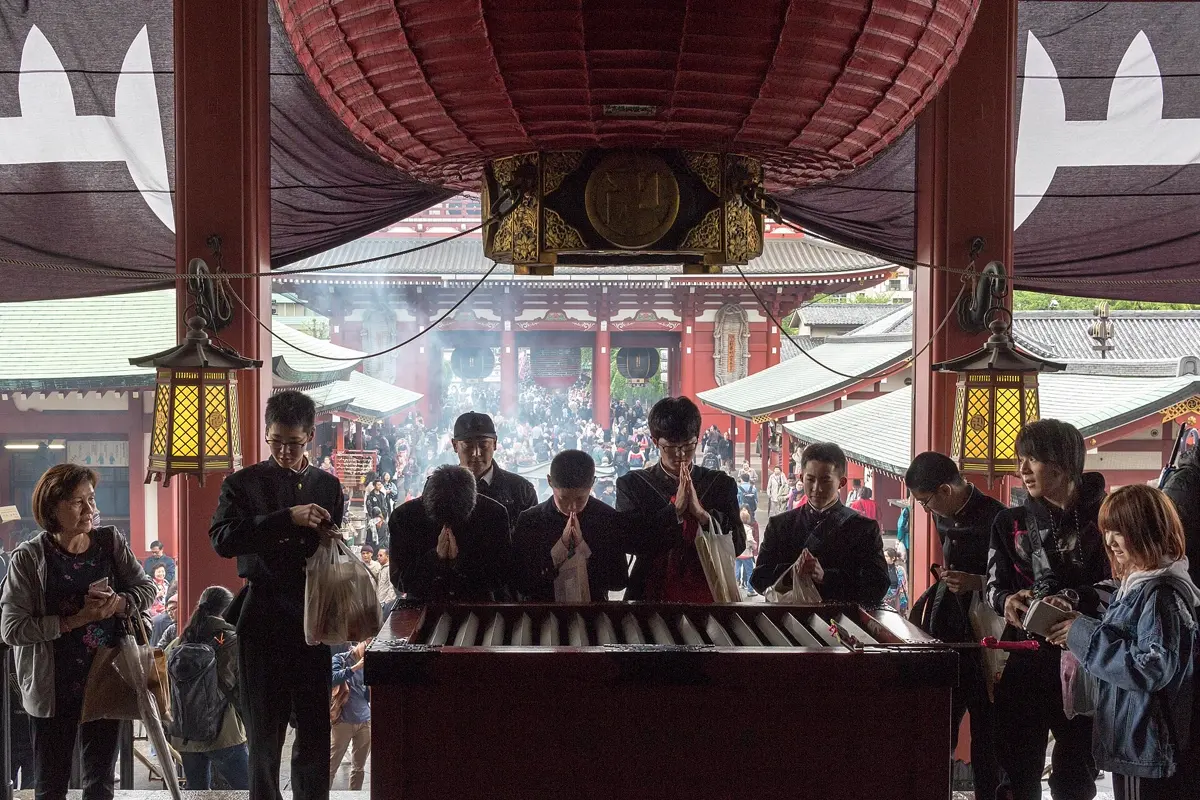
Two days are enough for a first impression if Tokyo is the start of a longer trip through Japan. The first day belongs to the old east. Early in the morning, walk through the red Thunder Gate to Sensō-ji, Tokyo's oldest temple, and along the Nakamise shopping street before the tour groups arrive. The subway takes a few minutes to Ueno, with its large park and the Tokyo National Museum, the biggest collection of Japanese art. Lunch is at the stalls of Ameyoko under the railway tracks, and by late afternoon the signs of the electronics shops and arcades in Akihabara are already lit.
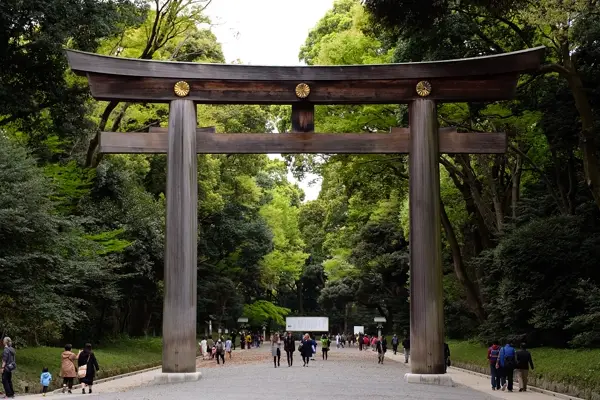
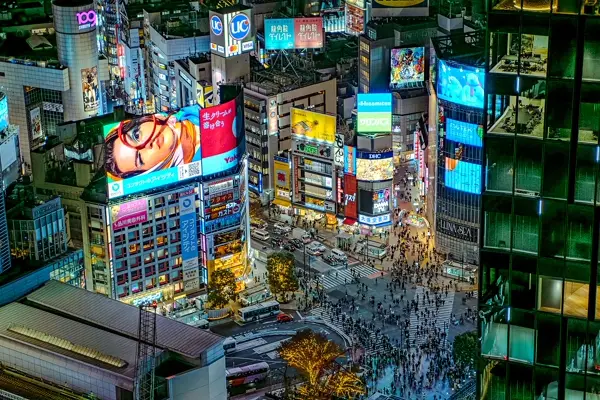
The second day heads west. In the morning, walk through the forest to Meiji Shrine, then along narrow Takeshita Street in Harajuku to the Shibuya Crossing, where hundreds of people walk at once on every green light. At sunset go up Shibuya Sky, and in the evening eat yakitori in the tiny bars of Omoide Yokochō in Shinjuku. Ginza and the Imperial Palace will have to wait.
Three days in Tokyo: all the classics
Three days are the minimum to get a feel for the city. Our ready-made plan splits Tokyo into three parts, with each day's stops in walking order:
- Day 1 – Asakusa, Ueno and Akihabara: Sensō-ji, the Tokyo National Museum, Ueno Park, lunch in Ameyoko, Akihabara in the afternoon.
- Day 2 – Harajuku, Shibuya and Shinjuku: Meiji Shrine, Takeshita Street, the Shibuya Crossing with the Hachikō statue, Shibuya Sky at sunset, Omoide Yokochō in the evening.
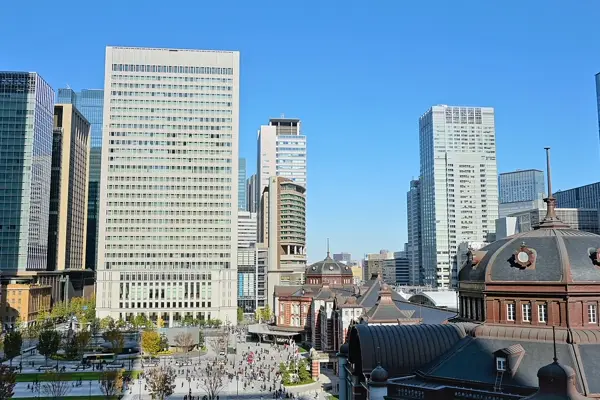
- Day 3 – Tsukiji, Ginza and the Imperial Palace: breakfast at the Tsukiji Outer Market with sushi and tamagoyaki, the Hama-rikyū Gardens by the water, Ginza with the food halls below its department stores, the Imperial Palace East Gardens and the red-brick Tokyo Station.
Between districts you take the subway or JR trains; within a district you walk. For a long-haul trip, though, three days are tight: with jet lag at the start, you often get only two and a half real days. Tickets for viewing decks and museums in Tokyo* are on Klook.

Four to five days: Kamakura, Nikkō and Yanaka
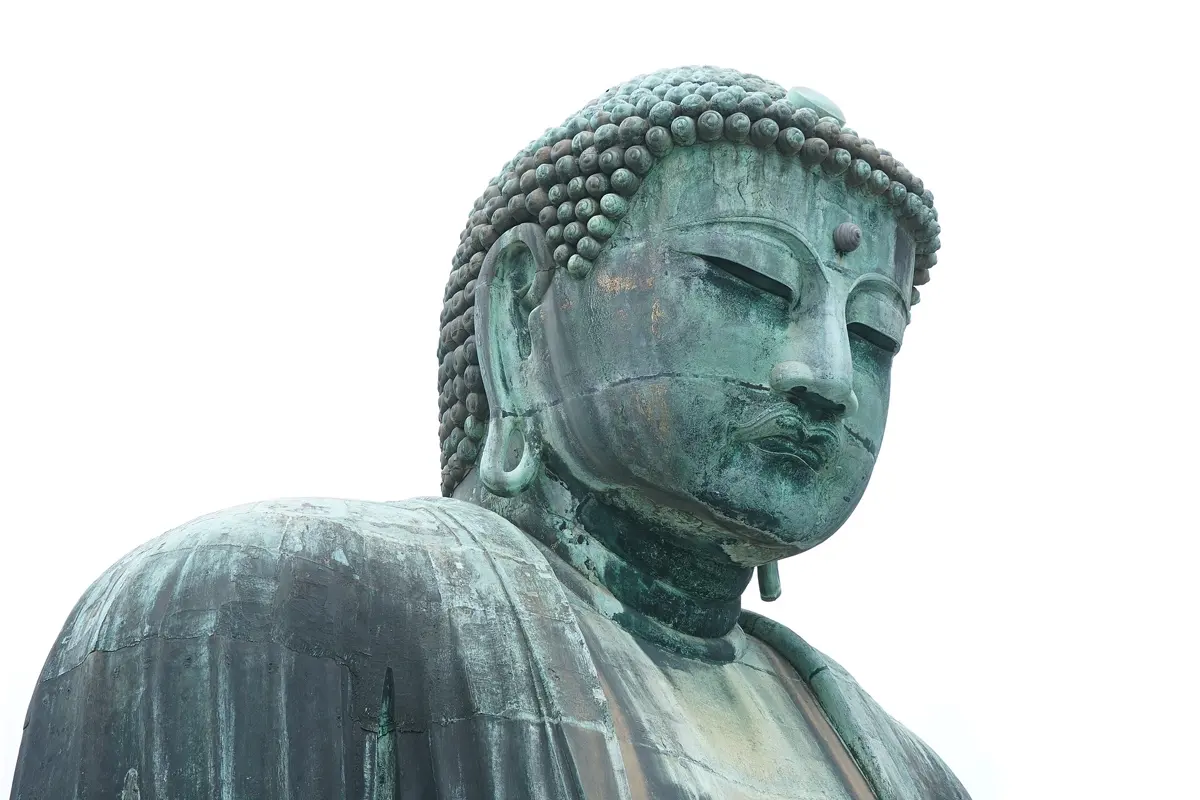
With four or five days Tokyo comes together, because now a day trip fits in. The easiest is Kamakura to the south, about 1 hour by train from Tokyo. Here sits the Great Buddha of Kōtoku-in temple, a bronze figure in the open air. Add the Tsurugaoka Hachimangū shrine, Hase-dera temple with its view of the sea and hiking trails through the hills between the temples.
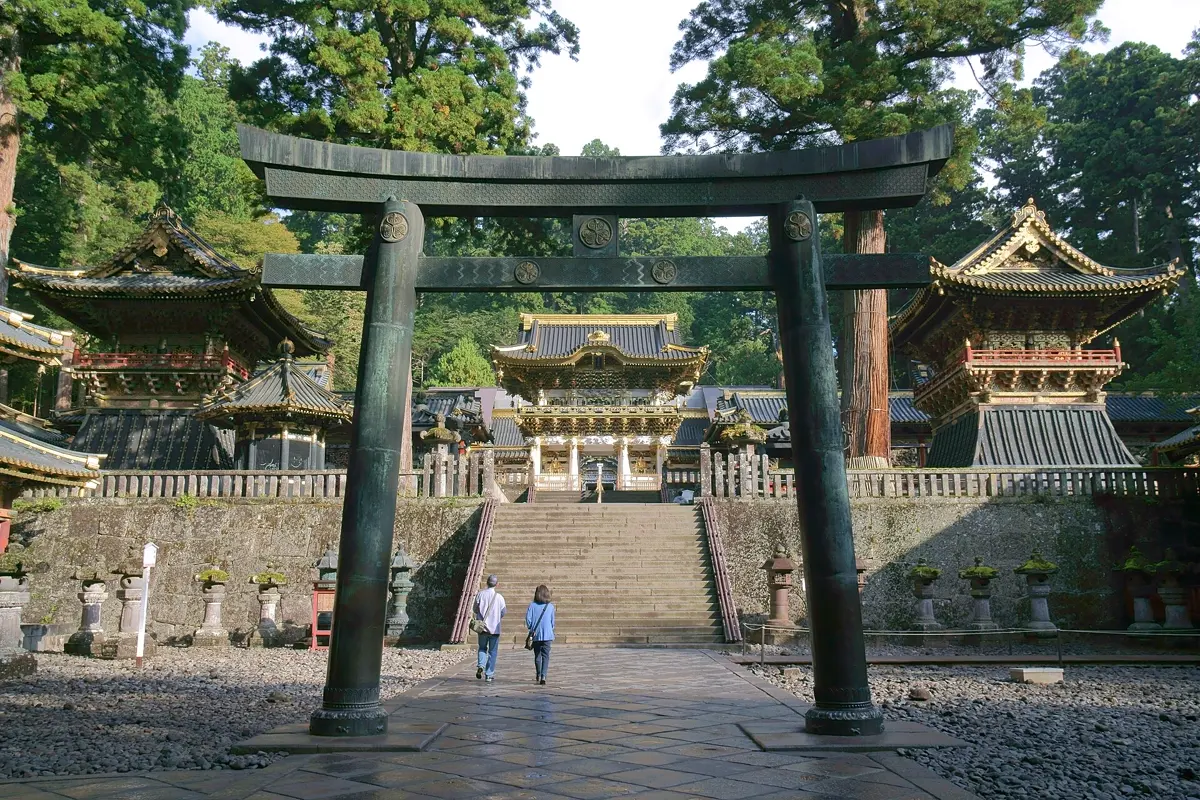
Further away but more impressive is Nikkō to the north, about 2 hours by train from Asakusa. The Shrines and Temples of Nikkō in the cedar forest are a UNESCO World Heritage Site; the best known is the richly carved Tōshō-gū, the mausoleum of the shogun Tokugawa Ieyasu, with the three monkeys who see, hear and speak no evil. Leave early, or the day gets long. Guided day trips with pick-up in the centre* are available, for example, on KKday.
Spend the fifth day in the city, but more slowly. Yanaka still has old wooden houses, small temples and a traditional shopping street – a Tokyo without skyscrapers. If you like art, plan a museum day in Ueno or Roppongi; for the view, go up the Tokyo Skytree, at 634 metres the tallest tower in Japan. Tickets for the Ghibli Museum in Mitaka are only sold in advance for a fixed date, so plan that early.
Six days or more: Hakone, Mount Fuji and Yokohama
If you stay a week, leave the city for a night. Hakone in the mountains south-west of Tokyo is about 1.5 hours away on the Romancecar from Shinjuku. The classic stay is a ryokan, a traditional inn with a hot spring, and the classic loop runs by mountain railway, cable car and boat past the steaming valley of Ōwakudani to Lake Ashi. On clear days Mount Fuji rises above the lake, most often in winter and early in the morning. Closer to the mountain are the Fuji Five Lakes on its northern side, such as Lake Kawaguchi, which you reach from Tokyo by bus or train.
Half a day is enough for Yokohama, about half an hour away by train, with its harbour promenade and large Chinatown. And if you travel on: the Nozomi shinkansen takes about 2 hours 15 minutes to Kyoto. The classic route with Kyoto, Nara, Osaka and Hiroshima is in our two-week Japan itinerary. You can find Shinkansen and local train connections on 12Go*.
Base map: Natural Earth
Where to stay in Tokyo
Because distances in Tokyo are long, stay close to a big station:
- Shinjuku: a major rail hub with lots of hotels and places open late. Good if you like going out in the evening and want the Romancecar to Hakone.
- Ginza and Tokyo Station: central and quieter in the evening. Handy if you are moving on by shinkansen or want to be at Tsukiji early.
- Ueno and Asakusa: quieter and more traditional, close to Sensō-ji and the museums. From Ueno the Keisei Skyliner runs straight to Narita Airport.
Subway and JR trains go everywhere, and signs are also in English. Tickets are sold at machines; the easiest option is a rechargeable IC card such as Suica or Pasmo, which you simply tap at the gate. Haneda is close to the centre, while from Narita you should allow about 1 hour or more; a transfer from the airport to your hotel in Tokyo* can be booked with Welcome Pickups.
For mobile data without roaming charges, get an eSIM from Airalo before you leave.
Best time to visit Tokyo
| Month | Day (avg. high) | Night (avg. low) | Rain per month |
|---|---|---|---|
| Jan | 9.2 °C | 0.4 °C | 59 mm |
| Feb | 10.3 °C | 1.5 °C | 62 mm |
| Mar | 14.1 °C | 5.4 °C | 132 mm |
| Apr | 18.3 °C | 10.4 °C | 131 mm |
| May | 22.8 °C | 15.3 °C | 136 mm |
| Jun | 25.5 °C | 19.2 °C | 187 mm |
| Jul | 29.3 °C | 23.4 °C | 179 mm |
| Aug | 30.7 °C | 24.6 °C | 137 mm |
| Sep | 27.2 °C | 21.1 °C | 207 mm |
| Oct | 21.6 °C | 14.6 °C | 181 mm |
| Nov | 16.8 °C | 8.7 °C | 105 mm |
| Dec | 11.6 °C | 2.9 °C | 55 mm |
Averages 2015–2024 from the ERA5 reanalysis (via Open-Meteo), rounded. The values describe a grid cell of about 25 km; between the towers it can get noticeably warmer on summer days.
Tokyo is most pleasant in April and May and in October and November, with 17 to 23 °C by day – good for the many kilometres you will walk. Late March to early April is cherry blossom season, when parks and hotels are at their fullest; late April to early May is Golden Week, when many Japanese travel themselves. The rainy season starts in June, and July and August are tiring at 29 to 31 °C by day with humid nights – allow an extra day for the same programme and put museums into the middle of the day. The wettest month is September with 207 mm, and typhoons are possible in late summer and autumn. Winter is cool but often dry and clear, with the best chance of seeing Mount Fuji from an observation deck. Every month compared with Kyoto and Osaka: Best time to visit Japan.
How YesTrip helps you plan
YesTrip has a ready-made three-day plan for Tokyo: Asakusa, Ueno and Akihabara, then Harajuku, Shibuya and Shinjuku, and finally Tsukiji, Ginza and the Imperial Palace. Each day has times, the stops are in walking order, and the subway and JR tips are included. With one tap you copy the plan into the app and add days for Kamakura, Nikkō or Hakone; for those places the AI creates a day plan for you. The app shows the weather for your travel days, the packing list thinks of an umbrella or warm layers and the right plug adapter, and with the offline package you have the map without a connection. YesTrip is free.
 Tokyo trip planDay by day, with map and tips
Which trip suits your hotel and the weather is covered in our day trips from Tokyo.
How to get from Narita or Haneda to your neighbourhood is covered in Tokyo airport to city.
* Ad – Partner link: if you book there, we earn a commission. Your price stays the same.
Free
Plan your trip in 30 seconds.
Tell YesTrip where and when – the app plans day by day with real places on the map, shows the weather, splits costs with your travel companions and guides you to the next stop on the go.
Frequently asked questions
How many days do you need in Tokyo?
You need 3 days for the best-known districts: Asakusa and Ueno, Shibuya and Shinjuku, Ginza and the Imperial Palace. Four to five days are ideal, adding a trip to Kamakura or Nikkō and quiet districts such as Yanaka. From 6 days there is time for Hakone and Mount Fuji.
Are 3 days enough for Tokyo?
For the classics, yes, but it is tight for a long-haul trip. After a flight of about 14 hours and a time difference of 8 to 9 hours from the UK, the first day is often only half a day. A fourth day gives you room for a day trip or bad weather.
Is a day trip to Kamakura or Nikkō worth it?
Yes, both show a very different Japan from the big city. Kamakura with its Great Buddha is about 1 hour away by train, Nikkō with its shrines in the cedar forest about 2 hours. For Nikkō you should leave early.
How many days for Tokyo and Kyoto?
In one week, 4 days in Tokyo and 3 days in Kyoto work well together. The Nozomi shinkansen takes about 2 hours 15 minutes between the two cities. With 10 days you can add Hakone, Nara and Osaka.
When is the best time to visit Tokyo?
April, May, October and November, with 17 to 23 °C by day. June is the rainy season, July and August are hot and humid, and September is the wettest month with 207 mm. Winter is cool but often clear.
Sources
- Climate data: Open-Meteo Historical Weather API, daily values 2015–2024 – open-meteo.com
- Copernicus ERA5 reanalysis (Hersbach et al. 2020) – cds.climate.copernicus.eu
- UNESCO World Heritage: Shrines and Temples of Nikkō – whc.unesco.org
- Japan National Tourism Organization, official travel portal – www.japan.travel
- Entry requirements for Japan: UK Foreign Travel Advice – www.gov.uk
Researched with AI support and checked by our editors. Prices, opening hours and weather can change – please check before you go. YesTrip is not a travel agency. Published: .
More articles
 How many days?
How many days in Baku? 3 with Gobustan
Two days are enough for Baku's old town, the Boulevard and the Heydar Aliyev Center. The third belongs to Gobustan, 64 km away, with more … · 6 min read How many days?
How many days in Funchal? 3, or 5+ for Madeira
Two days are enough for Funchal: the old town, the market, the cable car and the gardens at Monte. Day three goes to the mountains, with … · 6 min read How many days?
How many days in Kotor? 2 with Perast
Two days are enough for Kotor: the old town and about 1,300 steps to the fortress on the first, Perast and the island of Our Lady of the … · 6 min read


