
How many days in Kyoto? Plans for 2–7 days
In short
You need 3 days in Kyoto: one for Higashiyama and Gion, one for Arashiyama and the Golden Pavilion, one for Fushimi Inari and the Philosopher's Path. Four to five days are ideal, adding Nara (about 45 minutes by train) or Uji, and from 6 days there is time for Himeji, Osaka or Hiroshima. The most pleasant months are April, May, October and November (16 to 24 °C by day).
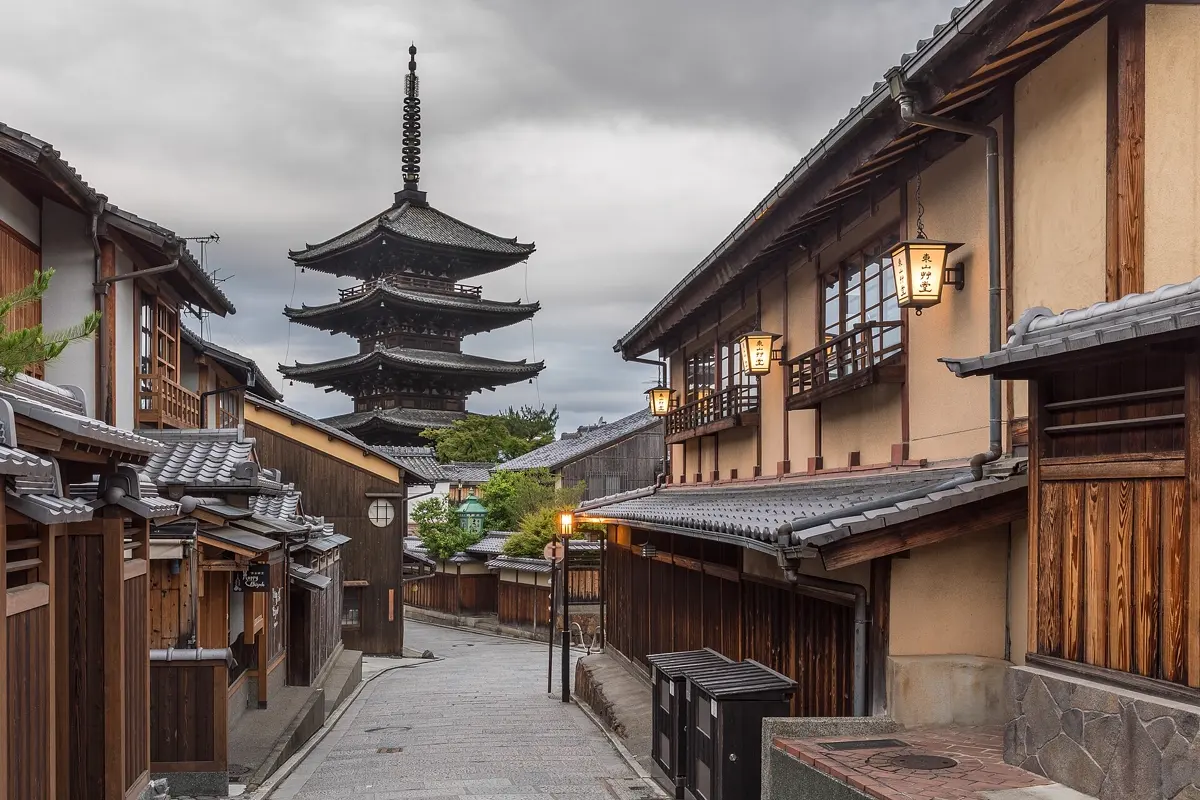
Kyoto was Japan's capital for more than a thousand years, and it shows: hundreds of temples, shrines in the hills, wooden houses in Gion and gardens that people come to see from all over the world. Seventeen of its temples, shrines and castles are part of a UNESCO World Heritage Site. The problem is not finding something to see but choosing – and arriving early, before the tour groups. The short answer: 3 days for the best-known places, 4 to 5 days are ideal with Nara or Uji, and from 6 days there is time for Himeji Castle, an evening in Osaka or a trip to Hiroshima.
How many days in Kyoto? The overview
| Days | What you see | Best for |
|---|---|---|
| 2 days | Kiyomizu-dera, Gion, Fushimi Inari, Arashiyama | a short stop on a Japan trip |
| 3 days | plus the Golden Pavilion, Ryōan-ji, the Philosopher's Path, Nishiki Market | all the classics |
| 4–5 days | plus a day trip to Nara or Uji, Kurama and Kibune | the ideal length |
| 6–7 days | plus Himeji Castle, Osaka, Hiroshima and Miyajima | Kyoto as a base for western Japan |
Worth knowing for planning: Kyoto's buses are often packed, and many sights lie on the edge of the city. Group each day by area and use trains and the subway where you can. The big temples open early and close in the late afternoon, so start at 7 or 8 in the morning – Fushimi Inari, the bamboo grove and Kiyomizu-dera are much quieter then. Most travellers come by train: the Nozomi shinkansen takes about 2 hours 15 minutes from Tokyo. From London there is no direct flight to Kansai Airport; you fly via Tokyo or with a change, and Japan is 8 hours ahead of the UK in summer and 9 in winter.
Two days in Kyoto: east and west
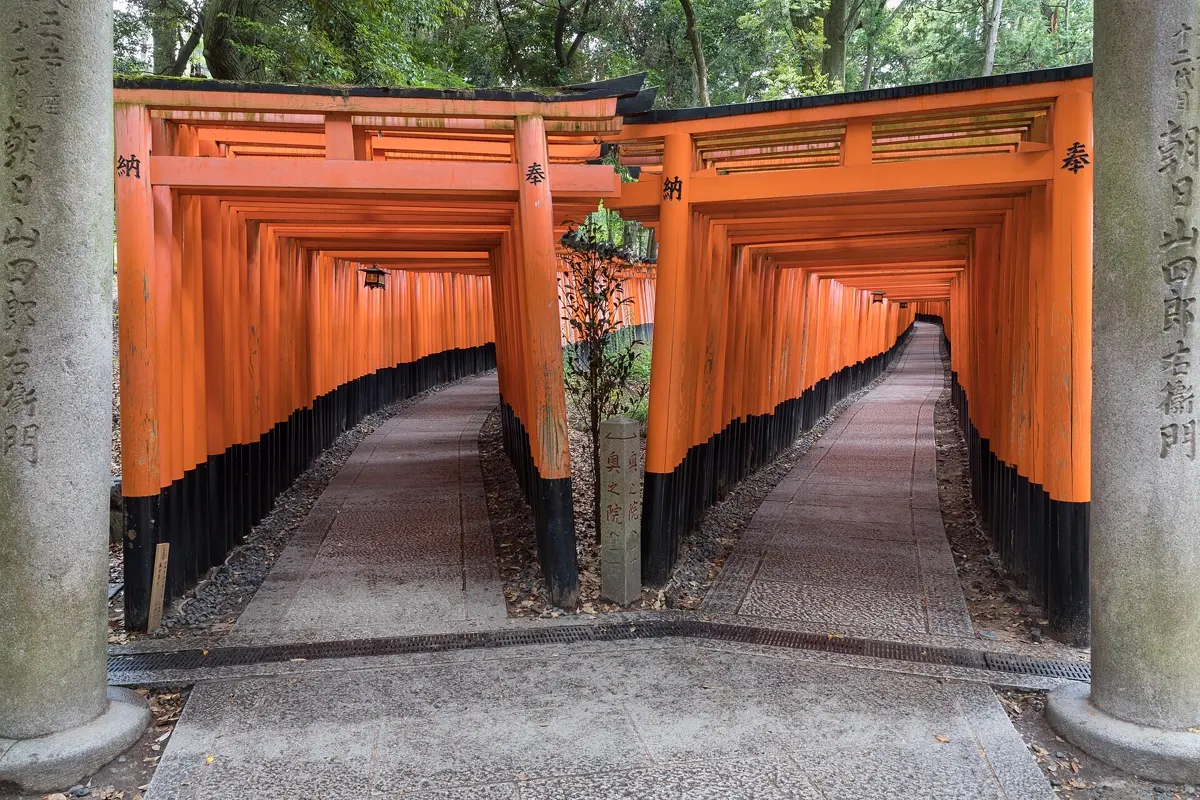
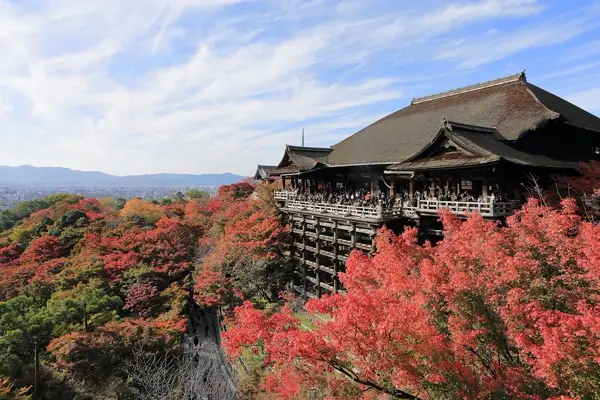
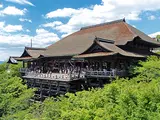
Two days are tight, but enough for the most famous images. The first day begins at dawn at Fushimi Inari-taisha, where thousands of red gates climb the mountain; the higher you go, the quieter it gets. Then take the train back towards the centre to Kiyomizu-dera with its wooden terrace over the hillside, and walk down the old lanes of Sannenzaka and Ninenzaka to Yasaka Shrine and Gion. In the evening, eat in Pontochō, the narrow lane along the Kamo River.
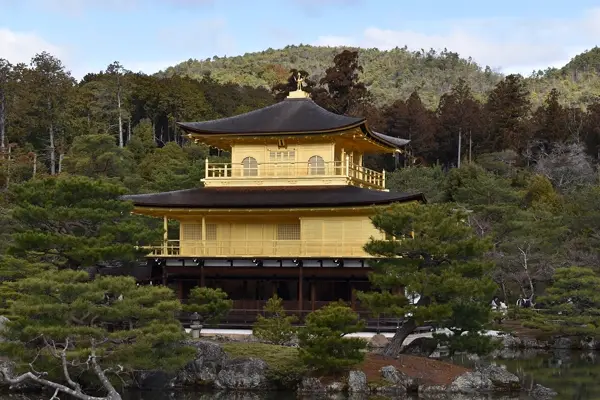
The second day goes west. Be in the Arashiyama bamboo grove early, visit the garden of Tenryū-ji and cross the Togetsukyō Bridge. In the afternoon, take a bus or taxi to the Golden Pavilion, Kinkaku-ji, which is reflected in its pond. The Philosopher's Path and Nishiki Market will have to wait.
Three days in Kyoto: all the classics
Three days give you the city without rushing from temple to temple. Our ready-made plan:
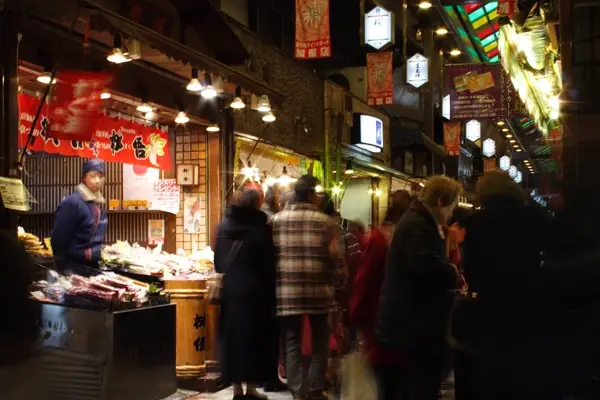
- Day 1 – Higashiyama and Gion: Kiyomizu-dera, Sannenzaka and Ninenzaka, Yasaka Shrine, lunch at Nishiki Market, Kennin-ji, Kyoto's oldest Zen temple, Hanamikōji in Gion, dinner in Pontochō.
- Day 2 – Arashiyama and the Golden Pavilion: the bamboo grove early in the morning, Tenryū-ji, the Togetsukyō Bridge, Kinkaku-ji and the rock garden of Ryōan-ji.
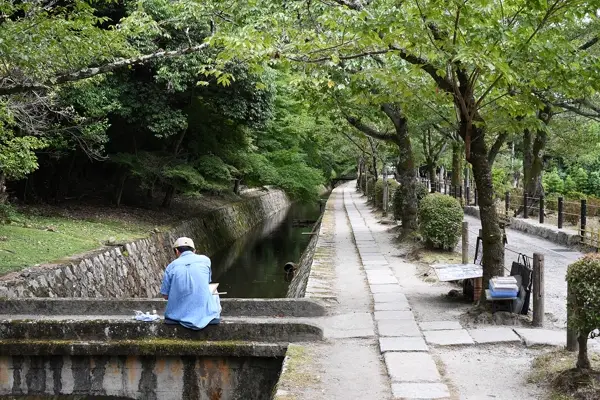
- Day 3 – Fushimi Inari and the Philosopher's Path: Fushimi Inari-taisha at 7:30, Tōfuku-ji with its maples, then the Silver Pavilion Ginkaku-ji, the Philosopher's Path along the canal and Nanzen-ji with its old brick aqueduct.
A rechargeable IC card works on trains and buses. In Gion, photography is banned in some private lanes – don't crowd the geiko and maiko on their way to work. Tickets for tea ceremonies, kimono rentals and guided walks* are on Klook.
Four to five days: Nara, Uji, Kurama and Kibune
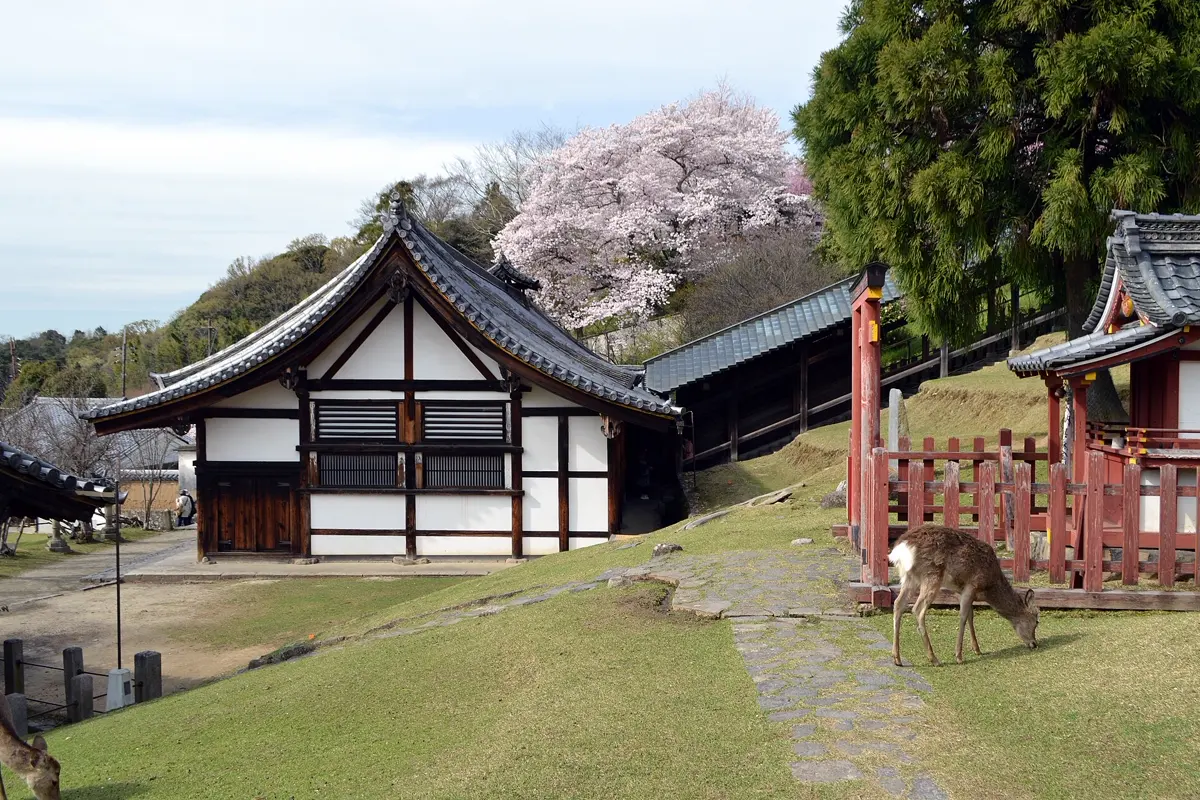
With four or five days, Kyoto's surroundings come into play. The most important day trip goes to Nara, about 45 minutes away by train. Japan's first permanent capital is a UNESCO World Heritage Site too: in Tōdai-ji sits a huge bronze Buddha in one of the largest wooden halls in the world, and in Nara Park hundreds of sika deer roam freely between the temples. Add the lanterns of Kasuga Taisha in the forest, and the day is full.
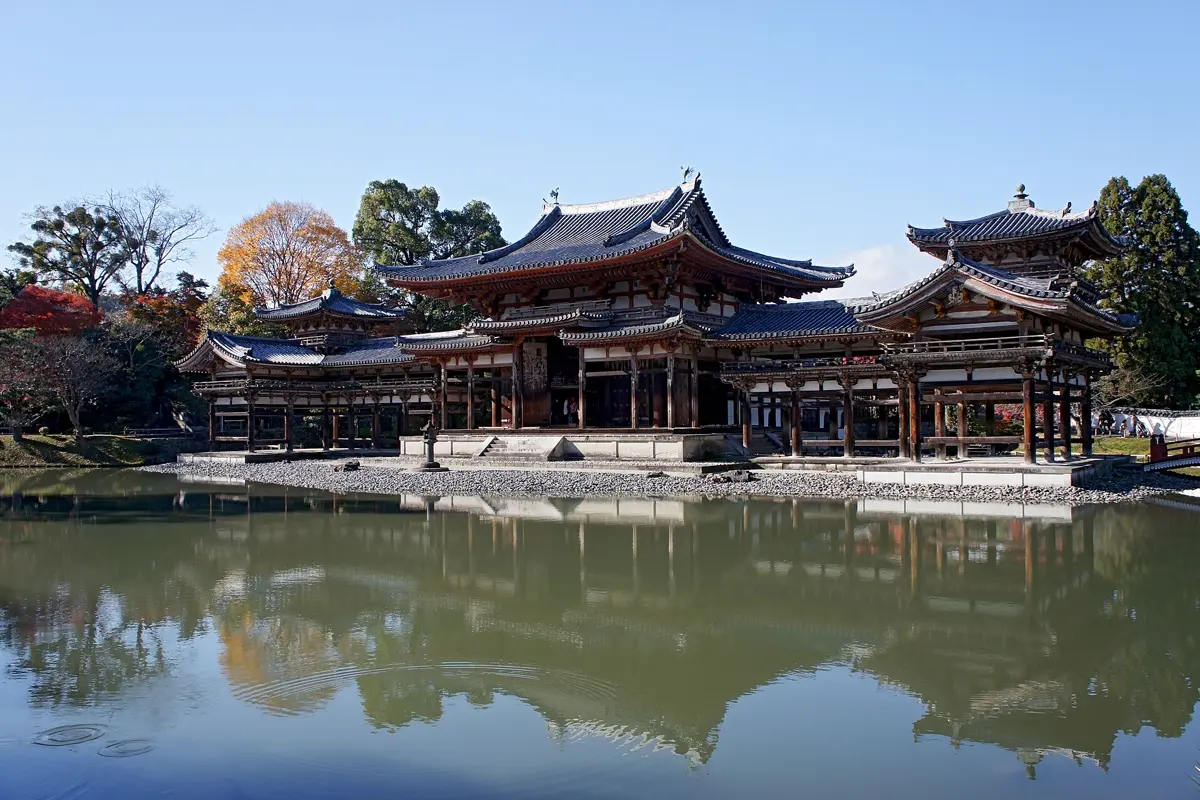
Closer is Uji, about 20 to 30 minutes south by train. Here stands Byōdō-in with the Phoenix Hall, which is pictured on the 10-yen coin, and the town is known throughout Japan for its green tea. Plan half a day, and in the afternoon sit in a tea house by the river.
For the fifth day, head into the mountains north of the city: from Kurama a forest path leads over the hill to Kibune, where restaurants in summer serve meals on platforms over the stream. Or stay in the city and take your time: a museum, a temple garden off the main routes, an evening in Gion. Guided day trips to Nara or Uji* are available, for example, on KKday.
Six days or more: Himeji, Osaka and Hiroshima
If you stay a week, use Kyoto as a base for western Japan. Osaka is only about 30 minutes away by train, and an evening among the neon signs of Dōtonbori and the street food stalls is a contrast to quiet Kyoto. Himeji Castle, the best-preserved feudal castle in Japan and a UNESCO World Heritage Site, is under an hour away by shinkansen.
Hiroshima takes about 1 hour 40 minutes by shinkansen. The Peace Memorial Park and museum recall the atomic bomb of 1945, and the island of Miyajima with its torii in the sea is a short train and ferry ride away. It can be done as a long day trip, but a night in Hiroshima makes it easier. You can find Shinkansen and local trains on 12Go*. The classic route from Tokyo via Kyoto to Hiroshima is in our two-week Japan itinerary, and if you are starting in Tokyo, read how many days in Tokyo.
Base map: Natural Earth
Where to stay in Kyoto
Because Kyoto's sights are spread out, location decides how early you get going:
- Around Kyoto Station: handy for day trips, the shinkansen and the airport train. Less atmosphere in the evening, but the best base if you go to Nara, Osaka or Himeji.
- Gion and Higashiyama: old lanes and temples on the doorstep, so you are at Kiyomizu-dera before the crowds. Quieter in the evening once the day visitors have left.
- Central Kyoto around Shijō and Karasuma: between the station and Gion, with Nishiki Market, lots of restaurants and two subway lines.
From Kansai Airport, the Haruka express runs to Kyoto Station. Bring some cash: small temples and shops don't always take cards. For mobile data without roaming charges, get an eSIM for Japan* from Airalo before you leave.
Best time to visit Kyoto
| Month | Day (avg. high) | Night (avg. low) | Rain per month |
|---|---|---|---|
| Jan | 8.1 °C | -0.4 °C | 64 mm |
| Feb | 9.2 °C | 0.2 °C | 67 mm |
| Mar | 13.6 °C | 3.8 °C | 121 mm |
| Apr | 18.7 °C | 8.7 °C | 165 mm |
| May | 23.5 °C | 13.4 °C | 171 mm |
| Jun | 26.5 °C | 17.8 °C | 253 mm |
| Jul | 30.2 °C | 22.6 °C | 262 mm |
| Aug | 32.0 °C | 23.8 °C | 193 mm |
| Sep | 27.8 °C | 20.2 °C | 200 mm |
| Oct | 21.8 °C | 13.2 °C | 179 mm |
| Nov | 16.4 °C | 7.4 °C | 82 mm |
| Dec | 10.6 °C | 1.6 °C | 61 mm |
Averages 2015–2024 from the ERA5 reanalysis (via Open-Meteo), rounded. The values describe a grid cell of about 25 km; in the basin of the city it is often a little hotter in summer.
Kyoto is most pleasant in April and May and in October and November, at 16 to 24 °C by day. Late March to early April is cherry blossom season and mid to late November the time of red maples – the most beautiful weeks, but also the busiest, so book early and be out at dawn. The rainy season starts in June, and July and August are tiring at 30 to 32 °C with humid nights; the wettest month is July with 262 mm. Winter is cold, with frost at night in January, but the temples are quiet and occasionally dusted with snow. Every month compared with Tokyo and Osaka: Best time to visit Japan.
How YesTrip helps you plan
YesTrip has a ready-made three-day plan for Kyoto: Higashiyama and Gion, Arashiyama with the Golden Pavilion, and Fushimi Inari with the Philosopher's Path. Each day has times, the stops are in walking order, the bus and train legs are noted, and the early starts are built in. With one tap you copy the plan into the app and add days for Nara, Uji or Himeji; for those places the AI creates a day plan for you. The app shows the weather for your travel days, the packing list thinks of an umbrella or warm layers and the right plug adapter, and with the offline package you have the map without a connection. YesTrip is free.
 Kyoto trip planDay by day, with map and tips
If you land at Kansai, the Haruka takes you to Kyoto with no change; the alternatives are in Kansai airport to Osaka.
* Ad – Partner link: if you book there, we earn a commission. Your price stays the same.
Free
Plan your trip in 30 seconds.
Tell YesTrip where and when – the app plans day by day with real places on the map, shows the weather, splits costs with your travel companions and guides you to the next stop on the go.
Frequently asked questions
How many days do you need in Kyoto?
You need 3 days for the best-known places: Higashiyama and Gion, Arashiyama with the Golden Pavilion, and Fushimi Inari with the Philosopher's Path. Four to five days are ideal, adding a trip to Nara or Uji. From 6 days there is time for Himeji, Osaka or Hiroshima.
Are 2 days enough for Kyoto?
For the most famous images, yes: Fushimi Inari, Kiyomizu-dera and Gion on one day, Arashiyama and the Golden Pavilion on the other. Both days need an early start. The Philosopher's Path, Nara and the quieter temples do not fit in.
Is a day trip to Nara worth it?
Yes, Nara is the most important day trip from Kyoto. The train takes about 45 minutes, and Tōdai-ji with its Great Buddha, the deer in Nara Park and Kasuga Taisha easily fill a day.
How many days for Kyoto and Osaka?
In five days, 3 or 4 days in Kyoto and 1 or 2 in Osaka work well. The cities are only about 30 minutes apart by train, so you can also stay in one and visit the other in the evening.
When is the best time to visit Kyoto?
April, May, October and November, with 16 to 24 °C by day. Cherry blossom in early April and the red maples in late November are the most beautiful and busiest weeks. July and August are hot and humid, and July is the wettest month with 262 mm.
Sources
- Climate data: Open-Meteo Historical Weather API, daily values 2015–2024 – open-meteo.com
- Copernicus ERA5 reanalysis (Hersbach et al. 2020) – cds.climate.copernicus.eu
- UNESCO World Heritage: Historic Monuments of Ancient Kyoto – whc.unesco.org
- UNESCO World Heritage: Historic Monuments of Ancient Nara – whc.unesco.org
- Kyoto City Official Travel Guide – kyoto.travel
- Entry requirements for Japan: UK Foreign Travel Advice – www.gov.uk
Researched with AI support and checked by our editors. Prices, opening hours and weather can change – please check before you go. YesTrip is not a travel agency. Published: .
More articles
 How many days?
How many days in Baku? 3 with Gobustan
Two days are enough for Baku's old town, the Boulevard and the Heydar Aliyev Center. The third belongs to Gobustan, 64 km away, with more … · 6 min read How many days?
How many days in Funchal? 3, or 5+ for Madeira
Two days are enough for Funchal: the old town, the market, the cable car and the gardens at Monte. Day three goes to the mountains, with … · 6 min read How many days?
How many days in Kotor? 2 with Perast
Two days are enough for Kotor: the old town and about 1,300 steps to the fortress on the first, Perast and the island of Our Lady of the … · 6 min read


