
City break with a dog: rules and 9 cities
In short
To travel between EU countries, your dog needs a microchip, a valid rabies vaccination and an EU pet passport. A first vaccination is only valid after 21 days, so puppies can travel abroad from about 15 weeks old. Finland, Ireland, Malta, Norway and Northern Ireland also require a tapeworm treatment. Green, flat cities such as Vienna, Berlin, Munich and Amsterdam work best with a dog.
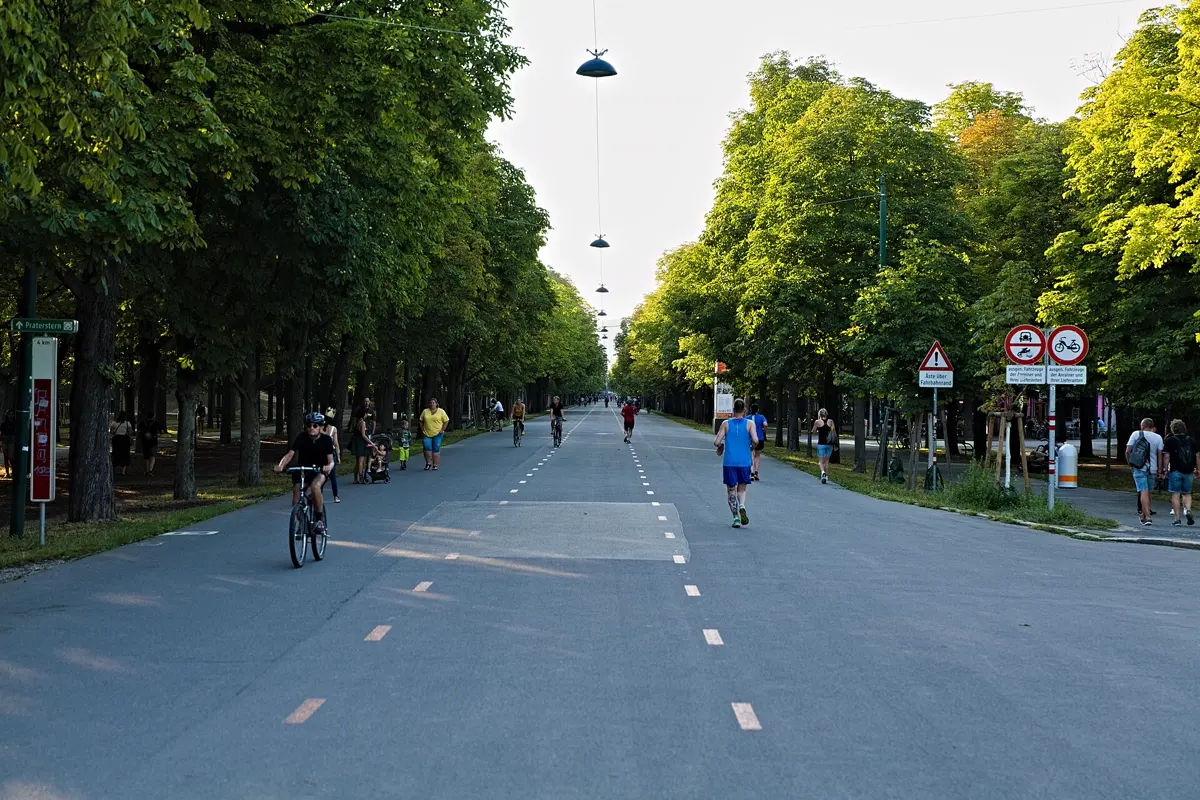
A city break with your dog is not a contradiction. Many European cities have large parks, riverbanks and woods right on their edge, and in plenty of cafés a dog under the table is completely normal. The harder parts are elsewhere: the paperwork at the border, the rules on buses and trains, and how long your dog can stay alone in the apartment. Here is what to sort out before you go, which cities suit a trip with a dog, and how to plan the day so it works for both of you.
The paperwork: what your dog needs in the EU
Travel with dogs, cats and ferrets between EU countries has followed the same rules for years. Your dog needs three things:
- Microchip: implanted under the skin, before or at the latest at the time of the rabies vaccination. A clearly readable tattoo applied before 3 July 2011 is still accepted.
- Rabies vaccination: your dog must be at least 12 weeks old at the first vaccination, and the vaccination becomes valid only 21 days later. If boosters are given on time, there is no new waiting period.
- EU pet passport: issued by your vet, with the chip number and vaccinations.
This means puppies can travel to another EU country from about 15 weeks of age. Some destinations add a rule: for Finland, Ireland, Malta, Norway and Northern Ireland, dogs must be treated against the tapeworm Echinococcus 1 to 5 days before arrival, recorded in the passport. You can travel with up to five pets without further formalities.
Switzerland and Norway apply the same basic rules. Great Britain has its own: EU pet passports issued to owners resident in Great Britain are no longer valid for travel to the EU, so dogs from Great Britain need an animal health certificate from a vet for each trip. Coming back to the EU from many non-EU countries also requires a rabies antibody blood test, and you then have to wait three months before travelling. Check the official pages linked below before every trip.
Also check whether your destination has rules for certain breeds. Some countries restrict entry of so-called dangerous breeds or require a muzzle and lead at all times.
Getting there: car, train or plane
By car is easiest: breaks whenever your dog needs them and space for a blanket, bowl and food. Stop every two to three hours, and never leave your dog in a parked car in summer – not even for ten minutes. If you need a car at your destination, you can compare hire cars in Vienna* at Economybookings and then ask the rental company whether dogs are allowed and whether there is a cleaning fee.
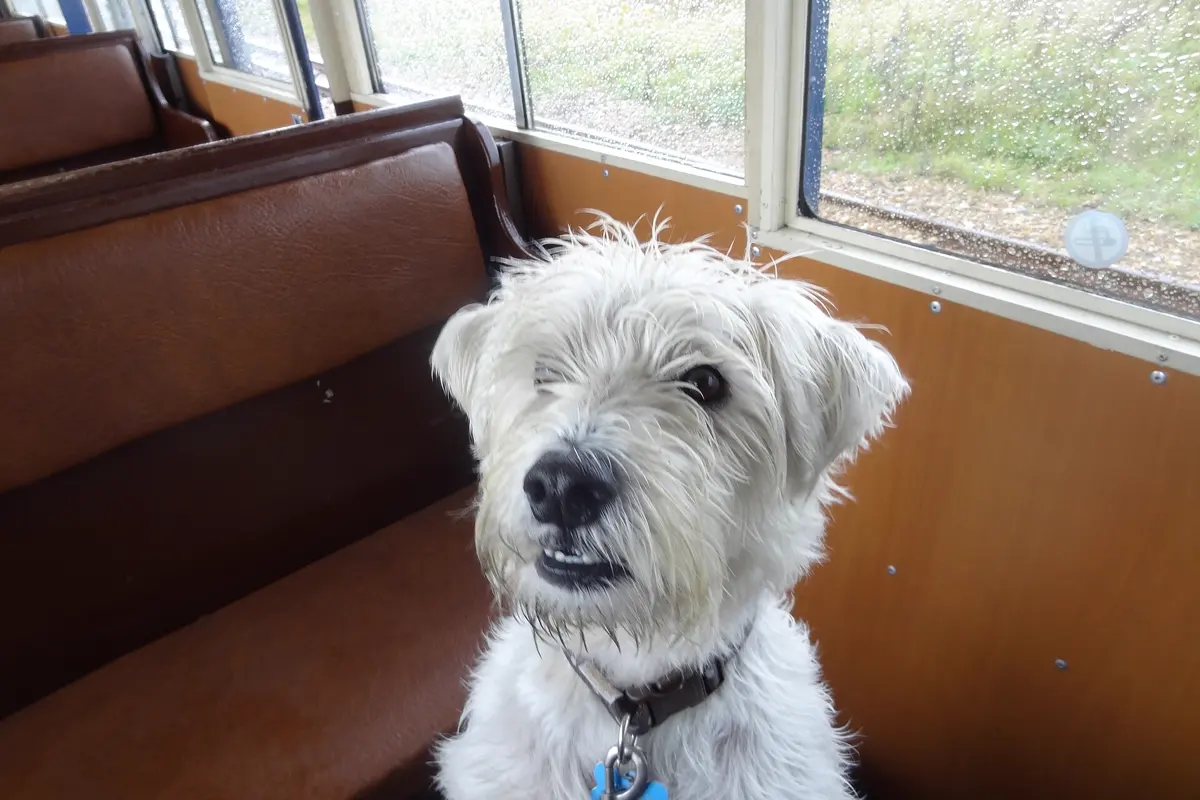
By train most dogs are calmer than on a plane. In many countries, small dogs travel in a carrier like hand luggage, while larger dogs travel on a lead, often with a muzzle and sometimes with their own ticket. Each rail company sets its own rules in its conditions of carriage. Eurostar between London and the continent takes assistance dogs only; with a car, the Channel Tunnel shuttle and many ferries are the alternative. You can find train connections on the continent* on Omio and then check the dog rules with the rail operator.
By plane it gets complicated. Many airlines allow small dogs in the cabin in a bag under the seat in front, with a weight limit that includes the bag. Larger dogs travel in the hold or not at all, and some airlines refuse short-nosed breeds for health reasons. The number of animals per flight is limited, so register your dog when you book.
In the city: buses, trams and cafés
Whether your dog may ride buses, trams and metros is decided by each city or transport authority. Often, small dogs in a carrier ride free, while larger dogs need a lead, often a muzzle and sometimes their own ticket. In some cities large dogs are not allowed on certain lines at all, or only outside rush hour. Check the local transport operator's website before you go – it takes two minutes and saves arguments on the platform.
Restaurants and cafés vary in the same way. In Austria, Germany and Switzerland dogs are welcome in many places; in southern Europe and Scandinavia you are more likely to sit outside with your dog. Museums, churches and most indoor sights do not admit dogs, assistance dogs excepted. So plan one indoor visit a day at most and, if you travel as two, take turns: one goes in, the other walks the dog.
Which cities suit a short break with a dog
With a dog, different things count: green space within walking distance, level paths, a relaxed attitude to dogs – and ideally a journey without flying. These nine cities do well.
| City | Green space | Without flying from Germany |
|---|---|---|
| Vienna | Prater, Danube Island, Vienna Woods on the edge | direct train from Munich, car |
| Berlin | Grunewald forest, Tempelhofer Feld, many parks | train, car |
| Hamburg | Stadtpark, Elbe riverbank, Alster lakes | train, car |
| Munich | English Garden, Isar riverbanks | train, car |
| Salzburg | Kapuzinerberg, Mönchsberg, Salzach riverbank | direct train from Munich, car |
| Amsterdam | Vondelpark, Amsterdamse Bos | direct train from Cologne and Frankfurt, car |
| Copenhagen | Fælledparken, harbour promenades | direct train from Hamburg, car |
| Prague | Stromovka, Letná park, Vltava riverbank | direct train from Berlin, car |
| Ljubljana | Tivoli park, Rožnik hill, car-free old town | car |
The table lists green spaces, not the lead rules there. Many parks require a lead and have marked off-lead areas – signs at the entrance or the city's website tell you where.
- Vienna Prater
- Berlin Grunewald
- Hamburg Elbe
- Munich Isar
- Salzburg Mönchsberg
- Amsterdam Vondelpark
- Copenhagen Fælledparken
- Prague Stromovka
- Ljubljana Tivoli
Base map: Natural Earth
Vienna, Berlin, Munich: plenty of room to run
For many dog owners, Vienna is the favourite. The Hauptallee in the Prater runs for several kilometres under trees, Danube Island has designated dog zones by the water, and dogs are welcome in many of the traditional coffee houses. We have a ready-made Vienna plan you can add parks to.
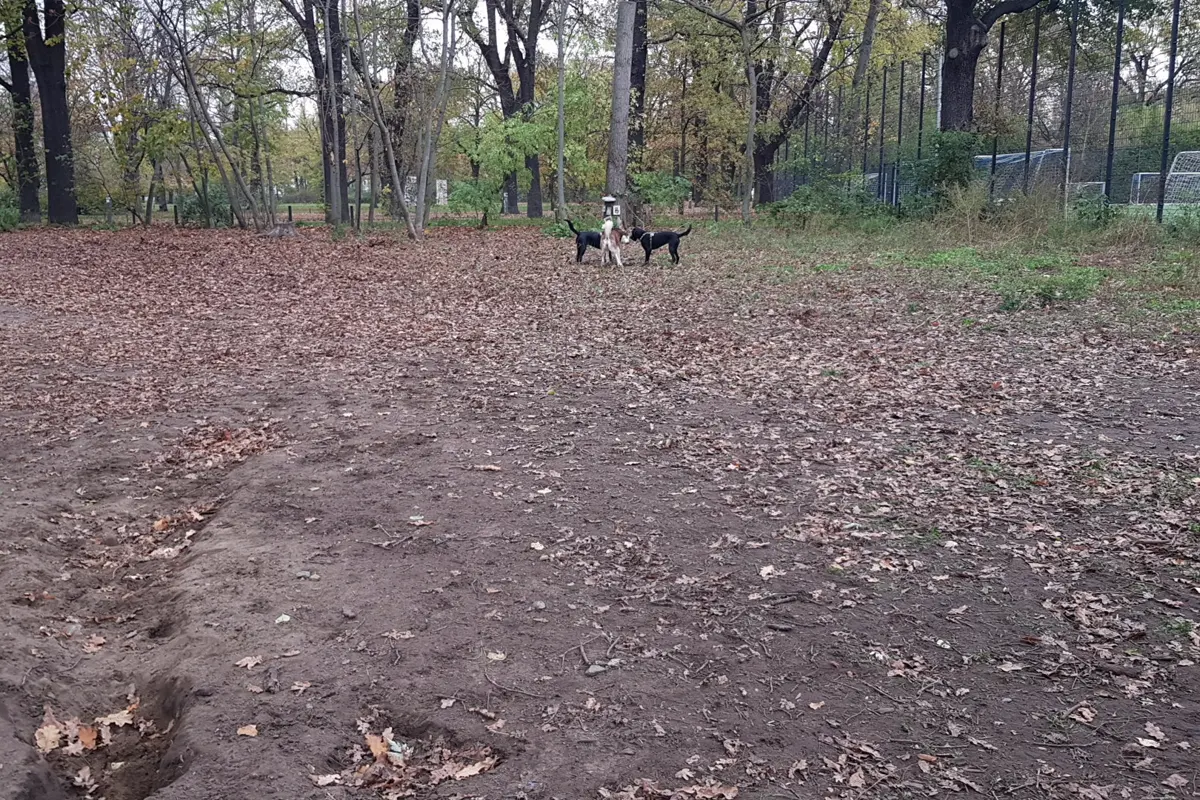
Berlin has its largest dog-exercise area, the Grunewald, inside the city, and at the Grunewaldsee lake dogs may go into the water. Tempelhofer Feld, the former airport, has its own off-lead areas. Munich offers long paths by the water in the English Garden and along the Isar – ideal for the morning before you head into the old town.
Amsterdam, Copenhagen, Prague: flat and compact
Amsterdam is flat and compact. Start the morning in Vondelpark, and for a long run head to the Amsterdamse Bos forest in the south. Watch out for cyclists by the canals – the bike lanes are busy and fast. Copenhagen is just as flat, with long harbour promenades and the large Fælledparken. In Prague, walk from the Vltava up to Letná park with its view over the old town; the old town itself is very crowded during the day, so early mornings are more pleasant with a dog.

Ljubljana and Salzburg: small and green
Ljubljana is one of Europe's most relaxed capitals: the old town along the Ljubljanica river is largely car-free, and Tivoli park stretches up to the wooded Rožnik hill. Salzburg is small enough to do everything on foot; on the town hills Mönchsberg and Kapuzinerberg you walk through woods with views of the old town and the fortress.
 Ljubljana trip planDay by day, with map and tips
Packing list for your dog
- Pet passport (or animal health certificate), proof of tapeworm treatment if needed
- Lead, collar or harness with a tag showing your mobile number
- Muzzle, even if your dog never needs one at home – many transport operators require it
- Usual food for every day, bowl, water bottle for walks
- Poo bags, a blanket for the apartment and cafés, a towel
- Medication and tick protection, the number of a vet at your destination
Mobile data is doubly useful with a dog: for finding the nearest dog park or a vet. A travel eSIM*, for example from Airalo, can be installed before you leave.
How YesTrip helps
In YesTrip you enter the city and your dates and get a day-by-day plan with a map. Arrange the stops so that there is a park between two sights, and check the forecast for your travel days – on hot days, move the long walks to the morning and evening. The trip's packing list suggests items that fit the weather; you add the lead, bowl and pet passport yourself. With the offline package you have the map without a connection, and if you travel with others you share the trip and keep track of joint expenses.
* Ad – Partner link: if you book there, we earn a commission. Your price stays the same.
Free
Plan your trip in 30 seconds.
Tell YesTrip where and when – the app plans day by day with real places on the map, shows the weather, splits costs with your travel companions and guides you to the next stop on the go.
Frequently asked questions
What does my dog need to travel within the EU?
A microchip, a valid rabies vaccination and an EU pet passport recording both. After the first rabies vaccination you must wait 21 days before travelling. Finland, Ireland, Malta, Norway and Northern Ireland also require a tapeworm treatment 1 to 5 days before arrival.
How old must a puppy be to travel to another EU country?
The rabies vaccination can be given from 12 weeks of age, followed by a 21-day waiting period. So a puppy can usually travel to another EU country from about 15 weeks old.
Can I take my dog from the UK to the EU with a pet passport?
Not with an EU pet passport issued to an owner living in Great Britain – those are no longer valid for travel to the EU. Instead your dog needs an animal health certificate from a vet for each trip, plus a microchip and a valid rabies vaccination.
Can my dog ride buses and trams?
In most cities, yes, but the rules differ. Often small dogs in a carrier ride free, while larger dogs need a lead, often a muzzle and sometimes their own ticket. The exact conditions are on the local transport operator's website.
Which European cities are especially dog-friendly?
Green, flat cities with large parks within walking distance work best, such as Vienna with the Prater and Danube Island, Berlin with the Grunewald, Munich with the English Garden, and Amsterdam and Copenhagen.
Sources
- European Union, Your Europe: travelling with pets in the EU – europa.eu
- European Commission: movement of pets, rules and tapeworm treatment – food.ec.europa.eu
- UK government: taking your pet abroad – www.gov.uk
- City of Vienna: dog zones – www.wien.gv.at
Researched with AI support and checked by our editors. Prices, opening hours and weather can change – please check before you go. YesTrip is not a travel agency. Published: .
More articles
 City breaks & rail
Alpine city breaks: 6 cities compared
For mountains right by the city, Innsbruck and Lucerne are the first choice; for old town and music Salzburg; for a lakeside city with … · 11 min read City breaks & rail
Asia city breaks: 6 cities compared
For a first city trip to Asia, Tokyo and Kyoto go well together (about 2 hours 15 minutes by Shinkansen), Seoul is the lively alternative, … · 10 min read City breaks & rail
Balkans city breaks: 9 cities compared
For sea and old towns, Split, Dubrovnik and Kotor are the first choice; for big-city life and nightlife Belgrade and Bucharest; for history … · 11 min read


