
Best time to visit Kenya: safari and migration
In short
The best time for a safari in Kenya is the long dry season from June to October: the Maasai Mara then gets only 14 to 50 mm of rain a month, and the wildebeest migration is in the reserve from about July to October. January and February are a second, shorter dry season. The long rains from March to May are the wettest time, with up to 186 mm in Nairobi in April.
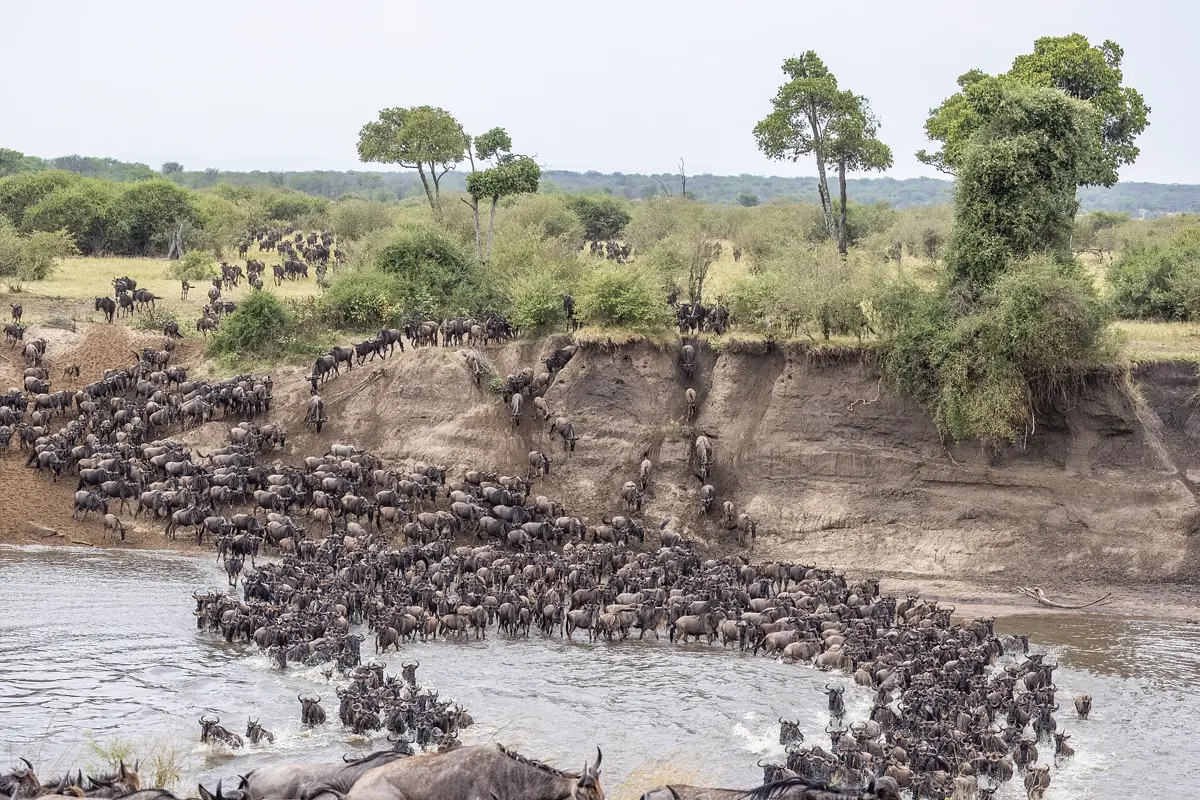
Kenya lies on the equator, but much of the country is high: Nairobi is at about 1,700 metres, so the days are warm rather than hot and the nights cool. The year is shaped by two rainy seasons. According to the Kenya Meteorological Department, the long rains from March to May are the main rainy season over most of the country, and the short rains from October to December are the second. In between lie the dry seasons that are best for a safari: a long one from June to October and a shorter one in January and February. The great wildebeest migration reaches the Maasai Mara during the long dry season. We analysed the weather from 2015 to 2024 at four places.
The short answer
- Best time for a safari: June to October. Dry, sunny days, cool mornings, animals gather at the water.
- Wildebeest migration in the Maasai Mara: about July to October.
- Second dry season: January and February, warm and mostly dry – good for safari and the coast.
- Long rains: March to May, the wettest time; some lodges close and roads in the parks can become difficult.
Kenya's climate: all 12 months
| Month | Nairobi day | Nairobi night | Nairobi rain | Maasai Mara rain | Amboseli rain | Diani day | Diani rain |
|---|---|---|---|---|---|---|---|
| January | 26.1 °C | 14.5 °C | 50 mm | 89 mm | 92 mm | 30.6 °C | 43 mm |
| February | 27.4 °C | 14.9 °C | 46 mm | 44 mm | 60 mm | 31.0 °C | 25 mm |
| March | 27.4 °C | 15.4 °C | 74 mm | 77 mm | 69 mm | 30.9 °C | 74 mm |
| April | 25.1 °C | 15.7 °C | 186 mm | 152 mm | 219 mm | 28.9 °C | 227 mm |
| May | 23.8 °C | 14.7 °C | 105 mm | 62 mm | 92 mm | 27.5 °C | 275 mm |
| June | 23.1 °C | 13.0 °C | 40 mm | 40 mm | 32 mm | 26.8 °C | 105 mm |
| July | 22.7 °C | 12.2 °C | 20 mm | 14 mm | 11 mm | 26.0 °C | 92 mm |
| August | 23.4 °C | 12.5 °C | 26 mm | 21 mm | 13 mm | 26.4 °C | 73 mm |
| September | 25.1 °C | 13.1 °C | 33 mm | 33 mm | 14 mm | 27.2 °C | 83 mm |
| October | 26.2 °C | 14.6 °C | 91 mm | 50 mm | 58 mm | 28.3 °C | 111 mm |
| November | 24.3 °C | 15.1 °C | 144 mm | 135 mm | 159 mm | 28.8 °C | 115 mm |
| December | 24.7 °C | 14.8 °C | 83 mm | 89 mm | 132 mm | 30.0 °C | 99 mm |
Temperature and rain: monthly averages 2015–2024 from the ERA5 reanalysis (via Open-Meteo), rounded. A grid cell is about 25 km wide and averages over hills and plains. The rainy seasons vary a great deal from year to year: in some years the long rains are weak, in others they bring floods. Treat the numbers as a rough guide; the seasonal pattern is reliable.
The Maasai Mara is driest in July and August, with only 14 to 21 mm, exactly when the migration arrives. The peaks in April and November mark the long and short rains.
Nairobi is never really hot: the warmest months, February and March, reach 27.4 °C by day, and July is the coolest at 22.7 °C, with nights around 12 °C.
Kenya month by month
June to October: the main safari season
The long dry season. The grass is shorter, animals gather near rivers and waterholes, and game drives are easier. July and August are the driest months in the Maasai Mara and Amboseli, with only 11 to 21 mm. Mornings and evenings on safari can be cold, especially in an open vehicle at sunrise. This is also the busiest and most expensive time of year.
July to October: the wildebeest migration
Every year, huge herds of wildebeest and zebra move from Tanzania's Serengeti into the Maasai Mara. According to the Kenya News Agency, the animals migrate to the Kenyan side between July and October, and most visitors come between July and September; the river crossings at the Mara River are the best-known moment. The timing depends on the rain in any given year, so the herds can arrive a little earlier or later.
November and December: short rains
Showers return, often in the afternoon, with 135 to 159 mm in November in the Mara and Amboseli. Safaris are still possible, the landscapes turn green and there are fewer visitors. December is drier again in many areas.
January and February: the short dry season
Warm and mostly dry, with 44 to 60 mm in February in the parks. A good time for a safari combined with the coast around Diani, which is hot and dry at 30 to 31 °C. Calving season in the southern Serengeti means the big herds are in Tanzania, not in the Mara.
March to May: the long rains
The main rainy season according to the Kenya Meteorological Department, with April the wettest month in Nairobi at 186 mm and May on the coast at 275 mm. Some camps close, and dirt roads in the parks can become difficult. Prices are at their lowest.

Safari and coast
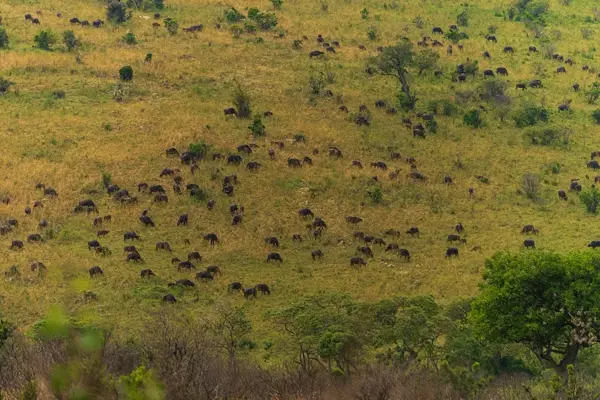
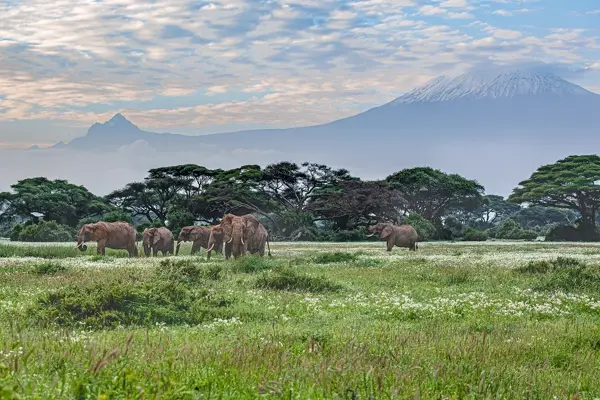
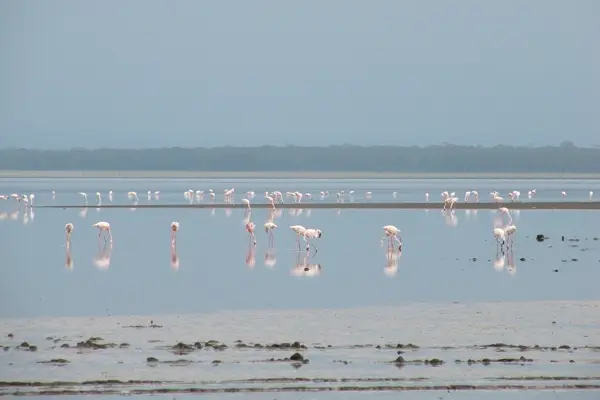
A classic trip combines several parks: the Maasai Mara for the big herds and predators, Amboseli for elephants in front of Kilimanjaro, and lakes such as Nakuru in the Rift Valley. Many travellers end on the coast, at Diani Beach south of Mombasa, or fly on to Zanzibar. The coast follows its own pattern: its wettest months are April and May, while it is mostly dry from December to March. According to the UK travel advice, safaris should be booked with established operators rather than touts, and park rules and wardens' advice should be followed. Flights from Nairobi's Wilson Airport serve the parks, and an airport transfer* gets you into the city on arrival. Comparing Africa? See also the best time to visit South Africa.
How YesTrip helps with this trip
In YesTrip you plan Nairobi, the parks and the coast day by day on one map, including the flights or long drives between them. The forecast for your travel days shows rain and cold mornings, and the packing list suggests warm layers for early game drives, sun protection and neutral-coloured clothing. If you combine Kenya with Zanzibar, both parts stay in one trip, which you can share with your travel companions, including shared expenses.
Before you go
- Entry: Check the current entry rules for British citizens on gov.uk before you travel.
- Time: Kenya is 3 hours ahead of the UK in winter and 2 hours in summer.
- Power: 240 volts; UK-style three-pin sockets (type G).
- Mobile data: a travel eSIM* is usually much cheaper than roaming; our eSIM price index compares the prices per gigabyte.
More destinations by month: Best time to visit: where to go when.
* Ad – Partner link: if you book there, we earn a commission. Your price stays the same.
Free
Plan your trip in 30 seconds.
Tell YesTrip where and when – the app plans day by day with real places on the map, shows the weather, splits costs with your travel companions and guides you to the next stop on the go.
Frequently asked questions
When is the best time to visit Kenya for a safari?
June to October, the long dry season. The Maasai Mara gets only 14 to 50 mm of rain a month from June to October, and animals are easier to see near the water. January and February are a second, shorter dry season.
When is the wildebeest migration in the Maasai Mara?
Usually from July to October. According to the Kenya News Agency, the animals migrate from the Serengeti to the Kenyan side between July and October, and most visitors come between July and September. The exact timing depends on the rain in that year.
When is the rainy season in Kenya?
There are two. The long rains from March to May are the main rainy season, according to the Kenya Meteorological Department; Nairobi averages 186 mm in April. The short rains from October to December are weaker, with 144 mm in November in Nairobi.
Is Kenya cold?
Not during the day, but at altitude the nights are cool. Nairobi averages 22.7 °C by day and around 12 °C at night in July. On early morning game drives in an open vehicle, a warm jacket is useful. The coast is warm all year.
When is the best time for Diani Beach?
December to March, when the coast is hot and mostly dry, with 25 mm of rain in February. April and May are the wettest months on the coast, with 227 to 275 mm.
Sources
- Climate data: Open-Meteo Historical Weather API (ERA5), average 2015–2024 – open-meteo.com
- Copernicus ERA5 reanalysis (Hersbach et al. 2020) – cds.climate.copernicus.eu
- Long rains (March to May) and short rains (October to December): Kenya Meteorological Department, outlook for the 2025 long rains – meteo.go.ke
- Wildebeest migration in the Maasai Mara (July to October): Kenya News Agency – www.kenyanews.go.ke
- Safaris and national parks: UK Foreign Travel Advice for Kenya – www.gov.uk
- Entry requirements for Kenya: UK Foreign Travel Advice – www.gov.uk
Researched with AI support and checked by our editors. Prices, opening hours and weather can change – please check before you go. YesTrip is not a travel agency. Published: .
More best-time guides
 When to go
Best time to visit Crete: weather by month
The best time to visit Crete is May to June and September to October: daytime highs in Heraklion are then 25 to 29 °C and it hardly rains. … · 8 min read When to go
Best time to visit Croatia: climate by month
The best time to visit Croatia is June and September: Split sees 26 to 28 °C by day and only 48 to 116 mm of rain a month, with fewer crowds … · 6 min read When to go
Best time to visit Cuba: dry season and hurricanes
The best time to visit Cuba is December to April: Havana then sees 27 to 31 °C by day and only 22 to 42 mm of rain a month. From May to … · 7 min read
All destinations: best time to visit and warm places by month


