
Best time to visit Tanzania: safari and Kilimanjaro
In short
The best time for a safari in Tanzania is the long dry season from June to October: the central Serengeti then gets only 5 to 17 mm of rain a month, and the wildebeest herds move through the north, with river crossings from July. January and February are a second dry window and calving season in the southern Serengeti. Kilimanjaro is best climbed in the same dry months. Avoid April, when Arusha gets 282 mm.
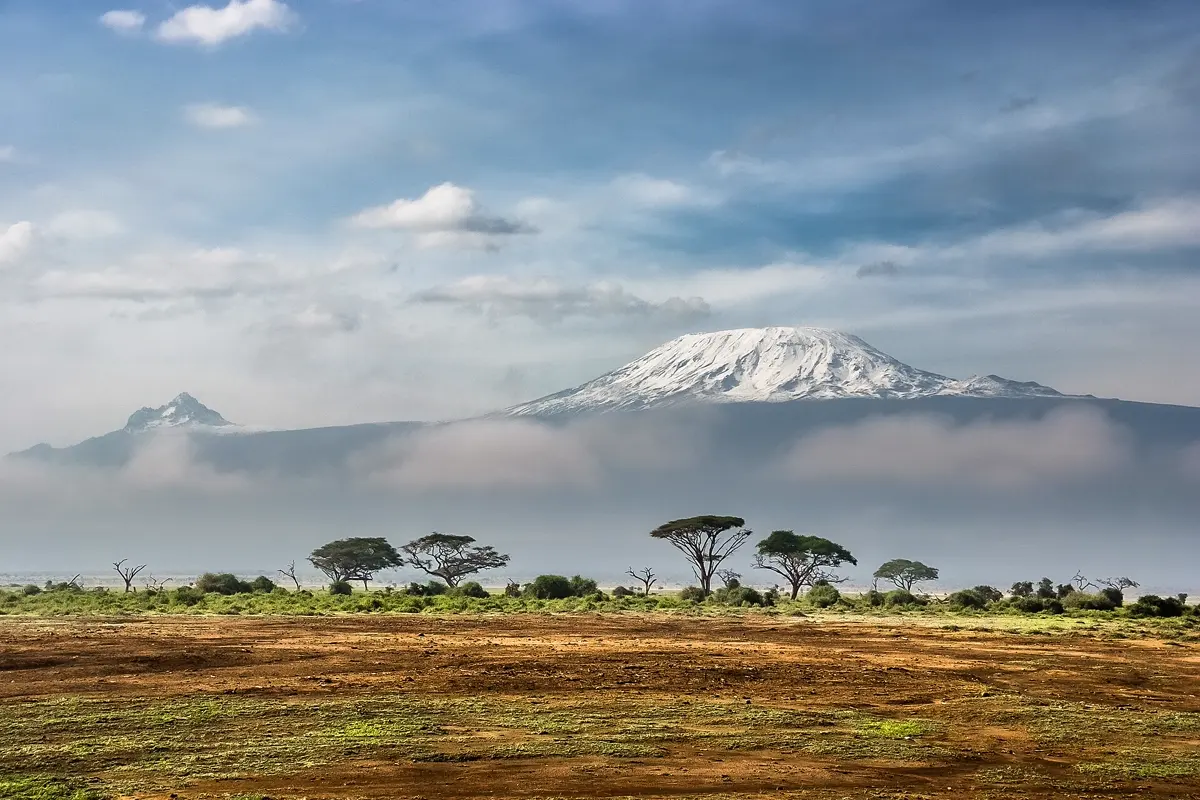
The best time to visit Tanzania for a safari is the long dry season from June to October: the grass is short, animals gather at rivers and waterholes, and the park roads are in good condition. January and February are a second, shorter dry window and the time when the wildebeest give birth in the southern Serengeti. The same dry months are the best for climbing Kilimanjaro and suit a beach extension on Zanzibar. The wettest time is April and May, during the long rains. According to the UK travel advice, Tanzania's rainy seasons generally run from late March to May and from October to mid-December. We analysed the weather from 2015 to 2024 at three places: Arusha, the gateway to the northern parks and Kilimanjaro, the central Serengeti around Seronera, and Stone Town on Zanzibar.
The short answer
- Safari in the north: June to October, the long dry season. The central Serengeti gets only 5 to 17 mm of rain a month from June to September.
- Wildebeest migration: calving in the southern Serengeti around February; the herds reach the northern Serengeti by June or July, and the river crossings draw visitors from July to October.
- Kilimanjaro: best in the dry seasons, June to October and January to February.
- Zanzibar: June to October and January to February; more in our best time to visit Zanzibar.
- Avoid: April and May. Arusha gets 282 mm in April and Stone Town 368 mm.
Tanzania's climate: all 12 months
| Month | Arusha day | Arusha night | Arusha rain | Serengeti day | Serengeti rain | Zanzibar day | Zanzibar rain |
|---|---|---|---|---|---|---|---|
| January | 27.0 °C | 15.9 °C | 121 mm | 27.5 °C | 95 mm | 31.5 °C | 61 mm |
| February | 27.7 °C | 16.0 °C | 96 mm | 29.3 °C | 63 mm | 32.1 °C | 40 mm |
| March | 27.2 °C | 16.8 °C | 183 mm | 29.1 °C | 81 mm | 31.4 °C | 110 mm |
| April | 23.9 °C | 16.8 °C | 282 mm | 27.3 °C | 146 mm | 28.7 °C | 368 mm |
| May | 22.3 °C | 15.4 °C | 124 mm | 27.3 °C | 40 mm | 28.0 °C | 202 mm |
| June | 21.3 °C | 14.0 °C | 35 mm | 27.6 °C | 11 mm | 27.8 °C | 55 mm |
| July | 21.3 °C | 13.3 °C | 34 mm | 27.9 °C | 5 mm | 27.3 °C | 46 mm |
| August | 22.7 °C | 13.6 °C | 27 mm | 28.7 °C | 9 mm | 27.7 °C | 40 mm |
| September | 24.8 °C | 14.4 °C | 25 mm | 29.7 °C | 17 mm | 28.5 °C | 43 mm |
| October | 26.2 °C | 15.6 °C | 60 mm | 30.3 °C | 41 mm | 29.5 °C | 90 mm |
| November | 25.6 °C | 16.3 °C | 132 mm | 28.5 °C | 116 mm | 29.7 °C | 125 mm |
| December | 26.0 °C | 16.0 °C | 136 mm | 27.3 °C | 120 mm | 30.6 °C | 99 mm |
Temperature and rain: monthly averages 2015–2024 from the ERA5 reanalysis (via Open-Meteo), rounded; "Serengeti" is the area around Seronera in the centre of the park. A grid cell is about 25 km wide, so the values are a regional average rather than a single weather station, and rainfall in East Africa varies a lot from year to year: some years the rains start early, end late or are much weaker. Treat the numbers as a rough guide. On Kilimanjaro itself, conditions depend on altitude: it is warm at the foot of the mountain, but at the summit, at 5,895 metres, nights are well below freezing all year.
Arusha shows the two rainy seasons clearly: a large peak from March to May, with 282 mm in April, and a smaller one from November to December. From June to September it gets only 25 to 35 mm a month.
The central Serengeti is drier than Arusha in the model data: from June to September only 5 to 17 mm a month, while the grass plains turn green with the rains from November.
Tanzania month by month
June to October: the long dry season
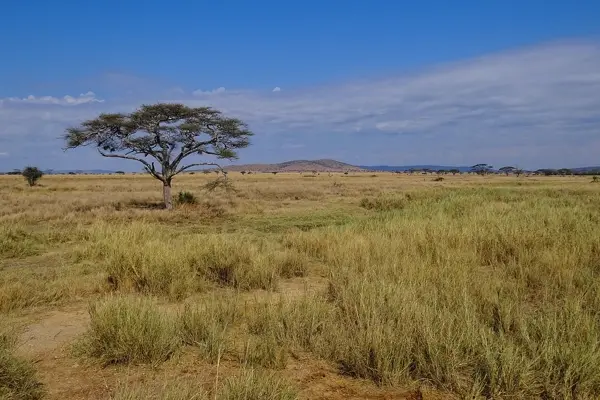
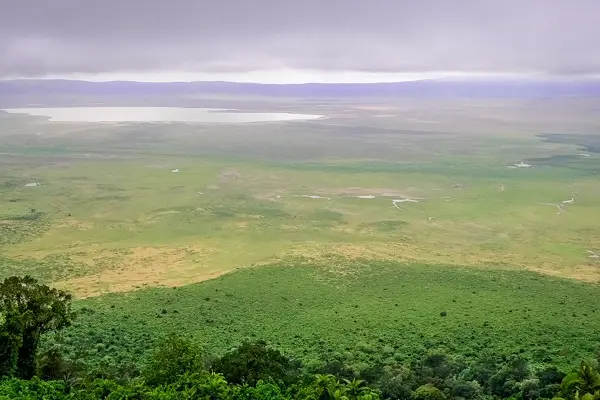
The classic safari season. The vegetation thins out and animals concentrate around permanent water, which makes them easier to spot in the Serengeti, the Ngorongoro Crater and Tarangire. According to NASA's Earth Observatory, the wildebeest herds reach the northern Serengeti by June or July and must cross the Grumeti and Mara rivers; tourists often come from July to October to watch the crossings. Days are pleasant, and in Arusha and on the crater rim mornings and evenings are cool, at 13 to 14 °C at night in July. This is the busiest and most expensive season, so book lodges early. It is also the main season for Kilimanjaro.
November and December: short rains
Showers return, often in the afternoon, with 116 to 136 mm a month in Arusha and the Serengeti. According to NASA, the rainy season begins again in the southern Serengeti by November and the herds return south. Safaris are still possible, the landscape turns green and there are fewer visitors.
January to March: the second dry window and calving
Warm and fairly dry in January and February. NASA describes how from December to March most of the wildebeest gather around Ndutu in the southern Serengeti, where they give birth to their calves each February within a four- to six-week period. That attracts predators, which makes this a popular time for safaris in the south. Zanzibar is hot at 31 to 32 °C. In March the humidity rises and the long rains approach.
April and May: long rains
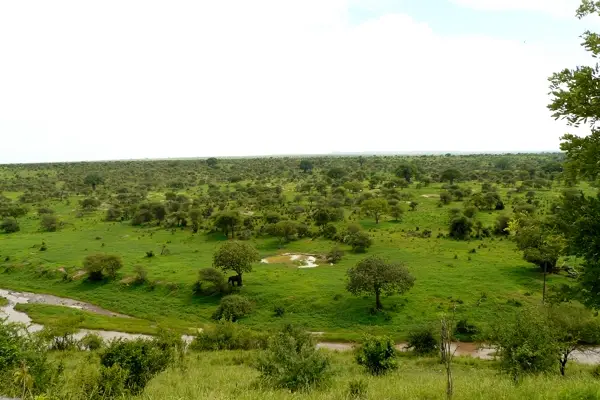
The wettest time of year: Arusha gets 282 mm in April, Stone Town on Zanzibar 368 mm. The UK travel advice warns that roads in the national parks, mainly dirt tracks, can become hazardous or impassable after heavy rain. Some camps close for a few weeks. If you travel now, you get green landscapes and fewer visitors, but should expect a lot of rain.
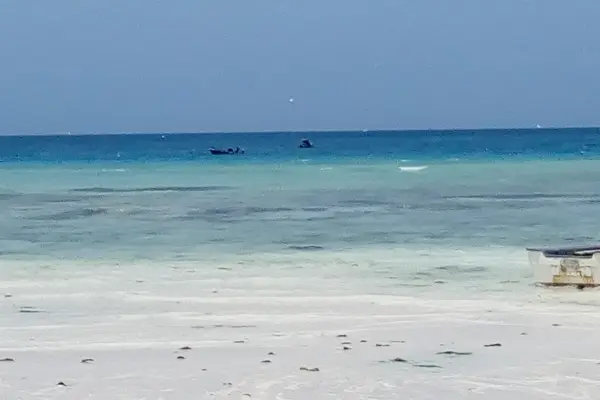
Climbing Kilimanjaro
Kilimanjaro is Africa's highest mountain and, according to UNESCO, a snow-capped volcano rising to 5,895 metres above the surrounding plains. The ascent is possible all year, but the dry seasons from June to October and January to February have the most stable weather and the best chances of clear views; in April and May the paths are wet and slippery. Whatever the month, nights high on the mountain are well below freezing, so you need proper cold-weather gear. The UK travel advice recommends using only a reputable travel company, sticking to established routes and walking in groups. Most climbs start near Moshi or Arusha and take several days to allow time for acclimatisation.
Safari and beach
A classic first trip to Tanzania combines the northern circuit – Tarangire, the Ngorongoro Crater and the Serengeti – with a few days on Zanzibar. The dry seasons on the mainland and the island overlap from June to October and in January and February. Many travellers also combine Tanzania with Kenya, where the herds cross into the Maasai Mara; see our best time to visit Kenya. For South Africa's safari season, see the best time to visit South Africa. Safaris in the national parks are usually booked with a local operator, including a 4x4 and a guide; for the transfer from the airport, a pre-booked transfer* saves negotiating on arrival.
How YesTrip helps with this trip
In YesTrip you plan Arusha, the parks of the northern circuit and your days on Zanzibar in one trip on a map, so you can see the distances between them. The forecast for your travel days warns of heavy rain in the shoulder months, and the packing list suggests warm layers for early game drives and the crater rim, sun protection and the right plug adapter. Travelling with others, you share the trip and log shared expenses for the safari and the flights; the map also works offline in the national parks, where the signal is often weak.
Before you go
- Entry: check the current visa and entry rules for British citizens on gov.uk before you travel.
- Health: Tanzania is a malaria area. Read the official travel health advice (in the UK, TravelHealthPro) and get medical advice in good time before you travel.
- Time: Tanzania is 3 hours ahead of the UK in winter and 2 hours in summer.
- Power: 230 volts; UK-style three-pin sockets (type G) are common.
- Mobile data: a travel eSIM* is usually much cheaper than roaming; our eSIM price index compares the prices per gigabyte.
More destinations by month: Best time to visit: where to go when.
* Ad – Partner link: if you book there, we earn a commission. Your price stays the same.
Free
Plan your trip in 30 seconds.
Tell YesTrip where and when – the app plans day by day with real places on the map, shows the weather, splits costs with your travel companions and guides you to the next stop on the go.
Frequently asked questions
When is the best time for a safari in Tanzania?
In the long dry season from June to October. The central Serengeti then gets only 5 to 17 mm of rain a month from June to September, the grass is short, and animals gather around the remaining water. January and February are a good second choice, especially in the southern Serengeti during calving season.
When is the wildebeest migration in Tanzania?
The herds move in a large circle all year. According to NASA's Earth Observatory, they gather in the southern Serengeti around Ndutu from December to March and calve in February, head west around May, reach the northern Serengeti by June or July and cross the Mara River from about July to October, before returning south from November. The exact timing varies from year to year.
When is the best time to climb Kilimanjaro?
In the dry seasons, June to October and January to February, when the weather is most stable. In April and May the long rains make the paths wet and slippery. At the summit, at 5,895 metres, nights are well below freezing all year.
When is the rainy season in Tanzania?
According to the UK travel advice, the rainy seasons generally run from late March to May and from October to mid-December. The long rains are the heavier: Arusha gets 183 to 282 mm a month from March to April in the model data.
Can I combine a safari with Zanzibar?
Yes. The dry seasons on the mainland and on Zanzibar overlap from June to October and in January and February, so these months suit both. Many travellers end their trip with a few days on the beach after the safari.
Sources
- Climate data: Open-Meteo Historical Weather API (ERA5), average 2015–2024 – open-meteo.com
- Copernicus ERA5 reanalysis (Hersbach et al. 2020) – cds.climate.copernicus.eu
- Weather forecasts and warnings: Tanzania Meteorological Authority – www.meteo.go.tz
- Rainy seasons, park roads and Kilimanjaro: UK Foreign Travel Advice for Tanzania – www.gov.uk
- Migration of the wildebeest in the Serengeti: NASA Earth Observatory – science.nasa.gov
- Kilimanjaro National Park: UNESCO World Heritage Centre – whc.unesco.org
- Serengeti National Park: UNESCO World Heritage Centre – whc.unesco.org
- Entry requirements for Tanzania: UK Foreign Travel Advice – www.gov.uk
Researched with AI support and checked by our editors. Prices, opening hours and weather can change – please check before you go. YesTrip is not a travel agency. Published: .
More best-time guides
 When to go
Best time to visit Thailand: weather by region
The best time to visit Thailand is December to February: Bangkok gets only 19 to 30 mm of rain a month, nights in Chiang Mai are a pleasant … · 9 min read When to go
Best time to visit Turkey: Riviera and Istanbul
For a beach holiday on the Turkish Riviera, June and September are ideal: 31 to 32 °C by day in Antalya and hardly any rain, while July and … · 7 min read When to go
Best time to visit Vietnam: north, centre, south
The best time for a trip through all of Vietnam is February to April: Hanoi warms to 22 to 29 °C, Da Nang is dry at 54 to 78 mm a month and … · 7 min read
All destinations: best time to visit and warm places by month


