
Best time to visit Vietnam: north, centre, south
In short
The best time for a trip through all of Vietnam is February to April: Hanoi warms to 22 to 29 °C, Da Nang is dry at 54 to 78 mm a month and Ho Chi Minh City is in its dry season. The three regions have different rainy seasons: the north and south get most rain from May to October, the centre from September to December (Da Nang 470 mm in October).

Vietnam stretches over more than 1,600 km from north to south, and its weather does not follow one calendar. The north around Hanoi has a real cool season, the centre around Da Nang and Hoi An gets its heavy rain in autumn, and the south around Ho Chi Minh City is hot all year with a clear dry and wet season. That is why there is no perfect month for everything – but there is a window that works well for a trip through the whole country. We analysed the weather from 2015 to 2024 at four places.
The short answer
- Best time for a north-to-south trip: February to April. The north is mild, the centre dry and the south in its dry season.
- North (Hanoi, Ha Long, Sa Pa): October to April are drier; December to February can be cool and grey at 20 to 22 °C by day.
- Centre (Da Nang, Hoi An, Hue): February to August are the dry months; September to December bring heavy rain and floods.
- South (Ho Chi Minh City, Mekong Delta, Phu Quoc): December to April is the dry season; May to November brings daily showers.
Vietnam's climate: all 12 months
| Month | Hanoi day | Hanoi night | Hanoi rain | Da Nang day | Da Nang rain | Ho Chi Minh City day | Ho Chi Minh City rain |
|---|---|---|---|---|---|---|---|
| January | 20.8 °C | 14.1 °C | 65 mm | 23.8 °C | 169 mm | 31.8 °C | 29 mm |
| February | 22.3 °C | 15.2 °C | 48 mm | 24.4 °C | 78 mm | 33.2 °C | 13 mm |
| March | 25.7 °C | 18.8 °C | 83 mm | 27.1 °C | 54 mm | 34.5 °C | 17 mm |
| April | 29.1 °C | 21.7 °C | 90 mm | 29.6 °C | 72 mm | 34.2 °C | 76 mm |
| May | 31.8 °C | 25.0 °C | 215 mm | 31.8 °C | 73 mm | 33.0 °C | 221 mm |
| June | 33.5 °C | 26.7 °C | 239 mm | 33.6 °C | 66 mm | 31.5 °C | 252 mm |
| July | 32.8 °C | 26.3 °C | 305 mm | 32.6 °C | 118 mm | 30.7 °C | 296 mm |
| August | 31.8 °C | 25.8 °C | 404 mm | 33.0 °C | 116 mm | 31.0 °C | 294 mm |
| September | 30.8 °C | 24.8 °C | 350 mm | 30.7 °C | 242 mm | 30.6 °C | 348 mm |
| October | 28.3 °C | 21.7 °C | 186 mm | 28.1 °C | 470 mm | 30.3 °C | 305 mm |
| November | 26.0 °C | 19.1 °C | 59 mm | 26.7 °C | 354 mm | 30.7 °C | 145 mm |
| December | 21.2 °C | 14.1 °C | 34 mm | 24.3 °C | 338 mm | 30.7 °C | 62 mm |
Temperature and rain: monthly averages 2015–2024 from the ERA5 reanalysis (via Open-Meteo), rounded. A grid cell is about 25 km wide; for Da Nang it includes some of the sea and the mountains behind the city.
The two charts show the key point: when Hanoi is at its wettest in August, Da Nang is in its dry season – and when the centre is soaked from October to December, the north is dry again. In the south the temperature hardly changes: Ho Chi Minh City reaches 30 to 35 °C by day in every month, and only the rain decides between dry and wet season.
The three regions
North: Hanoi, Ha Long Bay and Sa Pa
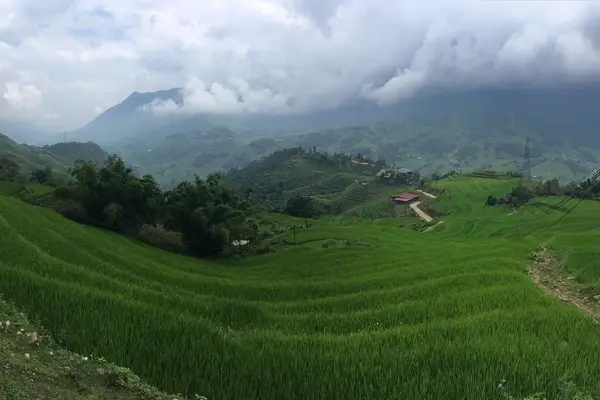
Hanoi has four seasons. From December to February it is mild by day at 20 to 22 °C and around 14 °C at night, often under a grey sky; in the mountains around Sa Pa it can get much colder. Spring (March and April) and autumn (October and November) are the most pleasant times, with 25 to 29 °C and little rain. Summer from May to September is hot and humid at 31 to 34 °C, with the most rain in August at 404 mm. A cruise on Ha Long Bay works best from October to April; in summer, storms can cancel boat trips.
Centre: Hue, Da Nang and Hoi An
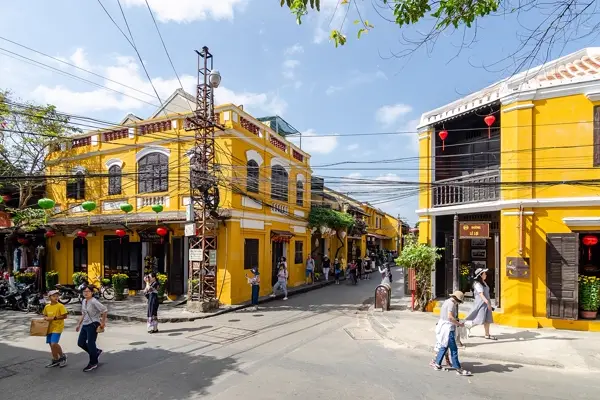
The centre has its own rhythm. From February to August it is mostly dry, with 54 to 118 mm a month in Da Nang, and from May the days get hot at over 31 °C. From September the rainy season begins, peaking in October with 470 mm. According to the UK travel advice, seasonal flooding occurs in central Vietnam in October and November; the old town of Hoi An is regularly under water at that time.
South: Ho Chi Minh City, the Mekong Delta and Phu Quoc
The south is tropical: 30 to 35 °C by day all year. The dry season runs from December to April, with only 13 to 29 mm in Ho Chi Minh City from January to March. From May to November short, heavy showers fall almost every afternoon, while mornings are often dry. The island of Phu Quoc has its beach season from about November to March; from May to October it gets 346 to 501 mm a month.
Base map: Natural Earth
Cyclone season and Tet
Tropical cyclones (typhoons) mostly reach Vietnam's east coast between May and November, according to the UK government's travel advice; they can also occur at other times. If you travel in autumn, follow the local forecasts and allow a buffer day for boat trips and flights. A second date to plan around is Tet, the Vietnamese New Year, in late January or February. Many Vietnamese travel home, trains and buses are full, and some shops and restaurants close for several days. More on rainy seasons in Asia: best time to visit Thailand.


A good route for February to April
From Hanoi you go to Ha Long Bay, then fly or take the train to Hue and on to Da Nang and Hoi An, and finish in Ho Chi Minh City and the Mekong Delta. In this window all three regions are in their better season at the same time. A detailed route with days and distances is in our Vietnam itinerary. The long distances are usually covered by domestic flight or overnight train; locally, tours and transfers* save a lot of organising.
How YesTrip helps with this trip
In YesTrip you plan Hanoi, Hoi An and Ho Chi Minh City day by day with a map, so the long legs between the regions are clear from the start. The forecast for your travel days shows when a downpour is likely and a covered market or museum is the better plan. The packing list suggests light clothes, rain gear and a jacket for the north in winter. Travelling as a group, you share the trip and log shared expenses like boat tours and transfers; the map of your places also works offline.
Before you go
- Entry: Check the current visa rules for British citizens on gov.uk before you book. Vietnam issues e-visas through an official government portal.
- Flight: From London a direct flight to Hanoi or Ho Chi Minh City takes approx. 12.5 hours; many connections have one stop. Vietnam is 7 hours ahead of the UK in winter and 6 in summer.
- Power: 220 volts; most sockets take two-pin plugs. From the UK you need an adapter.
- Mobile data: a travel eSIM* is usually much cheaper than roaming.
More destinations by month: Best time to visit: where to go when.
* Ad – Partner link: if you book there, we earn a commission. Your price stays the same.
Free
Plan your trip in 30 seconds.
Tell YesTrip where and when – the app plans day by day with real places on the map, shows the weather, splits costs with your travel companions and guides you to the next stop on the go.
Frequently asked questions
When is the best time to visit Vietnam?
For a trip through the whole country, February to April. Hanoi then reaches 22 to 29 °C by day, Da Nang is dry at 54 to 78 mm a month, and Ho Chi Minh City is in its dry season with little rain.
When is the rainy season in Vietnam?
It depends on the region. In the north and south most rain falls from May to October (Hanoi 404 mm in August, Ho Chi Minh City 348 mm in September). In the centre around Da Nang and Hoi An the rainy season runs from September to December, peaking in October with 470 mm.
When is typhoon season in Vietnam?
According to the UK government's travel advice, tropical cyclones normally affect Vietnam's east coast from May to November, but they can occur at other times. Central Vietnam also has seasonal flooding in October and November.
Is Vietnam cold in winter?
In the north, yes, by tropical standards: Hanoi averages 20.8 °C by day and 14.1 °C at night in January, often under grey skies, and the mountains around Sa Pa are colder. The south stays hot at around 31 °C by day.
When is the best time to visit Hoi An?
February to May. Da Nang, next to Hoi An, then gets only 54 to 78 mm of rain a month and reaches 24 to 32 °C by day. Avoid October and November, when heavy rain often floods the old town.
Sources
- Climate data: Open-Meteo Historical Weather API (ERA5), average 2015–2024 – open-meteo.com
- Copernicus ERA5 reanalysis (Hersbach et al. 2020) – cds.climate.copernicus.eu
- Tropical cyclones, rainy seasons and flooding: UK Foreign Travel Advice for Vietnam – www.gov.uk
- Weather forecasts and warnings: Vietnam National Center for Hydro-Meteorological Forecasting – nchmf.gov.vn
- Entry requirements for Vietnam: UK Foreign Travel Advice – www.gov.uk
- E-visa: official portal of the Vietnam Immigration Department – evisa.gov.vn
Researched with AI support and checked by our editors. Prices, opening hours and weather can change – please check before you go. YesTrip is not a travel agency. Published: .
More best-time guides
 When to go
Best time to visit Cyprus: month by month
The best time to visit Cyprus is April to June and September to November: Paphos then reaches 21 to 29 °C by day. July and August are hot … · 6 min read When to go
Best time to visit Egypt: Red Sea, Nile, Cairo
For a beach holiday in Hurghada, March to May and October to November are best, with daytime highs of 24 to 31 °C. For Luxor and the Nile, … · 7 min read When to go
Best time to visit the Algarve: month by month
The best time to visit the Algarve is May to June and September to October: Faro sees 23 to 26 °C by day and almost no rain from May to … · 6 min read
All destinations: best time to visit and warm places by month


