
Best time to visit South Africa: weather by region
In short
South Africa has two seasons to choose from: Cape Town is at its best in summer from November to March (25.9 °C in January, only 10 to 29 mm of rain a month) and wettest in winter (124 mm in June). For a safari in Kruger, the dry season from May to September is ideal (Skukuza 6 to 22 mm), and whales visit the Cape coast roughly from June to November.
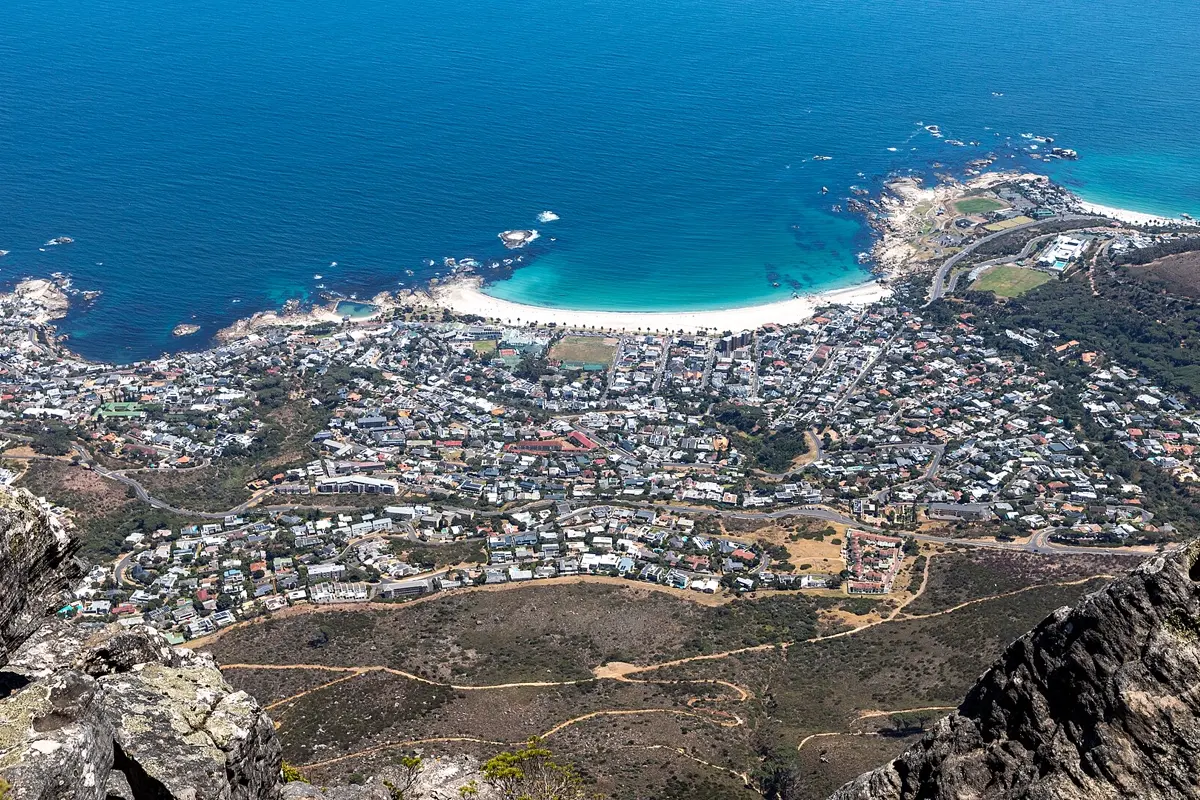
South Africa lies in the southern hemisphere, so the seasons are reversed: when it is winter in Europe, it is summer at the Cape. What makes it special, though, is that the country has two completely different rainy seasons. Cape Town and the Western Cape have a Mediterranean climate with rain in winter. The north and east – Johannesburg, Kruger National Park and Durban – get their rain in summer instead, often as afternoon thunderstorms. If you want to combine both, you have to weigh things up. We analysed the weather data for 2015 to 2024 for five places and tell you when to go where.
The short answer
- Cape Town and the Western Cape: November to March. January and February average 25.9 °C by day, with only 10 to 15 mm of rain a month.
- Safari in Kruger: May to September, in the dry season. Skukuza then gets only 6 to 22 mm a month, the bush is thin, and animals gather at the waterholes.
- Whales: southern right whales come into the bays of the south coast roughly from June to November, most famously at Hermanus. Numbers usually peak in September and October.
- The best compromise for a round trip: September to November or March to April. The Cape is then mild to warm, Kruger still fairly dry, and in spring the whales are there.
- Durban on the Indian Ocean is warm all year, still 22.3 °C by day in July – a beach option even in the northern summer.
Cape Town's climate: all 12 months
| Month | Day (avg. high) | Night (avg. low) | Rain per month |
|---|---|---|---|
| January | 25.9 °C | 17.4 °C | 15 mm |
| February | 25.9 °C | 17.3 °C | 10 mm |
| March | 24.0 °C | 15.9 °C | 29 mm |
| April | 22.2 °C | 14.0 °C | 32 mm |
| May | 19.6 °C | 12.1 °C | 59 mm |
| June | 17.5 °C | 10.5 °C | 124 mm |
| July | 16.4 °C | 9.6 °C | 113 mm |
| August | 16.6 °C | 9.7 °C | 82 mm |
| September | 18.0 °C | 10.9 °C | 50 mm |
| October | 21.2 °C | 13.0 °C | 35 mm |
| November | 22.4 °C | 14.3 °C | 23 mm |
| December | 23.8 °C | 16.0 °C | 28 mm |
Temperatures and rain: monthly averages 2015–2024 from the ERA5 reanalysis (Open-Meteo), rounded. Values apply to a grid cell of about 25 km; it rains much more on the slopes of Table Mountain, and inland it is hotter in summer.
Cape Town is never really hot and never really cold. Summer days reach 24 to 26 °C, winter days 16 to 18 °C, and there is practically no frost in the city. The difference lies in the rain: June and July get 124 and 113 mm, February only 10 mm. Winter at the Cape is green, often stormy and changeable, with rainy days between clear, sunny ones. In summer, on the other hand, a strong southeasterly wind often blows, which Capetonians call the Cape Doctor. It keeps the air clear but can spoil beach days and stop the cable car up Table Mountain.
On the Atlantic side around Camps Bay and Clifton the sea is cold even in summer, because a cool ocean current flows along the west coast. In False Bay around Muizenberg and Simon's Town the water is noticeably warmer.
Two rainy seasons compared
| Month | Cape Town | Johannesburg | Skukuza (Kruger) | Durban |
|---|---|---|---|---|
| Jan | 15 mm | 118 mm | 101 mm | 96 mm |
| Feb | 10 mm | 103 mm | 135 mm | 97 mm |
| Mar | 29 mm | 61 mm | 46 mm | 84 mm |
| Apr | 32 mm | 57 mm | 33 mm | 99 mm |
| May | 59 mm | 16 mm | 17 mm | 67 mm |
| Jun | 124 mm | 8 mm | 6 mm | 20 mm |
| Jul | 113 mm | 4 mm | 10 mm | 33 mm |
| Aug | 82 mm | 3 mm | 7 mm | 32 mm |
| Sep | 50 mm | 13 mm | 22 mm | 69 mm |
| Oct | 35 mm | 39 mm | 33 mm | 98 mm |
| Nov | 23 mm | 76 mm | 49 mm | 86 mm |
| Dec | 28 mm | 109 mm | 89 mm | 99 mm |
Rain: monthly averages 2015–2024, ERA5 reanalysis (Open-Meteo), rounded.
The table shows the mirror image of Cape Town clearly. Johannesburg gets only 4 mm in July and 3 mm in August, but 118 mm in January. In Kruger around Skukuza, February is the wettest month with 135 mm and June the driest with 6 mm. Durban has no real dry season, but from June to August it gets much less rain, 20 to 33 mm, than in summer with around 100 mm. So if you travel in the northern summer, the north and east have the most settled weather and the Cape the most changeable.
Safari in Kruger: dry season or rainy season?
| Month | Day (avg. high) | Night (avg. low) |
|---|---|---|
| January | 30.8 °C | 20.8 °C |
| April | 28.8 °C | 17.7 °C |
| July | 25.4 °C | 11.7 °C |
| October | 30.1 °C | 17.4 °C |
| December | 32.0 °C | 20.8 °C |
Skukuza: monthly averages 2015–2024, ERA5 reanalysis (Open-Meteo), rounded.
The dry season from May to September is considered the best time for safaris. The grass is short, many trees lose their leaves, and animals are easier to spot because they gather at rivers and waterholes. Days are pleasant at around 25 °C, but nights in July are cool at 11 to 12 °C – for early game drives in an open vehicle you need a warm jacket. Towards the end of the dry season, in September and October, the land is at its barest and game viewing is often at its best, but it gets hot again.
The rainy season from November to March has its own appeal: the bush is green, many antelope give birth, and large numbers of migratory birds pass through. In return it is hot at 30 to 32 °C by day, afternoon thunderstorms are common, and animals spread out because there is water everywhere. Kruger is also in a malaria area, and the risk is higher in the rainy season. Get medical advice before you travel and read the official travel health advice.
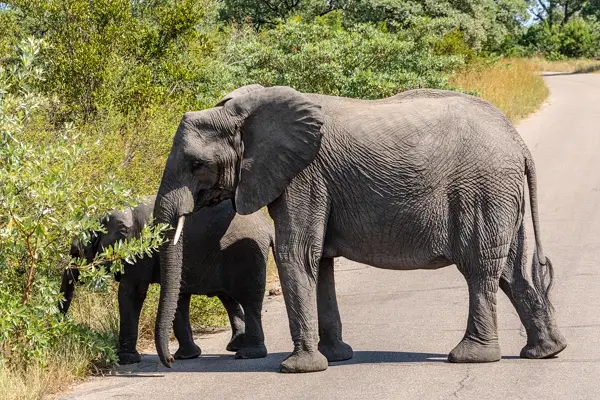
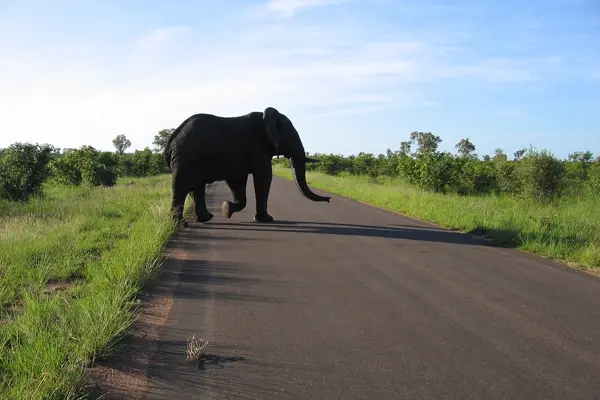
You can drive into Kruger in your own car on tarred roads and well-kept gravel roads; many visitors drive themselves and stay in the national park's rest camps. Reserve your rental car in advance, especially in peak season. Guided game drives in open 4x4 vehicles, including early morning and after sunset, can be booked directly at the camps or at lodges in the private reserves on the edge of the park.
Whale season on the coast
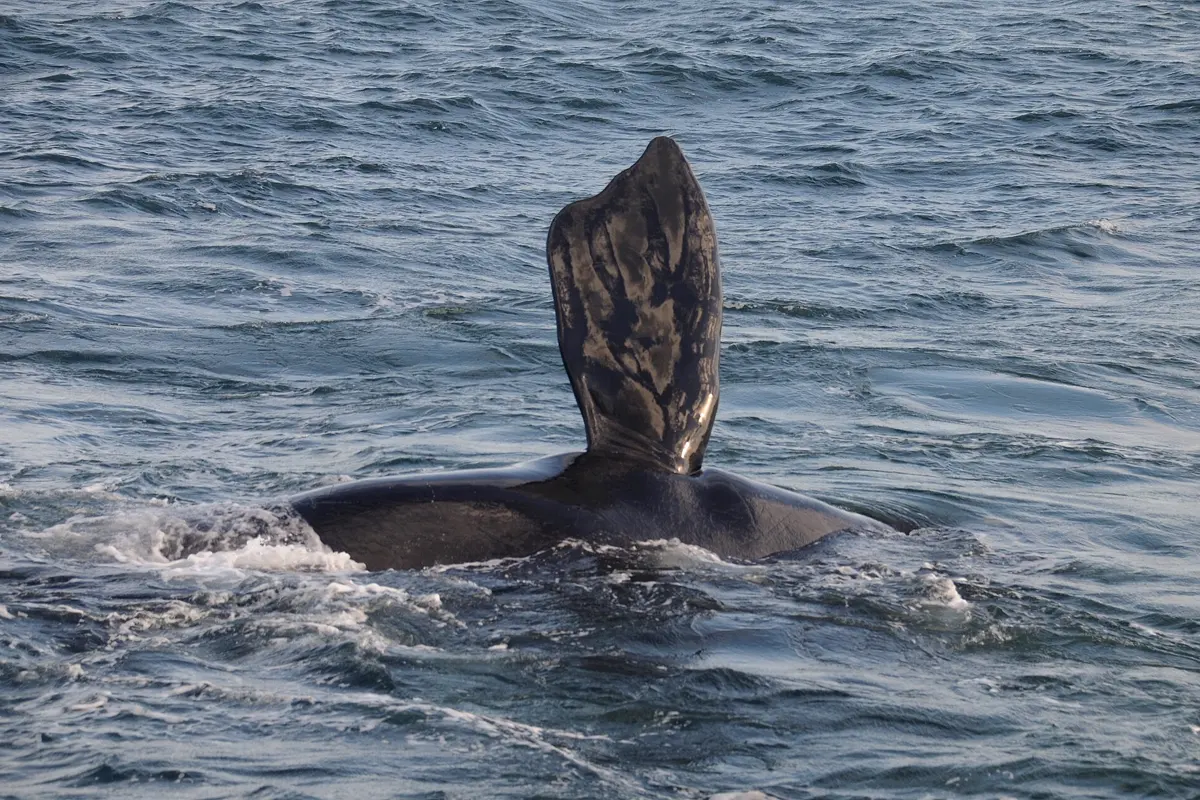
Every year southern right whales travel from Antarctic waters to the south coast of South Africa to give birth to their calves. They arrive from about June and stay until November, with the most animals usually seen in September and October. The best-known place is Hermanus, around 120 kilometres southeast of Cape Town: the whales come so close to the rocky shore that you can watch them from the cliff path. False Bay and the coast at De Kelders are good spots too. You can find whale-watching boat trips from Cape Town* at Klook, for example.
The weather at this time is typical Cape winter: Hermanus averages 16.1 °C by day and 8.9 °C at night in July, and gets 108 mm of rain in June. From September it gets friendlier, with 58 mm and 17.6 °C. At the same time the spring flowers bloom in the Western Cape and further north in Namaqualand; in August and September large areas there turn into carpets of flowers when winter has brought enough rain.
South Africa month by month
December to February
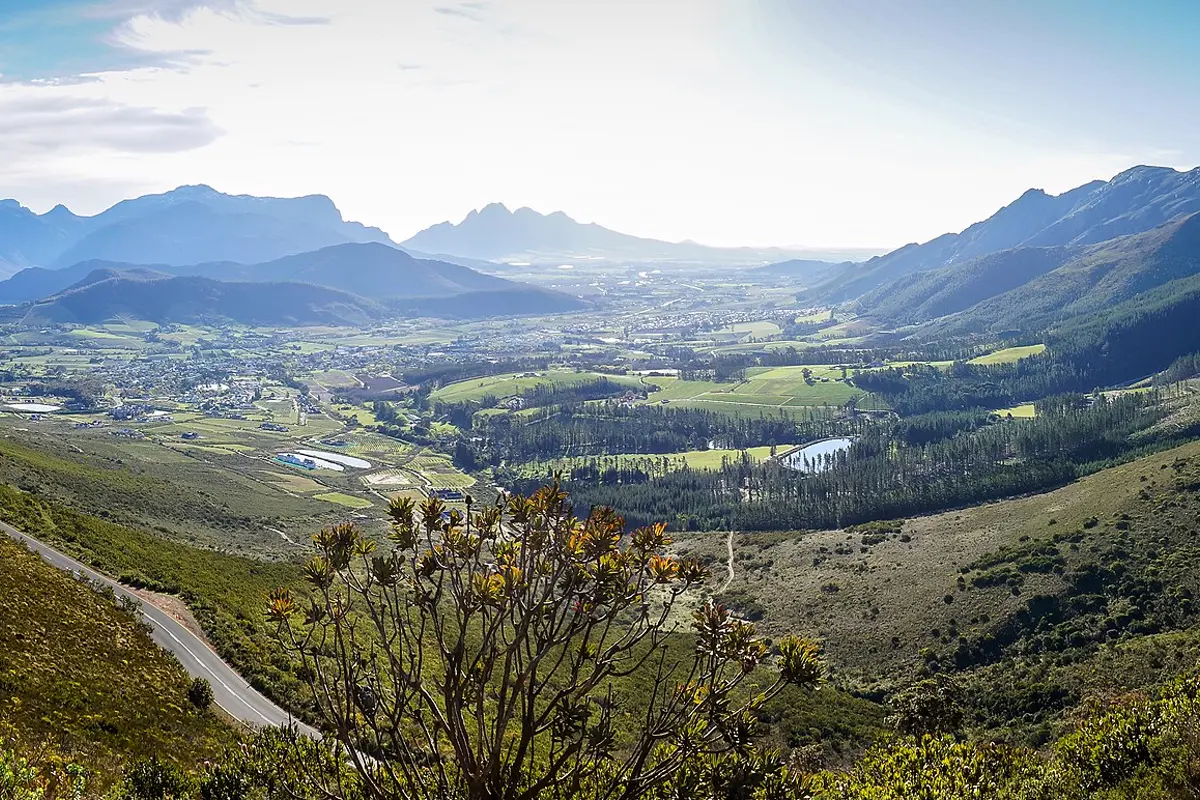
High summer at the Cape: 24 to 26 °C, hardly any rain, long evenings. This is the most popular time for Cape Town, the Cape Peninsula and the winelands around Stellenbosch and Franschhoek. December and January are South Africa's long summer school holidays; accommodation on the coast books up early. In the north and east it is the rainy season: hot and green, with afternoon thunderstorms.
March to May
Autumn at the Cape and one of the most pleasant times overall. Cape Town averages 24.0 °C in March and 22.2 °C in April, the wind drops and the grape harvest is under way. In Kruger the rainy season is ending: Skukuza gets 33 mm in April and 17 mm in May, and the land is still green. Good months to combine the Cape and a safari.
June to August
Winter at the Cape: cool, with 113 to 124 mm of rain in June and July, but also clear days in between. In return this is the best safari time, Johannesburg and Kruger get hardly any rain, and the whales arrive from June. Nights on the highveld are cold: Johannesburg averages 3.4 °C at night in July. Durban stays mild at 22 to 23 °C by day.
September to November
Spring. The Cape gets drier and warmer, from 18.0 °C in September to 22.4 °C in November, the whales are still there and the flowers are in bloom. In Kruger the dry season is at its peak, and it turns hot in October at 30.1 °C. For a round trip with the Cape, whales and a safari, this is the time when everything fits best.
Cape Town and the Cape Peninsula
Cape Town is best visited for four or five days: Table Mountain by cable car or on foot, the Waterfront, the colourful Bo-Kaap district, Kirstenbosch botanical garden and Robben Island. Give one day to the Cape Peninsula with the Cape of Good Hope, Cape Point and the penguin colony at Boulders Beach. Plan Table Mountain for a clear, calm day – in strong wind the cable car stops. You can find trips and tickets in Cape Town* at Tiqets, for example.
 Cape Town trip planDay by day, with map and tips
The airport is about 20 kilometres from the city; after a long-haul flight, a pre-booked transfer* is the most comfortable option.
How YesTrip helps with this trip
In YesTrip you'll find a ready-made city plan for Cape Town with Table Mountain, the Waterfront and the Cape Peninsula, which you can adopt and fit to your travel days. For Hermanus, Kruger or Durban, the AI creates a day plan with a map. The weather forecast covers your travel days – so you can see which day Table Mountain will be clear and calm. The packing list remembers warm layers for early game drives, sun protection and a rain jacket depending on the region, and the right plug adapter. Travelling with others, you share the trip and log shared expenses; the map also works offline in the national park, where the signal is often weak.
What to know before you go
- Entry: UK and EU citizens do not need a visa for tourist stays of up to 90 days. Your passport needs blank pages on arrival and must be valid beyond your departure. The exact rules, including for travelling with children, are on gov.uk or with your own government.
- Flight: from London, direct flights take about 11.5 hours to Cape Town and about 11 hours to Johannesburg. For a round trip an open-jaw ticket makes sense, for example into Johannesburg and back from Cape Town.
- Time: South Africa is two hours ahead of UK winter time and one hour ahead in British summer. Hardly any jet lag.
- Health: the northeast, including Kruger, is a malaria area. Read the official travel health advice (in the UK, TravelHealthPro) and get medical advice in good time before you travel.
- Power: 230 volts, mostly large three-pin sockets; two-pin European plugs fit only some sockets. Pack an adapter.
- Mobile data: roaming is expensive for most visitors. A travel eSIM helps with maps and navigation in a rental car.
How to fit Cape Town, the Garden Route and a malaria-free safari into one trip is shown in our 2-week South Africa itinerary.
* Ad – Partner link: if you book there, we earn a commission. Your price stays the same.
Free
Plan your trip in 30 seconds.
Tell YesTrip where and when – the app plans day by day with real places on the map, shows the weather, splits costs with your travel companions and guides you to the next stop on the go.
Frequently asked questions
When is the best time to visit South Africa?
It depends on the region. For Cape Town and the Western Cape, November to March is best; February there gets only 10 mm of rain at 25.9 °C by day. For a safari in Kruger, the dry season from May to September is ideal, with only 6 to 22 mm of rain a month in Skukuza. For a round trip covering both, September to November and March to April are a good compromise.
When is the rainy season in South Africa?
South Africa has two rainy seasons. At the Cape around Cape Town it rains in winter, most in June with 124 mm. In the north and east, with Johannesburg, Kruger and Durban, it rains in summer from about November to March; Johannesburg gets 118 mm in January, and Kruger 135 mm in February.
When can you see whales in South Africa?
Southern right whales are on the south coast roughly from June to November, with most usually seen in September and October. The best-known place is Hermanus, around 120 kilometres southeast of Cape Town, where the whales can often be seen from the shore.
When is the best time for a safari in Kruger?
In the dry season from May to September. The bush is thin, animals gather at the waterholes, and Skukuza gets only 6 to 22 mm of rain a month. Nights are cool at around 12 °C in July, while days are a pleasant 25 °C.
Is Cape Town worth visiting in June or July?
With some caveats. June and July are winter in Cape Town, with 16 to 18 °C by day and 113 to 124 mm of rain a month, often changeable and windy. On the other hand whale season begins, and South Africa combines well with a safari in the dry north, where it hardly rains at that time.
Sources
- Climate data: ERA5 reanalysis via Open-Meteo, monthly averages 2015–2024 – open-meteo.com
- Copernicus ERA5 reanalysis (Hersbach et al. 2020) – cds.climate.copernicus.eu
- Weather and seasons: South African Weather Service – www.weathersa.co.za
- Kruger National Park and the Cape parks: South African National Parks (SANParks) – www.sanparks.org
- Entry requirements for South Africa: UK Foreign Travel Advice – www.gov.uk
- Travel health advice for South Africa: TravelHealthPro (NaTHNaC) – travelhealthpro.org.uk
Researched with AI support and checked by our editors. Prices, opening hours and weather can change – please check before you go. YesTrip is not a travel agency. Published: .
More best-time guides
 When to go
Best time to visit Tanzania: safari and Kilimanjaro
The best time for a safari in Tanzania is the long dry season from June to October: the central Serengeti then gets only 5 to 17 mm of rain … · 8 min read When to go
Best time to visit Thailand: weather by region
The best time to visit Thailand is December to February: Bangkok gets only 19 to 30 mm of rain a month, nights in Chiang Mai are a pleasant … · 9 min read When to go
Best time to visit Turkey: Riviera and Istanbul
For a beach holiday on the Turkish Riviera, June and September are ideal: 31 to 32 °C by day in Antalya and hardly any rain, while July and … · 7 min read
All destinations: best time to visit and warm places by month


