
Best time to visit Malaysia: west, east and Borneo
In short
Malaysia is hot all year at 29 to 33 °C, so the best time depends on the coast. The west coast with Langkawi and Penang is driest from December to March (50 to 90 mm a month on Langkawi). The east coast islands such as the Perhentians are best from March to September; in November and December the north-east monsoon brings over 500 mm a month. Borneo has rain all year.
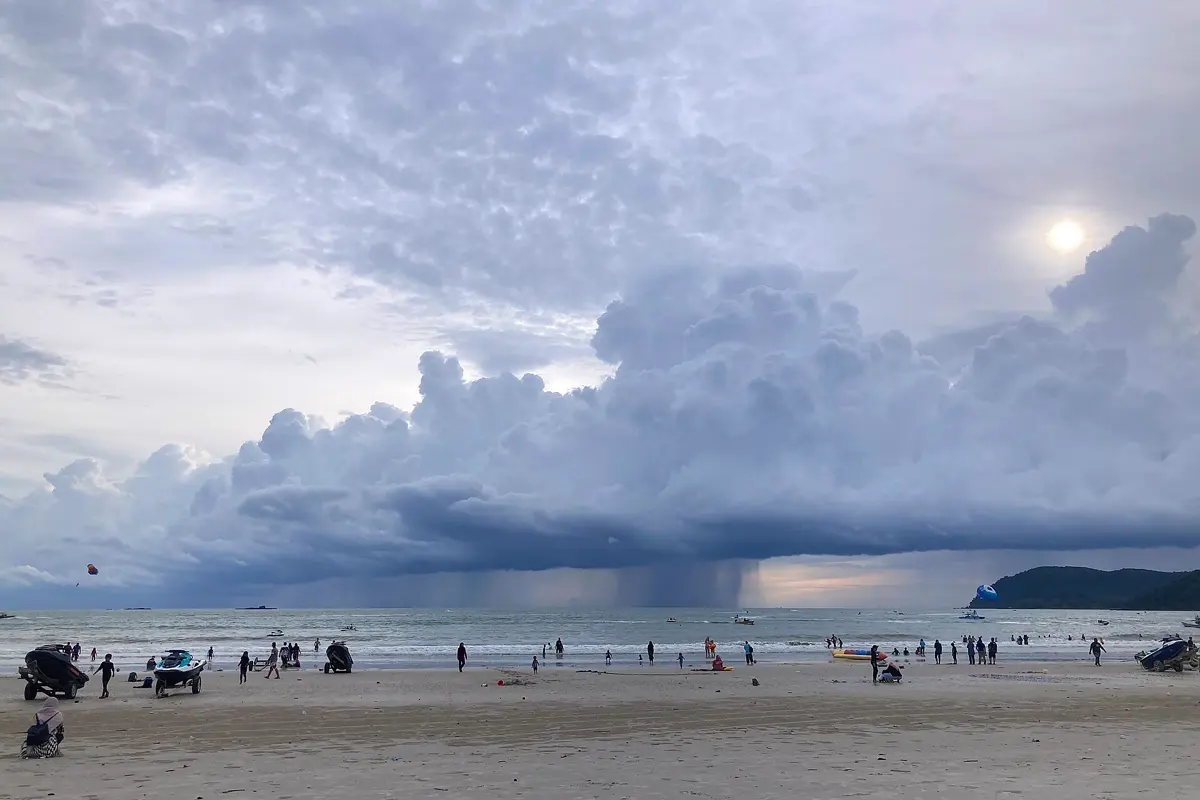
Malaysia lies just north of the equator and is hot and humid all year: by day it is 28 to 33 °C in every month, and it rains often – in Kuala Lumpur more than 100 mm in every month. There is no single best time for the whole country, because the monsoons affect the coasts differently. The north-east monsoon from about November to March brings heavy rain to the east coast of the peninsula and to Borneo, while the west coast is then at its driest. In the middle of the year it is the other way round. We analysed the weather from 2015 to 2024 at five places: Kuala Lumpur, Langkawi, Penang, the Perhentian Islands and Kota Kinabalu on Borneo.
The short answer
- West coast (Langkawi, Penang): best from December to March. Langkawi gets only 50 to 90 mm a month from January to March.
- East coast (Perhentian, Tioman, Redang): best from March to September. November and December bring over 500 mm a month.
- Kuala Lumpur: warm and wet all year; June, July and February have the least rain.
- Borneo (Sabah): rain all year, least from February to April; October is the wettest month in Kota Kinabalu.
Malaysia's climate: all 12 months
| Month | Kuala Lumpur day | Kuala Lumpur night | Kuala Lumpur rain | Langkawi rain | Penang rain | Perhentian rain | Kota Kinabalu rain |
|---|---|---|---|---|---|---|---|
| January | 30.2 °C | 23.2 °C | 222 mm | 79 mm | 142 mm | 212 mm | 240 mm |
| February | 31.3 °C | 23.4 °C | 118 mm | 50 mm | 113 mm | 108 mm | 94 mm |
| March | 31.6 °C | 23.8 °C | 224 mm | 90 mm | 185 mm | 57 mm | 112 mm |
| April | 31.2 °C | 24.1 °C | 288 mm | 198 mm | 316 mm | 110 mm | 133 mm |
| May | 30.9 °C | 24.4 °C | 274 mm | 315 mm | 399 mm | 156 mm | 246 mm |
| June | 30.7 °C | 24.0 °C | 185 mm | 214 mm | 225 mm | 151 mm | 220 mm |
| July | 30.8 °C | 23.8 °C | 183 mm | 238 mm | 189 mm | 140 mm | 221 mm |
| August | 30.5 °C | 23.7 °C | 227 mm | 291 mm | 318 mm | 166 mm | 236 mm |
| September | 30.5 °C | 23.7 °C | 254 mm | 308 mm | 325 mm | 157 mm | 285 mm |
| October | 30.5 °C | 23.7 °C | 273 mm | 334 mm | 409 mm | 264 mm | 353 mm |
| November | 29.8 °C | 23.6 °C | 382 mm | 317 mm | 408 mm | 529 mm | 245 mm |
| December | 29.8 °C | 23.5 °C | 310 mm | 158 mm | 216 mm | 504 mm | 269 mm |
Temperature and rain: monthly averages 2015–2024 from the ERA5 reanalysis (via Open-Meteo), rounded. A grid cell is about 25 km wide. Tropical thunderstorms are very local, and the model tends to spread rain over more days and places than a rain gauge would; treat the millimetres as a rough guide. The seasonal pattern – which months are wetter or drier on each coast – matches the description of Malaysia's weather service.
Langkawi shows the west-coast pattern: dry from January to March, then wet from April to November, with the peak in October.
The Perhentian Islands are almost a mirror image: March is the driest month at 57 mm, and the north-east monsoon brings more than 500 mm in November and December.
The monsoon split
According to the Malaysian Meteorological Department (MetMalaysia), the east coast of the peninsula gets its maximum rain in November, December and January during the north-east monsoon, and coastal Sarawak receives much of its rain from December to March. In the north-west of the peninsula, around Langkawi and Penang, the driest period is January and February, and on the rest of the west side the rain peaks in October and November. For the 2024–25 season MetMalaysia expected the north-east monsoon from 5 November until March, with episodes of heavy rain in Kelantan, Terengganu, Pahang, Johor, Sabah and Sarawak. Many resorts on the east coast islands close during these months, and boat services are reduced.
Malaysia region by region
Kuala Lumpur and the west coast
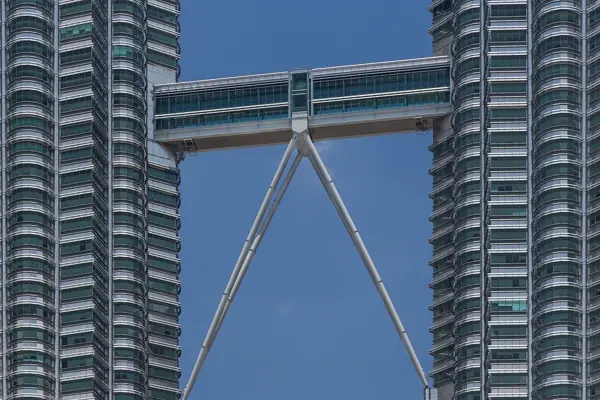
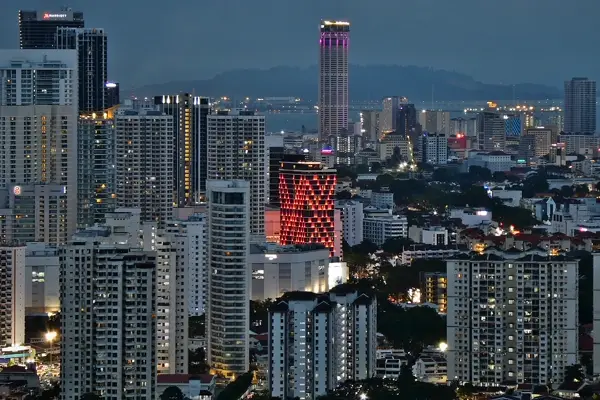
Kuala Lumpur is warm and wet all year at 30 to 31 °C by day; heavy thunderstorms usually come in the afternoon or evening. The least rain falls in February, June and July. Penang with George Town and Langkawi are best from December to March, when the sea on the west coast is calm. From April to November there is more rain, but rarely all day.
East coast islands
The Perhentian Islands, Redang and Tioman are a classic summer destination: from March to September the sea is calm and clear, ideal for snorkelling. From November to February the north-east monsoon brings rough seas and heavy rain.
Borneo: Sabah and Sarawak
In Sabah, around Kota Kinabalu and Mount Kinabalu, it rains in every month. MetMalaysia gives October as the primary rain maximum on Sabah's north-west coast and June as a secondary one; the least rain falls from February to April. Sarawak is wettest from December to March. For climbing Kinabalu and for wildlife trips, the drier months from February to April are a good choice.


Planning a combination
The simplest rule: in the European winter, combine Kuala Lumpur with Penang and Langkawi; in the European summer, combine Kuala Lumpur with the east coast islands or Borneo. The historic cities of Melaka and George Town are a joint UNESCO World Heritage Site and can be visited all year. Domestic flights connect Kuala Lumpur with Langkawi, Penang and Kota Kinabalu; on the peninsula, a hire car* gives you flexibility for the Cameron Highlands and the coast. Comparing South-East Asia? See also the best time to visit Singapore, the best time to visit Thailand and the best time to visit the Philippines.
 Kuala Lumpur trip planDay by day, with map and tips
How YesTrip helps with this trip
In YesTrip you plan Kuala Lumpur, Penang, Langkawi or the east coast islands day by day on one map; our ready-made plan for Kuala Lumpur is a good starting point. The forecast for your travel days shows thunderstorms in advance, so you can plan outdoor sights for the morning. The packing list suggests a light rain jacket, sun protection and a plug adapter, and if you travel as a group you share the trip and log shared expenses.
Before you go
- Entry: Check the current entry rules for British citizens on gov.uk before you travel.
- Time: Malaysia is 8 hours ahead of the UK in winter and 7 hours in summer.
- Power: 240 volts; UK-style three-pin sockets (type G).
- Mobile data: a travel eSIM* is usually much cheaper than roaming; our eSIM price index compares the prices per gigabyte.
More destinations by month: Best time to visit: where to go when.
* Ad – Partner link: if you book there, we earn a commission. Your price stays the same.
Free
Plan your trip in 30 seconds.
Tell YesTrip where and when – the app plans day by day with real places on the map, shows the weather, splits costs with your travel companions and guides you to the next stop on the go.
Frequently asked questions
When is the best time to visit Malaysia?
It depends on the coast. For Langkawi and Penang on the west coast, December to March is best; for the Perhentian Islands, Redang and Tioman on the east coast, March to September. Kuala Lumpur can be visited all year.
When is the monsoon season in Malaysia?
The north-east monsoon runs from about November to March and brings the heaviest rain to the east coast of the peninsula, Sabah and Sarawak; MetMalaysia expected it from 5 November until March for the 2024–25 season. On the west coast, October and November are the wettest months.
When is the best time for Langkawi?
December to March. Langkawi averages 79 mm of rain in January, 50 mm in February and 90 mm in March, with 30 to 33 °C by day. From April to November it rains much more, with a peak of 334 mm in October.
When can you visit the Perhentian Islands?
From about March to September, when the sea is calm. March is the driest month at 57 mm. During the north-east monsoon, November and December bring over 500 mm, the sea is rough and many resorts close.
What is the weather like in Borneo?
Wet and warm all year. Kota Kinabalu in Sabah gets more than 90 mm of rain in every month, the least in February (94 mm) and the most in October (353 mm). February to April is the driest period for climbing Mount Kinabalu.
Sources
- Climate data: Open-Meteo Historical Weather API (ERA5), average 2015–2024 – open-meteo.com
- Copernicus ERA5 reanalysis (Hersbach et al. 2020) – cds.climate.copernicus.eu
- Malaysia's climate, monsoons and rainfall seasons: Malaysian Meteorological Department (MetMalaysia) – www.met.gov.my
- North-east monsoon 2024–25 (5 November to March): MetMalaysia via RTM – berita.rtm.gov.my
- Melaka and George Town, historic cities of the Straits of Malacca: UNESCO World Heritage Centre – whc.unesco.org
- Entry requirements for Malaysia: UK Foreign Travel Advice – www.gov.uk
Researched with AI support and checked by our editors. Prices, opening hours and weather can change – please check before you go. YesTrip is not a travel agency. Published: .
More best-time guides
 When to go
Best time to visit the Maldives: monsoon guide
The best time to visit the Maldives is January to April, the season of the dry north-east monsoon: around Malé 46 to 120 mm of rain falls a … · 6 min read When to go
Best time to visit Mallorca, month by month
For a beach holiday in Mallorca, June to September is best, with daytime highs of 27 to 32 °C; July is the hottest and driest month at 32.1 … · 6 min read When to go
Best time to visit Malta: month by month
The best time to visit Malta is April to June and September to October: Valletta then reaches 19 to 27 °C by day, with little rain. July and … · 5 min read
All destinations: best time to visit and warm places by month


