
Best time to visit Singapore: weather, monsoon
In short
Singapore is warm all year: on average 29 to 30 °C by day and 24 to 26 °C at night, whatever the month. The difference is the rain: February is driest with 99 mm, November wettest with 303 mm. The most pleasant months are February to April and July to September.

In Singapore you don't ask whether it will be warm, only how often it will rain. The city lies just over 100 kilometres north of the equator, and temperatures barely change through the year. What does change are the monsoon seasons – and with them how much rain falls and when the thunderstorms come. We analysed the weather data for 2015 to 2024.
The short answer
You can visit Singapore all year round. February is the driest month, and March, July, August and September are also good. The most rain falls in November, December and January. Even then it rarely rains all day: usually a heavy shower or thunderstorm passes and the sun comes out again. For a stopover on the way to Asia or Australia, any month works.
Singapore's climate: all 12 months
| Month | Day (avg. high) | Night (avg. low) | Rain per month |
|---|---|---|---|
| January | 28.6 °C | 24.5 °C | 236 mm |
| February | 29.4 °C | 24.6 °C | 99 mm |
| March | 29.8 °C | 25.2 °C | 159 mm |
| April | 29.6 °C | 25.7 °C | 222 mm |
| May | 29.6 °C | 26.2 °C | 259 mm |
| June | 29.1 °C | 26.0 °C | 249 mm |
| July | 29.2 °C | 26.1 °C | 156 mm |
| August | 29.1 °C | 25.8 °C | 176 mm |
| September | 29.3 °C | 25.7 °C | 174 mm |
| October | 29.2 °C | 25.4 °C | 216 mm |
| November | 28.8 °C | 24.9 °C | 303 mm |
| December | 28.8 °C | 24.7 °C | 259 mm |
Temperature and rain: average of 2015–2024 from the ERA5 reanalysis (via Open-Meteo) for the city centre, rounded. The values describe a grid cell of about 25 km that partly lies over the sea; weather stations in the city often record 1 to 2 degrees more by day.
The temperature curve is almost flat: on average only one degree separates the coolest and the warmest month, and nights rarely drop below 24 °C. Humidity is high all year, so it often feels hotter than the numbers say. Rainfall, on the other hand, varies a lot: November gets three times as much as February.
The monsoon seasons, simply explained
Singapore's weather service divides the year into four parts: two monsoon seasons and two inter-monsoon periods in between.
Northeast Monsoon (December to early March): At the start, in December and January, it is the wettest time of year, often with longer spells of rain lasting several hours. From late January it becomes much drier and breezier, which is why February is the driest month.
First inter-monsoon (April and May): Winds are light, and thunderstorms are common in the afternoon and early evening. It is one of the muggiest times of the year – night lows are highest in May at 26.2 °C.
Southwest Monsoon (June to September): Comparatively dry. Typical are short, intense lines of thunderstorms that cross the city before dawn or in the morning, after which the day often stays dry. In some years smoke from forest and peat fires in neighbouring countries drifts over during this season, known as haze. The government publishes current readings daily.
Second inter-monsoon (October and November): Light winds again, with thunderstorms in the afternoon and evening. November is on average the wettest month of the year.
What this means for your trip
| Period | Rain | Best for |
|---|---|---|
| February to March | least | First choice, lots of time outdoors |
| April to June | afternoon storms | Plan sights for the morning |
| July to September | moderate | Good alternative, watch for haze |
| October to January | most | Stopovers, more time indoors |
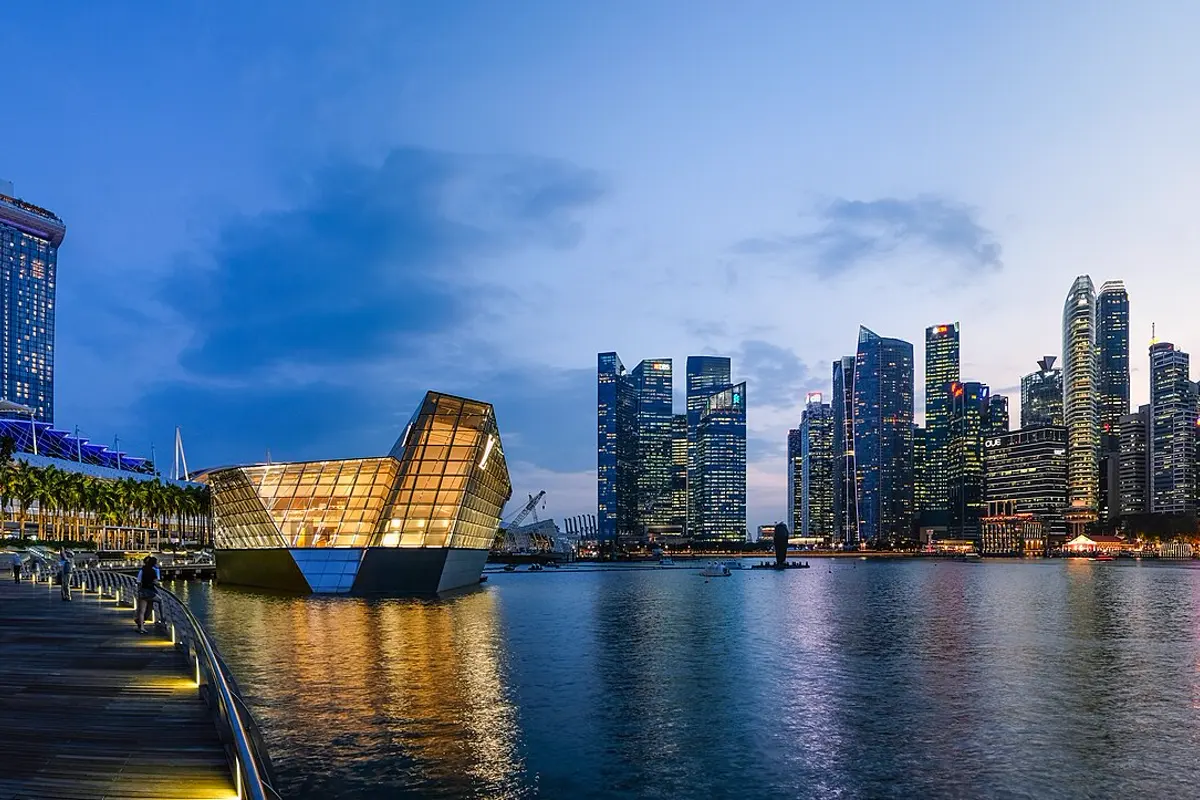
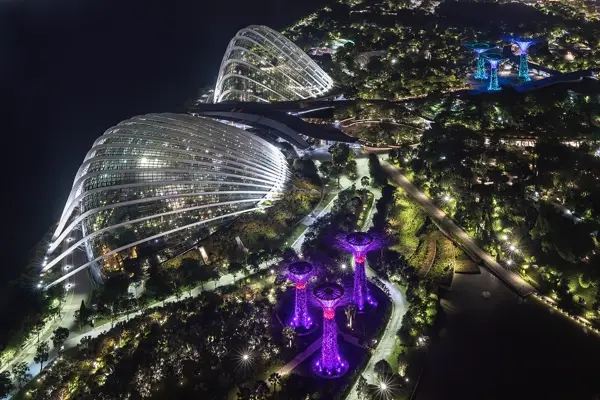
Because it rains at some point in almost every month, how you plan the day matters more than the month. Outdoors is best in the morning – at Gardens by the Bay, the Botanic Gardens or on a walk around Marina Bay. For the afternoons, when the storms arrive, there are museums, the big malls on Orchard Road, or the two conservatories at Gardens by the Bay, Flower Dome and Cloud Forest. Evenings are often dry again – good for the hawker centres, where you eat cheaply and very well.


Festivals through the year
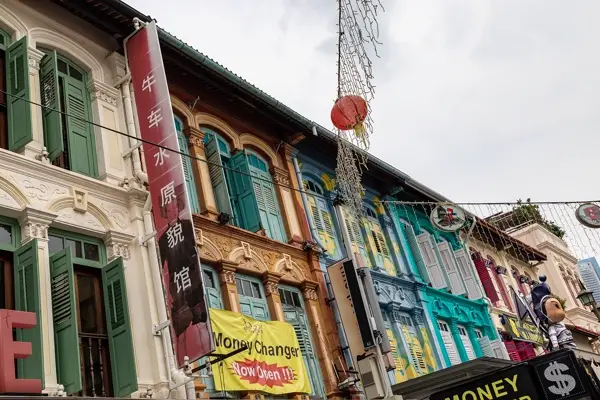
Chinese New Year falls in January or February, depending on the lunar calendar. Chinatown is festively decorated, but on the holidays themselves some small shops and eateries close. As a city with Chinese, Malay and Indian communities, Singapore celebrates many other festivals too, such as Hari Raya and Deepavali, whose dates move every year.

Entry and practical tips
- Entry: Visitors from the UK, the EU and many other countries do not need a visa for a tourist stay. Before arrival you fill in the free SG Arrival Card online with the immigration authority. The current rules are on the official website.
- Clothing: Light, breathable clothes plus a thin layer – trains, museums and malls are strongly air-conditioned.
- Plugs: Singapore uses the same three-pin plugs as the UK, so travellers from Britain need no adapter; most others do.
- Umbrella: Keep one in your bag, for rain and for shade.
How to plan the trip
From London a direct flight to Singapore takes approx. 13 hours. Many people use the city as a stopover on the way to Bali, Thailand or Australia – two to three days are enough for the main sights. To see Singapore at a relaxed pace, plan four to five days.
In YesTrip you enter Singapore and your dates and get a day-by-day plan with a map – with the forecast for your travel days, so you can put gardens and walks into the dry hours. The packing list suggests clothes to match the weather and reminds you about plugs. You can take over our ready-made plan directly.
 Singapore trip planDay by day, with map and tips
Free
Plan your trip in 30 seconds.
Tell YesTrip where and when – the app plans day by day with real places on the map, shows the weather, splits costs with your travel companions and guides you to the next stop on the go.
Frequently asked questions
When is the best time to visit Singapore?
February to April and July to September. February is the driest month, with an average of 99 mm of rain. It is warm all year: on average 29 to 30 °C by day and around 25 °C at night.
When is the rainy season in Singapore?
The most rain falls from November to January, during the second inter-monsoon period and the early Northeast Monsoon. November is the wettest month with an average of 303 mm. Even then it rarely rains all day; usually a heavy shower passes.
How hot is Singapore?
Much the same all year: average daytime highs are between 28.6 and 29.8 °C, and at night the temperature rarely drops below 24 °C. Weather stations in the city often record 1 to 2 degrees more by day, and the high humidity makes it feel hotter.
Is Singapore worth visiting in December?
Yes, if you plan around the rain. With an average of 259 mm, December is one of the wettest months, but the city is decorated for Christmas. Put outdoor sights in the morning and keep museums or malls as a backup.
How many days do you need in Singapore?
For a stopover, two to three days cover Marina Bay, Gardens by the Bay, Chinatown and Little India. With four to five days there is time for the Botanic Gardens, Sentosa and the zoo.
Sources
- Open-Meteo Historical Weather API (ERA5), average 2015–2024 – open-meteo.com
- Copernicus ERA5 reanalysis (Hersbach et al. 2020) – cds.climate.copernicus.eu
- Meteorological Service Singapore: climate and monsoon seasons – www.weather.gov.sg
- Immigration & Checkpoints Authority: SG Arrival Card – www.ica.gov.sg
Researched with AI support and checked by our editors. Prices, opening hours and weather can change – please check before you go. YesTrip is not a travel agency. Published: .
More articles
 When to go
Best time to visit Dubai: weather by month
The best time to visit Dubai is November to March: daytime highs are 24 to 31 °C, nights 15 to 21 °C, and it hardly rains. From May to … · 6 min read When to go
Best time to visit New York, month by month
The best time to visit New York is May and June or September and October, with average daytime highs of 19 to 26 °C and pleasant evenings. … · 6 min read When to go
Warm places in December: 20 destinations
The warmest places within a short flight of Europe in December are the Canary Islands (southern Gran Canaria averages 22.3 °C by day) and … · 7 min read


,_China_Town,_Pagoda_Street_--_2019_--_4507.jpg)
