
Best time to visit the Maldives: monsoon guide
In short
The best time to visit the Maldives is January to April, the season of the dry north-east monsoon: around Malé 46 to 120 mm of rain falls a month, least in February. From May to December the south-west monsoon brings 162 to 272 mm, with June the exception at 93 mm. Temperatures stay at 28 to 29 °C by day and 26 to 27 °C at night all year.
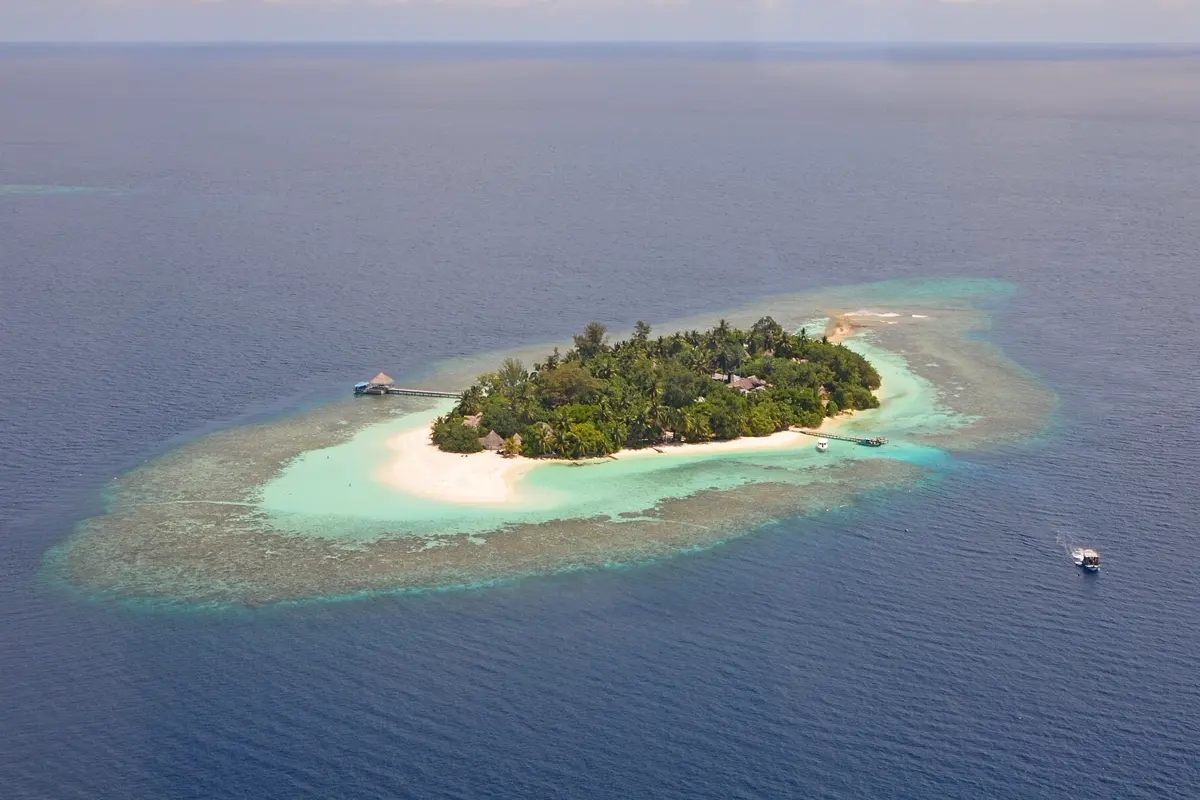
The Maldives are always warm: the coolest and the warmest month differ by only one and a half degrees on average. What changes over the year is rain, wind and swell – driven by the monsoon, which switches direction twice a year. We analysed the weather of 2015 to 2024 for the area around the capital Malé and explain when you can count on lots of sun and when a trip is still worthwhile despite the rain.
The short answer
- Best time: January to April. The north-east monsoon (Iruvai in Dhivehi) brings dry air, calm seas and plenty of sun. Around Malé 46 to 120 mm of rain falls a month. This is high season, and resorts are at their most expensive.
- Wetter season: May to December. The south-west monsoon (Hulhangu) brings more humid air, more wind and showers, with 272 mm on average in May. Rain usually comes in short, heavy bursts with sunshine in between. Many resorts are cheaper.
- Temperature: Not a factor when planning. 28 to 29 °C by day and 26 to 27 °C at night, all year round.
Over Christmas and New Year the Maldives are heavily booked despite December's rain, and prices peak.
The Maldives' climate: all 12 months
| Month | Day (avg. high) | Night (avg. low) | Rain per month |
|---|---|---|---|
| January | 27.8 °C | 26.5 °C | 74 mm |
| February | 28.1 °C | 26.8 °C | 46 mm |
| March | 28.6 °C | 27.1 °C | 70 mm |
| April | 29.2 °C | 27.3 °C | 120 mm |
| May | 29.1 °C | 27.1 °C | 272 mm |
| June | 28.8 °C | 27.2 °C | 93 mm |
| July | 28.6 °C | 26.8 °C | 162 mm |
| August | 28.4 °C | 26.8 °C | 186 mm |
| September | 28.2 °C | 26.4 °C | 203 mm |
| October | 28.2 °C | 26.4 °C | 221 mm |
| November | 28.0 °C | 26.1 °C | 260 mm |
| December | 28.1 °C | 26.3 °C | 219 mm |
Temperature and rain: average of 2015–2024 from the ERA5 reanalysis (via Open-Meteo) for the area around Malé, rounded. A grid cell is about 25 km wide and here lies almost entirely over the sea, so the values describe the air above the ocean; on the sand of an island the midday sun feels much hotter. The atolls stretch for about 800 km from north to south, and the dry season is less pronounced in the far south.
The chart shows the monsoon clearly: from January to April rain mostly stays below 120 mm, then jumps to 272 mm in May. June stands out at 93 mm – rainfall varies a lot from year to year, and a single wet or dry year shifts the average. So rely on the season rather than on one particular month.
The Maldives month by month
January to March
The driest time: 46 to 74 mm of rain, usually calm seas and clear visibility underwater. The most reliable period for snorkelling on the house reef, trips to sandbanks* and seaplane transfers. It is high season and many resorts are booked out months ahead – if you want February or March, book early.
April
At 29.2 °C the warmest month, and at 120 mm still fairly dry. Towards the end of the month the air becomes more humid and the wind shifts. A good compromise: still plenty of sun and, Easter aside, somewhat cheaper than February.
May
The switch to the south-west monsoon brings the most rain of the year at 272 mm. Heavy showers and thunderstorms are typical, and you may get a whole grey day. In return the low season starts and many resorts lower their rates.
June to October
The south-west monsoon season: 93 to 221 mm of rain, more wind and waves, especially on the west and south-west sides of the atolls. There are still many hours of sunshine and it stays 28 to 29 °C. Surfers like this season because the monsoon brings swell. In Baa Atoll, Hanifaru Bay often draws large numbers of manta rays at this time.
November and December
Still wet at 260 and 219 mm as the monsoon turns back to the north-east. From mid-December it usually gets drier, just as the most expensive time of year begins. Travel in late November or early December and you often still get low-season rates.
Diving, snorkelling and mantas
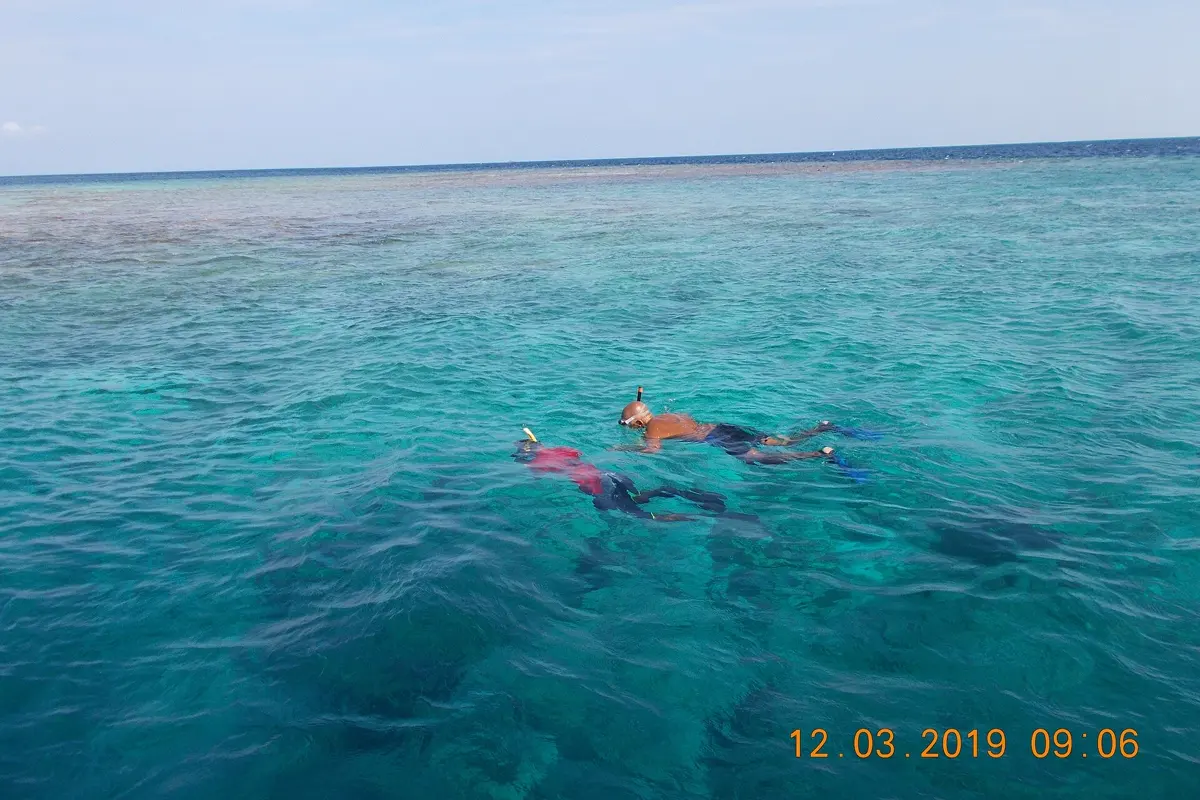
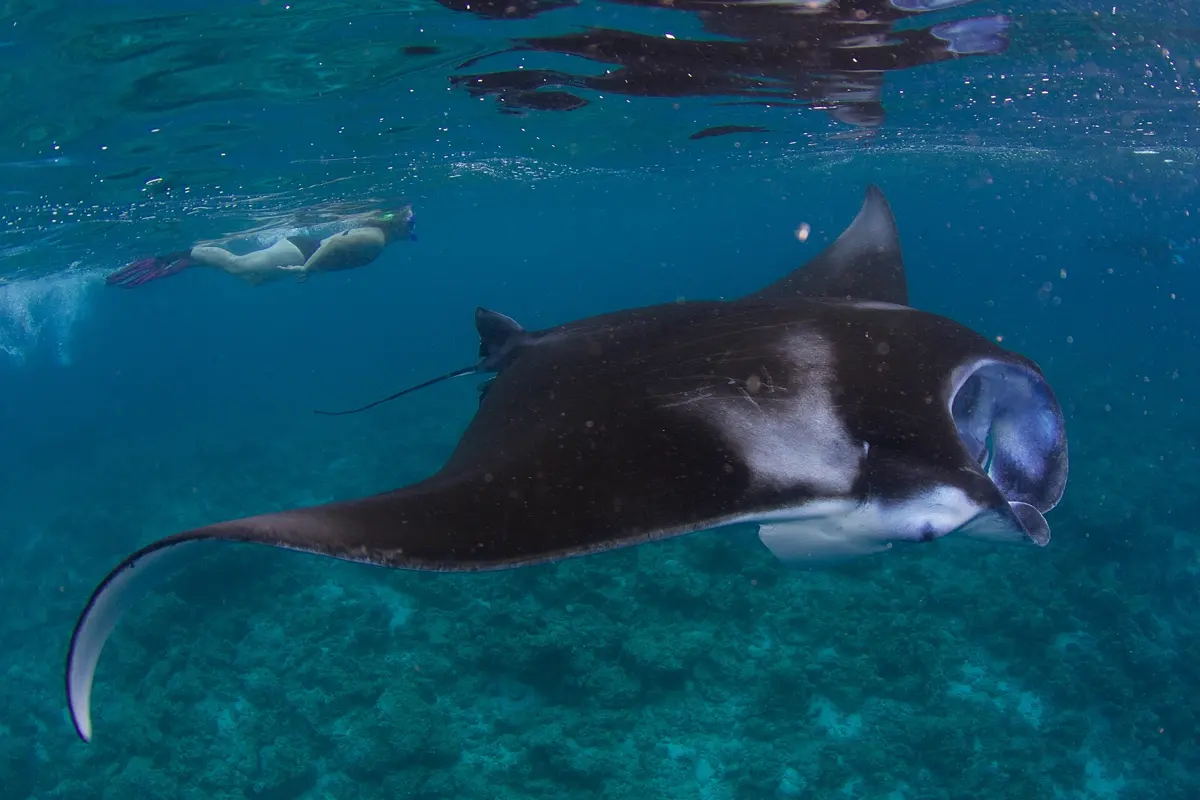
Underwater, the Maldives are worth it all year. Visibility is usually best and the sea calmest in the dry season from January to April. Manta rays and whale sharks follow the plankton that monsoon currents push to the sheltered side of the atolls. As a rule of thumb: during the north-east monsoon the west side of the atolls is better, during the south-west monsoon the east side. The dive centres at the resorts know which sites in your atoll are good at the moment.
Resort island or local island
Most visitors stay on a resort island: one island, one hotel, with a speedboat transfer from the airport or a seaplane to the more distant atolls. Seaplanes only fly in daylight – if your flight lands in the evening, you may spend the first night near Malé. For some years there have also been guesthouses on local islands such as Maafushi. You stay for less and closer to everyday Maldivian life, but the rules of a Muslim country apply: no alcohol, shoulders and knees covered in the village, and bikinis only on designated beaches.
Base map: Natural Earth
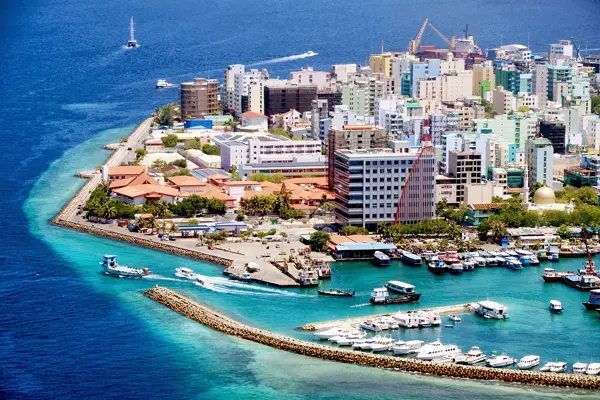
The capital Malé itself is one of the most densely built cities in the world. It is worth half a day* for the fish market, the Old Friday Mosque and the view from the water if you are passing through the airport anyway.

How YesTrip helps with this trip
A Maldives holiday is usually a stay on one island, but it still needs planning: in YesTrip you add your flight, transfer and days on the island, plan a day trip to Malé or a sandbank excursion, and see the forecast for your travel days. The packing list suggests sun protection, snorkelling gear, light clothes and the right plug adapter. If you travel as a group, you share the trip and log shared expenses.
Before you go
- Entry: British citizens receive a tourist visa on arrival. You fill in an online form before travel and need a booked place to stay and a return or onward ticket. Check the current rules on gov.uk.
- Flight: From London there are direct flights of approx. 10.5 hours; many travellers connect via the Gulf instead.
- Power: 230 volts, sockets mostly British three-pin (type G). Visitors from the UK usually need no adapter.
- Mobile data: Roaming in the Maldives is expensive. Resort Wi-Fi is often enough, but a travel eSIM is handy for transfers and excursions.
* Ad – Partner link: if you book there, we earn a commission. Your price stays the same.
Free
Plan your trip in 30 seconds.
Tell YesTrip where and when – the app plans day by day with real places on the map, shows the weather, splits costs with your travel companions and guides you to the next stop on the go.
Frequently asked questions
When is the best time to visit the Maldives?
January to April, during the dry north-east monsoon. Around Malé an average of 46 to 120 mm of rain falls a month, least in February, and the sea is usually calm. It is high season, so resorts are at their most expensive.
When is the rainy season in the Maldives?
From May to December, with the south-west monsoon. May averages 272 mm, and July to December 162 to 260 mm a month. Rain usually comes in short, heavy showers; whole days of rain are less common but possible.
Is it worth visiting the Maldives in the rainy season?
Yes, if you can live with some showers. It stays 28 to 29 °C, many resorts are cheaper, and some atolls see especially large numbers of manta rays at this time. Expect more wind and swell, especially on the west side of the atolls.
How warm is it in the Maldives?
Almost the same all year: 28 to 29 °C by day and 26 to 27 °C at night on average. April is the warmest month and January the coolest, with a difference of one and a half degrees.
When is the Maldives cheapest?
Usually from May to October, during the south-west monsoon low season. The most expensive weeks are around Christmas and New Year, plus February and March.
Sources
- Open-Meteo Historical Weather API (ERA5), average 2015–2024 – open-meteo.com
- Copernicus ERA5 reanalysis (Hersbach et al. 2020) – cds.climate.copernicus.eu
- Maldives entry requirements: UK Foreign Travel Advice – www.gov.uk
Researched with AI support and checked by our editors. Prices, opening hours and weather can change – please check before you go. YesTrip is not a travel agency. Published: .
More best-time guides
 When to go
Best time to visit Mallorca, month by month
For a beach holiday in Mallorca, June to September is best, with daytime highs of 27 to 32 °C; July is the hottest and driest month at 32.1 … · 6 min read When to go
Best time to visit Malta: month by month
The best time to visit Malta is April to June and September to October: Valletta then reaches 19 to 27 °C by day, with little rain. July and … · 5 min read When to go
Best time to visit Morocco: weather by region
The best time to visit Morocco is March to May and October to November: Marrakech then has 23 to 30 °C by day, and even the Sahara around … · 9 min read
All destinations: best time to visit and warm places by month


