
Best time to visit London, month by month
In short
The best time to visit London is May to September, with average daytime highs of 17 to 23 °C and long evenings – in June it stays light until after 9 pm. July and August are the warmest months at about 22.5 °C. Rain falls all year, 40 to 77 mm a month; April is the driest month, October the wettest. Winter days reach 8 to 9 °C.
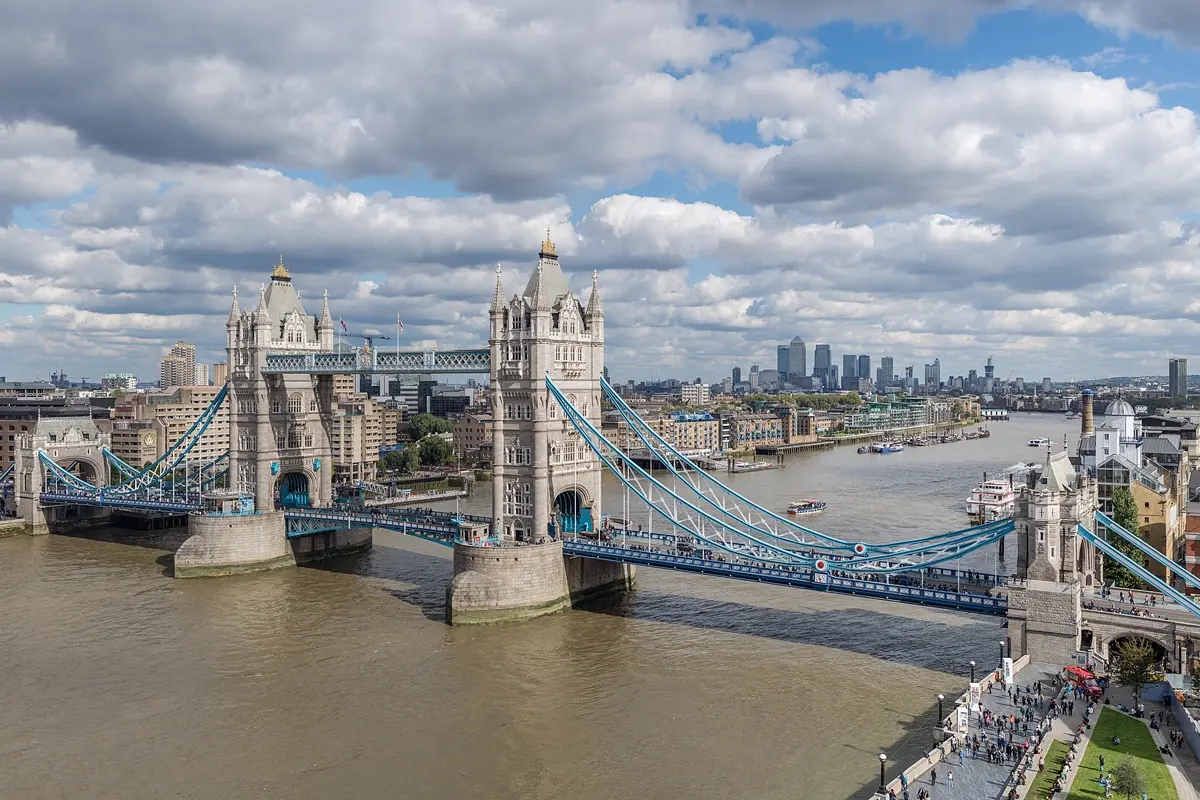
London has a reputation for rain that it only half deserves: it rains often, but rarely much, and the city works in any weather – many of its great museums are free, and there is always a pub nearby. Still, the parks, markets, river walks and long summer evenings make the warm half of the year the best time for most visitors. We analysed the weather of 2015 to 2024 for central London: how warm does it get by day, how cold at night, and how much rain falls each month?
The short answer
For a first visit, May to September is best. Daytime highs are between 17 and 23 °C, the parks are green, and the days are long – around midsummer it stays light until after 9 pm. June combines warm days with fewer summer-holiday crowds than July and August, the warmest months at about 22.5 °C. Spring and autumn are mild and changeable. Winter is cool and grey at 8 to 9 °C by day, but December brings Christmas lights and markets, and January and February are the cheapest months.
London's climate: all 12 months
| Month | Day (avg. high) | Night (avg. low) | Rain per month |
|---|---|---|---|
| January | 7.8 °C | 1.6 °C | 61 mm |
| February | 9.2 °C | 2.5 °C | 54 mm |
| March | 11.0 °C | 3.7 °C | 58 mm |
| April | 13.8 °C | 4.6 °C | 40 mm |
| May | 17.4 °C | 8.2 °C | 57 mm |
| June | 20.9 °C | 11.5 °C | 61 mm |
| July | 22.6 °C | 13.8 °C | 60 mm |
| August | 22.4 °C | 13.6 °C | 57 mm |
| September | 19.7 °C | 11.4 °C | 64 mm |
| October | 15.5 °C | 8.7 °C | 77 mm |
| November | 11.0 °C | 5.1 °C | 66 mm |
| December | 9.3 °C | 4.1 °C | 66 mm |
Temperature and rain: average of 2015–2024 from the ERA5 reanalysis (via Open-Meteo) for central London, rounded. The values describe a grid cell of about 25 km that includes suburbs and green belt; in the dense centre, days and especially nights are often a degree or two warmer.
Two things stand out. Rain is spread almost evenly over the year – between 40 mm in April and 77 mm in October, mostly as light rain or showers rather than downpours. And London is mild: summers are rarely hot on average, winters rarely freezing. A light rain jacket belongs in the suitcase in every month.
Spring (March to May): blossom and longer days
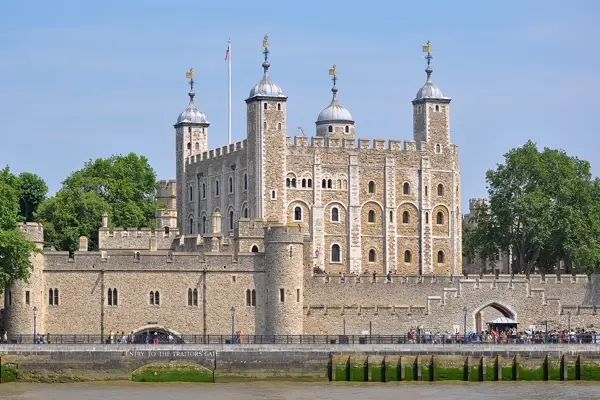
March is still cool at 11 °C, but the days get noticeably longer, and the first blossom appears in the parks. April is the driest month of the year on average, 14 °C by day and still chilly at night. May is lovely: 17 °C, the parks in full bloom, the Chelsea Flower Show in the second half of the month. Easter and the two bank holiday weekends in May are busy; book popular sights such as the Tower of London and the London Eye with a time slot.
Summer (June to August): long evenings and open-air London
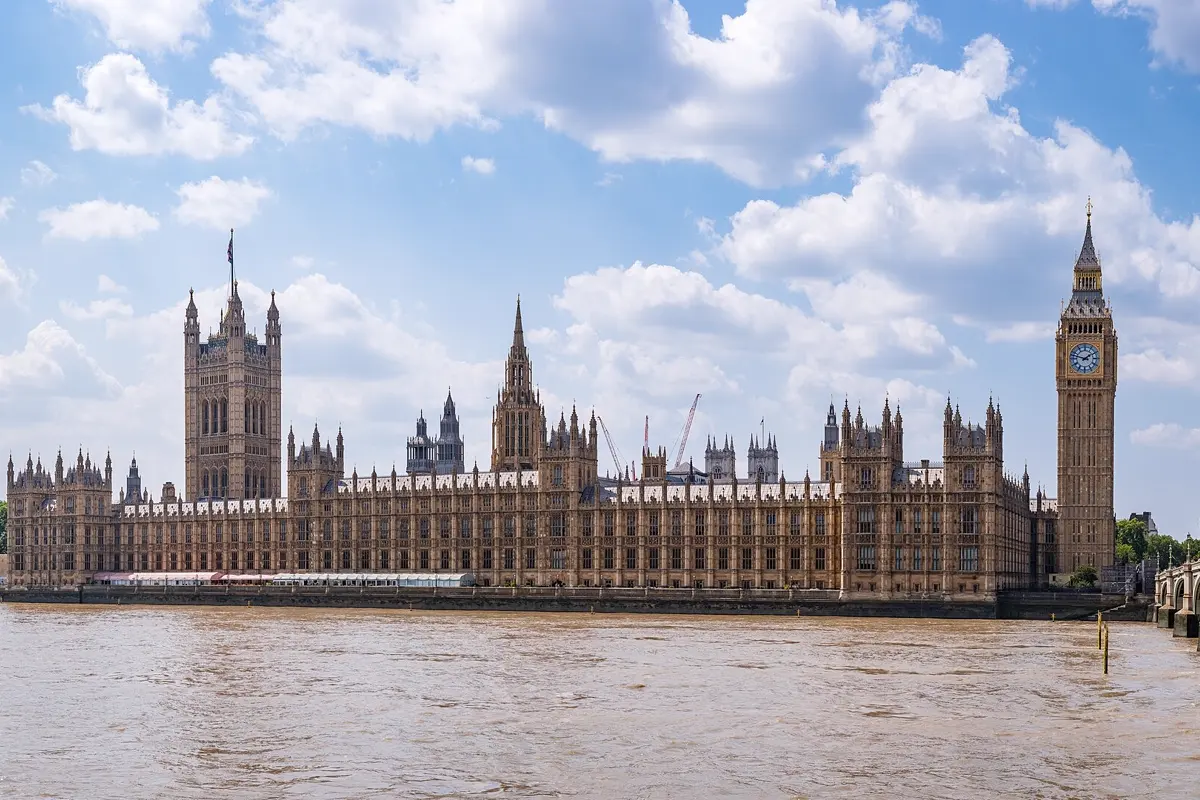
June may be the best month of all: 21 °C, the longest days of the year, and the start of the summer season with Trooping the Colour and, at the end of the month, the Wimbledon tennis championships. July and August average 22.5 °C, with occasional hot spells in some years – many older buildings, Tube lines and hotels have no air conditioning. It is the season of open-air theatre, rooftop bars and picnics in Hyde Park, Regent's Park and on Hampstead Heath. The Notting Hill Carnival fills west London on the August bank holiday weekend. Summer is also peak season, with the highest hotel prices of the year.
Autumn (September to November): the second best season
September is a good alternative to summer: still 20 °C, school holidays over, fewer crowds. October is mild at 15.5 °C, with autumn colours in the parks, but it is the wettest month of the year at 77 mm. November is grey and cool at 11 °C – a good time for museums, theatre and pubs, and during November the Christmas lights go on.
Winter (December to February): lights, museums, low prices
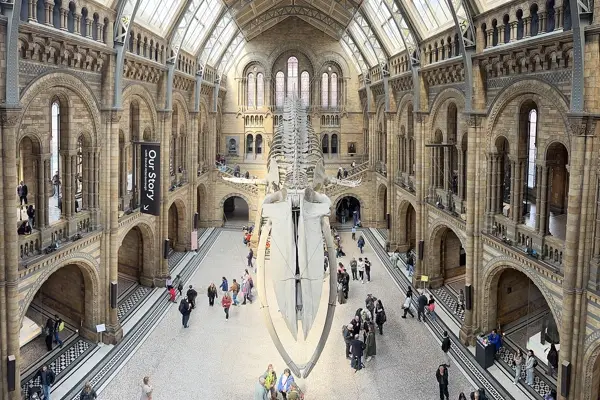
London's winter is cool rather than cold: 8 to 9 °C by day, just above freezing at night, with snow only rarely. Days are short – in December it gets dark before 4 pm. December is popular for the Christmas lights on Oxford Street and Regent Street, the ice rinks and Christmas markets. January and February are the quietest months, with the January sales, shorter queues and often the lowest hotel prices of the year.
Month by month: our recommendation
| When | Best for | Keep in mind |
|---|---|---|
| April, May | Parks in bloom, mild days | Showers, busy bank holidays |
| June | First visit, longest days | Popular, book early |
| July, August | Open-air events, long evenings | Peak prices, crowded |
| September | First visit, fewer crowds | Changeable |
| October, November | Museums, theatre | Wettest month, short days |
| December | Christmas lights and markets | Busy, early darkness |
| January to March | Small budget, museums | Cold and grey |
 London trip planDay by day, with map and tips
How to plan the trip
From Paris, the Eurostar takes about two and a half hours to London; from most European capitals, a direct flight takes 1 to 2.5 hours. Many visitors now need an Electronic Travel Authorisation (ETA) before travelling to the UK – check the official GOV.UK page for your nationality. Four days are good for a first visit; our article how many days in London has plans for each length, day trips from London covers Oxford, Bath and more, and Heathrow to central London explains the arrival.
Many big museums, such as the British Museum, the National Gallery and the Natural History Museum, are free; for the Tower of London, the London Eye and Westminster Abbey, tickets for London's sights with a time slot* can be compared on Tiqets. The UK is not in the EU, so roaming from the EU can cost extra; a travel eSIM for the UK* (Airalo) is often cheaper, and our eSIM price index compares the prices per gigabyte.
In YesTrip you enter London and your dates and get a day-by-day plan with a map that keeps distances short – with the forecast for your travel days and a packing list that matches the weather, including a rain jacket and the adapter for UK plugs. You can take over our ready-made plan and adapt it. YesTrip is free.
All other destinations in this series are in the overview best time to visit.
* Ad – Partner link: if you book there, we earn a commission. Your price stays the same.
Free
Plan your trip in 30 seconds.
Tell YesTrip where and when – the app plans day by day with real places on the map, shows the weather, splits costs with your travel companions and guides you to the next stop on the go.
Frequently asked questions
When is the best time to visit London?
May to September, with daytime highs of 17 to 23 °C and long evenings. June is often the best compromise: warm, very long days and fewer holiday crowds than July and August.
What is the rainiest month in London?
October, with an average of 77 mm. April is the driest at 40 mm. Rain is spread over the whole year and usually falls as light rain or showers.
How warm is London in summer?
July and August average about 22.5 °C by day and 14 °C at night. Hot spells happen in some years; many older buildings and Tube lines have no air conditioning.
Is London worth visiting in winter?
Yes. Days are cool at 8 to 9 °C, but the Christmas lights, theatres and free museums make up for it, and January and February are often the cheapest months.
When is London cheapest?
Usually in January and February, after the Christmas season. Summer, Easter and the weeks before Christmas are the most expensive.
Sources
- Open-Meteo Historical Weather API (ERA5), average 2015–2024 – open-meteo.com
- Copernicus ERA5 reanalysis (Hersbach et al. 2020) – cds.climate.copernicus.eu
- Visit London: official visitor guide to London – www.visitlondon.com
- GOV.UK: Electronic Travel Authorisation (ETA) – www.gov.uk
Researched with AI support and checked by our editors. Prices, opening hours and weather can change – please check before you go. YesTrip is not a travel agency. Published: .
More best-time guides
 When to go
Best time to visit Madeira: weather by month
Madeira is mild all year: in Funchal daytime highs range from 18.5 °C in January to 27.5 °C in August, and nights never drop below 13.6 °C. … · 8 min read When to go
Best time to visit Malaysia: west, east and Borneo
Malaysia is hot all year at 29 to 33 °C, so the best time depends on the coast. The west coast with Langkawi and Penang is driest from … · 6 min read When to go
Best time to visit the Maldives: monsoon guide
The best time to visit the Maldives is January to April, the season of the dry north-east monsoon: around Malé 46 to 120 mm of rain falls a … · 6 min read
All destinations: best time to visit and warm places by month


