
Best time to visit Madeira: weather by month
In short
Madeira is mild all year: in Funchal daytime highs range from 18.5 °C in January to 27.5 °C in August, and nights never drop below 13.6 °C. July and August are the driest months with 12 to 13 mm of rain. The north coast is cooler and wetter, and on Pico do Arieiro January days reach only 6.9 °C. April to October is best for hiking.
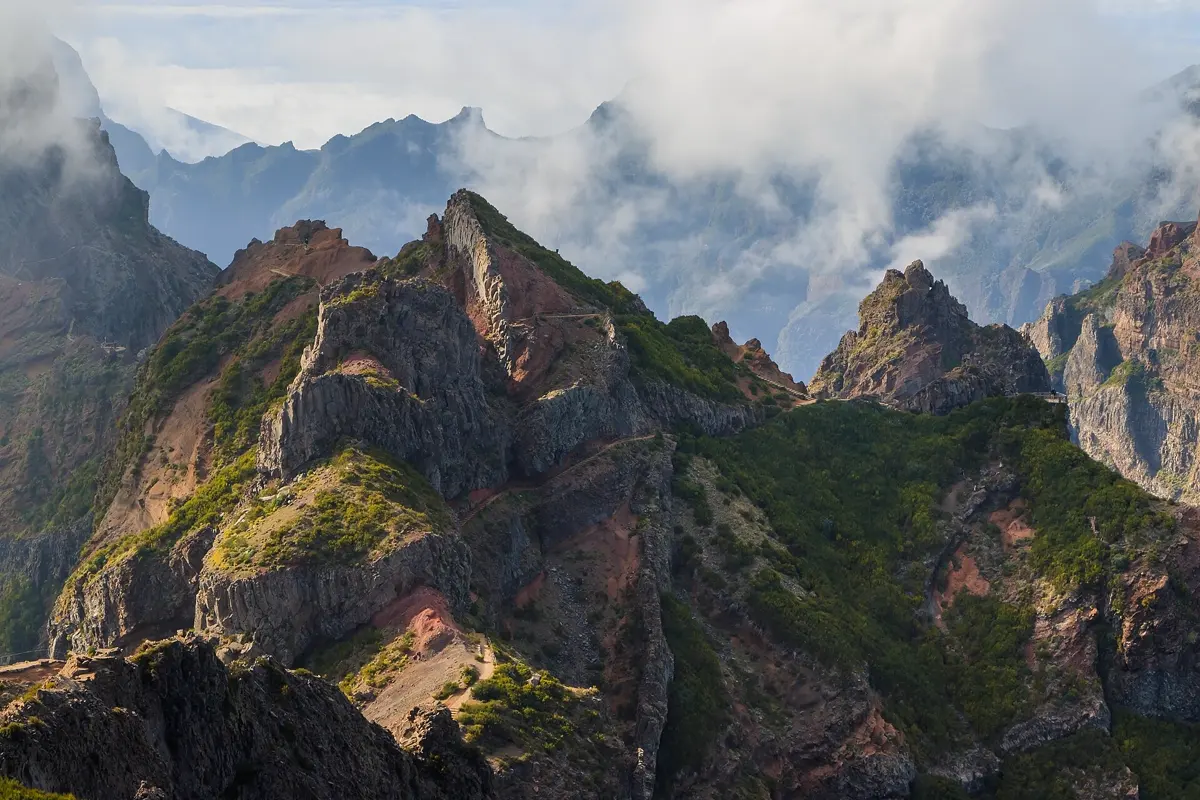
Madeira lies in the Atlantic about 1,000 km off the coast of Portugal, level with Morocco. The island is small but steep: the mountains rise from the sea to more than 1,800 m, and that shapes the weather more than the season does. In Funchal on the south coast it feels like spring all year, the north side is noticeably wetter, and up in the mountains it can get frosty in winter. We analysed the weather data for 2015 to 2024 for three places.
The short answer
- All year: Madeira is a good choice in every season. In Funchal it is 18.5 °C by day in winter and up to 27.5 °C in summer, and the nights stay mild.
- Hiking: April to October. The mountains are then milder and drier than in winter, with 9 to 16 °C by day on Pico do Arieiro.
- Swimming and sun: July to September. Funchal gets only 12 to 13 mm of rain in July and August, and the sea is warmest after the summer.
- Winter: November to March is mild but the wettest time – 67 to 85 mm a month in Funchal and over 110 mm on the north coast.
Funchal's climate: all 12 months
| Month | Day (avg. high) | Night (avg. low) | Rain per month |
|---|---|---|---|
| January | 18.5 °C | 14.1 °C | 70 mm |
| February | 18.5 °C | 13.6 °C | 67 mm |
| March | 19.1 °C | 13.8 °C | 74 mm |
| April | 20.1 °C | 14.5 °C | 74 mm |
| May | 21.7 °C | 16.1 °C | 36 mm |
| June | 23.5 °C | 17.9 °C | 72 mm |
| July | 25.9 °C | 19.6 °C | 13 mm |
| August | 27.5 °C | 20.8 °C | 12 mm |
| September | 25.6 °C | 19.9 °C | 41 mm |
| October | 24.4 °C | 18.9 °C | 83 mm |
| November | 21.4 °C | 16.5 °C | 85 mm |
| December | 19.7 °C | 15.3 °C | 81 mm |
Temperatures and rain: monthly averages 2015–2024 from the ERA5 reanalysis (Open-Meteo), rounded. A grid cell is about 25 km wide and around Funchal stretches from the sea up the slopes; right on the coast there is usually a little less rain, higher up more. A ten-year average can also be shaped by a few wet years – which explains the comparatively high value for June.
The coolest and warmest months in Funchal are only nine degrees apart. Nights are mild all year: even in February the average low does not drop below 13.6 °C. Rain falls mainly from October to April, often in spells of low pressure with sunshine in between.
South, north, mountains: three climates on one island
| Month | Funchal (south) rain | Santana (north) rain | Pico do Arieiro day | Pico do Arieiro night |
|---|---|---|---|---|
| Jan | 70 mm | 118 mm | 6.9 °C | 1.9 °C |
| Feb | 67 mm | 113 mm | 7.1 °C | 1.7 °C |
| Mar | 74 mm | 116 mm | 7.7 °C | 1.9 °C |
| Apr | 74 mm | 101 mm | 9.0 °C | 2.7 °C |
| May | 36 mm | 71 mm | 10.5 °C | 4.2 °C |
| Jun | 72 mm | 82 mm | 12.3 °C | 6.1 °C |
| Jul | 13 mm | 35 mm | 14.8 °C | 7.8 °C |
| Aug | 12 mm | 41 mm | 16.4 °C | 8.8 °C |
| Sep | 41 mm | 74 mm | 14.2 °C | 8.0 °C |
| Oct | 83 mm | 128 mm | 13.1 °C | 7.1 °C |
| Nov | 85 mm | 130 mm | 9.9 °C | 4.5 °C |
| Dec | 81 mm | 135 mm | 8.2 °C | 3.2 °C |
Monthly averages 2015–2024, ERA5 reanalysis (Open-Meteo), rounded. For the summit in particular, a 25 km grid cell can only show the altitude in smoothed form; on individual days it is much colder or warmer up there.
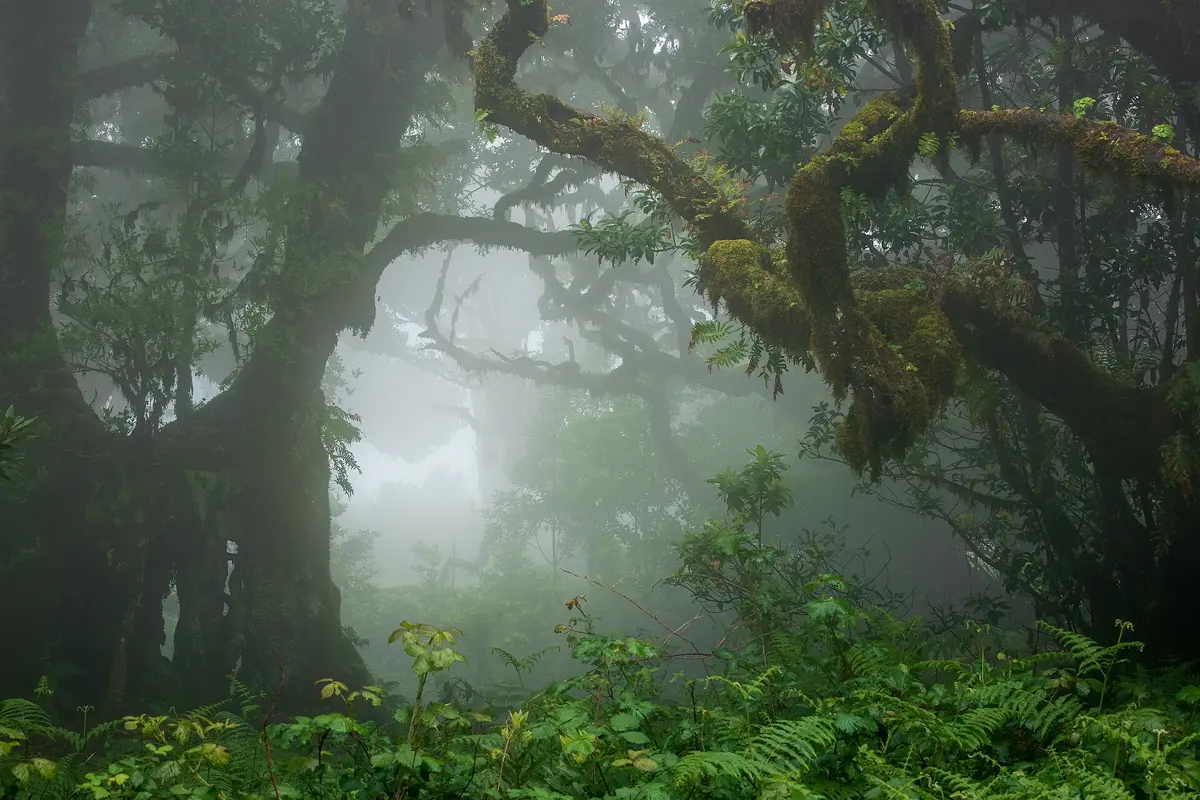
The reason for the differences is the northeast trade wind. It pushes moist air against the north side of the island, where it rises up the slopes and falls as rain. That is why Santana on the north coast gets 135 mm in December and Funchal 81 mm. The north is also cooler: Santana reaches 15.3 °C by day in January, three degrees less than Funchal. This moisture feeds the laurel forest, the Laurisilva, which is a UNESCO World Heritage Site.
In the mountains around Pico do Arieiro (1,818 m) and Pico Ruivo (1,862 m), the island's highest peak, it is different again: in winter nights there average 2 °C, with frost and sometimes snow on individual days. A layer of cloud often sits below the summits – then you stand in the sun above a sea of clouds while Funchal is overcast.
Madeira month by month
November to February
A mild winter escape, but not the sunniest: 18.5 to 21.4 °C by day in Funchal, 13.6 to 16.5 °C at night, and 67 to 85 mm of rain a month. That is pleasant for the city, gardens and walks along the south coast, but the Atlantic is fresh for swimming. Mountain hikes are possible, but you need warm clothes and should expect cloud, wet paths and occasional closures. Funchal is known for its New Year's Eve fireworks over the bay; flights* and hotels book up early.
March and April
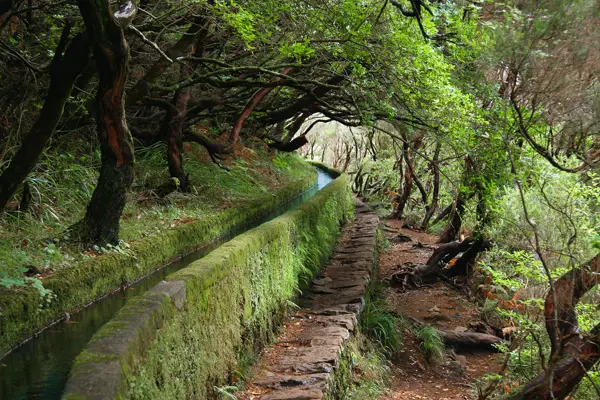
Spring arrives: the island is green, much is in bloom, and at 19 to 20 °C it is pleasantly warm. Rain still falls regularly (74 mm in March and April). It is a lovely time to walk along the levadas, the old irrigation channels with paths beside them. It gets busier around Easter.
May and June
For many the best time for a hiking holiday: 21.7 °C in Funchal in May with only 36 mm of rain, and over 10 °C by day on Pico do Arieiro. June is warmer, though low-pressure systems still bring occasional rain.
July to September
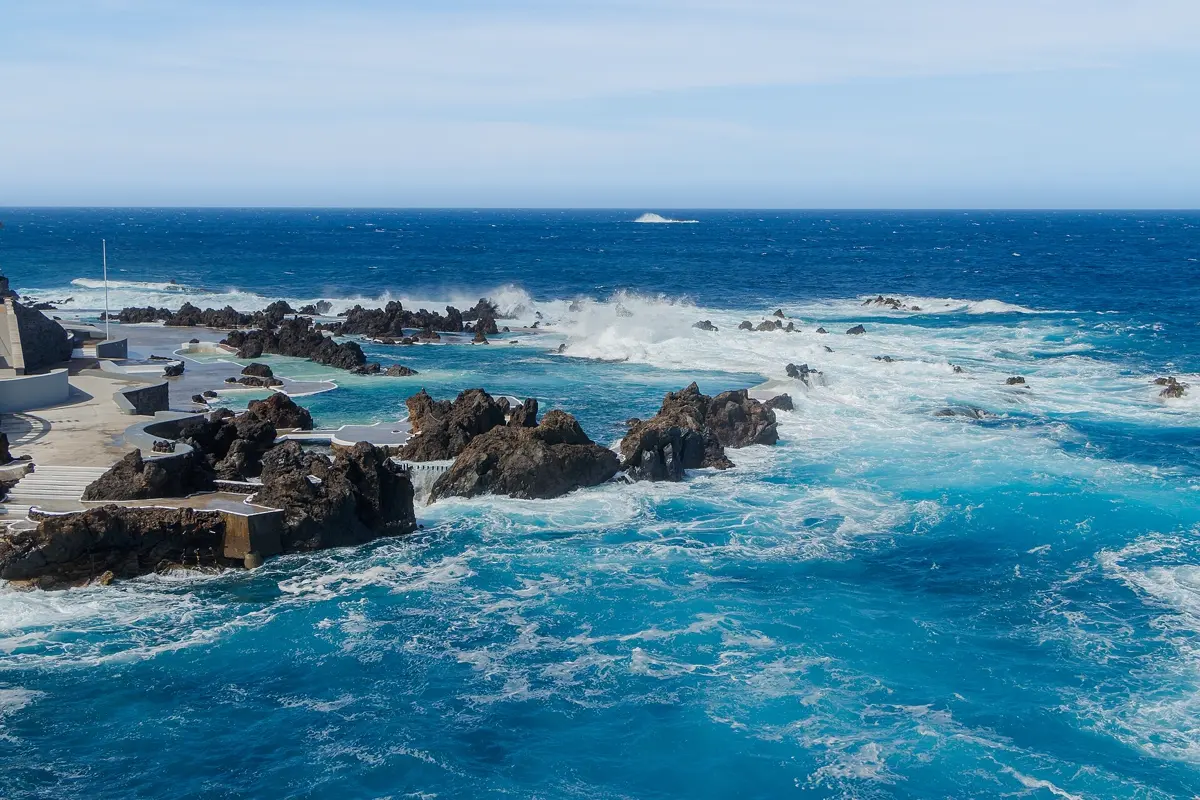
Summer is the driest time: Funchal gets only 12 to 13 mm in July and August, with daytime highs of 26 to 27.5 °C. Ideal for swimming in the natural lava rock pools, for example at Porto Moniz in the northwest, and for boat trips to watch whales and dolphins. The mountains are mild too, with 16.4 °C by day on the summit of Pico do Arieiro in August.
October
Still warm at 24.4 °C by day and 18.9 °C at night, and the sea is at its warmest after the summer. With 83 mm, though, the wetter season begins – the weather is usually more settled in the first weeks of the month than at the end.
What to do in the best months
Madeira is above all an island for walking. The best-known route leads from Pico do Arieiro along a ridge and through tunnels to Pico Ruivo – on a clear day one of the most impressive mountain hikes in Europe, but demanding in cloud and wind. Easier are the levada paths, which run almost level through laurel forest and along steep slopes, for example around Rabaçal. In the east lies the bare, windy Ponta de São Lourenço peninsula with views of both coasts.
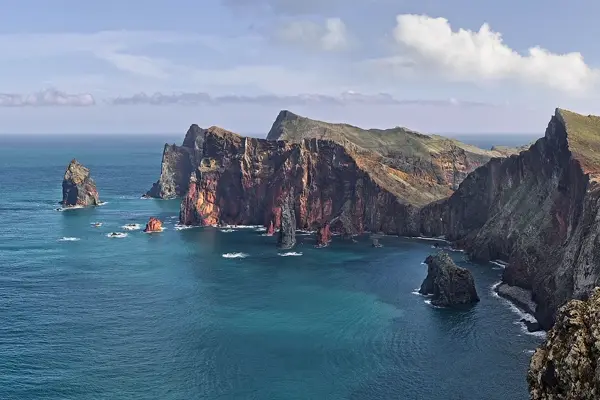
Before any mountain hike, check the forecast for the altitude, not just for Funchal. After storms or wildfires, individual paths are closed temporarily; the regional tourist board publishes the current status. If you don't want to drive yourself, there are guided hikes and jeep tours* that include the transfer to the trailhead.
In Funchal itself, the old town, the Mercado dos Lavradores market and the cable car up to Monte with its gardens are worthwhile. Sandy beaches are rare on Madeira – if you want sand, take the ferry to the neighbouring island of Porto Santo, known for its long beach.
How YesTrip helps with this trip
In YesTrip you enter Madeira and your travel dates and get a day plan with a map: Funchal, a levada walk, sunrise on Pico do Arieiro or a day on the north coast – arranged so the winding drives stay short. The weather forecast covers your travel days, so you can move the summit day to a clear one. The packing list remembers hiking boots, a warm jacket and rain gear for the mountains. Travelling with others, you share the trip and log shared expenses; the map also works offline when there is no signal in the valleys.
What to know before you go
- Entry: Madeira is part of Portugal and therefore the EU. EU citizens travel with an ID card or passport; UK citizens need a valid passport and fall under the Schengen rules for short stays. Check the current rules on gov.uk or with your own government.
- Flight: from London, direct flights to Funchal take about 4 hours. The airport lies between the sea and the mountains; in strong winds there are occasional delays or diversions. Madeira is on the same time as the UK.
- Power: 230 volts, European two-pin sockets (type F). Travellers from the UK need an adapter.
- Mobile data: EU plans usually include roaming in Portugal; with a UK plan, check your provider's terms or use a travel eSIM.
- Car hire: a car is the most convenient way to reach the mountain roads, the north coast and the trailheads. The roads are steep and winding, and many run through tunnels.
How to split your days and which trails to reserve in advance is covered in how many days in Funchal.
* Ad – Partner link: if you book there, we earn a commission. Your price stays the same.
Free
Plan your trip in 30 seconds.
Tell YesTrip where and when – the app plans day by day with real places on the map, shows the weather, splits costs with your travel companions and guides you to the next stop on the go.
Frequently asked questions
When is the best time to visit Madeira?
Madeira is mild all year. April to October is best for hiking, July to September for sun and swimming. In July and August Funchal gets only 12 to 13 mm of rain, with daytime highs of 26 to 27.5 °C.
How warm is Madeira in winter?
In Funchal daytime highs from December to February are 18.5 to 19.7 °C, nights 13.6 to 15.3 °C. It is the wettest time, with 67 to 81 mm a month. The mountains are much colder: on Pico do Arieiro the average January high is 6.9 °C.
When does it rain most on Madeira?
From October to April. Funchal averages 85 mm in November, Santana on the north coast 135 mm in December. July and August are the driest months.
Can you swim on Madeira?
Yes, best from July to October, when the sea is warmest. There are hardly any sandy beaches; people swim in natural lava rock pools such as those at Porto Moniz, from pebble beaches or in hotel pools. The neighbouring island of Porto Santo has a long sandy beach.
Is the north or the south of Madeira better?
The south around Funchal for sun and warmth. The north is cooler and wetter because of the trade wind – in Santana 15.3 °C by day and 118 mm of rain in January. In return it is greener, with the laurel forest that is a UNESCO World Heritage Site.
Sources
- Climate data: ERA5 reanalysis via Open-Meteo, monthly averages 2015–2024 – open-meteo.com
- Copernicus ERA5 reanalysis (Hersbach et al. 2020) – cds.climate.copernicus.eu
- Laurisilva of Madeira: UNESCO World Heritage List – whc.unesco.org
- Entry requirements for Portugal: UK Foreign Travel Advice – www.gov.uk
Researched with AI support and checked by our editors. Prices, opening hours and weather can change – please check before you go. YesTrip is not a travel agency. Published: .
More best-time guides
 When to go
Best time to visit Malaysia: west, east and Borneo
Malaysia is hot all year at 29 to 33 °C, so the best time depends on the coast. The west coast with Langkawi and Penang is driest from … · 6 min read When to go
Best time to visit the Maldives: monsoon guide
The best time to visit the Maldives is January to April, the season of the dry north-east monsoon: around Malé 46 to 120 mm of rain falls a … · 6 min read When to go
Best time to visit Mallorca, month by month
For a beach holiday in Mallorca, June to September is best, with daytime highs of 27 to 32 °C; July is the hottest and driest month at 32.1 … · 6 min read
All destinations: best time to visit and warm places by month


