
Best time to visit Canada: month by month
In short
The best time to visit Canada for most trips is June to September. Vancouver is then at 20 to 23 °C with little rain, Banff reaches 17 to 23 °C, and the mountain roads and lakes are accessible. In the east, Toronto and Montreal are warm at 22 to 27 °C in summer, and late September to mid-October brings the autumn colours. Winter, from December to March, is for skiing: Banff averages -4 to -6 °C by day in January.
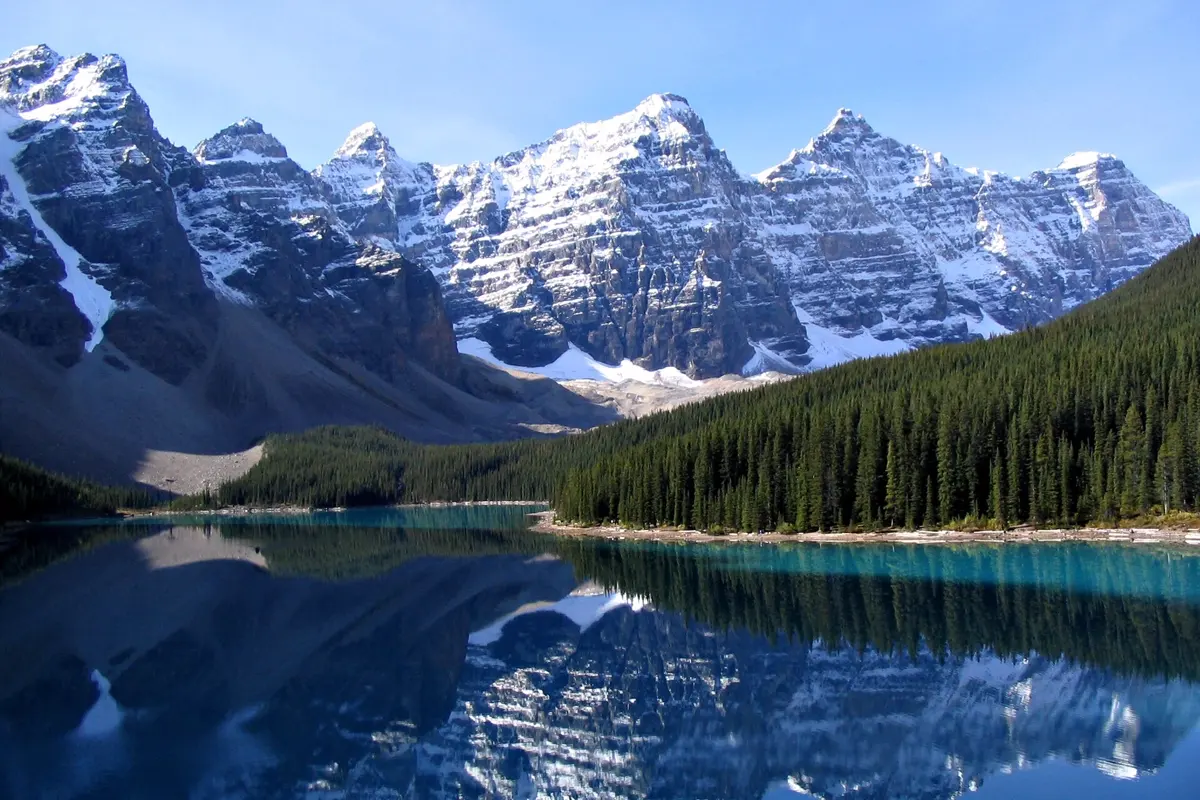
The best time to visit Canada is the summer from June to September: the Rockies are snow-free in the valleys, the national park roads are open, and both coasts are warm and fairly dry. For the east, late September and early October are just as good, with autumn colours and fewer visitors. Canada is huge, though, and the climate differs a lot between the mild, rainy west coast around Vancouver, the high mountains around Banff and the continental east with Toronto and Montreal, where winters are long and cold. We analysed the weather from 2015 to 2024 at four places.
The short answer
- Best months overall: June to September. Vancouver averages 19 to 23 °C by day, Banff 17 to 23 °C, Toronto and Montreal 22 to 27 °C.
- The Rockies: July and August are the warmest and most reliable months; from late May and in September there can be snow at higher levels. Parks Canada runs the road to Moraine Lake only from June to mid-October.
- Autumn colours in the east: late September to mid-October, at 14 to 22 °C by day in Toronto and Montreal.
- Winter and skiing: December to March. Banff averages -4 to -6 °C by day in January, Montreal -4 °C.
- Wettest time in Vancouver: October to January, with 226 to 314 mm a month.
Canada's climate: all 12 months
| Month | Vancouver day | Vancouver rain | Banff day | Banff night | Toronto day | Montreal day | Montreal night |
|---|---|---|---|---|---|---|---|
| January | 6.6 °C | 258 mm | -4.3 °C | -13.1 °C | 0.1 °C | -3.9 °C | -12.6 °C |
| February | 6.9 °C | 149 mm | -3.3 °C | -13.8 °C | 1.0 °C | -2.4 °C | -12.0 °C |
| March | 9.7 °C | 173 mm | 2.7 °C | -9.0 °C | 4.9 °C | 3.3 °C | -5.9 °C |
| April | 12.6 °C | 127 mm | 7.0 °C | -4.4 °C | 10.3 °C | 11.0 °C | 0.8 °C |
| May | 17.1 °C | 66 mm | 13.7 °C | 1.0 °C | 17.2 °C | 19.6 °C | 8.6 °C |
| June | 20.0 °C | 68 mm | 18.5 °C | 4.5 °C | 22.8 °C | 23.8 °C | 14.4 °C |
| July | 23.0 °C | 32 mm | 22.9 °C | 8.4 °C | 26.2 °C | 26.6 °C | 17.9 °C |
| August | 23.3 °C | 49 mm | 22.7 °C | 8.3 °C | 25.5 °C | 25.3 °C | 17.2 °C |
| September | 18.9 °C | 130 mm | 16.6 °C | 3.7 °C | 22.3 °C | 21.8 °C | 13.4 °C |
| October | 13.7 °C | 226 mm | 8.0 °C | -3.0 °C | 15.4 °C | 14.4 °C | 7.0 °C |
| November | 8.8 °C | 314 mm | -0.5 °C | -9.8 °C | 8.3 °C | 6.3 °C | -0.3 °C |
| December | 5.8 °C | 275 mm | -6.2 °C | -14.3 °C | 3.4 °C | 0.1 °C | -6.8 °C |
Temperature and rain: monthly averages 2015–2024 from the ERA5 reanalysis (via Open-Meteo), rounded. A grid cell is about 25 km wide, so the values are a regional average rather than a single weather station. Treat the Vancouver rain figures as a rough guide: the cell includes the mountains of the North Shore, which get much more rain than the city centre. In Banff, precipitation in winter falls mostly as snow, and the mountains around the town are much colder than the valley.
Vancouver has a clear dry season in summer: July gets only 32 mm, November 314 mm. The city rarely freezes, but from October to March it is often grey and wet.
Banff lies at about 1,400 metres in the Rocky Mountains. Even in July the nights average only 8 °C, and from November to March the days stay around or below freezing.
Canada month by month
June to August: summer
The main season for the Rockies, the west coast and the big cities. Banff and Lake Louise reach 19 to 23 °C by day, the lakes are thawed and the high trails gradually become free of snow. Vancouver is sunny and dry, with only 32 to 68 mm of rain a month. Toronto and Montreal are warm and sometimes humid at 23 to 27 °C, the season of festivals and patios. It is also the busiest time in the national parks, so book accommodation in Banff and Jasper early. The UK travel advice notes that the wildfire risk is highest in the grasslands and forests of western Canada and in forested areas of Quebec, Ontario and Nova Scotia during the summer months; smoke can affect views and air quality.
September and October: autumn
Early September is still good in the Rockies, at 17 °C by day in Banff, with fewer visitors and yellow larches at higher levels. From October, snow becomes more likely in the mountains. In the east, late September to mid-October is the time of the autumn colours in Ontario and Quebec, at 14 to 22 °C by day. Vancouver gets wetter from late September. According to the UK travel advice, hurricanes can affect coastal areas from July to November, mainly in the Atlantic provinces.
November to March: winter
Ski season in the Rockies and around Whistler. Banff averages -4 to -6 °C by day in December and January and -13 to -14 °C at night. Montreal is snowy at -4 to 0 °C by day, Toronto slightly milder. Vancouver stays above freezing but is at its wettest. The UK travel advice warns that winter storms with freezing rain, blizzards and hail are frequent from November to April, and that highways in Alberta and British Columbia are often closed by snowstorms and avalanches.
April and May: spring
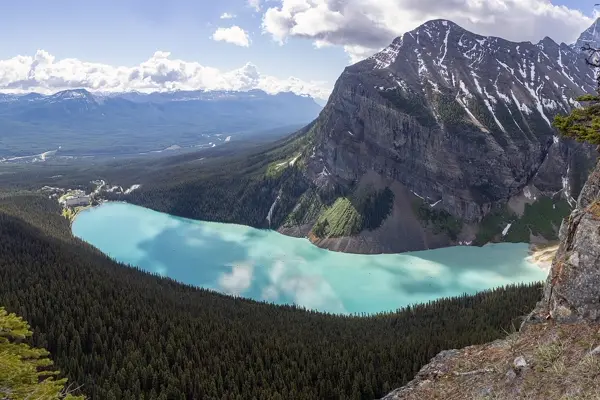
A transition time. Vancouver is green and mild at 13 to 17 °C, and the cherry trees blossom. In the Rockies, the valleys thaw in May; according to Parks Canada, Lake Louise and Moraine Lake usually melt by late May, but high trails often stay snowbound well into June. Toronto and Montreal warm up quickly, from 10 to 11 °C in April to 17 to 20 °C in May.
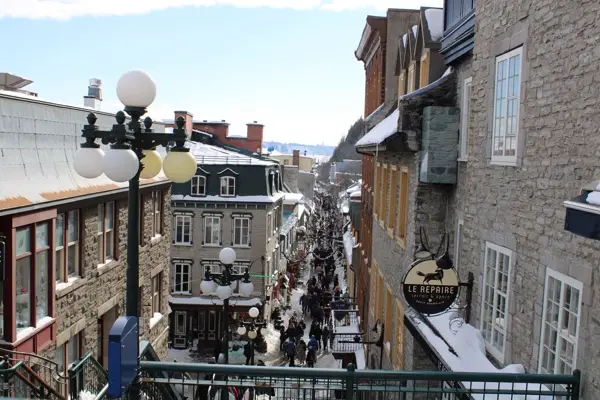
West or east?
Base map: Natural Earth
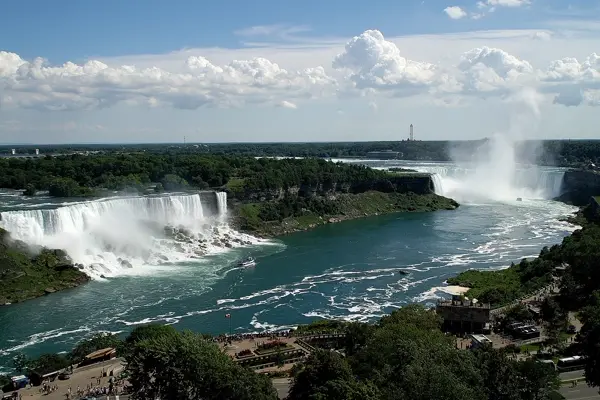
For a first trip of two to three weeks, most travellers choose one side of the country: the west, with Vancouver, Vancouver Island and the Rockies from Banff to Jasper, or the east, with Toronto, Niagara Falls, Ottawa, Montreal and Quebec City. Between the two, flights take about four to five hours. The west is at its best from mid-June to mid-September, the east from June to mid-October. Our Western Canada road trip has a full route through the Rockies. More on the cities: how many days in Vancouver and how many days in Toronto. In the Rockies, a hire car* is the most flexible option. At Lake Louise and Moraine Lake, parking is limited and Moraine Lake Road is closed to personal vehicles; Parks Canada runs shuttles there from June to mid-October.
How YesTrip helps with this trip
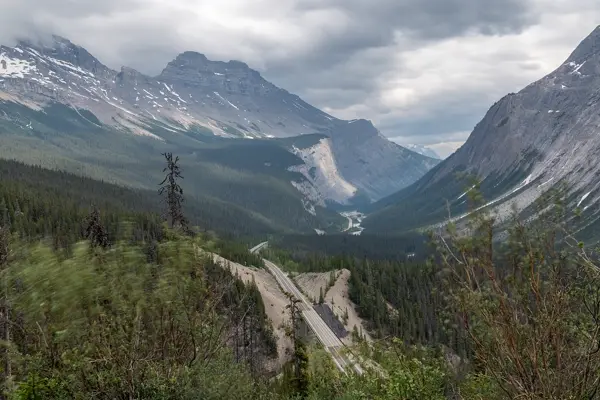
In YesTrip you plan Vancouver, Banff, Lake Louise and Jasper day by day on one map, with the drives in between. The forecast for your travel days shows a cold snap in the mountains or a rainy day on the coast in good time, and the packing list adds warm layers for mountain evenings, rain gear for Vancouver and the right plug adapter. Travelling with friends, you share the trip and split costs like the hire car, park passes and hotels; the map of your places also works offline, which helps on the Icefields Parkway, where there is often no signal.
Before you go
- Entry: British visitors flying to Canada usually need an Electronic Travel Authorisation (eTA). Check the current rules on gov.uk before you travel.
- Time: Vancouver is 8 hours behind the UK, Banff 7 hours and Toronto and Montreal 5 hours; Canada has six time zones.
- Power: 120 volts, sockets type A and B, so bring an adapter.
- Mobile data: a travel eSIM* is usually much cheaper than roaming; our eSIM price index compares the prices per gigabyte.
More destinations by month: Best time to visit: where to go when.
* Ad – Partner link: if you book there, we earn a commission. Your price stays the same.
Free
Plan your trip in 30 seconds.
Tell YesTrip where and when – the app plans day by day with real places on the map, shows the weather, splits costs with your travel companions and guides you to the next stop on the go.
Frequently asked questions
What is the best month to visit Canada?
July or August for the Rockies and the west coast, when Banff reaches 23 °C by day and Vancouver gets only 32 to 49 mm of rain a month. For the east, September is a good alternative, at 22 °C by day in Toronto and Montreal and with fewer visitors.
When is the best time to visit Banff and Lake Louise?
From mid-June to mid-September. Banff then averages 17 to 23 °C by day, the lakes have thawed and the trails are mostly free of snow. Parks Canada runs the shuttles to Moraine Lake only from June to mid-October; the road is closed to personal vehicles.
When are the autumn colours in Canada?
In the east, usually from late September to mid-October, in Ontario and Quebec. Toronto and Montreal are then at 14 to 22 °C by day. In the Rockies, the larches turn yellow in September.
How cold is Canada in winter?
Very cold inland. Banff averages -4 to -6 °C by day and around -13 to -14 °C at night in December and January, and Montreal is at -4 °C by day in January. Vancouver is the exception: it stays above freezing but is wet, with 258 mm in January.
When does it rain most in Vancouver?
From October to January, with 226 to 314 mm a month in the model data. July and August are the driest months, with 32 and 49 mm.
Sources
- Climate data: Open-Meteo Historical Weather API (ERA5), average 2015–2024 – open-meteo.com
- Copernicus ERA5 reanalysis (Hersbach et al. 2020) – cds.climate.copernicus.eu
- Weather forecasts and warnings: Environment and Climate Change Canada – weather.gc.ca
- Lake Louise and Moraine Lake, shuttles and road access: Parks Canada – parks.canada.ca
- Wildfires, winter storms and hurricanes: UK Foreign Travel Advice for Canada – www.gov.uk
- Entry requirements for Canada: UK Foreign Travel Advice – www.gov.uk
Researched with AI support and checked by our editors. Prices, opening hours and weather can change – please check before you go. YesTrip is not a travel agency. Published: .
More best-time guides
 When to go
Best time to visit the Canary Islands
The Canary Islands are mild all year: in the south of Tenerife daytime highs range from 20.5 °C in January to 26.8 °C in August, and rain is … · 7 min read When to go
Best time to visit Cape Verde: weather by month
Cape Verde is a year-round destination: on Sal daytime highs range from 24 °C in February to 29 °C in September and October, and it hardly … · 6 min read When to go
Best time to visit Kenya: safari and migration
The best time for a safari in Kenya is the long dry season from June to October: the Maasai Mara then gets only 14 to 50 mm of rain a month, … · 6 min read
All destinations: best time to visit and warm places by month


