
Best time to visit Andalusia: month by month
In short
The best time to visit Andalusia is March to May and late September to October: Seville then reaches 21 to 28 °C by day. July and August are very hot inland, at 37 °C in Seville and 35 °C in Granada; the coast around Málaga is cooler at 31 °C and the place for beach holidays. Winter is mild on the coast at around 17 °C by day, while Granada's nights drop to 3 °C.
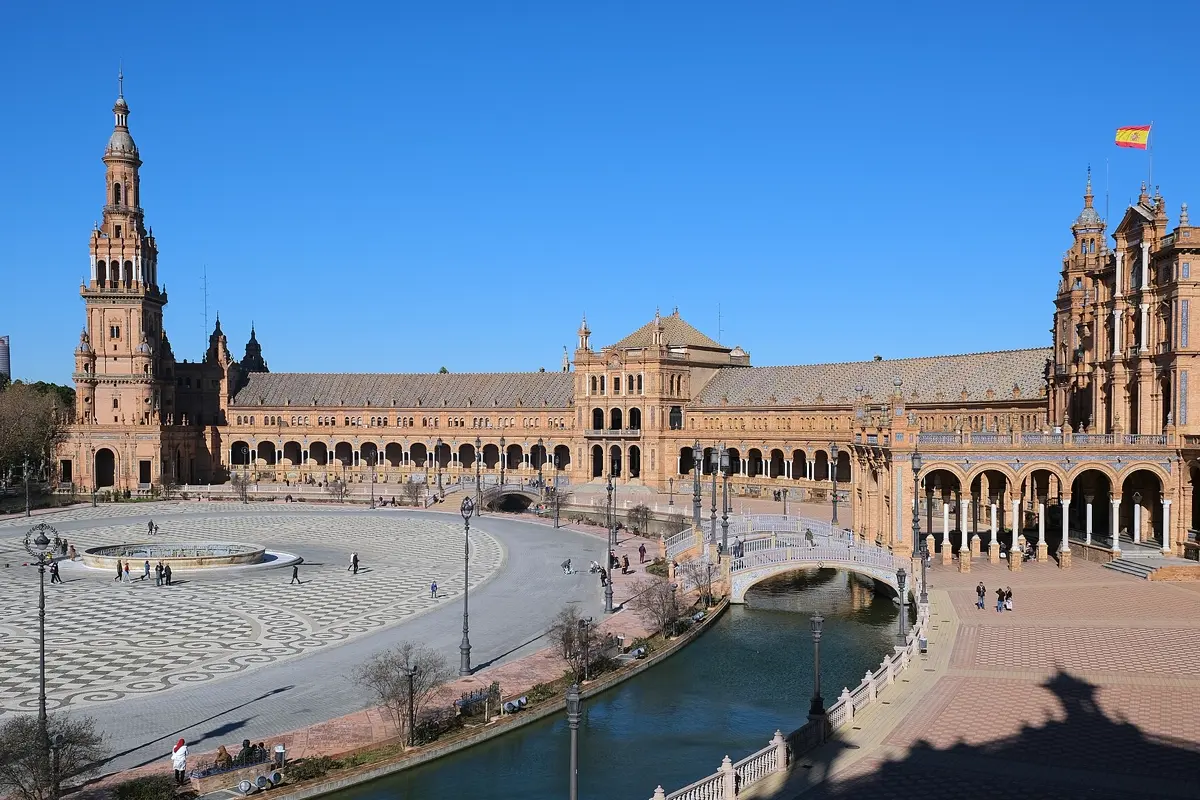
Andalusia in the south of Spain is one of the warmest regions in Europe, and that shapes the whole travel calendar. In spring and autumn, Seville, Granada and Córdoba are at their best. In midsummer, the inland cities become so hot that many travellers move to the coast, the Costa del Sol around Málaga. Winter is mild by the sea, while Granada at the foot of the Sierra Nevada has cold nights and snow on the mountains. We analysed the weather from 2015 to 2024 at three places: Seville, Málaga and Granada.
The short answer
- Best time for the cities: March to May and late September to October. Seville averages 23.3 °C by day in April, 28.5 °C in May and 26.6 °C in October.
- Beach season: June to September on the Costa del Sol. Málaga averages 28 to 31 °C by day and almost no rain in summer.
- Too hot for sightseeing: July and August inland, at 37 °C in Seville and 35 °C in Granada on average – heatwaves go well above that.
- Wettest months: October, November and March, with 59 to 87 mm in Seville.
- Winter: mild by day (16 to 18 °C on the coast and in Seville), but cold nights in Granada at around 3 °C.
Andalusia's climate: all 12 months
| Month | Seville day | Seville night | Seville rain | Málaga day | Málaga rain | Granada day | Granada night |
|---|---|---|---|---|---|---|---|
| January | 15.9 °C | 6.3 °C | 39 mm | 16.6 °C | 46 mm | 13.0 °C | 3.0 °C |
| February | 18.5 °C | 8.1 °C | 31 mm | 17.4 °C | 30 mm | 14.9 °C | 4.1 °C |
| March | 20.6 °C | 9.5 °C | 80 mm | 19.1 °C | 85 mm | 16.9 °C | 5.6 °C |
| April | 23.3 °C | 11.9 °C | 52 mm | 20.6 °C | 41 mm | 20.0 °C | 8.3 °C |
| May | 28.5 °C | 15.4 °C | 28 mm | 24.2 °C | 23 mm | 24.9 °C | 12.1 °C |
| June | 32.5 °C | 18.8 °C | 10 mm | 28.1 °C | 9 mm | 29.9 °C | 16.3 °C |
| July | 37.0 °C | 21.7 °C | 1 mm | 31.1 °C | 1 mm | 35.3 °C | 20.9 °C |
| August | 36.9 °C | 22.2 °C | 3 mm | 30.9 °C | 8 mm | 34.6 °C | 20.6 °C |
| September | 31.5 °C | 19.1 °C | 24 mm | 27.7 °C | 28 mm | 28.6 °C | 16.2 °C |
| October | 26.6 °C | 15.8 °C | 87 mm | 24.1 °C | 68 mm | 23.9 °C | 12.4 °C |
| November | 20.0 °C | 10.7 °C | 59 mm | 20.0 °C | 66 mm | 17.1 °C | 7.1 °C |
| December | 17.1 °C | 8.2 °C | 60 mm | 17.7 °C | 39 mm | 14.8 °C | 4.7 °C |
Temperature and rain: monthly averages 2015–2024 from the ERA5 reanalysis (via Open-Meteo), rounded. A grid cell is about 25 km wide, so the values are a regional average rather than a single weather station. Granada's cell also covers higher ground, so in the city itself winter nights can be a little milder and summer afternoons a little hotter.
Seville climbs steeply from spring to summer: from 23.3 °C in April to 37.0 °C in July. That is why May can already feel like summer, and why July and August are hard going for long walks through the old town.
Almost all the rain falls between October and April, often on a few days with heavy showers. From June to August it hardly rains at all.
Andalusia month by month
March to May: spring
The classic season for Seville, Córdoba and Granada. The orange trees blossom, the days are warm and the evenings mild. Holy Week before Easter, with its processions, and Seville's April Fair are highlights of the year and the busiest weeks in the city – hotels book up early. For the Alhambra in Granada, book tickets well in advance through the official ticket office. March can still be rainy.
June to August: summer
Very hot inland: Seville averages 37 °C by day in July and August, and heatwaves regularly push temperatures higher. If you visit the cities now, go out early in the morning and after sunset and spend the afternoon indoors, as locals do. The coast is more pleasant: Málaga averages around 31 °C and the sea is warm. According to the UK travel advice, extreme weather affects much of Spain in summer and wildfires happen often; check warnings from the Spanish Meteorological Office (AEMET).
September and October: autumn
From mid-September the heat eases. October is a very good month for the cities, at 26.6 °C in Seville, but it is also one of the wettest, with 87 mm. September is still beach weather on the Costa del Sol.
November to February: winter
Mild by day, at 16 to 18 °C in Seville and Málaga, and quiet outside Christmas. The coast is popular with travellers escaping northern winters. In Granada it gets cold at night, around 3 °C in January, and the Sierra Nevada above the city is a ski area in winter.




Where the places are
Base map: Natural Earth
Seville, Córdoba, Granada and Málaga are linked by train and motorway. A round trip of a week or more fits best into spring or autumn; in summer, combine a short city visit with days on the coast. Our Andalusia road trip has a ready-made route. More on the cities: how many days in Seville and how many days in Málaga. For a winter sun alternative off the African coast, see the best time to visit the Canary Islands.
How YesTrip helps with this trip
In YesTrip you plan Seville, Córdoba, Granada and the coast day by day on one map, with the drive or train between the cities. The forecast for your travel days shows when a hot afternoon is better spent in the Alcázar's shady gardens than in the streets, and the packing list adds sun protection and a light layer for the evenings. Travelling as a group, you share the trip and split costs such as the hire car and Alhambra tickets.
Before you go
- Entry: Spain is in the Schengen area. Check the current entry rules for British citizens on gov.uk before you travel.
- Time: Spain is 1 hour ahead of the UK all year.
- Power: 230 volts, sockets type C and F, so bring an adapter from the UK.
- Mobile data: a travel eSIM* can be cheaper than roaming, depending on your UK provider; our eSIM price index compares the prices per gigabyte.
More destinations by month: Best time to visit: where to go when.
Holy Week is a reason of its own to go; details are in Semana Santa in Seville 2027.
* Ad – Partner link: if you book there, we earn a commission. Your price stays the same.
Free
Plan your trip in 30 seconds.
Tell YesTrip where and when – the app plans day by day with real places on the map, shows the weather, splits costs with your travel companions and guides you to the next stop on the go.
Frequently asked questions
What is the best month to visit Andalusia?
April, May and October. Seville averages 23.3 °C by day in April, 28.5 °C in May and 26.6 °C in October – warm enough for evenings outside, but without the summer heat. October is wetter than spring.
Is Seville too hot in summer?
For many travellers, yes. Seville averages 37 °C by day in July and August, and heatwaves go well beyond that. If you go, plan sightseeing for the early morning and evening, and check AEMET's heat warnings.
When is the best time for the beach in Andalusia?
June to September on the Costa del Sol. Málaga averages 28 to 31 °C by day and almost no rain in these months. September is warm and less crowded than August.
Is Andalusia worth visiting in winter?
Yes, for mild city trips and the coast. Seville and Málaga average 16 to 18 °C by day from December to February. Granada is colder at night, around 3 °C in January, and the Sierra Nevada has snow.
When does it rain in Andalusia?
Mainly from October to April. Seville gets 87 mm in October and 80 mm in March, while June to August are almost dry, with 1 to 10 mm a month.
Sources
- Climate data: Open-Meteo Historical Weather API (ERA5), average 2015–2024 – open-meteo.com
- Copernicus ERA5 reanalysis (Hersbach et al. 2020) – cds.climate.copernicus.eu
- Weather warnings: Spanish Meteorological Office (AEMET) – www.aemet.es
- Summer extreme weather and wildfires: UK Foreign Travel Advice for Spain – www.gov.uk
- Alhambra, Generalife and Albayzín, Granada: UNESCO World Heritage – whc.unesco.org
- Official ticket sales: Patronato de la Alhambra y Generalife – www.alhambra-patronato.es
- Entry requirements for Spain: UK Foreign Travel Advice – www.gov.uk
Researched with AI support and checked by our editors. Prices, opening hours and weather can change – please check before you go. YesTrip is not a travel agency. Published: .
More best-time guides
 When to go
Best time to visit Australia: month by month
There is no single best time for Australia, because the south and the tropical north have opposite seasons. Sydney and Melbourne are best … · 7 min read When to go
Best time to visit Bali: dry and rainy season
The best time to visit Bali is May to September, the dry season: the south then gets only 56 to 107 mm of rain a month, least in August. … · 7 min read When to go
Best time to visit Barcelona, month by month
The best time to visit Barcelona is May and June or September, with average daytime highs of 21 to 26 °C – warm enough for the beach, not … · 6 min read
All destinations: best time to visit and warm places by month


