
Best time to visit Bali: dry and rainy season
In short
The best time to visit Bali is May to September, the dry season: the south then gets only 56 to 107 mm of rain a month, least in August. November to March is the rainy season with 207 to 336 mm. It is warm all year – average daytime highs are 27 to 29 °C, nights in the south 23 to 25 °C.
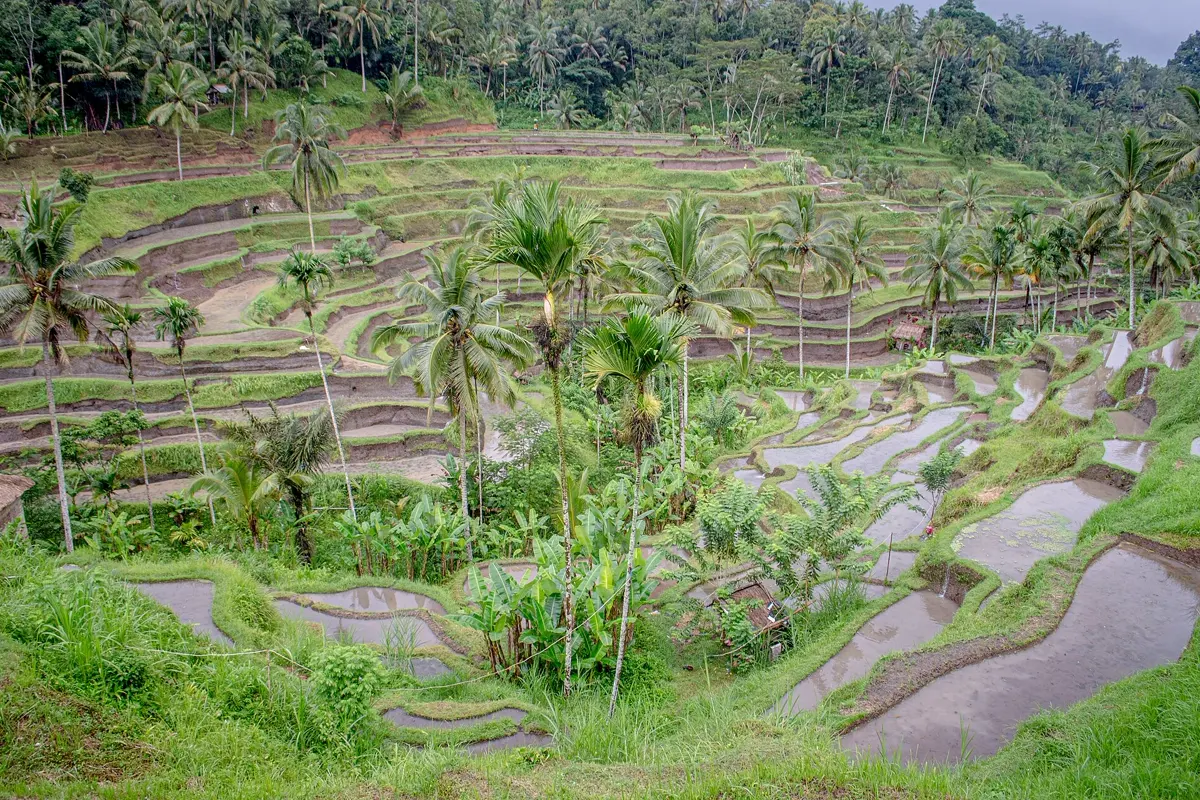
Bali is warm all year, so the question of when to go is mostly a question of rain. In the south of the island the wettest month gets six times as much rain as the driest: 56 mm in August, 336 mm in February. Temperature, by contrast, varies by only a little over two degrees across the year. We analysed the weather of 2015 to 2024 for the south around Denpasar and for Ubud in the island's interior.
The short answer
- Best time: May to September. This is the dry season, with 56 to 107 mm of rain a month in the south, lots of sun and slightly lower humidity. Ideal for beaches, temples, rice terraces and volcano hikes.
- Good shoulder months: April and October. Rain is tailing off or slowly returning, and it is usually less busy than in midsummer.
- Rainy season: November to March, with 207 to 336 mm a month. Showers are often heavy but rarely last all day. Travel is perfectly possible, but hikes and boat trips are cancelled more often.
July and August are the most popular months because of the European and North American summer holidays, so flights* and rooms book up early. If you are flexible, go in May, June or September: similarly dry, fewer crowds.
Bali's climate: all 12 months
| Month | Day (avg. high) | Night (avg. low) | Rain south (Denpasar) | Rain Ubud |
|---|---|---|---|---|
| January | 28.9 °C | 24.5 °C | 311 mm | 320 mm |
| February | 28.8 °C | 24.2 °C | 336 mm | 316 mm |
| March | 29.2 °C | 24.3 °C | 238 mm | 252 mm |
| April | 29.1 °C | 24.3 °C | 181 mm | 179 mm |
| May | 28.8 °C | 24.5 °C | 107 mm | 101 mm |
| June | 27.9 °C | 23.9 °C | 95 mm | 103 mm |
| July | 27.0 °C | 23.3 °C | 82 mm | 134 mm |
| August | 27.1 °C | 22.8 °C | 56 mm | 118 mm |
| September | 27.9 °C | 23.0 °C | 74 mm | 104 mm |
| October | 29.0 °C | 23.5 °C | 104 mm | 137 mm |
| November | 29.4 °C | 24.2 °C | 207 mm | 251 mm |
| December | 29.1 °C | 24.4 °C | 295 mm | 326 mm |
Temperature and rain: average of 2015–2024 from the ERA5 reanalysis (via Open-Meteo), rounded; temperatures for Denpasar. A grid cell is about 25 km wide, so the difference between coast and hills is blurred. In Ubud nights are on average about 1.5 degrees cooler than on the coast, and the highlands around Bedugul and Mount Batur are noticeably cooler still.
Two things stand out. First, nights are almost as warm as days, with a gap of only four to five degrees. Second, the interior gets more rain than the coast even in the dry season: Ubud sees 118 to 134 mm in July and August, the south only 56 to 82 mm. If you want to see rice terraces and waterfalls, pack an umbrella for Ubud, even in summer.
Bali month by month
January and February
The wettest months: the south gets 311 and 336 mm of rain, often as heavy afternoon or night-time showers and thunderstorms. In between, the sun does come out. It is humid, streets can flood briefly, and some beaches collect a lot of washed-up debris. In return the island is lush, and away from the New Year holidays prices are lower.
March
Still rainy season at 238 mm, but noticeably drier than February. Nyepi, the Balinese New Year, usually falls in March: a day of silence when nobody goes out on the streets anywhere on the island, the airport closes and tourists also stay inside their hotels. The date follows the Balinese calendar and changes every year – check it before you book.
April
The transition to the dry season: 181 mm of rain and 29 °C by day. The landscape is still deep green and high season has not started yet. A good month if you want greenery and quiet and can live with a few showers.
May and June
For many the best months of all: 95 to 107 mm of rain in the south, 28 to 29 °C by day and no school holidays in Europe yet. Beaches, temples and hikes all work well.
July and August
The driest and slightly coolest months: 27 °C by day, around 23 °C at night, and only 56 mm of rain in the south in August. This is high season. Kuta, Seminyak, Canggu and Ubud are busy, so reach popular sights* early in the morning. It is the best time for sunrise on Mount Batur, as views are usually clear.
September and October
Still dry – 74 mm in September, 104 mm in October – and calmer once the summer holidays are over. In October it gets a little warmer and more humid again. For divers and snorkellers these months are often especially pleasant.
November and December
The rainy season begins: 207 mm in November, 295 mm in December. Over Christmas and New Year Bali is still heavily booked, especially by travellers from Australia and Asia. Expect heavy showers and keep day trips flexible.
What works best when
| Plan | Best months | Keep in mind |
|---|---|---|
| Beach and swimming in the south | May to October | July and August very busy |
| Rice terraces and Ubud | April to June, September | showers possible even in the dry season |
| Mount Batur at sunrise | May to September | summit often cloudy in the rainy season |
| Surfing on the west coast (Kuta, Uluwatu) | May to September | in the rainy season the east coast works better |
| Travelling on a budget | January to March, November | rainy season, except the holidays |
Where to go in Bali
Base map: Natural Earth
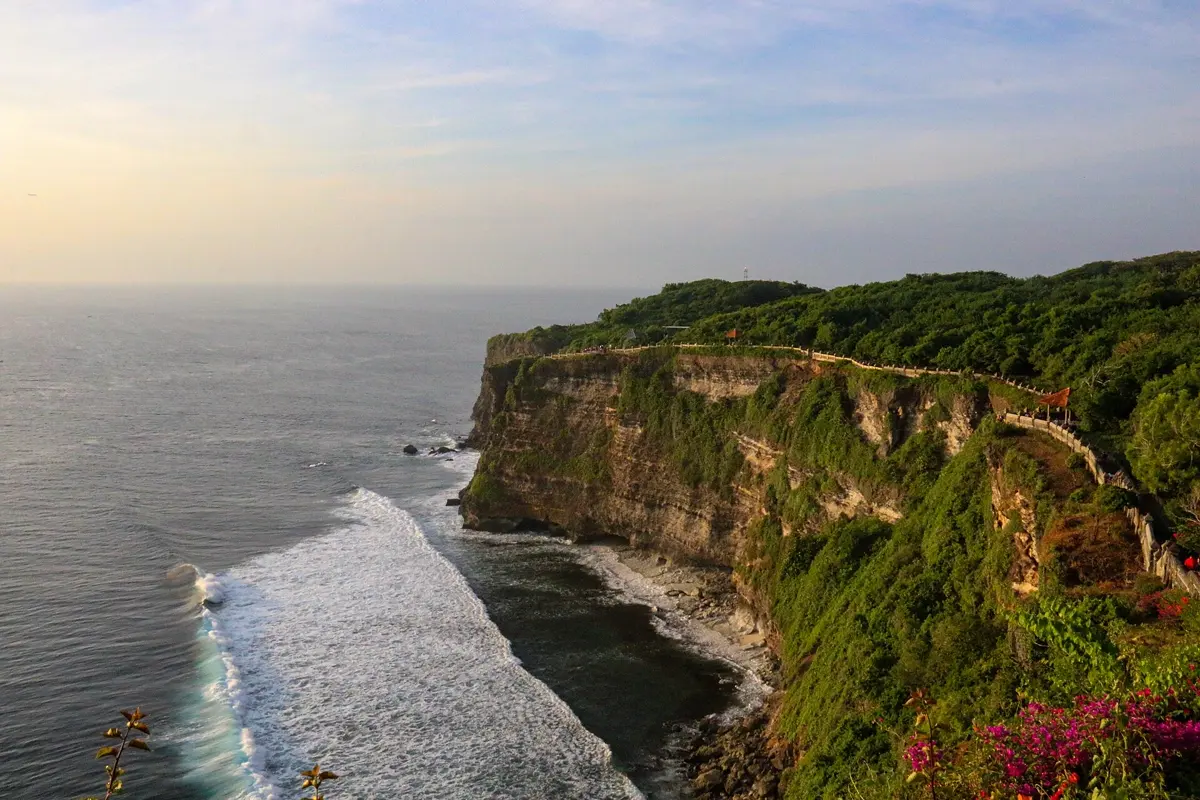
The south, with Kuta, Seminyak and Canggu, is close to the airport* and is the island's beach area. On the Bukit peninsula the temple of Pura Luhur Uluwatu sits on a cliff above the sea – it is at its best at sunset, and in the dry season the evening sky is almost always clear.
Ubud in the interior is the cultural centre, with its palace, markets and dance performances. North of it lie the Tegallalang rice terraces. Higher up, the temple of Ulun Danu Bratan stands on Lake Bratan; it is noticeably cooler here, and clouds often roll in by mid-morning.


For sunrise on Mount Batur you start in the middle of the night. It is cold at the top, so bring a warm jacket even if it is 27 °C down on the beach.

How YesTrip helps with this trip
In YesTrip you enter Bali and your dates and get a day-by-day plan with a map that keeps distances short – which matters on an island where traffic between the south and Ubud eats up time. The forecast for your travel days shows which day suits Mount Batur or the rice terraces best. The packing list suggests a rain jacket, light clothes, temple clothing and the right plug adapter. If you travel as a group, you share the trip and log shared expenses; the map also works offline.
Before you go
- Entry: Indonesia requires a visa, available on arrival or online in advance, and it costs a fee. Bali also charges its own levy on foreign visitors. Your passport should be valid for at least six months. Check the current rules on gov.uk.
- Flight: There are no direct flights from the UK. With one change, for example in the Gulf or South-East Asia, the journey usually takes 17 to 20 hours.
- Power: 230 volts, sockets type C and F (two round pins). From the UK you need an adapter.
- Temples: Cover shoulders and knees; many temples ask you to wear a sarong, often lent at the entrance.
- Mobile data: Roaming in Indonesia is expensive. A travel eSIM is usually much cheaper.
To use the dry season for more than the beach, see our 2-week Bali itinerary through Ubud, the east and the north.
* Ad – Partner link: if you book there, we earn a commission. Your price stays the same.
Free
Plan your trip in 30 seconds.
Tell YesTrip where and when – the app plans day by day with real places on the map, shows the weather, splits costs with your travel companions and guides you to the next stop on the go.
Frequently asked questions
When is the best time to visit Bali?
May to September, during the dry season. The south then gets on average only 56 to 107 mm of rain a month, least in August. May, June and September are almost as dry as midsummer but less crowded.
When is the rainy season in Bali?
From November to March. The south then gets 207 to 336 mm of rain a month, most in February. Rain usually comes as heavy showers or thunderstorms, often in the afternoon or at night; whole days of rain are less common.
Is it worth visiting Bali in the rainy season?
Yes. It stays warm at 28 to 29 °C, the island is green, and prices are lower outside the holidays. Expect heavy showers, keep day trips flexible and bring a rain jacket. Volcano hikes and boat trips are cancelled more often.
How warm is Bali?
Much the same all year: average daytime highs are 27 to 29 °C and nights in the south 23 to 25 °C. July and August are the coolest months. The highlands around Bedugul and Mount Batur are noticeably cooler.
What is Nyepi?
Nyepi is the Balinese New Year, a day of silence that usually falls in March. Nobody goes out on the streets, the airport closes, and tourists also stay in their hotels. The date changes every year.
Sources
- Open-Meteo Historical Weather API (ERA5), average 2015–2024 – open-meteo.com
- Copernicus ERA5 reanalysis (Hersbach et al. 2020) – cds.climate.copernicus.eu
- Indonesia entry requirements: UK Foreign Travel Advice – www.gov.uk
Researched with AI support and checked by our editors. Prices, opening hours and weather can change – please check before you go. YesTrip is not a travel agency. Published: .
More best-time guides
 When to go
Best time to visit Barcelona, month by month
The best time to visit Barcelona is May and June or September, with average daytime highs of 21 to 26 °C – warm enough for the beach, not … · 6 min read When to go
Best time to visit Costa Rica: dry & green season
The best time to visit Costa Rica is December to April, the dry season on the Pacific side and in the Central Valley: Liberia in Guanacaste … · 7 min read When to go
Best time to visit the Dominican Republic
The best time to visit the Dominican Republic is December to April: Punta Cana then sees 27 to 28 °C by day and 57 to 78 mm of rain a month. … · 6 min read
All destinations: best time to visit and warm places by month


