
How many days in Seville? Plans for 1–4 days
In short
Two days in Seville cover the essentials – the cathedral with the Giralda, the Real Alcázar, the Santa Cruz quarter, Plaza de España, Las Setas and Triana across the river. Three days are ideal, adding a day trip to the Mezquita of Córdoba, about 45 minutes by high-speed train. The most pleasant months are March to May, October and November; in July and August it often reaches about 40 °C.
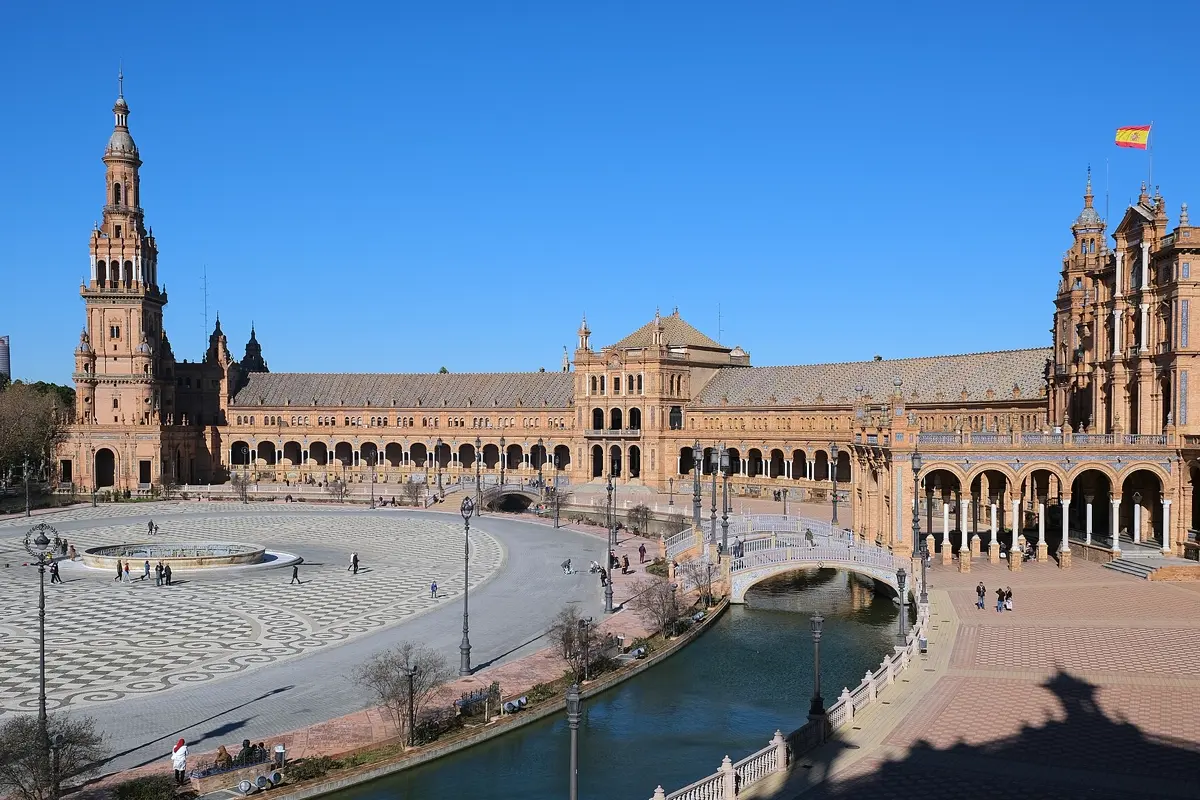
Seville is the capital of Andalusia and the city of flamenco, orange trees and Moorish palaces. Its old town is one of the largest in Europe, but the most famous sights lie close together around the cathedral, so you can see a lot on foot in a short time. The short answer: 2 days are enough for the essentials, 3 days are ideal with a day in Córdoba, and with 4 days you can slow down or add a second trip.
How many days in Seville? The overview
| Days | What you see | Best for |
|---|---|---|
| 1 day | the cathedral and the Giralda, the Real Alcázar, the Santa Cruz quarter, Plaza de España | a stop on an Andalusia trip |
| 2 days | plus the Casa de Pilatos, Las Setas, the Torre del Oro, Triana with its market, a flamenco show | a long weekend |
| 3 days | plus a day trip to Córdoba with the Mezquita | the ideal length |
| 4 days | plus a slow day in María Luisa Park and the museums, or a second trip to Cádiz or Carmona | slow travellers |
The most important thing to plan: the Real Alcázar and the cathedral sell tickets with an entry time on their official websites, and in spring the popular times are booked out days ahead. Book both before you travel and put them on the same morning – they are opposite each other.
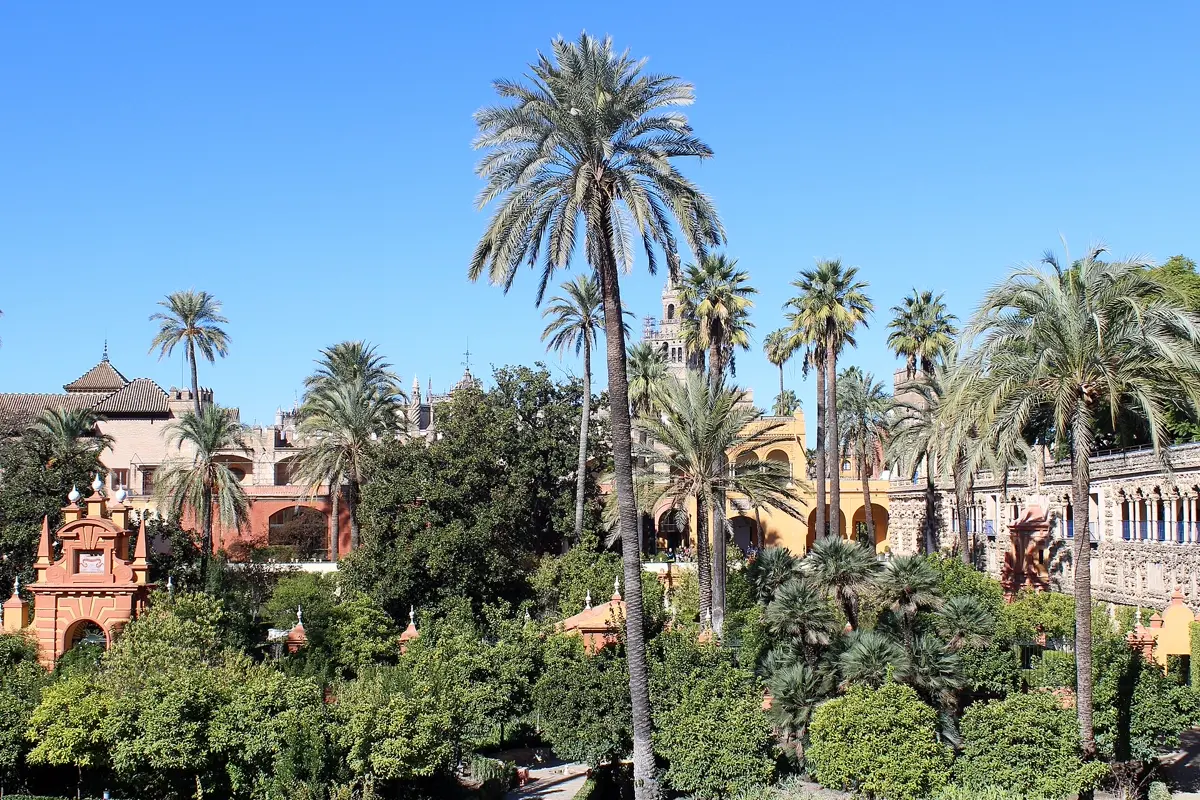
One day in Seville: cathedral, Alcázar and Plaza de España
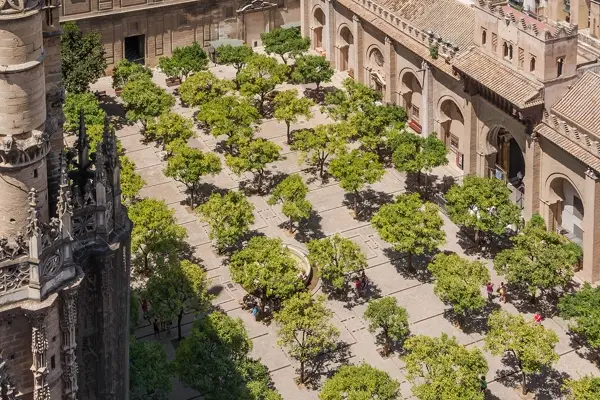
One day is enough for the big three if you start early. The cathedral is one of the largest Gothic churches in the world, built on the site of the old mosque; its bell tower, the Giralda, was once the minaret and is climbed by ramps rather than stairs. Next to it is the General Archive of the Indies, and across the square the Real Alcázar, a royal palace in the Mudéjar style with tiled courtyards and large gardens – allow two to three hours. All three together are a UNESCO World Heritage Site. After lunch, get lost in the narrow lanes of the Santa Cruz quarter, then walk south to the Plaza de España, the semicircular building of the 1929 Ibero-American Exposition with its tiled benches for every Spanish province, and María Luisa Park next to it.
What does not fit into this day: Triana, Las Setas and a flamenco evening.
Two days in Seville: the centre and Triana
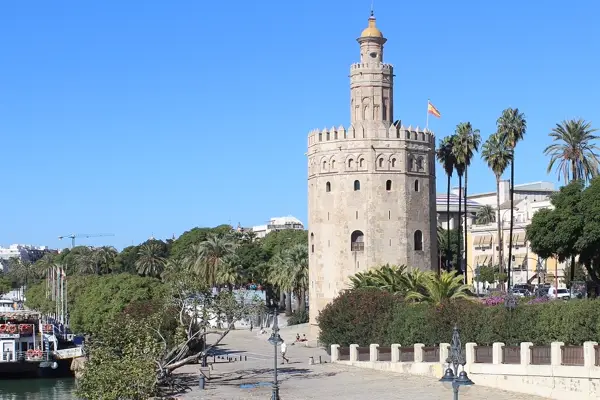
The second day starts at the Casa de Pilatos, a 16th-century palace that mixes Renaissance and Mudéjar styles. From there it is a short walk to the Metropol Parasol, the huge wooden structure on Plaza de la Encarnación that locals call Las Setas, "the mushrooms", with a walkway on top. In the afternoon, walk to the river: the Torre del Oro, an old watchtower on the Guadalquivir, then across the Triana Bridge to Triana, the old district of potters and flamenco singers, with its market hall. In the evening, a flamenco show – many small venues have performances every night; flamenco tickets in Seville* are on Tiqets.
Three days in Seville: our ready-made plan
Three days are ideal, because the third takes you to Córdoba, one of the great sights of Spain. Our plan:
- Day 1 – Cathedral, Alcázar and Plaza de España: the cathedral and the Giralda, the General Archive of the Indies, the Real Alcázar, the Santa Cruz quarter, the Plaza de España, María Luisa Park.
- Day 2 – The centre, the river and Triana: the Casa de Pilatos, the Metropol Parasol, the Torre del Oro, the Triana Bridge, the Mercado de Triana.
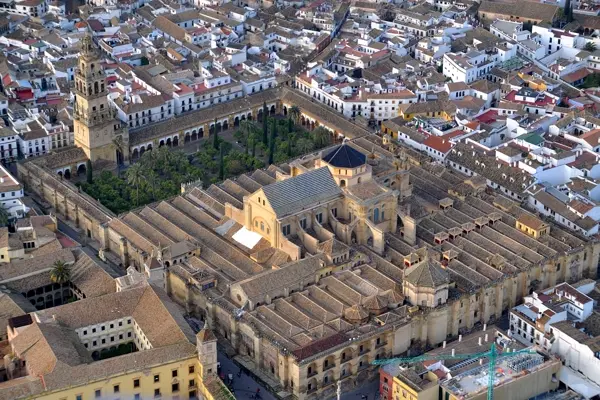
- Day 3 – Day trip to Córdoba: the high-speed train takes about 45 minutes. In Córdoba the Mosque–Cathedral (Mezquita) with its forest of red-and-white arches, the old Jewish Quarter, the Alcázar de los Reyes Cristianos and the Roman Bridge over the Guadalquivir. Back in Seville for dinner.

Four days or more: slower Seville, Cádiz or Carmona
With a fourth day, Seville can be enjoyed at a slower pace: a morning in María Luisa Park, the Museo de Bellas Artes with paintings by Murillo and Zurbarán, and long tapas evenings in the Alfalfa quarter. Or add a second trip: Cádiz, one of the oldest cities in Europe, on a narrow peninsula in the Atlantic, is reached by train; Carmona with its Roman necropolis and old town on a hill is close by road. Trains in Spain* can be compared on Omio.
If you want to see more of Andalusia – Granada with the Alhambra, Ronda, the white villages – plan a round trip rather than day trips; our Andalusia road trip shows a route.
Where to stay in Seville
Two areas suit a short stay:
- Santa Cruz and around the cathedral: in the heart of the old town, close to the Alcázar and the cathedral. Ideal for a short visit, but touristy.
- Triana: across the river, with a market, bars and fewer tourists. The bridge gets you to the centre quickly.
The old town is compact and you can reach almost everything on foot. For longer distances there are buses, a tram and one metro line. A bus runs from the airport to the centre; for a late arrival, a transfer from Seville airport* can be booked with Welcome Pickups. On the day you leave, you can use luggage storage near Santa Justa station* (Radical Storage) – useful if your train or flight is in the evening.
Best time to visit Seville
March to May and October and November are the most pleasant: warm days, mild evenings, and the orange trees blossom in spring. July and August are very hot, often around 40 °C – go out only in the morning and evening and plan a long siesta. In Holy Week (Semana Santa, the week before Easter; in 2027 from 21 to 28 March) and during the April Fair about two weeks later, the city is packed and hotels are expensive – unforgettable if you come for it, otherwise choose other dates. Winter is mild and quieter. YesTrip shows you the weather for your actual travel days.
Seville compared: how many days for other cities?
If you are choosing between cities: this is how many days we recommend in this series for a first visit.
Base map: Natural Earth
More in our articles how many days in Madrid and how many days in Lisbon, and all cities of the series in the overview how many days in each city.
How YesTrip helps you plan
YesTrip has a ready-made three-day plan for Seville with times, walking legs and a map for each day, the Córdoba trip included. With one tap you copy it into the app and adjust it – for example to put the Alcázar and the cathedral at the times you booked. The app shows the weather for your travel days, the packing list suggests a sun hat and light clothes when it is hot, and with the offline package you have the map without a connection. YesTrip is free.
 Seville trip planDay by day, with map and tips
How to plan Córdoba, Cádiz or Ronda is shown in our day trips from Seville.
If you are coming during Holy Week, plan with Semana Santa in Seville 2027.
* Ad – Partner link: if you book there, we earn a commission. Your price stays the same.
Free
Plan your trip in 30 seconds.
Tell YesTrip where and when – the app plans day by day with real places on the map, shows the weather, splits costs with your travel companions and guides you to the next stop on the go.
Frequently asked questions
How many days do you need in Seville?
Two days are enough for the cathedral, the Real Alcázar, Plaza de España and Triana. Three days are ideal, adding a day trip to Córdoba. With four days, you can slow down or add Cádiz or Carmona.
Is one day in Seville enough?
For the cathedral, the Alcázar, the Santa Cruz quarter and Plaza de España, yes – if you book the Alcázar and the cathedral in advance and start early. Triana, Las Setas and a flamenco evening need a second day.
Should you book the Real Alcázar in advance?
Yes. Tickets are sold with an entry time on the official website, and in spring and at weekends the popular times sell out days ahead. The same applies to the cathedral.
How do you get from Seville to Córdoba?
By high-speed train, which takes about 45 minutes. The station in Córdoba is a walk or a short taxi ride from the Mezquita, so a day trip works well without a car.
When is Holy Week in Seville in 2027?
Holy Week is the week before Easter. In 2027 Easter Sunday falls on 28 March, so Holy Week runs from Palm Sunday, 21 March, to 28 March. The city is very busy then and hotels are expensive.
Sources
- Real Alcázar de Sevilla, official website and tickets – www.alcazarsevilla.org
- Catedral de Sevilla, official website and tickets – www.catedraldesevilla.es
- UNESCO World Heritage: Cathedral, Alcázar and Archivo de Indias in Seville – whc.unesco.org
- UNESCO World Heritage: Historic Centre of Cordoba – whc.unesco.org
- Renfe: high-speed trains – www.renfe.com
Researched with AI support and checked by our editors. Prices, opening hours and weather can change – please check before you go. YesTrip is not a travel agency. Published: .
More articles
 How many days?
How many days in Baku? 3 with Gobustan
Two days are enough for Baku's old town, the Boulevard and the Heydar Aliyev Center. The third belongs to Gobustan, 64 km away, with more … · 6 min read How many days?
How many days in Funchal? 3, or 5+ for Madeira
Two days are enough for Funchal: the old town, the market, the cable car and the gardens at Monte. Day three goes to the mountains, with … · 6 min read How many days?
How many days in Kotor? 2 with Perast
Two days are enough for Kotor: the old town and about 1,300 steps to the fortress on the first, Perast and the island of Our Lady of the … · 6 min read


