
Andalusia road trip: 10-day itinerary
In short
The classic Andalusia road trip takes 10 days from Málaga via Ronda to Seville, on to Córdoba and Granada and back to Málaga – about 660 km by hire car, with an optional detour to Cádiz. No leg takes more than 2:15 hours of pure driving. Best time: April, May and October, with 23 to 29 °C in Seville.
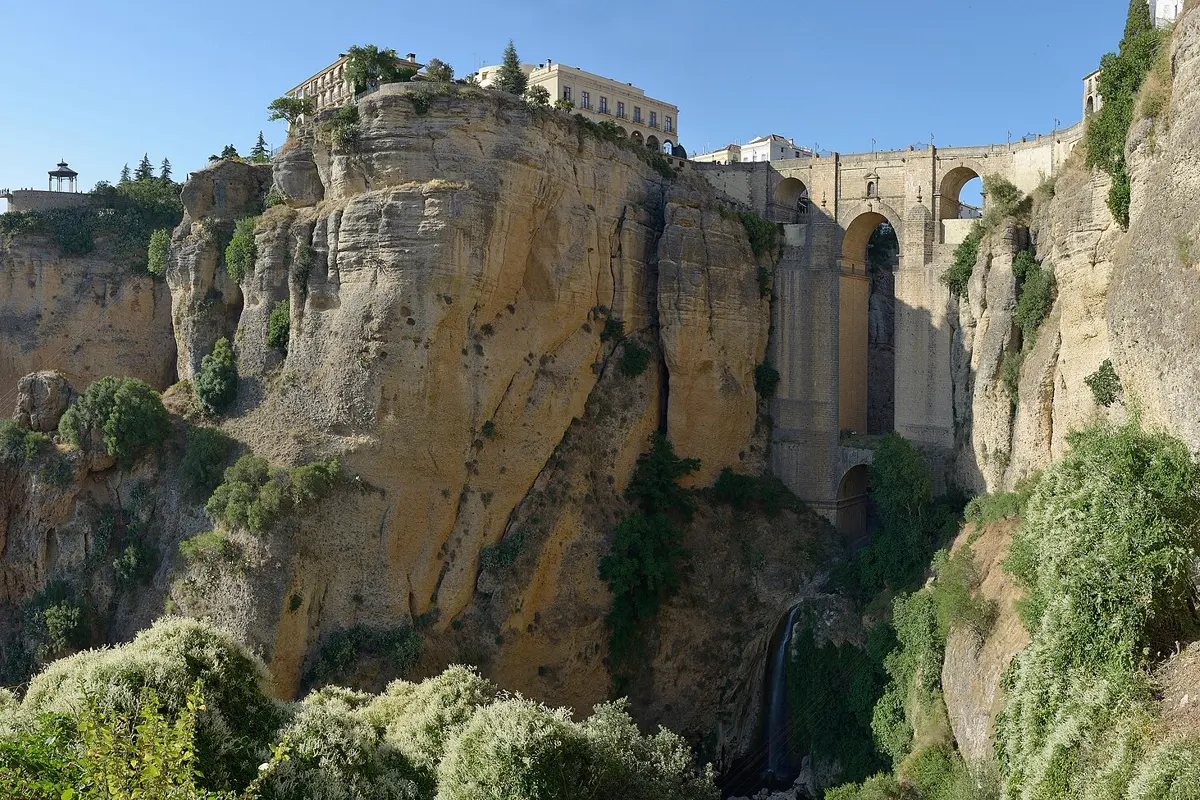
Andalusia is the region in southern Spain where almost eight centuries of Moorish rule left the deepest mark. On a loop of just over 650 km you see three of Spain's best-known monuments – the cathedral and Alcázar in Seville, the Mezquita in Córdoba and the Alhambra in Granada – plus the town of Ronda above its gorge and the coastal city of Málaga. The legs are short and the roads good. This route takes 10 days and starts and ends in Málaga; an 8-day version and the detour to Cádiz are further down.
The route at a glance
| Day | Leg | Distance | Pure driving time |
|---|---|---|---|
| 1–2 | Málaga | – | – |
| 3 | Málaga → Ronda | 104 km | approx. 1:45 h |
| 4 | Ronda → Seville | 126 km | approx. 1:50 h |
| 5–6 | Seville | – | – |
| 7 | Seville → Córdoba | 140 km | approx. 1:40 h |
| 8 | Córdoba → Granada | 166 km | approx. 2:15 h |
| 9 | Granada and the Alhambra | – | – |
| 10 | Granada → Málaga | 124 km | approx. 1:45 h |
Driving times: route calculation based on OpenStreetMap, without breaks. With stops in the white villages and looking for parking in the cities, add about a third.
- Málaga
- Ronda
- Seville
- Córdoba
- Granada
Base map: Natural Earth
Days 1–2: Málaga
Málaga is more than the airport for the Costa del Sol. Above the old town stands the Moorish fortress of the Alcazaba, and above that the Castillo de Gibralfaro with a view over the port and the bullring. At the foot of the Alcazaba the remains of a Roman theatre have been excavated. Pablo Picasso was born in Málaga, and the Museo Picasso* shows works from every period of his life. In the evening eat in the lanes around Calle Larios or try espetos, sardines grilled on skewers over a wood fire, in the beach district of El Palo. We have a ready-made plan for Málaga.

Day 3: Ronda
Behind the coast the road climbs into the mountains. Ronda sits on a rocky plateau split in two by the El Tajo gorge, spanned by the 18th-century Puente Nuevo bridge. You see it best from the viewpoints in the park along the gorge and from the path down to the foot of the bridge. Ronda's bullring is one of the oldest in Spain. Stay the night: in the evening, once the day-trippers have left, it gets quiet.
Days 4–6: through the white villages to Seville
Between Ronda and Seville lie the Pueblos Blancos, the white villages of the sierra. The best known is Setenil de las Bodegas, whose houses are built right under overhanging rock; Zahara de la Sierra and Grazalema are also worth a detour if you have time.
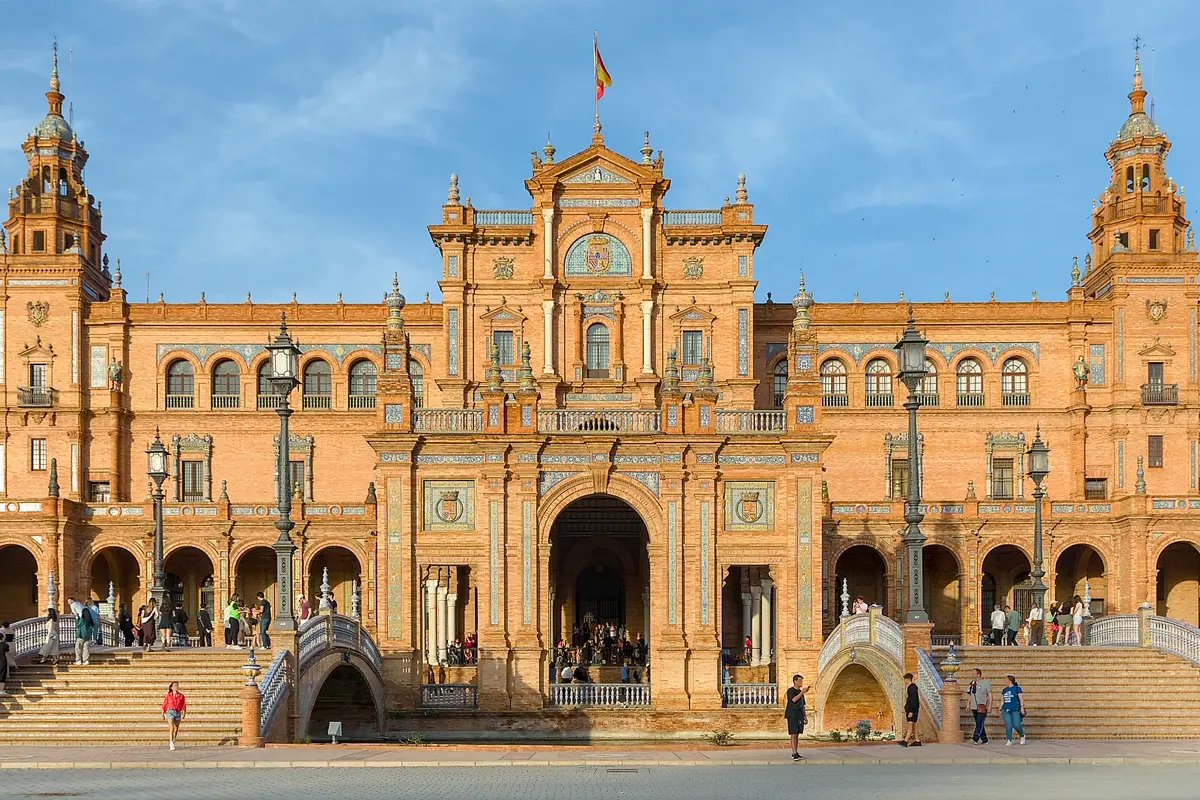
Seville is the capital of Andalusia and the heart of this trip. The Cathedral is one of the largest Gothic churches in the world, and its bell tower, the Giralda, was originally the minaret of the mosque. Opposite stands the Real Alcázar, a royal palace with Moorish courtyards and large gardens – the cathedral, the Alcázar and the Archive of the Indies are a joint UNESCO World Heritage Site. The semicircular Plaza de España was built for the Ibero-American Exposition of 1929. In the evening cross the river to the Triana district or go to a flamenco show. Don't drive into Seville's old town; leave the car in a car park – you won't need it for two days.
 Seville trip planDay by day, with map and tips
Day 7: Córdoba
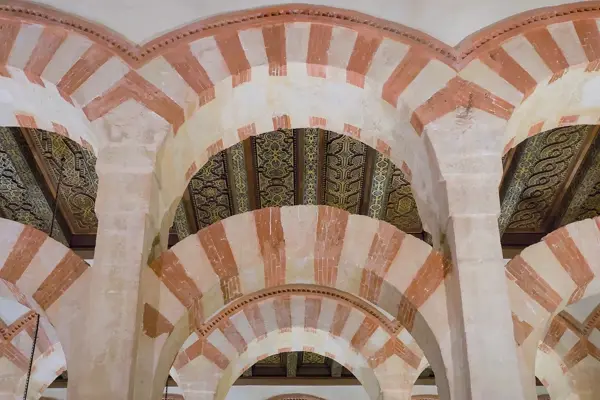
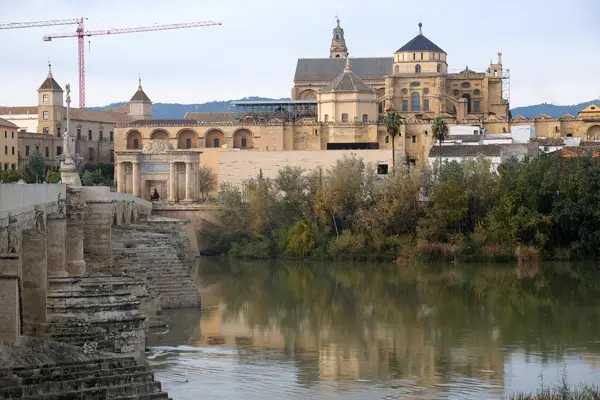
The Mezquita-Catedral of Córdoba is one of the most striking buildings in Europe: hundreds of columns carry red-and-white striped arches, and after the Reconquista a cathedral was built right in the middle of the former mosque. The old town around the Mezquita is a UNESCO World Heritage Site. The Roman Bridge crosses the Guadalquivir, and in the Judería, the old Jewish quarter, doorways open onto courtyards full of flowerpots. With half a day more, visit the ruins of the palace city of Medina Azahara outside town.
Days 8–9: Granada and the Alhambra
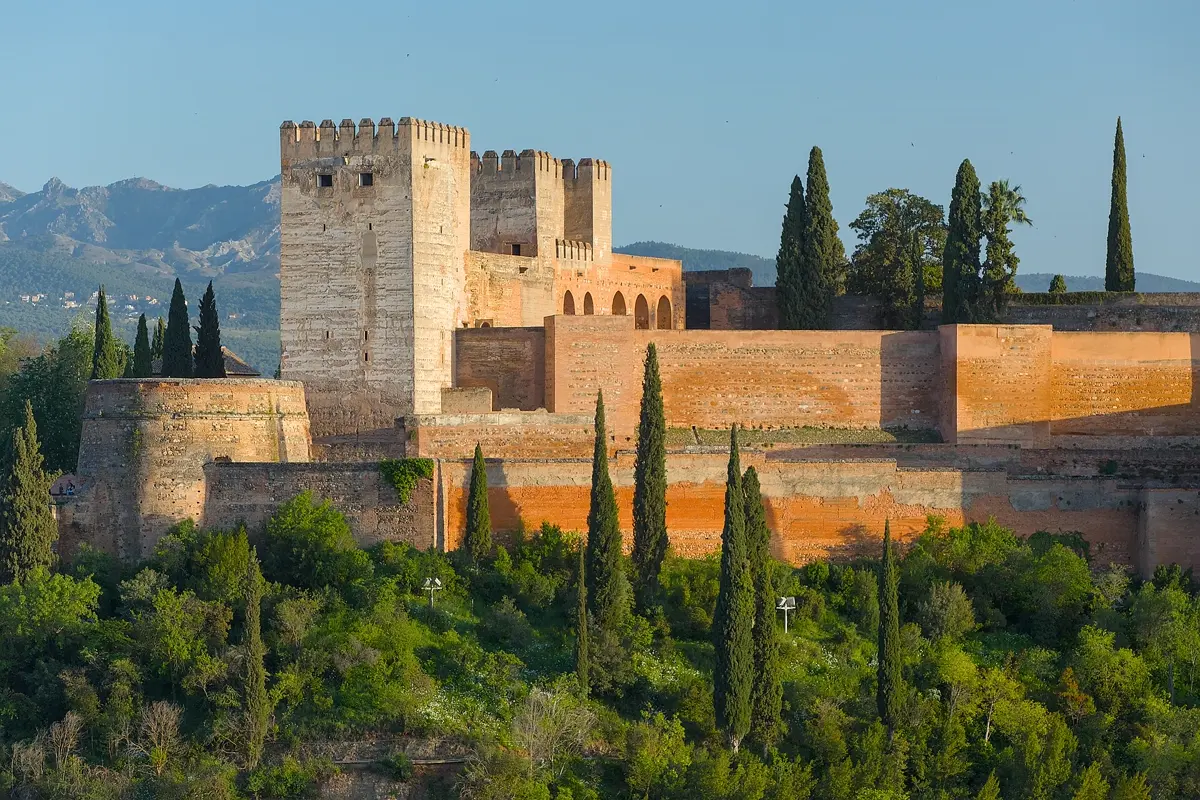
Granada lies at the foot of the Sierra Nevada, whose peaks keep their snow into spring. On a hill above the city rises the Alhambra, palace and fortress of the last Moorish rulers of Spain. You can only visit its Nasrid Palaces, with their stucco ceilings, pools and the Court of the Lions, at a fixed time slot, and in season tickets often sell out weeks ahead – buy them on the official website as soon as your dates are fixed. The gardens of the Generalife are part of the visit.
Opposite lies the old Moorish quarter of the Albaicín with narrow white lanes. From the Mirador de San Nicolás you watch the sunset over the Alhambra and the mountains behind it. On the last day it is just over an hour and a half back to Málaga.
Versions: 8 days or with Cádiz
8 days: Stay only one night in Málaga and one instead of two in Seville. The legs stay the same, but you have less time in the cities.
With Cádiz (11 days): Drive from Ronda to the Atlantic coast at Cádiz (145 km, approx. 2:00 h) and on to Seville the next day (121 km, approx. 1:25 h). Cádiz sits on a narrow spit of land in the sea, is considered one of the oldest cities in Western Europe and has an old town with city beaches. On the way to Seville lies Jerez de la Frontera, the home of sherry.
Best time for an Andalusia road trip
The best months are April, May and October: average daily highs in Seville are then 23 to 29 °C, the orange trees blossom in spring and the evenings are mild. In July and August it gets very hot inland, with an average of 37 °C in Seville; do your sightseeing in the morning and evening. Winter is mild and sunny at around 16 °C, but nights in Granada are cold. Around Easter (Semana Santa) and during the spring fair, accommodation in Seville is scarce – book early.
| Month | Day (avg high) | Night (avg low) | Precipitation |
|---|---|---|---|
| January | 15.9 °C | 6.4 °C | 39 mm |
| February | 18.4 °C | 8.2 °C | 31 mm |
| March | 20.6 °C | 9.6 °C | 80 mm |
| April | 23.3 °C | 12.0 °C | 52 mm |
| May | 28.5 °C | 15.5 °C | 28 mm |
| June | 32.5 °C | 18.9 °C | 10 mm |
| July | 37.0 °C | 21.8 °C | 1 mm |
| August | 36.8 °C | 22.3 °C | 3 mm |
| September | 31.5 °C | 19.2 °C | 24 mm |
| October | 26.6 °C | 15.9 °C | 87 mm |
| November | 20.0 °C | 10.8 °C | 59 mm |
| December | 17.0 °C | 8.3 °C | 60 mm |
Climate in Seville: 2015–2024 averages from the ERA5 reanalysis (Open-Meteo), rounded. Granada lies higher and is cooler: in January nights there average 3 °C, while July days reach 35 °C.
Good to know before you go
- Entry and money: Spain is in the EU and the Schengen Area, and the currency is the euro. EU and EEA mobile plans roam like at home.
- Tolls: Most dual carriageways (autovías) are toll-free, while some motorways (autopistas, AP) charge tolls – for example on the coast near Málaga.
- Old towns and low-emission zones: The old towns of Seville, Córdoba and Granada have areas only residents may drive into, and many cities are introducing low-emission zones. Park in car parks on the edge and ask your hotel about access.
- Alhambra tickets: Buy them as early as possible on the official website. Without a ticket for the Nasrid Palaces you miss the most important part.
- Heat: In summer, water, a sun hat and a long midday break are part of the plan. Many sights open early in the morning.
- Flight: A direct flight* from London to Málaga takes approx. 3 hours.
How YesTrip helps with this trip
Create a trip in YesTrip with the stops of this route: the app shows every place on the map, uses AI to plan your days in Seville, Córdoba and Granada and shows the weather for your travel days – in high summer that helps you put sightseeing into the cooler hours. The packing list suggests clothing to match the forecast, the offline map helps in the lanes of the Albaicín and the Judería, and if you travel with friends you can share the trip and the expenses in the app. For Málaga and Seville there are our ready-made city plans.
If you would rather stay based in Seville, our day trips from Seville show the alternatives.
* Ad – Partner link: if you book there, we earn a commission. Your price stays the same.
Free
Plan your trip in 30 seconds.
Tell YesTrip where and when – the app plans day by day with real places on the map, shows the weather, splits costs with your travel companions and guides you to the next stop on the go.
Frequently asked questions
How many days do you need for an Andalusia road trip?
Plan 10 days for the loop from Málaga via Ronda, Seville, Córdoba and Granada. Eight days work if you spend one night less in both Málaga and Seville. With the detour to Cádiz you need 11 days.
When is the best time to visit Andalusia?
April, May and October. Average daily highs in Seville are then between 23 and 29 °C. In July and August they average 37 °C, which makes afternoon sightseeing very tiring.
How far ahead do you need to book Alhambra tickets?
As early as possible, as soon as your dates are fixed. The Nasrid Palaces can only be visited with a fixed entry time, and in season tickets often sell out weeks ahead. Buy them on the official Alhambra website.
Do you need a car in Andalusia?
It is the most convenient option for this loop but not essential. Seville, Córdoba, Granada and Málaga are well connected by train and bus. For Ronda, the white villages and Cádiz a hire car is much more flexible. You don't need it within the cities.
Is a detour to Cádiz worth it?
Yes, if you have an extra day. Cádiz sits on a spit of land in the Atlantic, has a calm old town with city beaches and fits neatly on the way, 145 km from Ronda and 121 km on to Seville.
Sources
- Driving times: OSRM route calculation based on OpenStreetMap data – project-osrm.org
- Climate: Open-Meteo Historical Weather API (ERA5), averages 2015–2024 – open-meteo.com
- Cathedral, Alcázar and Archivo de Indias in Seville: UNESCO World Heritage – whc.unesco.org
- Historic Centre of Córdoba: UNESCO World Heritage – whc.unesco.org
- Alhambra, Generalife and Albayzín, Granada: UNESCO World Heritage – whc.unesco.org
- Official ticket sales: Patronato de la Alhambra y Generalife – www.alhambra-patronato.es
Researched with AI support and checked by our editors. Prices, opening hours and weather can change – please check before you go. YesTrip is not a travel agency. Published: .
More articles
 Road trips & itineraries
Amalfi Coast itinerary: 5 days, no car needed
This 5-day route runs from Pompeii through Sorrento, Positano, Amalfi and Ravello to Salerno, with no car. Travelmar lists the boat from … · 9 min read Road trips & itineraries
Australia East Coast itinerary: 3 weeks by car
This Australia East Coast itinerary takes 21 days from Sydney via Byron Bay, Noosa, K'gari and the Whitsundays to Cairns and Port Douglas, … · 7 min read Road trips & itineraries
Bali itinerary: 2 weeks, 5 bases, no scooter
This 14-day loop covers about 410 km and almost 7 hours of pure driving through Ubud, Sidemen, Amed, Munduk and Uluwatu, by car with a … · 8 min read


