
Plan a trip with friends: 7 steps
In short
A group trip works if you decide in this order: first who is coming, then the dates, then a budget that suits everyone, and only then the destination from three or four options. Share out fixed roles (travel, accommodation, programme, money), give every decision a deadline and plan just one shared fixed point per day.

The idea usually comes quickly: "We should go away together again." Then often nothing happens for weeks, because everyone in the group chat suggests something different and nobody decides. A trip with friends rarely fails because of the destination, but because of the order of decisions. This guide takes you in seven steps from the idea to settling up afterwards. Our example is a group of six friends choosing between four cities by the sea. For planning a trip in general – booking order, documents, packing – see our guide How to plan a trip: step by step.
Step 1: Find out who is really coming
Before you talk about destinations, ask clearly who is in. "Maybe" is not an answer you can book with. A group of four to eight people is easy to organise; from ten upwards it is worth thinking in smaller groups, for example for restaurants and day trips.
Also choose one person to drive the planning. That does not mean they do everything alone, but that they set deadlines and follow up.
Step 2: Find the dates
The dates are the hardest constraint, because holidays, family and work differ for everyone. Suggest two to four specific date ranges and let everyone tick the ones that work. Anyone who has not answered by the deadline is no longer planned in – that sounds strict but keeps the planning moving. Only once the dates are fixed does everyone book their time off.
Step 3: A budget that suits everyone
Money is the topic groups least like to discuss – and the one that causes the most trouble. Ask early for a range per person for the whole trip, with and without travel. What counts is the lowest budget in the group, not the average. Anyone who wants to spend more can treat themselves to a pricier dinner on the spot; anyone with less should not be outvoted on every decision.
Agree at the same time how you will split costs: accommodation and shared meals equally, drinks and extras by consumption. Our article Split travel expenses fairly shows how.
Step 4: Vote on the destination
Only now comes the destination. Collect ideas, but vote on three or four at most – with ten options the group splinters. Each suggestion should answer three questions: does it suit the dates (weather, season), the budget and what the group wants – beach, city, nature, nightlife?
In our example four cities by the sea are on the shortlist:
Base map: Natural Earth

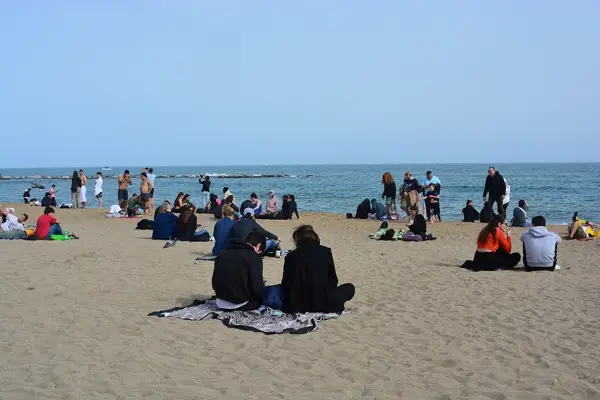


The group chooses Split: the old town and the beach are close together, and ferries leave from there to the islands. What matters is not which destination wins, but that the vote has a deadline and the result stands afterwards.
Step 5: Share out the tasks
If one person organises everything, they need a holiday afterwards. Share the work by role, ideally by what each person enjoys.
| Role | Task | By when |
|---|---|---|
| Travel | compare flights or trains, make a proposal, book | right after choosing the destination |
| Accommodation | find two or three options, let the group vote, book | a week after the travel is booked |
| Programme | suggest one or two day trips and restaurants | a few weeks before the trip |
| Money | collect expenses, settle up at the end | during and after the trip |
| On the ground | car hire, ferries, timed tickets | once dates and accommodation are fixed |
Every task needs a name and a date. "Someone will look at places to stay" in practice means: nobody.
Step 6: Book and collect the money
Book in the usual order: travel first, then accommodation, then everything on the ground. A group adds one question: who pays up front? Usually one person books the accommodation for everyone. Collect everyone's share straight away, not after the trip – otherwise one person carries the risk for weeks. Check the cancellation terms, because in a group someone is more likely to drop out.
Flights are usually booked by each person, which keeps everyone flexible on luggage and seats. You can compare flights together, for example in the Kiwi.com flight search*, so that everyone arrives at about the same time.
For a day on the islands or in the hinterland, a hire car is often more practical for a group than several bus rides; you can compare hire cars in Croatia* at Localrent, for example.
Step 7: The programme on the ground
The most common mistake on group trips is a programme where everyone always does everything together. Better: one shared fixed point per day – a day trip, a dinner – and the rest is free. Whoever wants to swim in the morning swims; whoever wants a lie-in sleeps. In the evening you meet up again.
For restaurants and day trips, short votes with two or three options help. One person books tours and timed tickets for everyone, for example tours and tickets in Split* at Tiqets, and records the expense straight away.
Group chat, spreadsheet or trip planner?
- Group chat: good for the mood and quick questions, bad for decisions. Links and agreements disappear in the history after a few days.
- Shared spreadsheet or document: clear for dates, tasks and costs, but someone has to maintain it, and on a phone on the road it is fiddly.
- A trip planner with group features: plan, map, votes and costs in one place. In return, everyone has to sign up to one more app.
Many groups combine them: the chat for the conversation, one tool for whatever should count in the end.
How YesTrip helps
In YesTrip you create the trip and invite your friends by link – to plan together or to view only; the invite is valid for 14 days. Everyone sees the same day plan with map and routes and can add or move stops. A history shows who changed what, and you can comment on every stop.


For decisions there are votes, including on dates or places. Tasks such as "Who books the hotel?" get a name and a date. The group can set a shared budget that everyone sees, and the app works out who owes whom how much – with splitting by shares or amounts and a setting for who is there on which days.

What YesTrip does not do: it never books anything and does not collect money. You book with the provider and pay each other outside the app. Sharing needs a free account; you sign in with a code sent by email, no password. For Split there is a ready-made city plan you can use as a starting point.
* Ad – Partner link: if you book there, we earn a commission. Your price stays the same.
Free
Plan your trip in 30 seconds.
Tell YesTrip where and when – the app plans day by day with real places on the map, shows the weather, splits costs with your travel companions and guides you to the next stop on the go.
Frequently asked questions
What is the best way to plan a trip with friends?
In this order: find out who is coming, agree the dates, set a budget per person, vote on the destination from three or four options, share out tasks with names and deadlines, book and collect money straight away. On the ground, one shared fixed point per day with plenty of free time works best.
How do you find dates for a group trip?
Suggest two to four specific date ranges and let everyone tick which ones work. Set a deadline for answers. Anyone who has not replied by then is no longer planned in, otherwise the planning drags on for weeks.
How do you agree on a destination?
Limit the choice to three or four suggestions that fit the dates and budget, and vote with a deadline. The result stands afterwards, even if it was not everyone's first choice.
Who pays for what on a group trip?
Usually one person books the accommodation for everyone, and each person books their own flights. Collect the accommodation shares straight away. Record costs on the ground as you go and settle only the balances at the end.
Is there a free app to plan a group trip?
Yes. YesTrip is free and offers a shared day plan with a map, votes, tasks and shared expenses. Sharing needs a free account. You still book with the provider yourself.
Sources
- UK government: foreign travel advice for Croatia – www.gov.uk
- European Union: roaming in the EU – europa.eu
- Jadrolinija: ferry connections from Split – www.jadrolinija.hr
Researched with AI support and checked by our editors. Prices, opening hours and weather can change – please check before you go. YesTrip is not a travel agency. Published: .
More articles
 Planning & packing
Cherry blossom Japan: when and where, by city
On 1991 to 2020 averages, cherry blossom opens in Tokyo on 24 March and reaches full bloom on 31 March, on 4 April in Kyoto, 13 April in … · 6 min read Planning & packing
Countries that drive on the left: all 54 listed
54 of 195 countries drive on the left, in Europe only the UK, Ireland, Malta and Cyprus. Japan, Thailand, India, Australia, New Zealand and … · 6 min read Planning & packing
Honeymoon destinations by month: 12 places
The right trip depends on your wedding month: January Maldives (27.9 °C, 74 mm of rain), March Cape Town (24.0 °C, 29 mm), June Amalfi Coast … · 7 min read


