
Split travel expenses fairly: a worked example
In short
The fairest way to split travel costs is a mix: accommodation, local transport and shared meals equally, drinks and extras by what each person had, and nobody pays for something they did not join. In our example of four friends and €867 of spending, three transfers settle everything. A shared kitty saves maths but only suits groups who consume about the same.

Nobody likes talking about money on holiday – which is exactly why it causes so much trouble afterwards. Who paid for the flat, who paid for the taxi, and why does the person who never drinks pay half the bar bill? With a clear method agreed before the trip and a list kept up to date on the road, settling up at the end takes minutes. Here are the three usual methods, a worked example for four friends in Barcelona and tips for foreign currencies and people who are not there the whole time.
The three methods compared
| Method | How it works | Good for | Weakness |
|---|---|---|---|
| Equal split | every expense divided by the number of people | accommodation, car hire, taxis, shared meals | unfair when consumption differs a lot |
| By consumption | everyone pays for what they had | drinks, individual tickets, souvenirs | more effort to record |
| Shared kitty | everyone pays the same amount in up front, spending comes out of it | groceries, small amounts, tips | leftovers or top-ups still need splitting |
In practice a mix works best: big shared items are split equally, everything personal by consumption. And anyone who did not join an activity does not pay for it. That sounds obvious but is what gets forgotten most often.
One variation is splitting by shares: a couple sharing a room pays two shares, a person alone in a single room pays one. The maths stays simple, and nobody pays for a bed they did not have.
The worked example: four friends, one weekend
Anna, Ben, Carla and David spend a long weekend in Barcelona. The amounts are made-up example figures; the method works the same for any total.
| Expense | Amount | Paid by | Split between |
|---|---|---|---|
| Holiday flat, 2 nights | €480 | Anna | all four equally, €120 each |
| Dinner on Friday | €160 | Ben | all four equally, €40 each |
| Breakfast shopping | €48 | Carla | all four equally, €12 each |
| Museum tickets | €75 | Carla | Anna, Ben, Carla €25 each (David did not go) |
| Taxi from the airport | €40 | David | all four equally, €10 each |
| Drinks on Saturday | €64 | Ben | by consumption: Anna €10, Ben €18, Carla €12, David €24 |
For each person, add up what they paid and subtract their own share. Positive means: gets money back. Negative means: owes money.
| Person | Paid | Own share | Balance |
|---|---|---|---|
| Anna | €480 | €217 | gets back €263 |
| Ben | €224 | €225 | owes €1 |
| Carla | €123 | €219 | owes €96 |
| David | €40 | €206 | owes €166 |
The balances always add up to zero – that is your check. Settling up takes only three transfers here, all to Anna: David pays €166, Carla €96, Ben €1. The trick: you do not send each expense back and forth, only the balances. The biggest debt goes to the biggest credit, then the next, until everything is even. That way four people need at most three payments.

The shared kitty: when it is worth it
With a kitty, everyone pays the same amount on the first day, say €100 each. One person looks after the money and pays groceries, ice cream, tips and short rides from it. That saves recording every little thing. Two rules keep it fair:
- Use it only for things everyone uses equally. Anyone going shopping alone pays for themselves.
- At the end, share out what is left equally or, if the kitty is empty, top it up equally.
A kitty does not suit big items such as accommodation or car hire, because these are usually paid online by card in advance. A list for the big items and a kitty for the small ones works well for many groups.
Tips that prevent arguments
- Agree beforehand: decide before you leave what is split equally and what is not. That conversation is short before the trip and long after it.
- Record it straight away: whoever writes down expenses only in the evening forgets half of them. A photo of the receipt is enough as a reminder.
- Foreign currencies: record each amount in the currency you paid in and convert everything at the end at one rate, for example the European Central Bank's reference rate. That is fairer than applying everyone's own bank rate.
- Not everyone there the whole time: if someone arrives a day later, the costs of that first day are split only among those who were there.
- Round small amounts: whether Ben owes €1 or not is a question of group harmony, not maths.
- Settle soon: within a week of getting home. Within the EU, euro transfers to another country cost no more than domestic ones.

Spreadsheet, group chat or app?
- Spreadsheet: a shared sheet with the columns expense, amount, paid by, split between. A few formulas work out the balances. Free and flexible, but someone has to build it, and on a phone on the road it is fiddly.
- Group chat or notes: every expense as a message. Quick to add, but at the end someone has to type it all up and do the sums.
- An expense-splitting app: type in an expense and the app keeps a running total. Convenient, but everyone has to use the app, or one person records for all.
How YesTrip helps
YesTrip is a free trip planner where the expenses live right next to the trip. You record who paid what, and the app works out who owes whom how much – at the top of the Group tab you see the total spent, your share and whether you get money back. Under Settle up it says, for example, "Anna pays you €28.17" with the button "Mark as settled".


You split an expense equally, by shares or by amounts, and choose who it is split between. For people who are not there the whole time, you set who is on the trip on which days. Each expense keeps its own currency; conversion uses the European Central Bank's rates. The Expenses tab shows costs by category, per day and against your budget. In the Android app, on-device text recognition reads the amount, date, shop and category from a receipt. At the end you can export everything as CSV or PDF.
Good to know: no money goes through YesTrip. The app only shows who owes whom; you pay each other yourselves, for example by bank transfer. You can add travellers by name only and record everything yourself. If you share the trip by link, your friends add their own expenses; sharing needs a free account. The expense features use no AI credits.
Many group costs start on arrival: a pre-booked airport transfer* has a fixed price that you can enter as an expense right away.
Shared trips and tickets are usually booked by one person for everyone, for example tickets for Barcelona* at Tiqets – then it is clear at once who paid.
If you also want to allow for tips on the road, the usual amounts are in Tipping by country.
* Ad – Partner link: if you book there, we earn a commission. Your price stays the same.
Free
Plan your trip in 30 seconds.
Tell YesTrip where and when – the app plans day by day with real places on the map, shows the weather, splits costs with your travel companions and guides you to the next stop on the go.
Frequently asked questions
What is the fairest way to split travel expenses?
A mix: split accommodation, car hire, taxis and shared meals equally, and drinks, individual tickets and personal items by consumption. Anyone who did not join an activity does not pay for it. The key is to agree the rules before the trip.
How many transfers are needed at the end?
If you settle only the balances instead of every single expense, at most one fewer than the number of people. Four people therefore need three transfers, sometimes fewer.
What is a shared kitty and when is it worth it?
Everyone pays the same amount into a common pot at the start, and small shared costs are paid from it. It works well for groceries, tips and short rides. Big items and anything not everyone uses equally are better settled separately.
How do you split expenses in a foreign currency?
Record each amount in the currency you paid in and convert everything at the end at one rate, such as the European Central Bank's reference rate. That way the same rate applies to everyone, whatever their bank.
Is there a free app to split travel costs?
Yes, several. YesTrip is free and works out who owes whom, with splitting by shares or amounts, foreign currencies and export as CSV or PDF. You pay each other outside the app.
Sources
- European Central Bank: euro foreign exchange reference rates – www.ecb.europa.eu
- Your Europe (EU): payments and transfers – europa.eu
Researched with AI support and checked by our editors. Prices, opening hours and weather can change – please check before you go. YesTrip is not a travel agency. Published: .
More articles
 Planning & packing
Cherry blossom Japan: when and where, by city
On 1991 to 2020 averages, cherry blossom opens in Tokyo on 24 March and reaches full bloom on 31 March, on 4 April in Kyoto, 13 April in … · 6 min read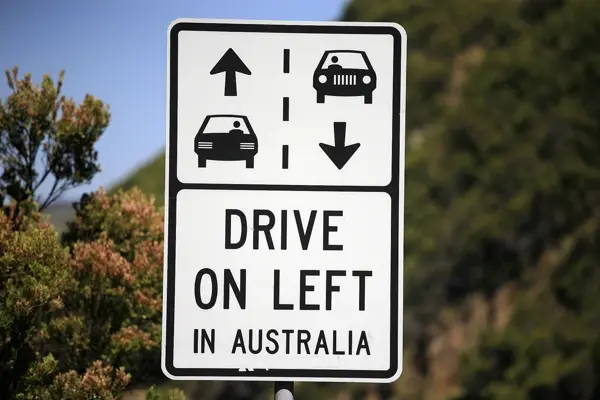 Planning & packing
Countries that drive on the left: all 54 listed
54 of 195 countries drive on the left, in Europe only the UK, Ireland, Malta and Cyprus. Japan, Thailand, India, Australia, New Zealand and … · 6 min read Planning & packing
Honeymoon destinations by month: 12 places
The right trip depends on your wedding month: January Maldives (27.9 °C, 74 mm of rain), March Cape Town (24.0 °C, 29 mm), June Amalfi Coast … · 7 min read


