
Best time to visit Sri Lanka: west or east coast
In short
For the west and south coasts the best time is December to March: Colombo then gets only 54 to 168 mm of rain a month, against 422 mm in May. The east coast around Trincomalee is driest from May to September (35 to 113 mm). It is warm everywhere all year, with daytime highs of 28 to 34 °C on the coast.
Sri Lanka doesn't have one best time to visit but two – depending on which coast you want. The island sits between two monsoons that arrive from opposite sides. When the west coast around Colombo and the south around Galle get the most rain, the east coast around Trincomalee is at its driest, and the other way round. It is always warm: on the coast, daytime highs are 28 to 34 °C all year. We analysed the weather data for 2015 to 2024 at four places.
The short answer
- West coast and south (Colombo, Galle, Mirissa): December to March. In February Colombo gets an average of only 54 mm of rain.
- East coast (Trincomalee, Pasikudah, Arugam Bay): May to September. Trincomalee then gets 35 to 113 mm a month.
- Hill country (Kandy, Nuwara Eliya, Ella): January to March is driest; October and November are wettest.
- Least suitable for a round trip: October and November. All four places get a lot of rain, Trincomalee 412 mm in November.
If you want to combine a round trip with a beach stay, plan January to March with the west and south coasts, or June to August with the east coast.
Rain in Sri Lanka: four regions compared
| Month | Colombo (west coast) | Galle (south) | Kandy (hill country) | Trincomalee (east coast) |
|---|---|---|---|---|
| January | 78 mm | 123 mm | 55 mm | 166 mm |
| February | 54 mm | 110 mm | 58 mm | 82 mm |
| March | 106 mm | 111 mm | 61 mm | 54 mm |
| April | 160 mm | 176 mm | 141 mm | 51 mm |
| May | 422 mm | 418 mm | 219 mm | 113 mm |
| June | 306 mm | 267 mm | 90 mm | 35 mm |
| July | 223 mm | 245 mm | 114 mm | 49 mm |
| August | 244 mm | 277 mm | 138 mm | 70 mm |
| September | 293 mm | 325 mm | 124 mm | 100 mm |
| October | 393 mm | 342 mm | 305 mm | 259 mm |
| November | 389 mm | 392 mm | 309 mm | 412 mm |
| December | 168 mm | 197 mm | 146 mm | 269 mm |
Rain: monthly totals, average 2015–2024 from the ERA5 reanalysis (Open-Meteo), rounded. The values describe a grid cell of about 25 km and show the order of magnitude, not the rain on one particular beach.
The two charts show the principle: Colombo has its wettest months in May and in October/November, while Trincomalee is dry from May to September and gets its rain from October to January.
Temperatures: coast and hill country
| Month | Colombo day | Colombo night | Kandy day | Kandy night | Trincomalee day |
|---|---|---|---|---|---|
| January | 30.5 °C | 22.5 °C | 27.5 °C | 19.3 °C | 27.8 °C |
| February | 31.3 °C | 23.1 °C | 28.8 °C | 19.8 °C | 28.5 °C |
| March | 31.2 °C | 24.0 °C | 30.7 °C | 20.3 °C | 30.5 °C |
| April | 31.1 °C | 24.8 °C | 30.8 °C | 21.3 °C | 32.7 °C |
| May | 29.8 °C | 25.4 °C | 28.5 °C | 22.0 °C | 33.5 °C |
| June | 29.0 °C | 25.3 °C | 27.6 °C | 21.8 °C | 34.4 °C |
| July | 28.8 °C | 25.2 °C | 27.5 °C | 21.5 °C | 34.5 °C |
| August | 28.5 °C | 25.0 °C | 27.3 °C | 21.1 °C | 34.1 °C |
| September | 28.5 °C | 24.6 °C | 27.4 °C | 21.0 °C | 33.6 °C |
| October | 28.6 °C | 24.1 °C | 27.2 °C | 20.5 °C | 31.4 °C |
| November | 28.8 °C | 23.4 °C | 26.8 °C | 20.2 °C | 28.8 °C |
| December | 29.5 °C | 22.9 °C | 26.8 °C | 19.9 °C | 28.1 °C |
Average daytime highs and night lows 2015–2024, ERA5 via Open-Meteo. The higher hill country around Nuwara Eliya is noticeably cooler than Kandy; we did not analyse separate values for it.
On the west coast the temperature barely changes through the year – less than three degrees between the coolest and the warmest month. The east coast gets properly hot in summer: from June to August Trincomalee averages 34 °C. In Kandy the nights are pleasantly fresh at 19 to 22 °C.
The two monsoons, simply explained
Sri Lanka's weather year has four parts. The southwest monsoon, from about mid-May to September, brings rain to the southwest coast and the western slopes of the hill country, while the east and northeast lie in its rain shadow. In the second inter-monsoon in October and November there are heavy showers and thunderstorms across the island. The northeast monsoon from December to February brings rain to the north and east. In the first inter-monsoon in March and April the winds are light and storms build up in the afternoon and evening.
For your planning this means: one coast is almost always in its good season. Only in October and November does it rain a lot everywhere.
Sri Lanka month by month
December to March
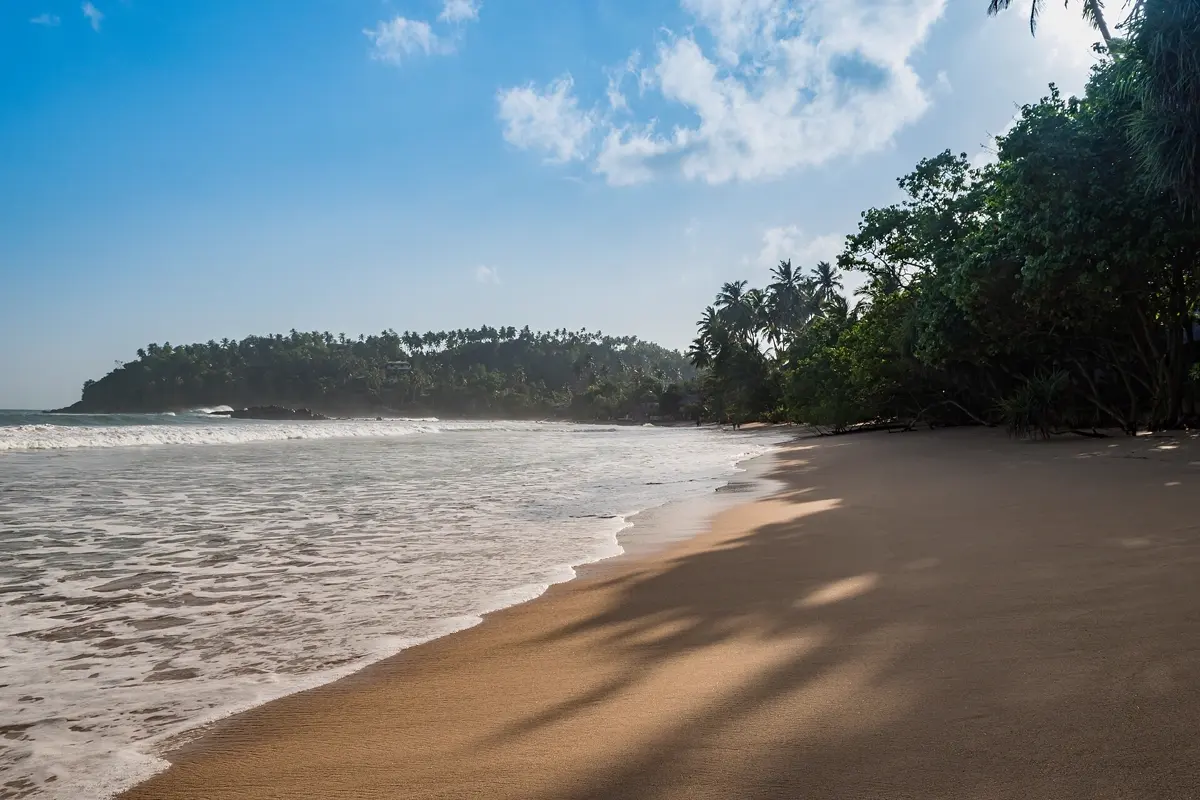
High season for the west coast, the south and the hill country. In February Colombo gets an average of only 54 mm of rain, Kandy less than 62 mm from January to March. Beaches such as Mirissa, Unawatuna and Bentota have calmer seas now. In December the west coast still gets 168 mm; the season is only just getting going. On the east coast it is the rainy season, with 269 mm in Trincomalee in December. For more warm places in these months, see where to go in January for sun and warm places in February.
April
A transition month. Rain increases in the west and south (Colombo 160 mm), while the east coast turns dry (Trincomalee 51 mm). Around the Sinhala and Tamil New Year in mid-April many locals travel, and rooms in popular places book up early.
May to September
Now it's the east coast's turn. Trincomalee, Pasikudah and Arugam Bay are dry and very warm. The west and south are in their rainy season; May is the wettest month there with over 400 mm. After that it often rains in heavy showers with sunshine in between – round trips are possible, but beach days on the west coast are uncertain and the sea is often rough. The hill country is comparatively moderate from June to September. In July or August Kandy holds the Esala Perahera, a large procession with decorated elephants; the date follows the lunar calendar.
October and November
The wettest time for the whole island. Colombo gets 393 mm in October, Kandy 305 mm, Trincomalee 412 mm in November. If you travel now you will find cheaper rooms, but expect rain on most days.
Round trip: what is where
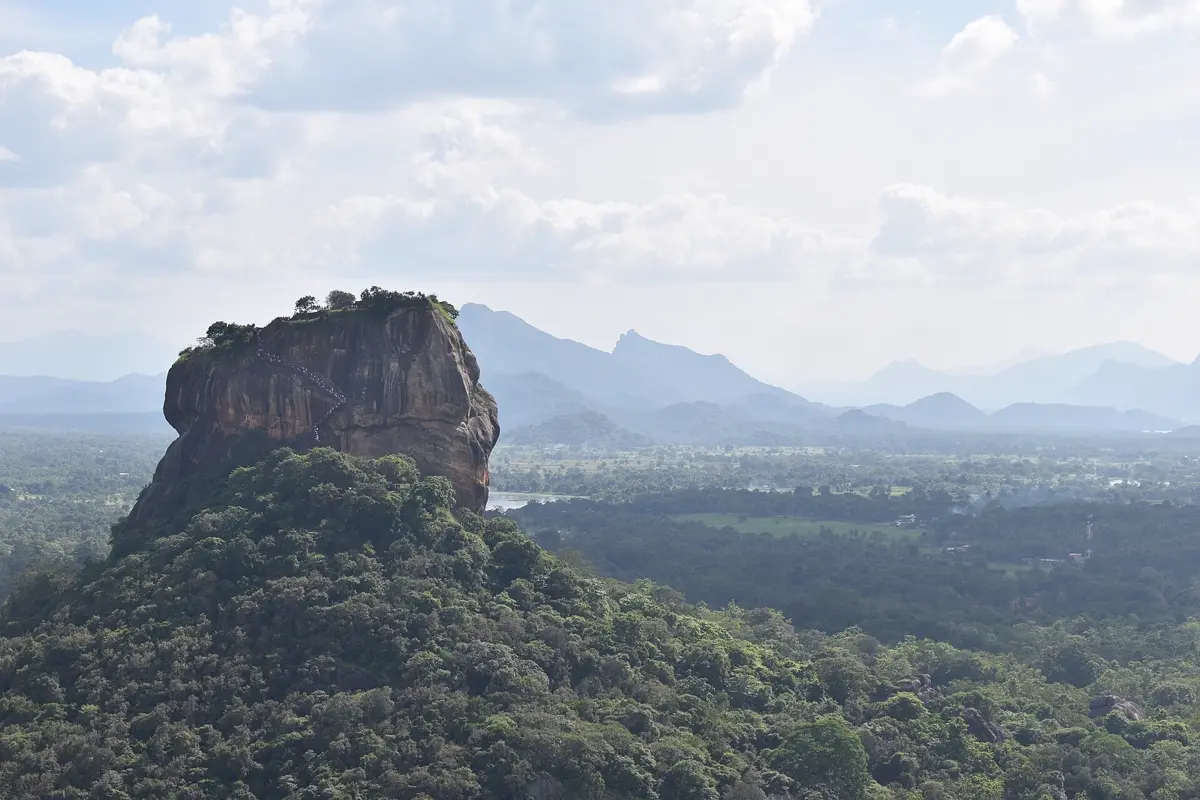
Many travellers combine the hill country and the Cultural Triangle with a few days on the beach. The Cultural Triangle includes the rock of Sigiriya, the Dambulla cave temple and the ancient royal cities of Anuradhapura and Polonnaruwa. It lies north of Kandy in the drier interior of the island; like the east, it gets most of its rain from October to January.
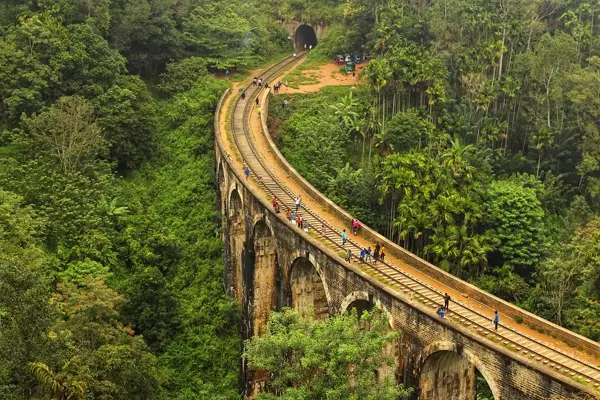
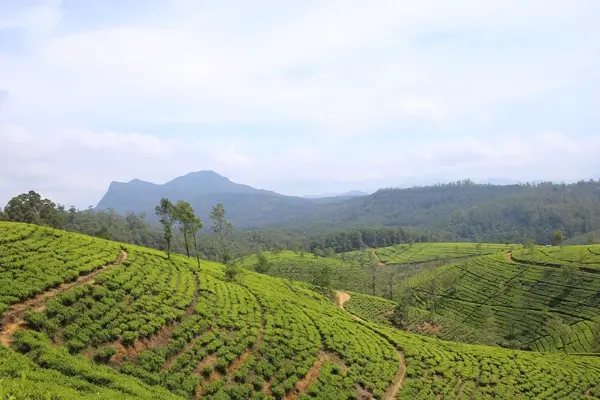
In the hill country, the train ride from Kandy through the tea estates to Ella is one of the best-known routes in the country; train tickets* for the reserved classes go quickly in high season. By car it is 115 km from Colombo to Kandy (about 2:10 hours of pure driving), 135 km from Kandy to Ella (2:45 hours) and 177 km from Ella to the south coast at Mirissa (2:55 hours). Allow about a third more for traffic and winding mountain roads. Most travellers hire a car with a driver or use buses and trains; driving yourself is tiring in the dense traffic. Sri Lanka drives on the left.
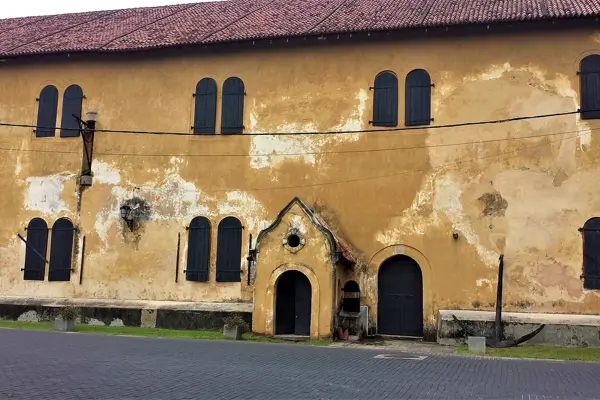
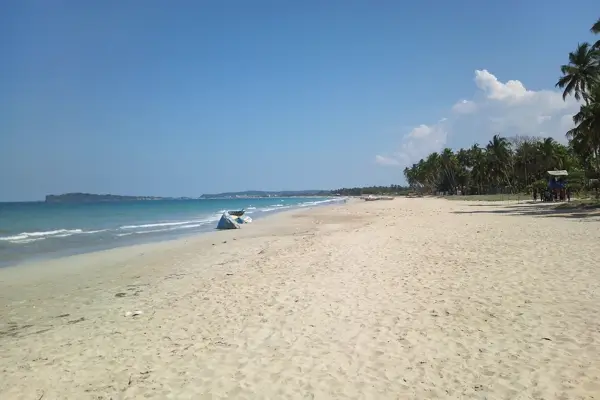
On the south coast, the old town inside Galle Fort is a UNESCO World Heritage Site. Off Mirissa, whale-watching boat trips run in the winter half of the year; it is easiest to compare tours and day trips* before you go.
How YesTrip helps with this trip
Tell YesTrip when you travel and which places you want to see – the app plans day by day with real places on the map. You see the forecast for each travel day, so you can put beach days and train rides on the drier days. The packing list suggests clothes for the weather and reminds you about a plug adapter. Travelling as a group, you share the trip and log shared expenses, such as drivers and rooms. With the offline package you have the map of your places even without a signal.

What to know before you go
- Entry: For a tourist stay you need an Electronic Travel Authorization (ETA), applied for online before you travel. The current rules are on the UK government's travel advice page.
- Flight: From London a direct flight takes approx. 11 hours; many routes connect via the Gulf.
- Power: 230 volts; sockets vary, often British three-pin (type G) or older types with round pins. A universal adapter is easiest.
- Clothing: In temples cover shoulders and knees and take off your shoes.
- Mobile data: a travel eSIM* is usually much cheaper than roaming.
Still choosing between destinations in the Indian Ocean? Compare with the best time to visit the Maldives or see all destinations in the overview Best time to visit: where to go when.
To turn the dry months into a route, see our 14-day Sri Lanka itinerary, which also covers where the trains stand.
* Ad – Partner link: if you book there, we earn a commission. Your price stays the same.
Free
Plan your trip in 30 seconds.
Tell YesTrip where and when – the app plans day by day with real places on the map, shows the weather, splits costs with your travel companions and guides you to the next stop on the go.
Frequently asked questions
When is the best time to visit Sri Lanka?
For the west and south coasts and the hill country, December to March is best; in February Colombo gets an average of only 54 mm of rain. For the east coast around Trincomalee, May to September is best, with 35 to 113 mm a month. It is warm all year.
When is the rainy season in Sri Lanka?
It depends on the coast. The west and south get most rain in May and in October and November, Colombo an average of 422 mm in May. The east gets most of its rain from October to January, Trincomalee 412 mm in November. October and November are wet across the island.
Can you visit Sri Lanka in summer?
Yes, that is the best time for the east coast: from June to August Trincomalee gets only 35 to 70 mm of rain a month and around 34 °C by day. The west coast and the south are in their rainy season, but round trips through the hill country work well.
How hot is Sri Lanka?
On the coast daytime highs are 28 to 34 °C all year, nights 22 to 26 °C. The hill country is cooler: Kandy reaches 27 to 31 °C by day and 19 to 22 °C at night, and Nuwara Eliya is noticeably fresher still.
Which month is best for a round trip of Sri Lanka?
February and March. The west coast, the south and the hill country are dry, and the east coast gets only 54 mm of rain in March. October and November are unfavourable because it rains a lot across the whole island.
Sources
- Climate data: Open-Meteo Historical Weather API (ERA5), average 2015–2024 – open-meteo.com
- Copernicus ERA5 reanalysis (Hersbach et al. 2020) – cds.climate.copernicus.eu
- Monsoon and inter-monsoon seasons: Climate of Sri Lanka – en.wikipedia.org
- Entry requirements: UK government foreign travel advice for Sri Lanka – www.gov.uk
- Driving times: OSRM route calculation based on OpenStreetMap data – project-osrm.org
Researched with AI support and checked by our editors. Prices, opening hours and weather can change – please check before you go. YesTrip is not a travel agency. Published: .
More best-time guides
 When to go
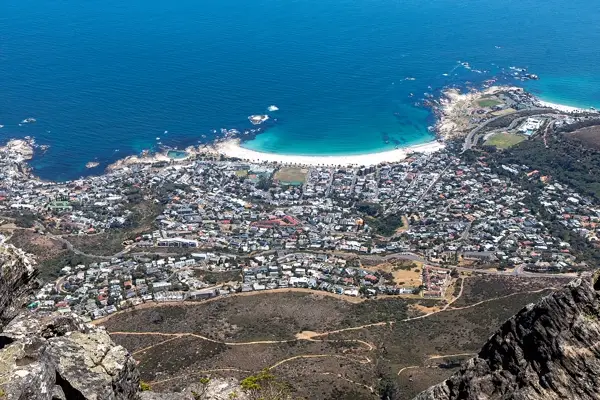
Best time to visit South Africa: weather by region
South Africa has two seasons to choose from: Cape Town is at its best in summer from November to March (25.9 °C in January, only 10 to 29 mm … · 11 min read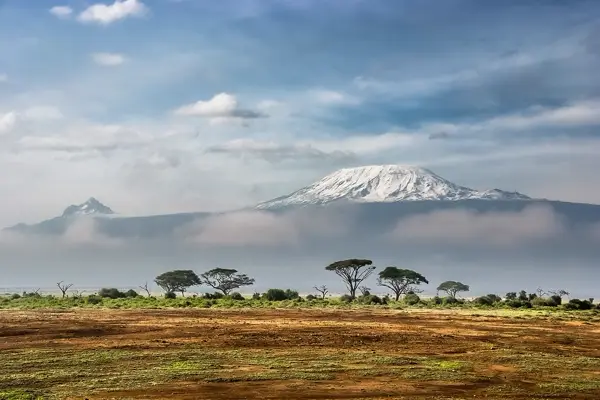 When to go
Best time to visit Tanzania: safari and Kilimanjaro
The best time for a safari in Tanzania is the long dry season from June to October: the central Serengeti then gets only 5 to 17 mm of rain … · 8 min read When to go
Best time to visit Thailand: weather by region
The best time to visit Thailand is December to February: Bangkok gets only 19 to 30 mm of rain a month, nights in Chiang Mai are a pleasant … · 9 min read
All destinations: best time to visit and warm places by month


