
Best time to visit Morocco: weather by region
In short
The best time to visit Morocco is March to May and October to November: Marrakech then has 23 to 30 °C by day, and even the Sahara around Merzouga is bearable. In July Marrakech averages 38.6 °C and Merzouga 41.8 °C. The Atlantic coast stays mild: Agadir has 21 to 28 °C by day all year round.
Morocco is only a short flight from the UK and packs several climate zones into a small space: the mild Atlantic coast, the imperial cities inland, the Atlas Mountains with peaks over 4,000 m and the edge of the Sahara. In July, Essaouira on the sea and Merzouga in the desert are on average 16 degrees apart by day. So the best time to go depends on where you're going. We analysed the weather data for 2015 to 2024 for five places.
The short answer
- Best time for a round trip: March to May and October to November. 23 to 30 °C by day in Marrakech, 20 to 28 °C in Fes, and the desert is not too hot.
- Summer (June to September): very hot inland – Marrakech averages 38.6 °C in July, Fes 37.5 °C, Merzouga 41.8 °C. The Atlantic coast is the better choice then: Essaouira has 25.8 °C in July.
- Winter (December to February): mild by day, around 20 °C in Marrakech, but cold at night – 5 °C in Marrakech and 3.7 °C in Merzouga in January. There is snow in the High Atlas.
- Beach holiday: Agadir is mild all year at 21 to 28 °C by day, and almost rain-free from April to September.
Marrakech's climate: all 12 months
| Month | Day (avg. high) | Night (avg. low) | Rain per month |
|---|---|---|---|
| January | 19.7 °C | 5.1 °C | 28 mm |
| February | 21.3 °C | 6.8 °C | 39 mm |
| March | 23.2 °C | 8.6 °C | 51 mm |
| April | 26.1 °C | 11.6 °C | 33 mm |
| May | 30.4 °C | 14.8 °C | 18 mm |
| June | 33.1 °C | 17.3 °C | 3 mm |
| July | 38.6 °C | 20.8 °C | 2 mm |
| August | 38.1 °C | 21.4 °C | 4 mm |
| September | 33.1 °C | 18.2 °C | 7 mm |
| October | 29.7 °C | 15.2 °C | 22 mm |
| November | 24.1 °C | 9.9 °C | 25 mm |
| December | 21.0 °C | 6.7 °C | 25 mm |
Temperatures and rain: monthly averages 2015–2024 from the ERA5 reanalysis (Open-Meteo), rounded. Values apply to a grid cell of about 25 km.
Typical of Marrakech is the big gap between day and night: in January it is almost 20 °C by day but only 5 °C at night – a difference of nearly 15 degrees. Rain is hardly an issue, with around 260 mm over the whole year, most of it from November to April. From June to September it practically never rains.
The regions compared
| Month | Fes day | Merzouga day | Merzouga night | Agadir day | Essaouira day |
|---|---|---|---|---|---|
| Jan | 16.7 °C | 17.9 °C | 3.7 °C | 20.9 °C | 19.1 °C |
| Feb | 18.5 °C | 20.2 °C | 6.5 °C | 21.6 °C | 19.3 °C |
| Mar | 20.1 °C | 24.3 °C | 10.5 °C | 22.0 °C | 19.9 °C |
| Apr | 23.4 °C | 29.2 °C | 15.3 °C | 22.8 °C | 21.0 °C |
| May | 28.5 °C | 33.4 °C | 19.7 °C | 24.2 °C | 22.6 °C |
| Jun | 32.3 °C | 37.9 °C | 23.9 °C | 25.2 °C | 23.8 °C |
| Jul | 37.5 °C | 41.8 °C | 27.8 °C | 27.3 °C | 25.8 °C |
| Aug | 37.3 °C | 40.4 °C | 27.1 °C | 28.1 °C | 26.2 °C |
| Sep | 32.2 °C | 35.2 °C | 22.2 °C | 26.1 °C | 25.1 °C |
| Oct | 27.9 °C | 29.1 °C | 16.3 °C | 26.4 °C | 24.4 °C |
| Nov | 21.5 °C | 22.9 °C | 9.7 °C | 24.0 °C | 22.2 °C |
| Dec | 18.4 °C | 18.5 °C | 5.1 °C | 22.0 °C | 20.4 °C |
Monthly averages 2015–2024, ERA5 reanalysis (Open-Meteo), rounded.
Base map: Natural Earth
Marrakech and the imperial cities
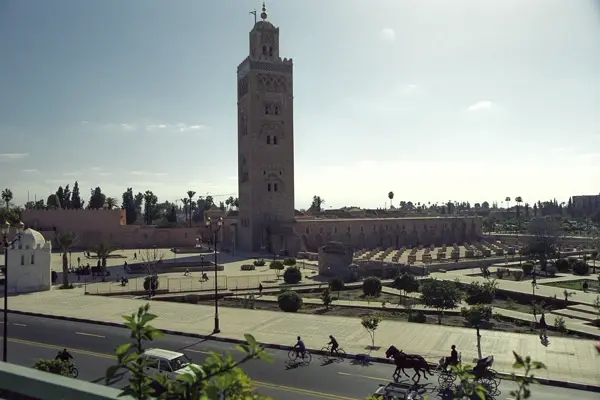
Marrakech is most pleasant in spring and autumn, and mild in winter with cold nights. Fes lies further north and is cooler and wetter in winter: 16.7 °C in January and 83 mm of rain in March, much more than Marrakech. In summer both cities get very hot; the narrow lanes of the medinas are shady, but sightseeing is then only comfortable in the morning and evening.
The Sahara
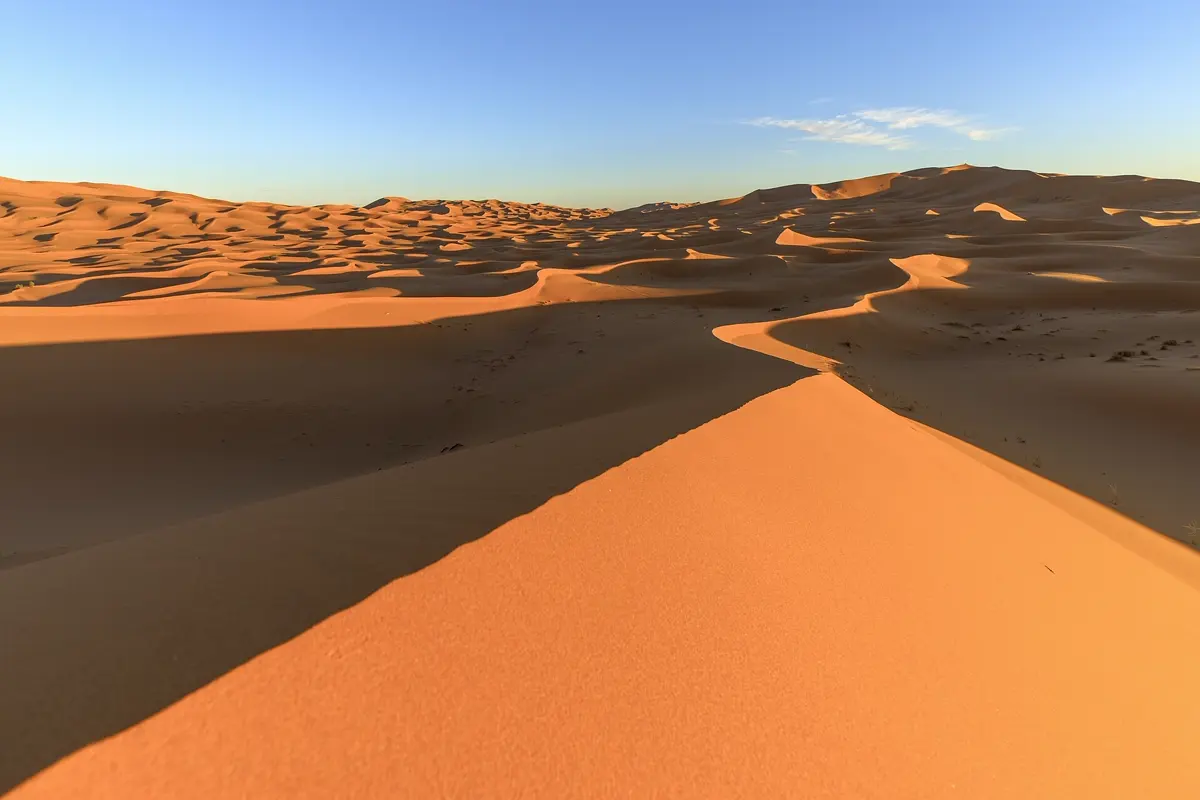
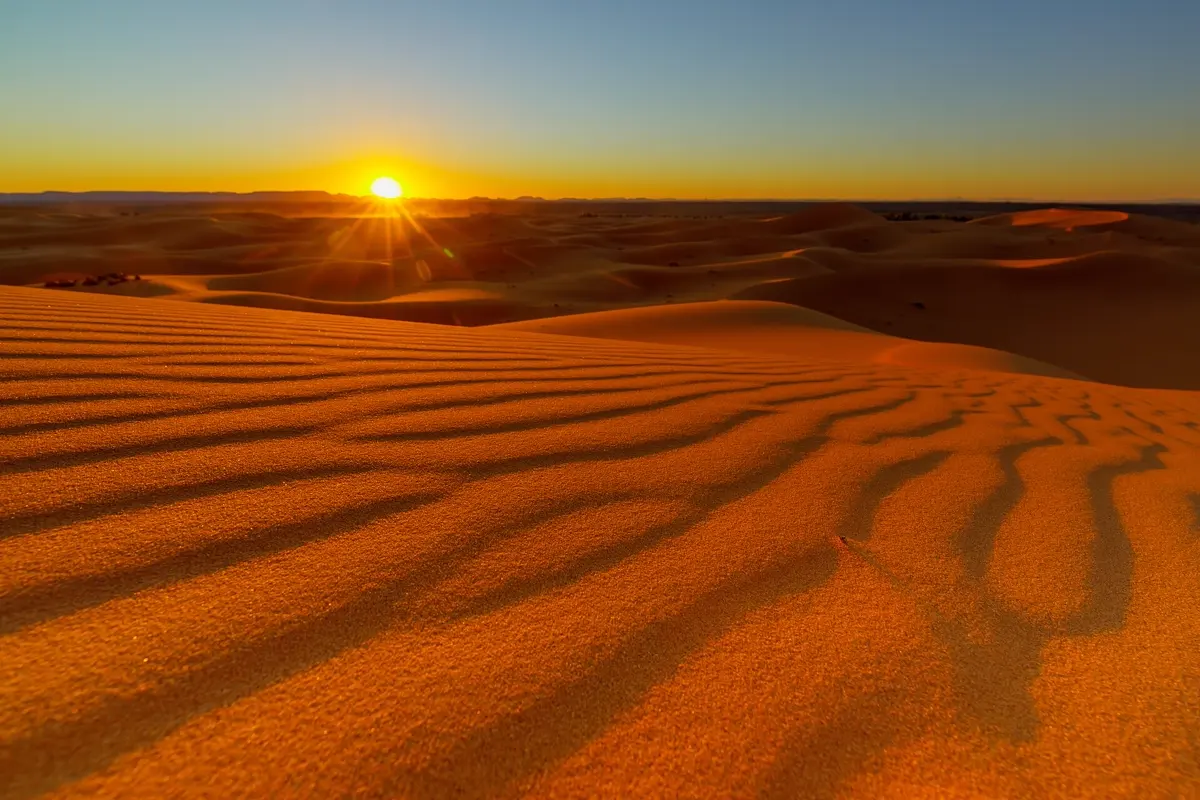
In Merzouga on the edge of the Erg Chebbi dunes, summer is extreme: 41.8 °C by day in July and still almost 28 °C at night. In winter the picture is reversed: 18 °C by day, an average of 3.7 °C at night – if you sleep in a desert camp in January, you need warm clothes and a good sleeping bag. March, April, October and November suit best, with 23 to 29 °C by day and mild nights. It almost never rains here.
The Atlantic coast
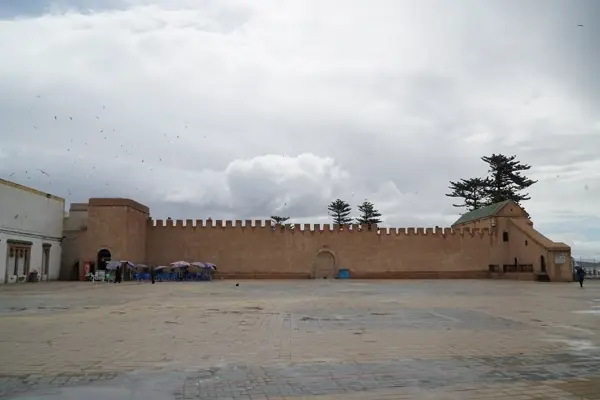
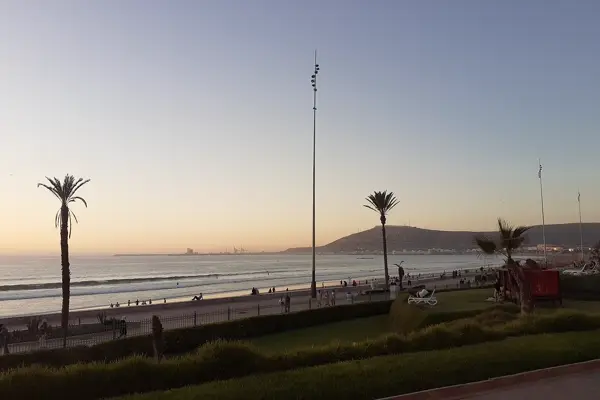
By the sea, the cool Atlantic evens out the temperatures. Agadir stays between 20.9 and 28.1 °C by day all year and, with 19 mm of rain in January, is mostly dry even in winter – the classic beach destination. Essaouira is cooler still and, at 25 to 26 °C in summer, a refuge from the heat inland. A strong wind often blows there, which is why the town is popular with kitesurfers and windsurfers; on the beach it feels cooler than the numbers suggest.
The Atlas Mountains
The High Atlas separates Marrakech from the desert. Toubkal (4,167 m) is the highest mountain in North Africa. In winter there is snow at altitude, and mountain passes such as the Tizi n'Tichka can be closed temporarily after snowfall. Spring to autumn is the best time for hiking, for example from the mountain village of Imlil; in high summer it is more pleasant up there than in Marrakech.

Morocco month by month
December to February
Mild by day, cold at night. In Marrakech just under 20 to 21 °C by day and 5 to 7 °C at night; pack a warm layer for the evenings. A good time for a city break in Marrakech, though busy around Christmas and New Year. The desert is pleasant by day and cold at night. There is snow in the Atlas, and Agadir tempts with 21 to 22 °C by day.
March to May
The best time for a round trip. In Marrakech temperatures rise from 23 to 30 °C, in Merzouga from 24 to 33 °C. In March it still rains more often in Fes (83 mm); from April it gets drier everywhere. The country is green after the winter, and the Atlas is in bloom. By May the south is already getting hot.
June to September
The hot season inland: Marrakech reaches 38.6 °C in July, Fes 37.5 °C. A desert tour is possible but tiring; camel rides and excursions then only take place early in the morning and in the evening. The better choice in summer is the coast: Agadir at 27 to 28 °C with practically no rain, Essaouira at 25 to 26 °C. From there Marrakech makes a short side trip.
October and November
The second good season. Marrakech has 29.7 °C in October and 24.1 °C in November. In the desert, October is ideal at 29 °C by day and 16 °C at night. In November nights get cooler everywhere, averaging 9.7 °C in Merzouga.
Ramadan in Morocco
During the fasting month of Ramadan, observant Muslims do not eat or drink from sunrise to sunset. Ramadan follows the Islamic lunar calendar and therefore moves forward by about eleven days every year – check before booking whether it falls within your travel dates. Travelling is perfectly possible: hotels, riads and sights are open. Outside the tourist centres, though, many restaurants and cafés are closed during the day, and some opening hours change. After sunset people break the fast together, and the evenings in the medinas are especially lively.
What to do in the best months
In Marrakech, start at Jemaa el-Fna square, which is liveliest in the evening with food stalls, musicians and storytellers, then wander through the souks and visit the city's gardens and palaces. You can buy tickets* for the well-known gardens and palaces in advance and skip the queue at the ticket office in peak season. From Marrakech, day trips lead into the Atlas to Imlil or to the sea at Essaouira.
For the Sahara you need at least three days: Marrakech to Merzouga is about 560 km, a good ten hours of pure driving time over the High Atlas – with breaks, add about a third. Many book a guided desert tour* with a night in a camp; others drive themselves in a rental car*. The full route with Aït Benhaddou, the Dadès Valley and Fes is in our Morocco itinerary.
 Marrakech trip planDay by day, with map and tips
How YesTrip helps with this trip
In YesTrip you'll find a ready-made city plan for Marrakech with Jemaa el-Fna, the souks, gardens and palaces, which you can adopt and fit to your travel days. For the desert, Fes or the coast, the AI creates a day plan with a map. The weather forecast covers your travel days – so you can see how cold the night in the desert camp will be. The packing list remembers the warm layer for the evenings, covering clothes and the right plug adapter. Travelling with others, you share the trip and log shared expenses; the map also works offline in the lanes of the medina.
What to know before you go
- Entry: UK and EU citizens can visit Morocco as tourists for up to 90 days without a visa; you need a valid passport. Check the current rules on gov.uk or with your own government.
- Flight: from London, direct flights to Marrakech take about 3.5 hours. Agadir and Fes can also be reached by air, directly or with a change depending on your departure airport.
- Power: 220 volts, European two-pin plugs; UK plugs need an adapter.
- Clothing: cover shoulders and knees, especially outside Marrakech and in the countryside.
- Mobile data: roaming in Morocco is expensive on most plans. A travel eSIM is usually much cheaper.
* Ad – Partner link: if you book there, we earn a commission. Your price stays the same.
Free
Plan your trip in 30 seconds.
Tell YesTrip where and when – the app plans day by day with real places on the map, shows the weather, splits costs with your travel companions and guides you to the next stop on the go.
Frequently asked questions
When is the best time to visit Morocco?
March to May and October to November. Marrakech then has 23 to 30 °C by day, Fes 20 to 28 °C, and the desert around Merzouga is manageable at 23 to 33 °C. Agadir is fine all year for a pure beach holiday.
How hot is Morocco in summer?
Very hot inland: in July Marrakech averages 38.6 °C, Fes 37.5 °C and Merzouga in the Sahara 41.8 °C. The Atlantic coast, by contrast, is mild, with 25.8 °C in Essaouira and 27.3 °C in Agadir.
How cold is the desert in winter?
In January nights in Merzouga average 3.7 °C, days 17.9 °C. For a night in a desert camp you then need warm clothes and a good sleeping bag. March, April, October and November are more pleasant.
Can you swim in Morocco in winter?
In Agadir the average January high is 20.9 °C and it is usually dry, which is enough for sunbathing. The Atlantic is cool in winter, though. June to October is the most pleasant time for swimming.
Should you visit Morocco during Ramadan?
Yes, it is perfectly possible. Hotels and sights are open, but outside the tourist centres many restaurants are closed during the day. Ramadan moves forward by about eleven days each year, so check the dates for your year of travel.
Sources
- Climate data: ERA5 reanalysis via Open-Meteo, monthly averages 2015–2024 – open-meteo.com
- Copernicus ERA5 reanalysis (Hersbach et al. 2020) – cds.climate.copernicus.eu
- Driving time Marrakech–Merzouga: OSRM routing on OpenStreetMap data (from our Morocco itinerary) – project-osrm.org
- Entry requirements for Morocco: UK Foreign Travel Advice – www.gov.uk
Researched with AI support and checked by our editors. Prices, opening hours and weather can change – please check before you go. YesTrip is not a travel agency. Published: .
More best-time guides
 When to go
Best time to visit Mauritius: summer and winter
The best time to visit Mauritius is September to December plus April and May: the north and west coasts then see 26 to 30 °C by day and … · 7 min read When to go
Best time to visit Mexico: Yucatán and Cancún
The best time to visit Cancún and the Yucatán Peninsula is December to April: it is warm at 26 to 29 °C by day and comparatively dry (37 mm … · 8 min read When to go
Best time to visit Namibia: dry season and desert
The best time to visit Namibia is the dry season from May to October: it hardly rains, the gravel roads are in good condition, and animals … · 7 min read
All destinations: best time to visit and warm places by month


