
Best time to visit Mauritius: summer and winter
In short
The best time to visit Mauritius is September to December plus April and May: the north and west coasts then see 26 to 30 °C by day and usually under 90 mm of rain a month. January to March is hot and wet (Grand Baie 222 mm in January), and cyclone season runs roughly November to April. Winter, June to August, stays dry at 25 °C but windier.
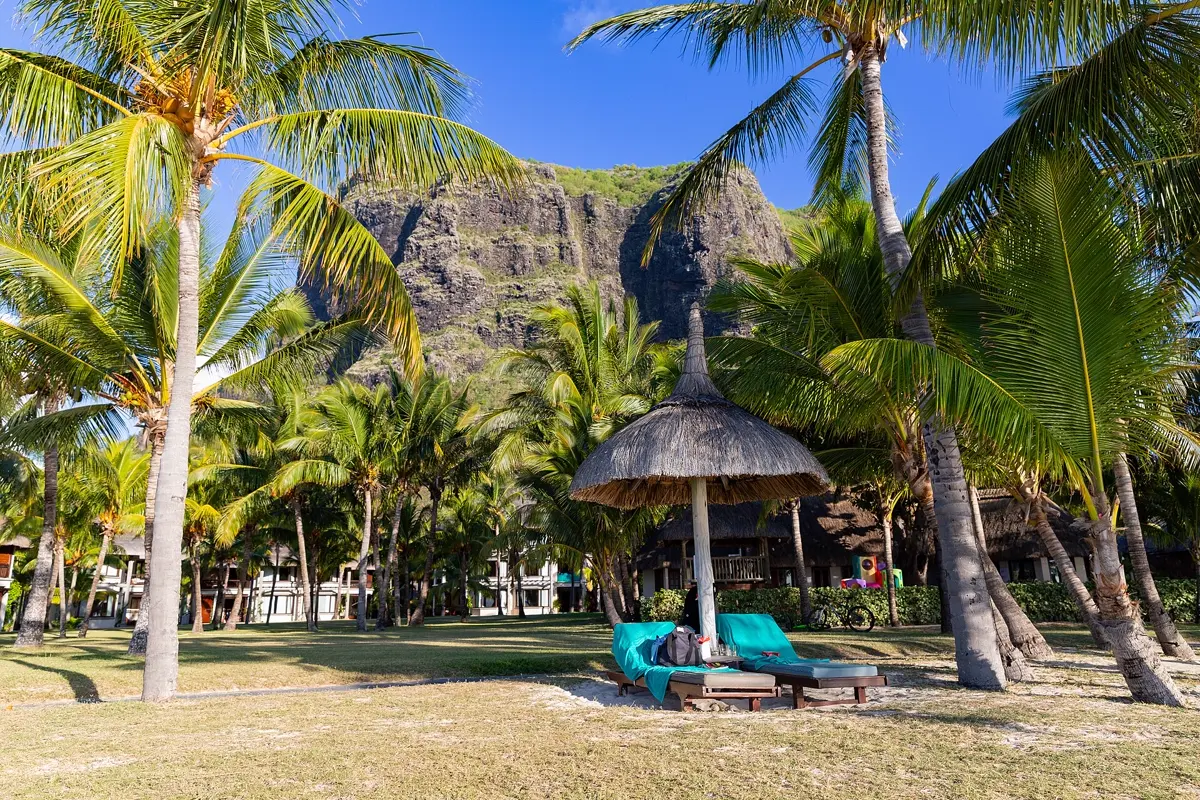
Mauritius lies in the Indian Ocean east of Madagascar, in the southern hemisphere. Its seasons are therefore reversed: summer runs from November to April, winter from June to September. It is warm enough to swim all year, but rain, wind and cyclones are spread very unevenly – across the months and across the coasts. We analysed the weather data for 2015 to 2024 at three places: Grand Baie in the north, Flic en Flac in the west and Mahébourg in the southeast.
The short answer
- Best time: September to December, plus April and May. 26 to 30 °C by day on the north and west coasts, little rain, outside the main cyclone period.
- Hot and wet: January to March. 28 to 30 °C, humid, the most rain; this is also when most cyclones occur.
- Winter: June to August. Dry and sunny in the west and north, but only 25 to 26 °C by day and around 20 °C at night. The southeast trade wind makes the east and south coasts windy.
- Which coast: in winter the west and north are more sheltered and drier; in summer the east coast is more pleasant thanks to the breeze.
Mauritius's climate: all 12 months
| Month | Grand Baie day | Grand Baie night | Grand Baie rain | Flic en Flac rain | Mahébourg day | Mahébourg rain |
|---|---|---|---|---|---|---|
| January | 29.0 °C | 24.8 °C | 222 mm | 220 mm | 27.9 °C | 283 mm |
| February | 29.1 °C | 24.8 °C | 135 mm | 124 mm | 27.8 °C | 217 mm |
| March | 29.1 °C | 24.8 °C | 124 mm | 122 mm | 27.7 °C | 195 mm |
| April | 28.3 °C | 24.1 °C | 73 mm | 65 mm | 26.9 °C | 194 mm |
| May | 27.0 °C | 22.5 °C | 44 mm | 34 mm | 25.2 °C | 138 mm |
| June | 25.5 °C | 21.0 °C | 23 mm | 17 mm | 23.6 °C | 106 mm |
| July | 24.9 °C | 20.1 °C | 25 mm | 18 mm | 22.8 °C | 125 mm |
| August | 25.1 °C | 20.0 °C | 27 mm | 19 mm | 22.9 °C | 97 mm |
| September | 25.7 °C | 20.4 °C | 20 mm | 16 mm | 23.3 °C | 93 mm |
| October | 26.9 °C | 21.4 °C | 37 mm | 44 mm | 24.9 °C | 84 mm |
| November | 28.1 °C | 22.5 °C | 40 mm | 54 mm | 26.2 °C | 112 mm |
| December | 29.1 °C | 24.0 °C | 85 mm | 92 mm | 27.4 °C | 163 mm |
Temperature and rain: monthly averages 2015–2024 from the ERA5 reanalysis (Open-Meteo), rounded. The values describe a grid cell of about 25 km that lies partly over the sea and partly over the uplands – they show the differences between the coasts, not the weather on one particular beach. The central plateau is cooler and much wetter.
Two things stand out. First, only about four degrees separate summer and winter – Mauritius is never really cool. Second, the southeast gets several times the rain of the west in every month: in July Mahébourg gets 125 mm, Flic en Flac only 18 mm. The reason is the southeast trade wind, which in winter pushes moist air against the east and south coasts and the uplands.
Mauritius month by month
January to March
High summer: 28 to 30 °C by day, around 25 °C at night, high humidity. This is when most rain falls, often as a heavy afternoon shower, and it is the main season for tropical cyclones. Not every year does a cyclone hit the island, but when one does, flights can be cancelled and excursions impossible for a few days. If you travel in these months, leave some slack in your plans and follow the weather service's warnings.
April and May
A very good period: the rain eases (Grand Baie 44 mm in May), it is still summery at 27 to 28 °C, and the sea has warmed up over the summer.
June to August
The Mauritian winter. The west and north are dry and sunny (17 to 27 mm of rain a month), but at 25 to 26 °C by day not hot, and you will want a jumper in the evening. On the east and south coasts the trade wind blows strongly and it rains more often. For hiking, for example in Black River Gorges National Park or up Le Morne Brabant, this is a pleasant time. The European summer holidays still make the island busy.
September to December
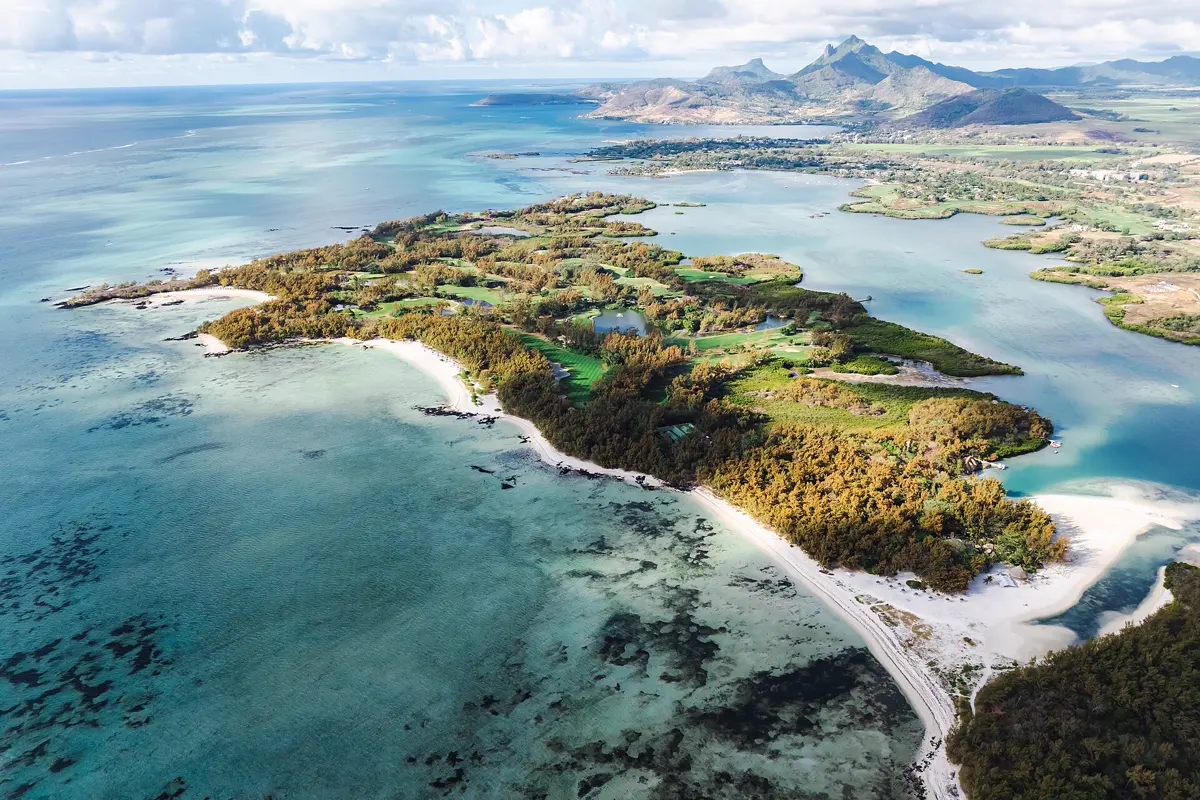
For many the best time. It gets warmer month by month (September 26 °C, December 29 °C), and September and October are the driest months in the west at 16 to 44 mm. According to the weather service, October is the driest month on average across the island. The rainy season starts gradually from December. Hotels are most expensive around Christmas and New Year. For more warm places in these months: where to go in October, where to go in November and warm places in December.
Which coast when
| Coast | Places | Best |
|---|---|---|
| North | Grand Baie, Pereybère, Trou aux Biches | almost all year, sheltered in winter |
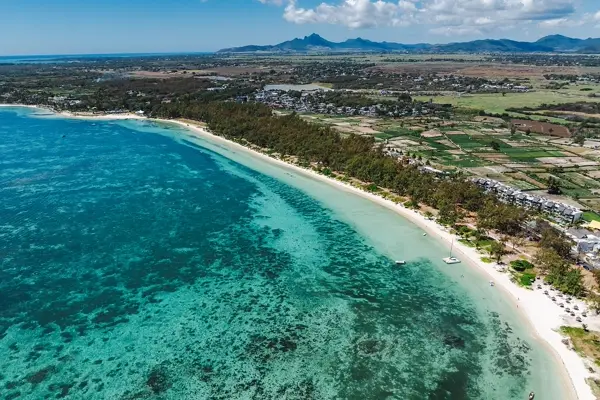
| West | Flic en Flac, Tamarin, Le Morne | May to December, the driest |
| East | Belle Mare, Trou d'Eau Douce | October to April, windy in winter |
| South | Mahébourg, Blue Bay | October to April, wetter |
The island is small enough to visit every coast from one base. A boat trip to Île aux Cerfs is a classic on the east coast. In the southwest you find the coloured earths and the waterfall of Chamarel, and in the capital Port Louis the market and the Caudan Waterfront. Mauritius drives on the left; a hire car* gives you flexibility, though roads in the interior are narrow and winding.

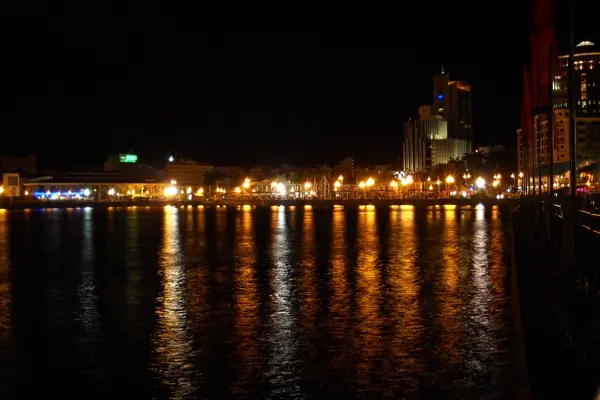
How YesTrip helps with this trip
Tell YesTrip when you will be in Mauritius and what you want to see – the app plans day by day with real places on the map. The forecast for your travel days helps you put boat trips and hikes on the dry days, especially in the rainy season. The packing list suggests clothes for the weather and reminds you about a plug adapter. Travelling as a group, you share the trip and log shared expenses, such as the hire car and excursions.

What to know before you go
- Entry: British passport holders do not need to apply for a visa in advance for a tourist stay. The current rules, including passport validity and onward tickets, are on the UK government's travel advice page.
- Flight: From London a direct flight takes approx. 12 hours.
- Time: four hours ahead of the UK in the British winter, three hours in summer.
- Power: 230 volts, mostly British three-pin sockets (type G), sometimes European two-pin. Travellers from the UK usually need no adapter.
- Transfer: The airport is in the southeast. It is 72 km to Grand Baie (about 55 minutes of pure driving) and 47 km to Flic en Flac (just over 40 minutes); allow about a third more. It is easiest to book a transfer* in advance.
- Mobile data: a travel eSIM* is usually much cheaper than roaming.
Still comparing islands in the Indian Ocean? See the best time to visit the Maldives or all destinations in the overview Best time to visit: where to go when.
* Ad – Partner link: if you book there, we earn a commission. Your price stays the same.
Free
Plan your trip in 30 seconds.
Tell YesTrip where and when – the app plans day by day with real places on the map, shows the weather, splits costs with your travel companions and guides you to the next stop on the go.
Frequently asked questions
When is the best time to visit Mauritius?
September to December, plus April and May. Daytime highs on the north and west coasts are then 26 to 30 °C, and usually less than 90 mm of rain falls a month. September and October are the driest.
When is the rainy season in Mauritius?
In summer from December to April, most of all from January to March. Grand Baie averages 222 mm in January, and Mahébourg in the southeast even 283 mm. Rain usually comes in heavy showers, followed by sunshine.
When is cyclone season in Mauritius?
Roughly from November to April, with most storms from January to March. Not every year does a cyclone hit the island. The Mauritius Meteorological Services issue warnings that you should follow during your trip.
Is Mauritius warm enough to swim in July?
Yes. On the north and west coasts July averages 25 to 26 °C by day, and it hardly rains. The sea is fresher than in summer, and evenings are cool at around 20 °C. The east and south coasts are windier and wetter.
Which coast is best in Mauritius in winter?
The west and north, for example Flic en Flac, Tamarin and Grand Baie. They lie in the lee of the southeast trade wind; Flic en Flac gets only 16 to 19 mm of rain a month from June to September.
Sources
- Climate data: Open-Meteo Historical Weather API (ERA5), average 2015–2024 – open-meteo.com
- Copernicus ERA5 reanalysis (Hersbach et al. 2020) – cds.climate.copernicus.eu
- Seasons and rainfall: Mauritius Meteorological Services, climate of Mauritius – metservice.intnet.mu
- Entry requirements: UK government foreign travel advice for Mauritius – www.gov.uk
- Driving times: OSRM route calculation based on OpenStreetMap data – project-osrm.org
Researched with AI support and checked by our editors. Prices, opening hours and weather can change – please check before you go. YesTrip is not a travel agency. Published: .
More best-time guides
 When to go
Best time to visit Mexico: Yucatán and Cancún
The best time to visit Cancún and the Yucatán Peninsula is December to April: it is warm at 26 to 29 °C by day and comparatively dry (37 mm … · 8 min read When to go
Best time to visit Namibia: dry season and desert
The best time to visit Namibia is the dry season from May to October: it hardly rains, the gravel roads are in good condition, and animals … · 7 min read When to go
Best time to visit New Zealand: month by month
The best time to visit New Zealand is the southern summer from December to March: Auckland reaches 22 to 23 °C by day, Queenstown 19 to 21 … · 7 min read
All destinations: best time to visit and warm places by month


