
Best time to visit New Zealand: month by month
In short
The best time to visit New Zealand is the southern summer from December to March: Auckland reaches 22 to 23 °C by day, Queenstown 19 to 21 °C, and the Great Walks are in season. February and March are often the best months, warm and quieter after the local school holidays. Winter, from June to August, is cool, at 6 to 8 °C by day in Queenstown, and is ski season in the Southern Alps.
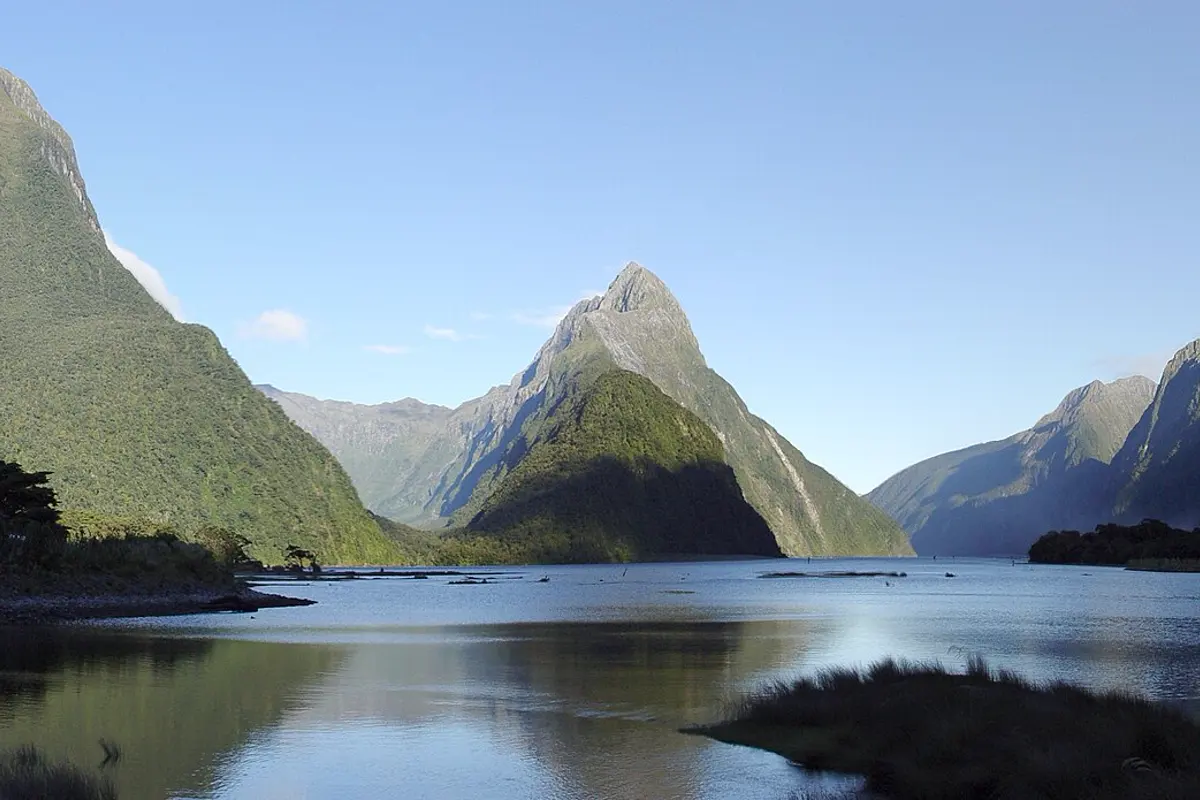
The best time to visit New Zealand is the southern summer from December to March, when the days are long and warm, the hiking trails are open and the lakes are pleasant for a swim. February and March are often the best months of all: still summery, but quieter than around Christmas and January. New Zealand's seasons are the reverse of Europe's, and the weather can change quickly, because the islands lie in the middle of the ocean and the mountains catch the westerly winds. The North Island around Auckland is subtropical and mild, the South Island around Queenstown has real winters with snow. We analysed the weather from 2015 to 2024 at three places: Auckland, Christchurch and Queenstown.
The short answer
- Best time overall: December to March. Auckland averages 22 to 23 °C by day, Christchurch 20 to 23 °C, Queenstown 19 to 21 °C.
- Best months: February and March – warm, often settled and less busy than the school holidays from Christmas to late January.
- Hiking and Great Walks: the Department of Conservation's Great Walks season runs until the end of April and starts in October or November, depending on the track; on the Milford Track it is November to April.
- Spring and autumn: October to November and April are good for road trips with fewer visitors, but cooler and more changeable.
- Winter and skiing: June to August. Queenstown averages 6.5 to 8 °C by day and only 1.5 to 2.5 °C at night.
New Zealand's climate: all 12 months
| Month | Auckland day | Auckland night | Auckland rain | Christchurch day | Christchurch rain | Queenstown day | Queenstown night |
|---|---|---|---|---|---|---|---|
| January | 23.1 °C | 17.7 °C | 89 mm | 22.8 °C | 49 mm | 21.4 °C | 12.6 °C |
| February | 23.2 °C | 17.9 °C | 108 mm | 22.7 °C | 52 mm | 20.4 °C | 12.1 °C |
| March | 21.9 °C | 16.6 °C | 90 mm | 20.2 °C | 50 mm | 18.5 °C | 10.7 °C |
| April | 19.8 °C | 14.8 °C | 95 mm | 17.8 °C | 53 mm | 14.7 °C | 7.8 °C |
| May | 17.5 °C | 12.6 °C | 96 mm | 15.0 °C | 52 mm | 11.1 °C | 5.3 °C |
| June | 15.5 °C | 11.1 °C | 94 mm | 11.9 °C | 55 mm | 7.2 °C | 2.5 °C |
| July | 14.6 °C | 9.9 °C | 118 mm | 11.2 °C | 74 mm | 6.5 °C | 1.5 °C |
| August | 14.7 °C | 9.7 °C | 118 mm | 12.5 °C | 43 mm | 7.8 °C | 2.2 °C |
| September | 15.8 °C | 10.9 °C | 107 mm | 14.7 °C | 47 mm | 10.5 °C | 3.5 °C |
| October | 17.2 °C | 12.3 °C | 98 mm | 17.2 °C | 54 mm | 13.8 °C | 5.6 °C |
| November | 19.3 °C | 14.0 °C | 108 mm | 19.2 °C | 60 mm | 17.2 °C | 8.3 °C |
| December | 21.5 °C | 16.3 °C | 86 mm | 21.3 °C | 68 mm | 19.8 °C | 11.0 °C |
Temperature and rain: monthly averages 2015–2024 from the ERA5 reanalysis (via Open-Meteo), rounded. A grid cell is about 25 km wide, so the values are a regional average rather than a single weather station. For Queenstown, the cell includes the surrounding mountains, so treat the rain figures as a rough guide: the town itself is drier, while the west coast and Fiordland get several times as much rain. For official station data and forecasts, see MetService and NIWA.
Auckland is mild all year: summer days average 22 to 23 °C, winter days still 15 °C. Rain is spread over the whole year, with slightly more in winter.
Queenstown, in the south of the South Island, has the biggest contrast between the seasons: 21 °C by day in January, 6.5 °C in July, with frost at night in winter.
New Zealand month by month
December to February: summer
The main season. Long days, warm temperatures and all hiking trails open. Christmas to late January is New Zealand's own summer holiday, so campsites, ferries between the islands and accommodation in hotspots like Queenstown and the Coromandel book up early. According to NIWA, February is generally a little warmer and drier than January for most of the country, though the difference is only about a degree. UV radiation is strong in summer, so take sun protection seriously.
March and April: autumn
Often the best time for a road trip. In March the days are still warm, at 22 °C in Auckland and 18.5 °C in Queenstown, the summer holidays are over and the roads are quieter. In April the leaves turn golden around Queenstown, Wanaka and Arrowtown, but the nights get noticeably cooler. On the Milford Track, the Great Walks season ends on 30 April.
May to September: winter
Cool, changeable weather. Auckland stays mild at 15 °C by day, while Queenstown averages only 6.5 to 8 °C from June to August, with frost at night. This is ski season in the Southern Alps around Queenstown and Wanaka. Hiking is still possible on lower trails, but alpine routes need experience: on the Milford Track, the Department of Conservation does not manage avalanche risk outside the Great Walks season and advises that it should only be attempted by fit, experienced and well-equipped walkers between May and late October.
October and November: spring
The country turns green, lambs are in the fields and the waterfalls are full. It warms up quickly, from 17 °C in Auckland in October to 19 °C in November, but the weather is still changeable, with snow possible in the mountains. The Great Walks season begins in October or November, depending on the track; according to DOC, avalanche risk on the Milford Track can extend into December.




North Island or South Island?
For a first trip of two to three weeks, many travellers combine both islands: on the North Island, Auckland, the Bay of Islands, Rotorua with its geothermal areas and the Tongariro Alpine Crossing; on the South Island, Queenstown, Milford Sound, the glaciers on the west coast and Lake Tekapo in the Mackenzie Basin. The North Island is milder and works well in spring and autumn too; the South Island is at its best from December to March. The ferry across Cook Strait links Wellington and Picton, or you fly. Distances look short on the map but the roads are winding, so plan fewer kilometres per day than in Europe. A hire car* or campervan is the usual way to travel; New Zealand drives on the left. Comparing long-haul destinations? See the best time to visit Australia.
How YesTrip helps with this trip
In YesTrip you plan the North and South Island day by day on one map, so you can see how long the drives between Rotorua, Wellington, Queenstown and Milford Sound really are. The forecast for your travel days shows rain on the west coast or a cold front in the mountains in good time, and the packing list adds layers, rain gear, sun protection and the right plug adapter. Travelling with friends, you share the trip and split costs like the hire car, ferry and tours; the map of your places also works offline, which helps on remote roads without signal.
Before you go
- Entry: British visitors usually need a New Zealand Electronic Travel Authority (NZeTA). Check the current rules on gov.uk before you travel.
- Time: New Zealand is 11 to 13 hours ahead of the UK, depending on the time of year.
- Power: 230 volts, sockets type I, so bring an adapter.
- Mobile data: a travel eSIM* is usually much cheaper than roaming; our eSIM price index compares the prices per gigabyte.
More destinations by month: Best time to visit: where to go when.
The route for both islands with all the driving times is in our 3-week New Zealand itinerary.
* Ad – Partner link: if you book there, we earn a commission. Your price stays the same.
Free
Plan your trip in 30 seconds.
Tell YesTrip where and when – the app plans day by day with real places on the map, shows the weather, splits costs with your travel companions and guides you to the next stop on the go.
Frequently asked questions
What is the best month to visit New Zealand?
February or March. Both are summery, at 22 to 23 °C by day in Auckland and 18 to 20 °C in Queenstown, the hiking trails are open, and the main school holidays from Christmas to late January are over.
When is the Great Walks season in New Zealand?
It depends on the track: the season starts in October or November and ends in late April. On the Milford Track, the Department of Conservation gives 1 November to 30 April. Outside the season, facilities are reduced and alpine tracks can be dangerous because of snow and avalanches.
Is New Zealand worth visiting in winter?
Yes, for skiing around Queenstown and Wanaka and for quieter roads, but it is cool: Queenstown averages 6.5 to 8 °C by day from June to August, with frost at night. Auckland stays mild at around 15 °C.
When does it rain most in New Zealand?
It depends on the region. Auckland gets rain all year, with the most in July and August at 118 mm. The west coast of the South Island and Fiordland are among the wettest places in the country, while Christchurch on the east coast is much drier, with 43 to 74 mm a month.
How warm is New Zealand in December?
Pleasantly warm: Auckland averages 21.5 °C by day, Christchurch 21 °C and Queenstown 20 °C. Nights in the south are cool at around 11 °C, so bring a warm layer.
Sources
- Climate data: Open-Meteo Historical Weather API (ERA5), average 2015–2024 – open-meteo.com
- Copernicus ERA5 reanalysis (Hersbach et al. 2020) – cds.climate.copernicus.eu
- Weather forecasts and warnings: MetService – www.metservice.com
- February warmer and drier than January for most of the country: NIWA – niwa.co.nz
- Great Walks season and avalanche risk on the Milford Track: Department of Conservation – www.doc.govt.nz
- Great Walks and bookings: Department of Conservation – www.doc.govt.nz
- Entry requirements for New Zealand: UK Foreign Travel Advice – www.gov.uk
Researched with AI support and checked by our editors. Prices, opening hours and weather can change – please check before you go. YesTrip is not a travel agency. Published: .
More best-time guides
 When to go
Best time to visit New York, month by month
The best time to visit New York is May and June or September and October, with average daytime highs of 19 to 26 °C and pleasant evenings. … · 6 min read When to go
Best time to visit Norway: fjords and northern lights
The best time to visit Norway's fjords is June to August: Oslo then reaches 20 to 22 °C by day and Bergen 17 °C, with very long days. In … · 6 min read When to go
Best time to visit Austria: month by month
For Vienna and the cities, May, June and September are the best months, at 20 to 26 °C by day. For hiking in the Alps and the lakes, June to … · 7 min read
All destinations: best time to visit and warm places by month


