
Best time to visit Lisbon, month by month
In short
The best time to visit Lisbon is April to June or September and October, with average daytime highs of 19 to 26 °C. July and August are the warmest months at about 28 °C and almost completely dry, with 1 to 3 mm of rain. Winter is mild, 15 to 16 °C by day and around 9 °C at night, but October to December bring most of the year's rain.
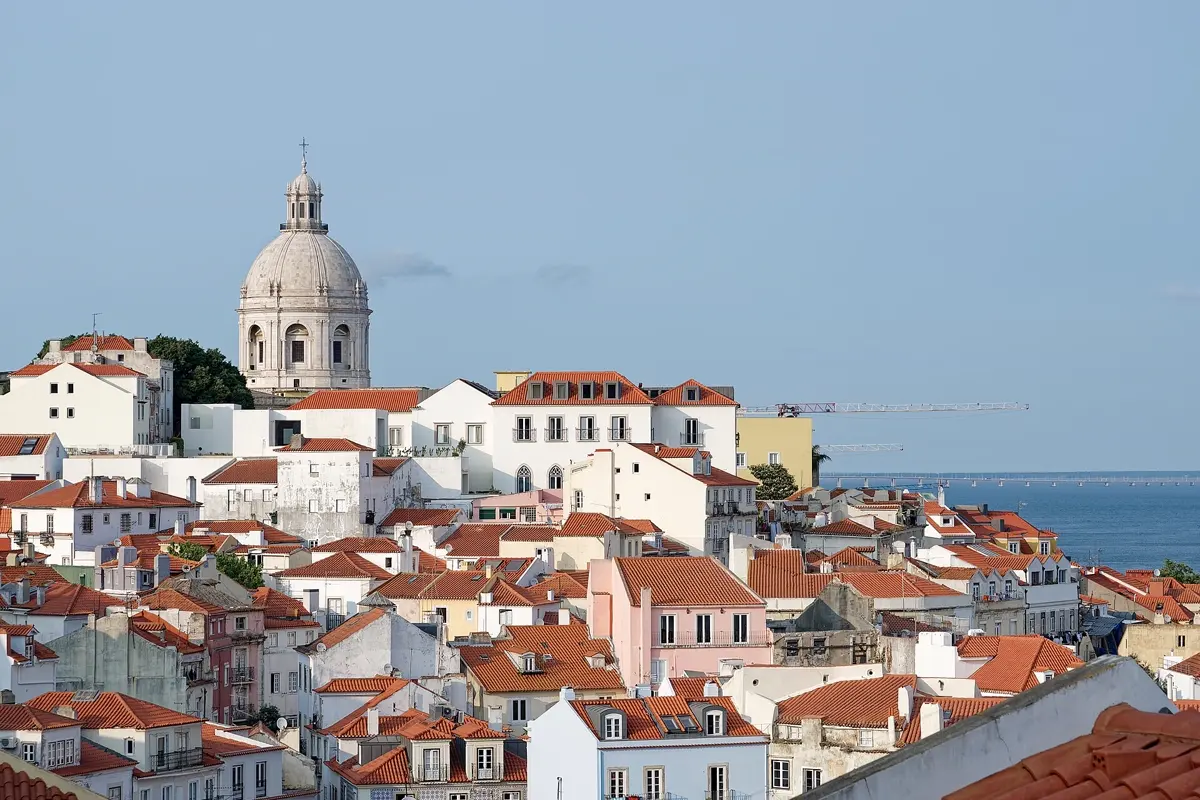
Lisbon is one of the mildest capitals in Europe – there is no month when it is really cold, and few when it is really hot. But the city is built on seven hills, and walking up and down the steep, cobbled lanes of the Alfama and the Bairro Alto feels very different at 16 °C than at 28 °C. We analysed the weather of 2015 to 2024 for the centre of Lisbon: how warm does it get by day, how cool at night, and how much rain falls each month?
The short answer
For a city break with lots of walking, April, May, June, September and October are best. Daytime highs are between 19 and 26 °C, the light over the Tagus is clear, and the evenings are warm enough for the miradouros, the viewpoints. July and August are the warmest, about 28 °C, and almost without rain – good for the beaches of Cascais and the Costa da Caparica, a little hot for the hills at midday. Winter is mild at 15 to 16 °C, quieter and cheaper, but rainy from October to December.
Lisbon's climate: all 12 months
| Month | Day (avg. high) | Night (avg. low) | Rain per month |
|---|---|---|---|
| January | 14.6 °C | 8.7 °C | 55 mm |
| February | 15.9 °C | 9.3 °C | 49 mm |
| March | 17.2 °C | 10.2 °C | 59 mm |
| April | 19.4 °C | 12.0 °C | 62 mm |
| May | 22.8 °C | 14.4 °C | 38 mm |
| June | 24.8 °C | 16.2 °C | 16 mm |
| July | 27.7 °C | 17.9 °C | 3 mm |
| August | 28.3 °C | 18.4 °C | 1 mm |
| September | 26.1 °C | 17.4 °C | 30 mm |
| October | 22.9 °C | 15.6 °C | 78 mm |
| November | 18.1 °C | 12.2 °C | 75 mm |
| December | 15.8 °C | 10.3 °C | 76 mm |
Temperature and rain: average of 2015–2024 from the ERA5 reanalysis (via Open-Meteo) for the centre of Lisbon, rounded. The values describe a grid cell of about 25 km; on hot summer days, the old town on its hills can feel warmer, while a breeze off the Atlantic often cools the riverside.
Two things stand out. Lisbon has a truly dry summer: from June to August only 1 to 16 mm of rain fall a month. And the city is mild all year round: the gap between the coolest and the warmest month is only about 14 degrees by day, and even in January nights average almost 9 °C.
Spring (March to May): Lisbon at its freshest
March is already mild at 17 °C, but showers are still frequent. April brings 19 °C and the first warm days; the jacarandas along the avenues start to bloom from late spring. May is one of the best months: 23 °C, little rain, long evenings on the viewpoints of Santa Luzia and São Pedro de Alcântara. Easter and the long weekends are busy, especially in Belém and on tram 28.

Summer (June to August): dry, sunny, festive
June is the month of the Santos Populares, the city's festivals of the popular saints: around 12 and 13 June, the night of Santo António, the Alfama and the Mouraria fill with street parties, music and grilled sardines. July and August average about 28 °C, with almost no rain. The heat is usually bearable thanks to the Atlantic breeze, but heatwaves occur in some years, and climbing the hills at midday is tiring. This is the best time for the beaches of Cascais, Estoril and the Costa da Caparica – the Atlantic stays cool, even in August. Many Lisboetas go on holiday in August, and the city is full of visitors.
Autumn (September to November): the second best season
September is excellent: still 26 °C, the sea at its warmest, the summer crowds thinning. October is mild at 23 °C, but the rain returns – 78 mm on average, often in a few rainy days rather than every day. November is still pleasant at 18 °C and much quieter, a good month for museums such as the Gulbenkian and the tile museum.


Winter (December to February): mild and quiet
Lisbon's winter is one of the mildest of any European capital: 15 to 16 °C by day, around 9 to 10 °C at night, and frost is almost unknown. December is one of the rainiest months, with 76 mm, and many older buildings are poorly heated – something to check when you book. In return, the city is at its quietest, hotel prices are often lower, and on clear winter days the light is beautiful. February is a good choice for a sunny escape, with 16 °C and less rain.
Month by month: our recommendation
| When | Best for | Keep in mind |
|---|---|---|
| April, May | First visit, lots of walking | Popular around Easter |
| June | City festivals, first beach days | Santos Populares: busy, book early |
| July, August | Beach and city | About 28 °C, crowded |
| September, October | City and warm sea | More rain from October |
| November | Museums, quiet city | Rain likely |
| December to March | Mild winter escape | Rainy, unheated old buildings |
 Lisbon trip planDay by day, with map and tips
How to plan the trip
From London a direct flight to Lisbon takes approx. 2.5 hours. Lisbon is on UK time all year. Three days are good for a first visit, four or five with Sintra or the coast – our article how many days in Lisbon has plans for each length, day trips from Lisbon covers Sintra, Cascais and more, and Lisbon airport to the city centre explains the arrival. The rest of the country is in the best time to visit Portugal.
In summer, queues at the Jerónimos Monastery, the Belém Tower and the palaces of Sintra are long; tickets for Belém, Sintra and other sights in Lisbon* can be compared on Tiqets. Visitors from outside the EU usually pay less with a travel eSIM for Portugal* (Airalo) than with roaming; our eSIM price index compares the prices per gigabyte.
In YesTrip you enter Lisbon and your dates and get a day-by-day plan with a map that keeps the walks short – with the forecast for your travel days and a packing list that matches the weather, from sun cream in August to a rain jacket in December. You can take over our ready-made plan and adapt it. YesTrip is free.
All other destinations in this series are in the overview best time to visit.
* Ad – Partner link: if you book there, we earn a commission. Your price stays the same.
Free
Plan your trip in 30 seconds.
Tell YesTrip where and when – the app plans day by day with real places on the map, shows the weather, splits costs with your travel companions and guides you to the next stop on the go.
Frequently asked questions
When is the best time to visit Lisbon?
April to June and September to October. Daytime highs are then 19 to 26 °C, ideal for walking the hills of the old town. June also brings the Santos Populares, the city's biggest festivals.
How hot is Lisbon in summer?
In July and August the average daytime high is about 28 °C and nights stay around 18 °C, with almost no rain. A breeze from the Atlantic often makes the heat bearable, but heatwaves occur in some years.
What is the rainiest month in Lisbon?
October, with an average of 78 mm, followed by December and November with 76 and 75 mm. July and August are almost completely dry.
Is Lisbon worth visiting in winter?
Yes. Days are mild at 15 to 16 °C, frost is rare, and the city is quieter and often cheaper. Pack a rain jacket, and check that your accommodation has heating.
Can you swim in the sea near Lisbon?
Yes, from June to September at Cascais, Estoril or the Costa da Caparica. The Atlantic stays cool even in summer, so the water feels fresher than the Mediterranean.
Sources
- Open-Meteo Historical Weather API (ERA5), average 2015–2024 – open-meteo.com
- Copernicus ERA5 reanalysis (Hersbach et al. 2020) – cds.climate.copernicus.eu
- Visit Lisboa: official tourism website of Lisbon – www.visitlisboa.com
- Visit Portugal: official tourism website of Portugal – www.visitportugal.com
Researched with AI support and checked by our editors. Prices, opening hours and weather can change – please check before you go. YesTrip is not a travel agency. Published: .
More best-time guides
 When to go
Best time to visit London, month by month
The best time to visit London is May to September, with average daytime highs of 17 to 23 °C and long evenings – in June it stays light … · 6 min read When to go
Best time to visit Madeira: weather by month
Madeira is mild all year: in Funchal daytime highs range from 18.5 °C in January to 27.5 °C in August, and nights never drop below 13.6 °C. … · 8 min read When to go
Best time to visit Malaysia: west, east and Borneo
Malaysia is hot all year at 29 to 33 °C, so the best time depends on the coast. The west coast with Langkawi and Penang is driest from … · 6 min read
All destinations: best time to visit and warm places by month


