
How many days in Valencia? Plans for 1–4 days
In short
Two days in Valencia cover the old town with the Central Market and La Lonja, the Turia gardens and the City of Arts and Sciences. Three days are ideal, adding the Albufera lagoon with paella in El Palmar and an evening in Russafa. With 4 days, add beach time or a trip to Sagunto. Most pleasant are April to June and September to October (20 to 28 °C by day).

Valencia is three cities in one: a medieval old town with a Gothic silk exchange and one of the largest market halls in Europe, a futuristic quarter of white buildings by Santiago Calatrava, and a long city beach. In between runs the Turia, a former riverbed that has become a park of about nine kilometres. The short answer: 2 days for the essentials, 3 days are ideal, and from 4 days you have time for the beach or a day trip.
How many days in Valencia? The overview
| Days | What you see | Best for |
|---|---|---|
| 1 day | the Central Market, La Lonja, the cathedral and the Miguelete tower, the Torres de Serranos, the Barrio del Carmen | a stopover or cruise call |
| 2 days | plus the Turia gardens, the City of Arts and Sciences, the Oceanogràfic, the Malvarrosa beach | a long weekend, first visit |
| 3 days | plus the Albufera lagoon with paella in El Palmar, an evening in Russafa | the ideal length |
| 4 days | plus a beach day or a trip to Sagunto | slow travellers, families |
| 5+ days | plus Peñíscola or Xàtiva, more museums at leisure | anyone combining city and sea |
Valencia has one date that changes everything: Las Fallas, from 15 to 19 March every year, when the city fills with giant papier-mâché figures, fireworks and crowds, and hotels are booked out. Wonderful if you go for it – otherwise pick other dates.
One day in Valencia: the old town on foot
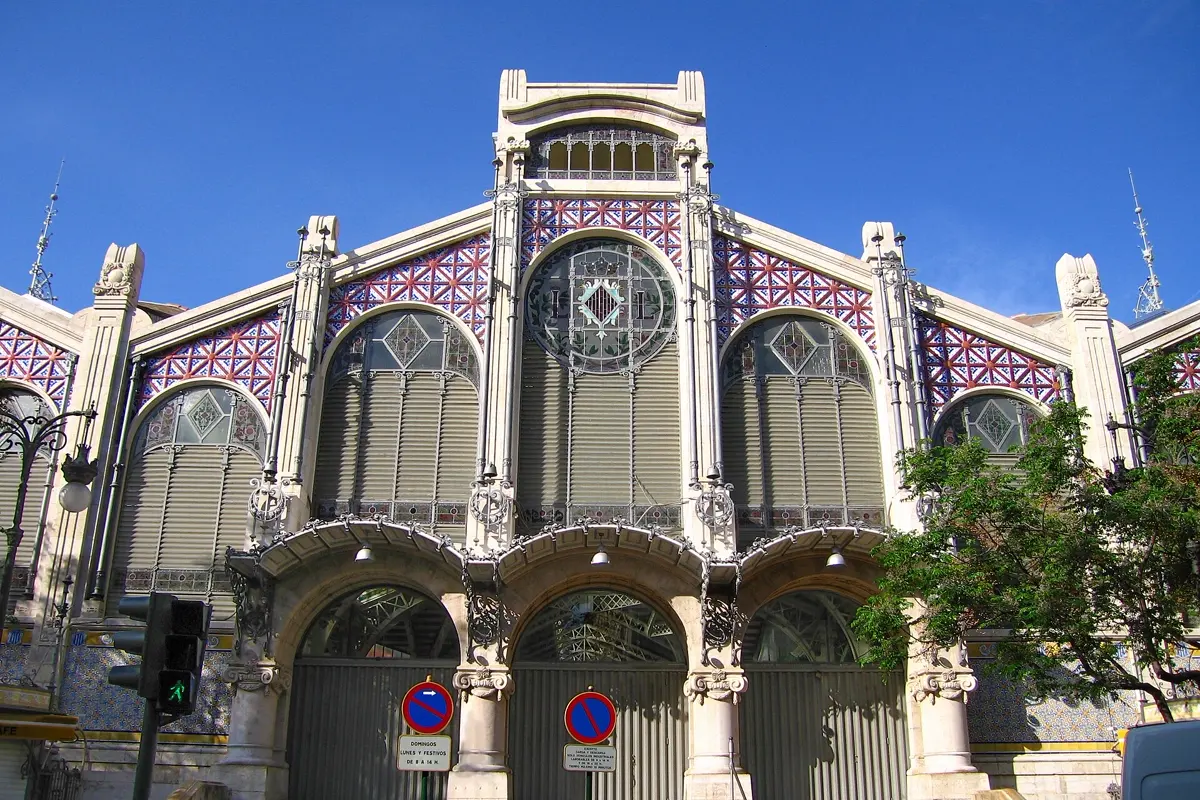
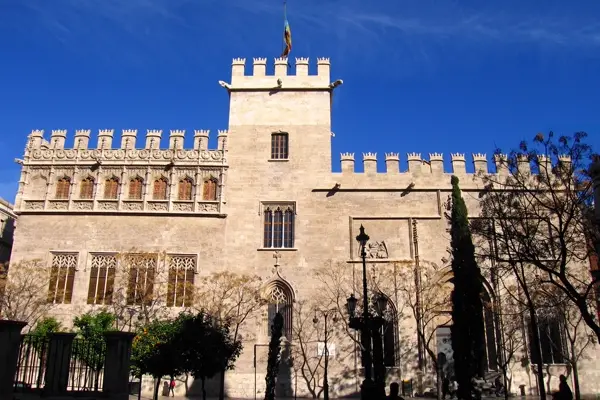
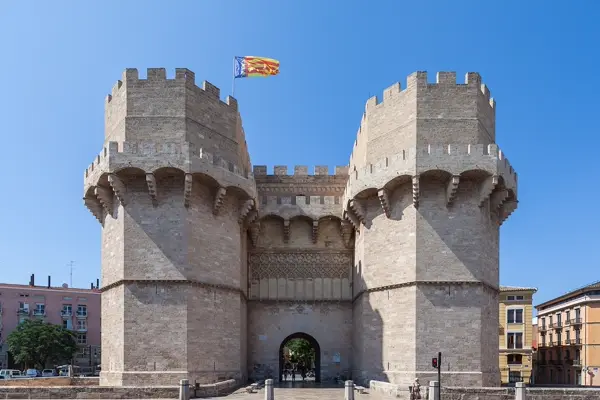
The Ciutat Vella, the old town, is the right choice for a single day. Start at the Central Market, a modernist hall full of stalls with fruit, ham, fish and horchata, ideally in the morning when it is busiest. Opposite stands La Lonja de la Seda, the late-Gothic silk exchange with twisted columns, a UNESCO World Heritage Site. Through the lanes you reach the cathedral with its bell tower, the Miguelete, which you can climb for a view over the roofs. North of it, the medieval city gate Torres de Serranos looks out over the Turia, and in the evening the Barrio del Carmen fills with bars and tapas.
This is the first day of our three-day plan. It works on its own, but the City of Arts and Sciences does not fit in as well – it lies at the other end of the Turia.
Two days in Valencia: Turia, Calatrava and the beach
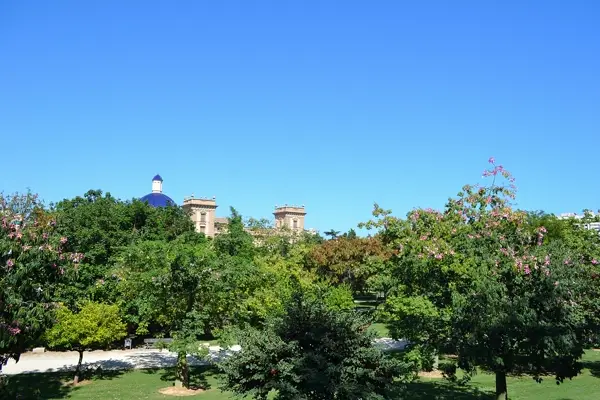
The second day follows the green belt. From the Mercado de Colón, a smaller modernist market hall with cafés, walk or cycle through the Jardín del Turia towards the sea. At its end lies the City of Arts and Sciences (Ciudad de las Artes y las Ciencias): the Hemisfèric, the science museum, the opera house and the Oceanogràfic, a large aquarium that easily fills half a day. Tickets for the Oceanogràfic and the science museum* are on Tiqets. In the late afternoon, take the tram to Malvarrosa beach for a swim or a walk along the promenade.
With these two days you have seen the old and the new Valencia and the sea.
Three days in Valencia: the ideal length
Three days are right for a first visit. Our ready-made plan divides the city like this:
- Day 1 – old town: Central Market, La Lonja, cathedral and Miguelete, Torres de Serranos, Barrio del Carmen.
- Day 2 – Turia and the City of Arts and Sciences: Mercado de Colón, Jardín del Turia, the City of Arts and Sciences, the Oceanogràfic, Malvarrosa beach.
- Day 3 – Albufera and Russafa: the Albufera, a freshwater lagoon south of the city surrounded by rice fields, with a boat trip and lunch in the village of El Palmar, where Valencian paella comes from. Back in town, the Estació del Nord, the station with its tiled hall, and an evening in Russafa, the lively quarter of cafés and small restaurants.

Four days or more: beach, Sagunto, Peñíscola
From the fourth day, Valencia can be enjoyed at a slower pace: a whole day at the beach, south of the Albufera at the quieter dunes of El Saler, or a bike ride along the full length of the Turia. For a trip out, Sagunto with its Roman theatre and a castle on the hill is close by train. Xàtiva, with a castle above the town, and Peñíscola, a walled old town on a rock in the sea, are further away and make full days. Train connections* can be compared on Omio; guided trips to the Albufera* are on Klook.

Where to stay in Valencia
For a short stay, two areas work best:
- Ciutat Vella (old town): between the market, the cathedral and the Barrio del Carmen. Everything is walkable, and in the evening you are in the middle of it.
- Russafa: just south of the old town, with cafés, restaurants and nightlife, and a little cheaper. Good if you like to go out.
The old town is walkable; the metro, trams and buses cover the rest, including the beach. Metro lines run from the airport into the city; for a late arrival with luggage, a transfer from Valencia airport* can be booked with Welcome Pickups. Travelling from outside the EU, for example from the UK, a travel eSIM from Airalo is usually cheaper than roaming; our eSIM price index compares the prices per gigabyte.
Best time to visit Valencia
| Month | Day (avg. high) | Night (avg. low) | Rain per month |
|---|---|---|---|
| Jan | 16.2 °C | 6.8 °C | 34 mm |
| Feb | 17.0 °C | 7.6 °C | 18 mm |
| Mar | 18.7 °C | 9.3 °C | 71 mm |
| Apr | 20.1 °C | 11.0 °C | 41 mm |
| May | 24.0 °C | 14.6 °C | 28 mm |
| Jun | 27.7 °C | 18.7 °C | 24 mm |
| Jul | 30.5 °C | 21.9 °C | 15 mm |
| Aug | 30.6 °C | 22.3 °C | 21 mm |
| Sep | 27.5 °C | 19.3 °C | 84 mm |
| Oct | 24.0 °C | 15.7 °C | 62 mm |
| Nov | 19.8 °C | 11.3 °C | 68 mm |
| Dec | 17.2 °C | 8.4 °C | 31 mm |
Averages 2015–2024 from the ERA5 reanalysis (via Open-Meteo), rounded.
April to June and September to October are the most pleasant, with 20 to 28 °C by day – warm enough for the beach from May. July and August reach just over 30 °C and are humid; plan the old town for the morning and the beach for the afternoon. Rain is rare overall, but September to November can bring heavy autumn downpours on a few days. Winter is mild at 16 to 17 °C by day, good for sightseeing without crowds.
Valencia compared: how many days for other cities?
If you are choosing between cities in Spain, this is how many days we recommend in this series for a first visit.
Base map: Natural Earth
More in our articles how many days in Barcelona, how many days in Madrid and how many days in Malaga, and all cities of the series in the overview how many days in each city.
How YesTrip helps you plan
YesTrip has a ready-made three-day plan for Valencia with times, short walks and a map for each day, the Albufera included. With one tap you copy it into the app, then move stops, drop what does not interest you and add your hotel. The app shows the weather for your travel days, the packing list suggests swimwear and sun cream when it is warm, and with the offline package you have the map without a connection. YesTrip is free.
 Valencia trip planDay by day, with map and tips
If you are coming in March, plan with Las Fallas in Valencia 2027.
* Ad – Partner link: if you book there, we earn a commission. Your price stays the same.
Free
Plan your trip in 30 seconds.
Tell YesTrip where and when – the app plans day by day with real places on the map, shows the weather, splits costs with your travel companions and guides you to the next stop on the go.
Frequently asked questions
How many days do you need in Valencia?
Two days are enough for the old town and the City of Arts and Sciences. Three days are ideal and add the Albufera lagoon with paella in El Palmar. From four days you have time for the beach or a trip to Sagunto.
Is a weekend enough for Valencia?
Yes. In two days you can see the Central Market, La Lonja, the cathedral, the Turia gardens, the City of Arts and Sciences and the beach. The Albufera needs an extra half day.
Is Valencia a good city for a beach holiday?
Yes. Malvarrosa beach is reachable by tram from the centre, and the quieter beaches of El Saler lie south of the city by the Albufera. From May to October it is warm enough to swim.
When is Las Fallas in Valencia?
Las Fallas takes place every year from 15 to 19 March. The city is very full during these days and hotels are booked out early, so book well in advance or choose other dates.
What is the best time to visit Valencia?
April to June and September to October, with daytime highs between 20 and 28 °C. July and August are hot at just over 30 °C. Winter is mild and quiet, at around 16 °C by day.
Sources
- Climate data: Open-Meteo Historical Weather API, daily values 2015–2024 – open-meteo.com
- Copernicus ERA5 reanalysis (Hersbach et al. 2020) – cds.climate.copernicus.eu
- Visit Valencia, official tourism website – www.visitvalencia.com
- UNESCO: La Lonja de la Seda de Valencia – whc.unesco.org
- Ciudad de las Artes y las Ciencias, official website – www.cac.es
Researched with AI support and checked by our editors. Prices, opening hours and weather can change – please check before you go. YesTrip is not a travel agency. Published: .
More articles
 How many days?
How many days in Baku? 3 with Gobustan
Two days are enough for Baku's old town, the Boulevard and the Heydar Aliyev Center. The third belongs to Gobustan, 64 km away, with more … · 6 min read How many days?
How many days in Funchal? 3, or 5+ for Madeira
Two days are enough for Funchal: the old town, the market, the cable car and the gardens at Monte. Day three goes to the mountains, with … · 6 min read How many days?
How many days in Kotor? 2 with Perast
Two days are enough for Kotor: the old town and about 1,300 steps to the fortress on the first, Perast and the island of Our Lady of the … · 6 min read


