
How many days in Tbilisi? Plans for 1–5 days
In short
Two days in Tbilisi cover the old town with the sulphur baths, Narikala Fortress and the Bridge of Peace, plus Rustaveli Avenue, the National Museum and Mtatsminda. Three days are ideal, adding a half-day trip to Mtskheta, a UNESCO World Heritage Site. With 4 or 5 days, add Kazbegi in the Caucasus or the wine region of Kakheti. The best months are May, June, September and October.
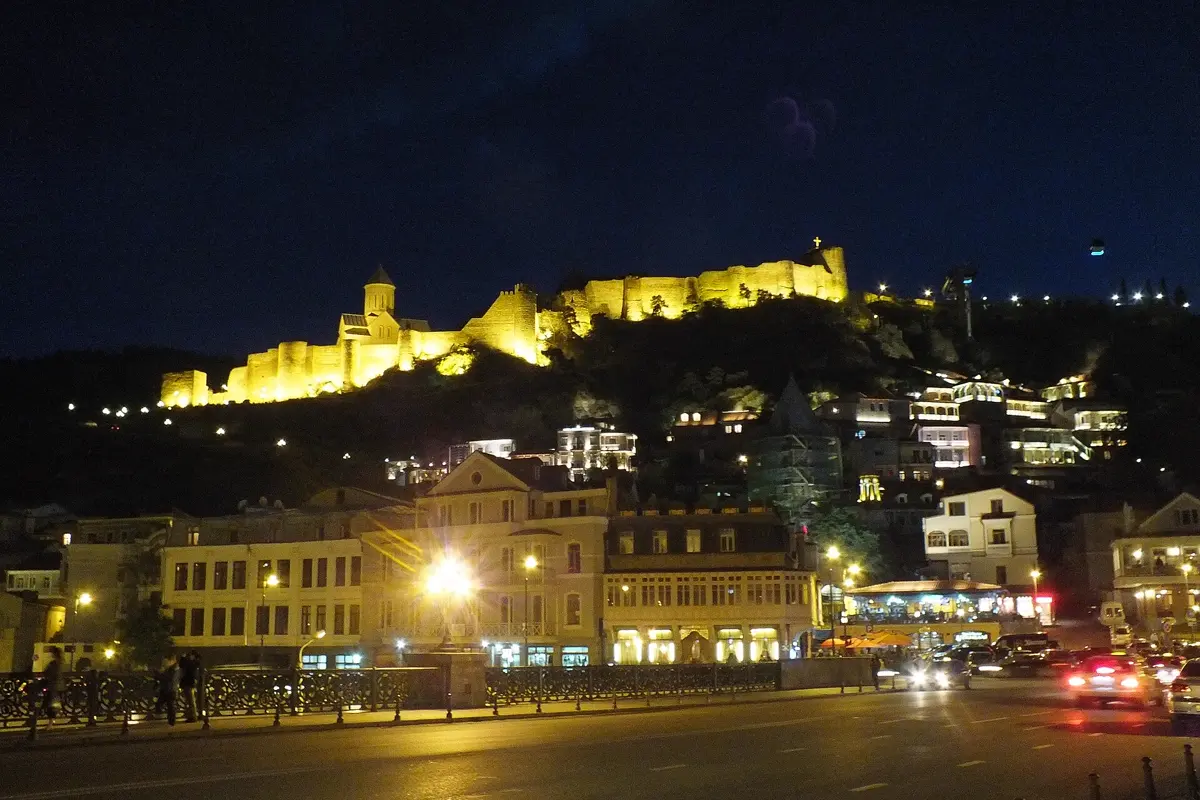
Tbilisi lies in a narrow valley of the Kura river, with Narikala Fortress above the old town, sulphur baths with brick domes, wooden balconies, churches that are over a thousand years old and Soviet-era boulevards side by side. The Georgian capital is compact, and the countryside starts close by: the old capital Mtskheta is only half an hour away. The short answer: 2 days for the city, 3 days are ideal with Mtskheta, and from 4 days there is time for the Caucasus or the Kakheti wine region.
How many days in Tbilisi? The overview
| Days | What you see | Best for |
|---|---|---|
| 1 day | Sameba Cathedral, Metekhi Church, the sulphur baths of Abanotubani, the old town lanes, Narikala Fortress, the Bridge of Peace, Sioni Cathedral | a short stop |
| 2 days | plus Freedom Square, the Georgian National Museum, the Dry Bridge market, Aghmashenebeli Avenue, Rustaveli Avenue, Mtatsminda | a long weekend |
| 3 days | plus Mtskheta with Jvari Monastery and Svetitskhoveli Cathedral, then Sololaki | the ideal length |
| 4 days | plus Kazbegi on the Georgian Military Road or Sighnaghi in Kakheti | first trip to Georgia |
| 5+ days | plus David Gareja, more of Kakheti or a round trip through Georgia | anyone combining city and countryside |
Many visitors combine Tbilisi with a round trip through Georgia, or with Armenia – Yerevan is reachable overland. Tbilisi is the natural start and end point.
One day in Tbilisi: the old town and Narikala
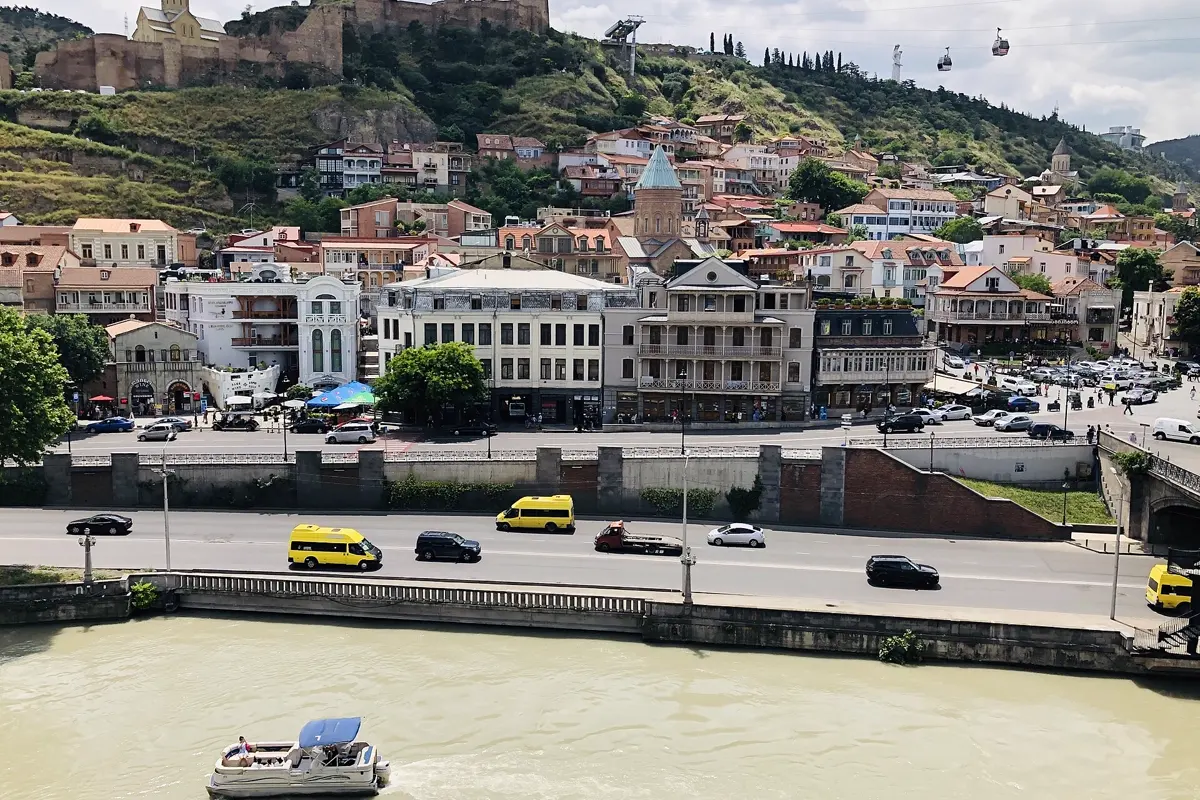
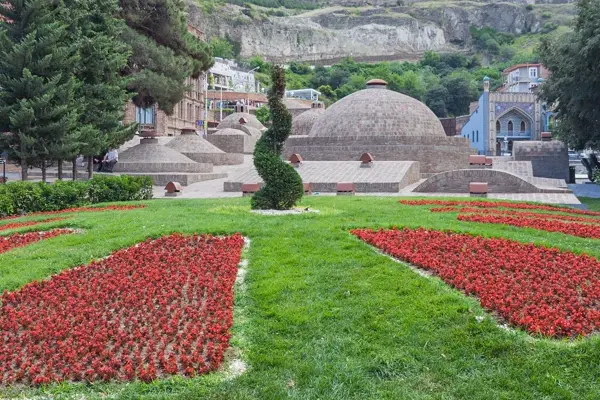
Start on the east bank at Sameba, the Holy Trinity Cathedral, one of the largest Orthodox churches in the region. Walk down to the Metekhi Church on its cliff above the river, then cross to Abanotubani, the bath district, where hot sulphur springs feed the brick-domed bathhouses – the springs gave the city its name. From there, the lanes of the old town lead up to Narikala Fortress; a cable car runs from Rike Park if you prefer not to climb. In the evening, walk across the glass Bridge of Peace and finish at Sioni Cathedral.
This is the first day of our three-day plan, and it works on its own.
Two days in Tbilisi: Rustaveli Avenue and Mtatsminda
The second day belongs to the 19th-century city. From Freedom Square, walk to the Georgian National Museum, whose treasury holds gold jewellery from ancient Colchis. At the Dry Bridge, an open-air market sells Soviet souvenirs, old cameras and paintings. Across the river, Aghmashenebeli Avenue has been restored with its old façades. In the afternoon, stroll along Rustaveli Avenue with the opera, the parliament and the theatres, then take the funicular up to Mtatsminda Park for the view over the city at sunset.
Tours and day trips from Tbilisi* are on Klook.
Three days in Tbilisi: the ideal length
Three days are right for a first visit. Our ready-made plan divides the city like this:
- Day 1 – the old town and Narikala: Sameba Cathedral, Metekhi Church, Abanotubani, the old town lanes around Kote Afkhazi Street, Narikala Fortress, the Bridge of Peace, Sioni Cathedral.
- Day 2 – Rustaveli Avenue and Mtatsminda: Freedom Square, Georgian National Museum, the Dry Bridge, Aghmashenebeli Avenue, Rustaveli Avenue, Mtatsminda Park.
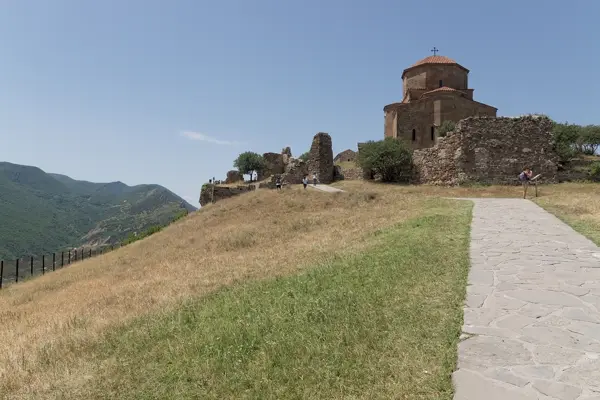
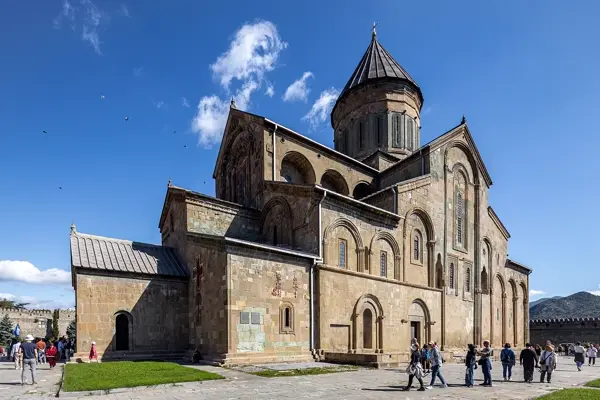
- Day 3 – day trip to Mtskheta: Jvari Monastery on its hill above the confluence of two rivers, Svetitskhoveli Cathedral and the lanes around it, Samtavro Monastery, then back in Tbilisi an evening walk through Sololaki. The historic monuments of Mtskheta are a UNESCO World Heritage Site. Minibuses leave from Didube bus station and take about half an hour.
Four days or more: Kazbegi, Kakheti and David Gareja
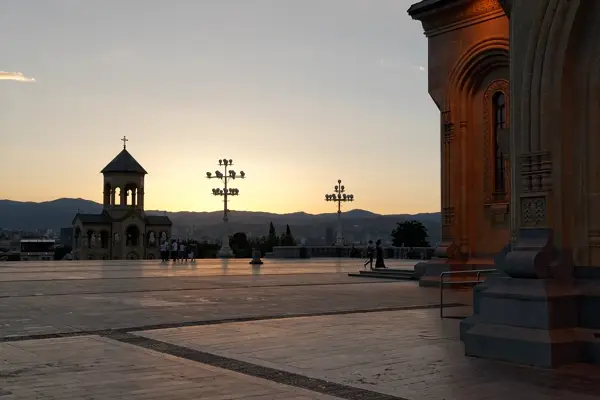
From the fourth day, Georgia's landscapes open up. The Georgian Military Road leads north into the Greater Caucasus to Stepantsminda (Kazbegi), where the Gergeti Trinity Church stands below the glaciated Mount Kazbek – a long day trip, better with an overnight stay. East of Tbilisi lies Kakheti, Georgia's main wine region, with the hilltop town of Sighnaghi and wineries that make wine in clay vessels called qvevri, a method UNESCO lists as intangible cultural heritage. The cave monastery of David Gareja lies on the semi-desert border with Azerbaijan.
Where to stay in Tbilisi
Three areas suit a short stay:
- Old town: baths, churches and the fortress on foot, with many small guesthouses. The lanes are steep – hard work with heavy luggage.
- Sololaki: a quiet residential area with old houses, close to the old town and Freedom Square. Good for calm evenings.
- Vake and Vera: leafy districts north of Rustaveli Avenue with cafés and restaurants, a short walk from the centre.
The metro and buses cover longer distances; taxis are easiest to order by app. Many nationalities, including EU and UK citizens, can enter Georgia without a visa for tourist stays – check the current rules before you travel. A travel eSIM for Georgia* (Airalo) is usually much cheaper than roaming, and our eSIM price index compares prices per gigabyte.
Best time to visit Tbilisi
| Month | Day (avg. high) | Night (avg. low) | Rain per month |
|---|---|---|---|
| Jan | 7.2 °C | -0.9 °C | 22 mm |
| Feb | 9.2 °C | 0.4 °C | 25 mm |
| Mar | 12.4 °C | 3.0 °C | 72 mm |
| Apr | 18.1 °C | 7.4 °C | 81 mm |
| May | 22.5 °C | 12.0 °C | 101 mm |
| Jun | 28.6 °C | 17.3 °C | 76 mm |
| Jul | 30.8 °C | 19.6 °C | 49 mm |
| Aug | 31.5 °C | 20.3 °C | 31 mm |
| Sep | 26.0 °C | 16.1 °C | 51 mm |
| Oct | 18.7 °C | 10.2 °C | 58 mm |
| Nov | 12.7 °C | 4.3 °C | 48 mm |
| Dec | 8.2 °C | 0.8 °C | 28 mm |
Averages 2015–2024 from the ERA5 reanalysis (via Open-Meteo), rounded.
The most pleasant months are May, June, September and October, with 19 to 29 °C by day. May is the wettest month, with spring showers. July and August are hot, at 31 to 32 °C, but good for trips into the cooler mountains of the Caucasus. September and October are harvest time in Kakheti, when young wine is everywhere. Winter is cold, with frost at night, but usually dry; the high mountain roads can be closed by snow.
Tbilisi compared: how many days for other cities?
In this series we recommend three days for Tbilisi and three for Istanbul – more in how many days in Istanbul, a route through both countries in our Georgia and Armenia itinerary, and all cities of the series in the overview how many days in each city.
How YesTrip helps you plan
YesTrip has a ready-made three-day plan for Tbilisi with times, short walks and a map for each day. With one tap you copy it into the app, then move stops, drop what does not interest you and add your hotel or a trip to Kazbegi. The app shows the weather for your travel days, the packing list suggests comfortable shoes for the steep lanes and a scarf for church visits, and with the offline package you have the map without a connection. YesTrip is free.
 Tbilisi trip planDay by day, with map and tips
Baku cannot currently be added overland; how many days in Baku explains why.
* Ad – Partner link: if you book there, we earn a commission. Your price stays the same.
Free
Plan your trip in 30 seconds.
Tell YesTrip where and when – the app plans day by day with real places on the map, shows the weather, splits costs with your travel companions and guides you to the next stop on the go.
Frequently asked questions
How many days do you need in Tbilisi?
Two days are enough for the old town, Narikala, Rustaveli Avenue and Mtatsminda. Three days are ideal and add a trip to Mtskheta. From four days, Kazbegi or the Kakheti wine region fit in.
Are 3 days enough for Tbilisi?
Yes, for the city and Mtskheta. For the Caucasus or Kakheti, add one or two days.
How do I get from Tbilisi to Mtskheta?
Minibuses leave from Didube bus station and take about half an hour. A taxi or an organised tour also work.
What should I wear in Georgian churches?
Shoulders and knees should be covered; women usually cover their hair with a scarf, and many churches lend scarves and wrap skirts at the entrance.
What is the best time to visit Tbilisi?
May, June, September and October, with 19 to 29 °C by day. July and August are hot; winter is cold but usually dry.
Sources
- Climate data: Open-Meteo Historical Weather API, daily values 2015–2024 – open-meteo.com
- Copernicus ERA5 reanalysis (Hersbach et al. 2020) – cds.climate.copernicus.eu
- Georgian National Tourism Administration: official tourism website – georgia.travel
- UNESCO World Heritage Centre: historical monuments of Mtskheta – whc.unesco.org
- UNESCO: ancient Georgian traditional qvevri wine-making method – ich.unesco.org
Researched with AI support and checked by our editors. Prices, opening hours and weather can change – please check before you go. YesTrip is not a travel agency. Published: .
More articles
 How many days?
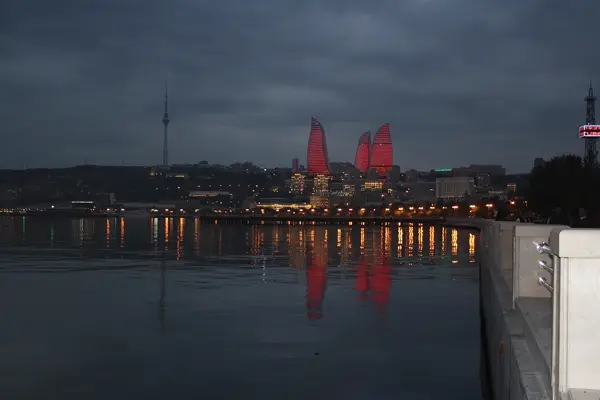
How many days in Baku? 3 with Gobustan
Two days are enough for Baku's old town, the Boulevard and the Heydar Aliyev Center. The third belongs to Gobustan, 64 km away, with more … · 6 min read How many days?
How many days in Funchal? 3, or 5+ for Madeira
Two days are enough for Funchal: the old town, the market, the cable car and the gardens at Monte. Day three goes to the mountains, with … · 6 min read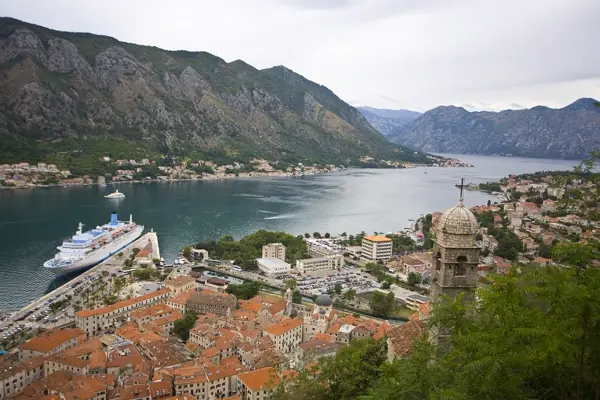 How many days?
How many days in Kotor? 2 with Perast
Two days are enough for Kotor: the old town and about 1,300 steps to the fortress on the first, Perast and the island of Our Lady of the … · 6 min read


