
Georgia and Armenia itinerary: 13-day route
In short
This 13-day trip runs from Tbilisi via Mtskheta and the Georgian Military Road to Stepantsminda below Mount Kazbek, into the Kakheti wine region and on to Armenia: Dilijan, Lake Sevan, Yerevan, Garni, Geghard and Khor Virap – about 1,050 km, with no leg longer than just over 4 hours of pure driving. Best months: May, June and September, with 22 to 29 °C in Tbilisi.
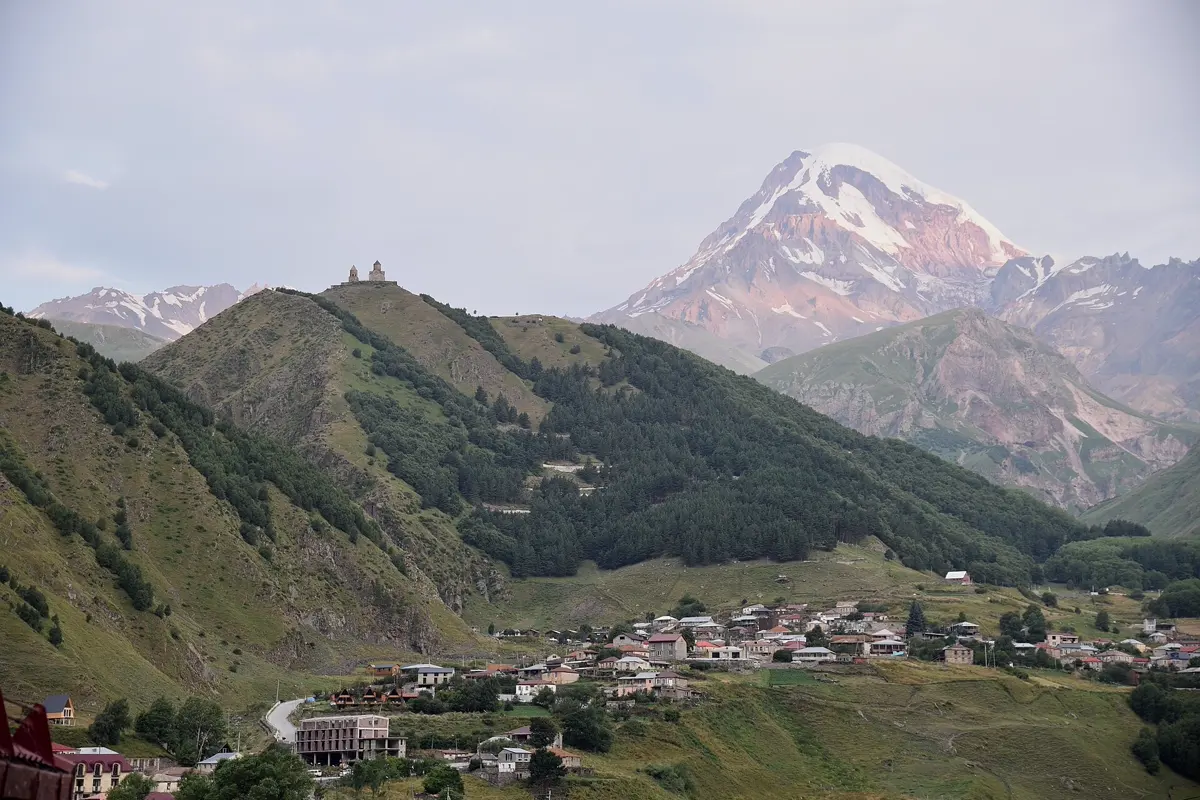
Georgia and Armenia sit side by side in the South Caucasus and combine easily into one trip. You land in Tbilisi, drive up the Georgian Military Road to Stepantsminda at the foot of Mount Kazbek, then head east into the wine region of Kakheti. From Tbilisi you travel overland to Armenia: through the monastery landscape of the Debed Canyon to Dilijan, on to Lake Sevan and Yerevan, from where you visit Garni, Geghard and Khor Virap. At the end you fly home from Yerevan. This route takes 13 days; versions for 12 and 14 days and an extension to Batumi on the Black Sea are further down.
The route at a glance
| Day | Leg | Distance | Pure driving time |
|---|---|---|---|
| 1–2 | Tbilisi | – | – |
| 3 | Tbilisi → Mtskheta → Ananuri → Gudauri → Stepantsminda | 162 km | approx. 2:50 h |
| 4 | Stepantsminda | – | – |
| 5 | Stepantsminda → Sighnaghi | 258 km | approx. 4:05 h |
| 6 | Kakheti | – | – |
| 7 | Sighnaghi → Telavi → Tbilisi | 161 km | approx. 2:50 h |
| 8 | Tbilisi → Haghpat → Dilijan | 198 km | approx. 3:40 h + border |
| 9 | Dilijan → Sevanavank → Yerevan | 105 km | approx. 1:50 h |
| 10 | Yerevan | – | – |
| 11 | Yerevan → Garni → Geghard → Yerevan | 81 km | approx. 1:40 h |
| 12 | Yerevan → Khor Virap → Yerevan | 86 km | approx. 1:30 h |
| 13 | Yerevan, flight home | – | – |
Driving times: route calculation based on OpenStreetMap, without breaks and without time at the border. On the mountain roads and with photo stops, add about a third. The easiest option is an open-jaw ticket: fly into Tbilisi and home from Yerevan.
Days 1–2: Tbilisi
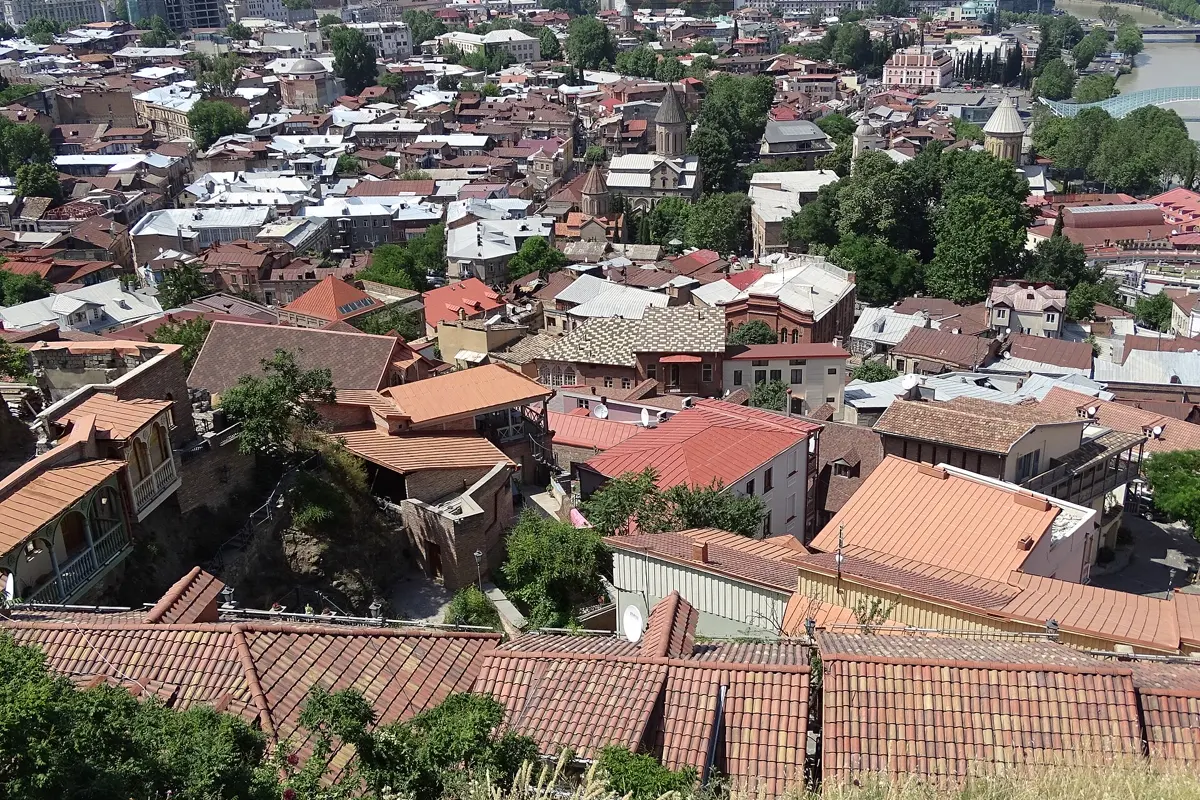
The Georgian capital lies in a valley on the Mtkvari river. In the Old Town, wooden houses with carved balconies stand among churches and domes, watched over by Narikala fortress, which a cable car climbs to. Below, in the Abanotubani district, the sulphur baths sit under low brick domes – warm springs rise here, and they gave the city its name. In the evening walk across the glass Bridge of Peace and along Rustaveli Avenue. Allow two days: one for the Old Town and fortress, one for markets, museums and Georgian food such as khachapuri and khinkali. We have a ready-made city plan for Tbilisi.
 Tbilisi trip planDay by day, with map and tips
Day 3: along the Georgian Military Road to Stepantsminda
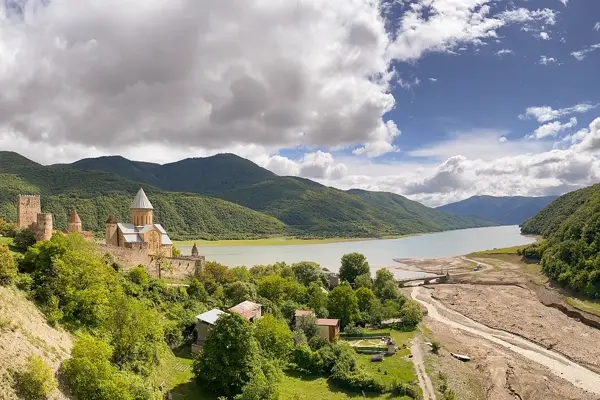
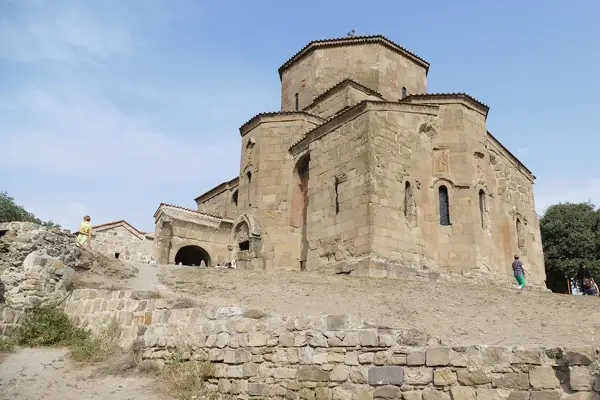
Pick up the hire car in Tbilisi on the morning of day three. After half an hour you reach Mtskheta, Georgia's old capital. Its historic monuments are a UNESCO World Heritage Site: Svetitskhoveli Cathedral in the town and Jvari Monastery on a hill above the confluence of the Aragvi and Mtkvari rivers. From there the Georgian Military Road follows the Aragvi valley north. By the Zhinvali reservoir stands Ananuri fortress, with two churches inside its walls. Beyond it the road climbs in hairpins to the ski resort of Gudauri and over the Jvari Pass at almost 2,400 m before dropping down to Stepantsminda, which many still know by its old name, Kazbegi.
Day 4: Gergeti and Mount Kazbek
On a ridge above Stepantsminda stands the 14th-century Gergeti Trinity Church, with the glaciated peak of Kazbek, one of the highest mountains in the Caucasus, rising behind it. A steep footpath leads up to the church and takes one to two hours depending on your fitness; alternatively a road runs to just below it. If you want more, spend a second day hiking into the Juta valley or towards the Gergeti Glacier – you will need hiking boots and good weather for that. Even in high summer the nights here are cool at around 12 °C.
Days 5–7: Kakheti and Sighnaghi
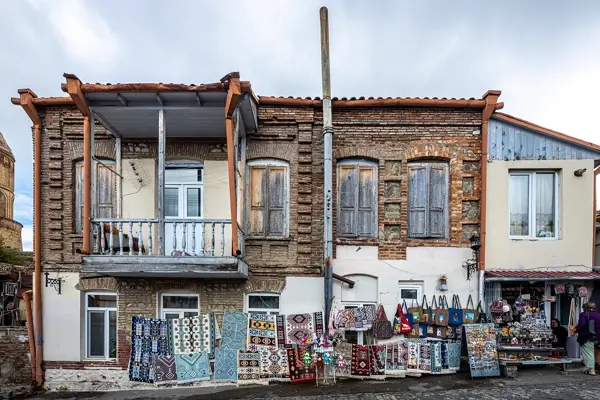
On day five you drive back down the Military Road and on east into the wine region of Kakheti. Georgia is one of the oldest wine regions in the world: traditionally the wine ferments in large clay vessels, called qvevri, buried in the ground – a method on UNESCO's list of intangible cultural heritage. Stay in Sighnaghi, a small hilltop town with a long town wall, defensive towers and a view across the wide Alazani Valley to the peaks of the Greater Caucasus. Just below it lies Bodbe Monastery. Use day six for wineries in the area; if you are tasting, it is better to be driven or to book a guided wine tour*. On day seven drive back to Tbilisi via Telavi, the main town of Kakheti, and return the hire car there.
Day 8: from Tbilisi to Armenia
Crossing the land border from Georgia into Armenia south of Tbilisi is a common route for travellers. Check which rules currently apply at the crossing in your government's official travel advice before you go. The most comfortable option is a private driver, which you can book in advance as a transfer*; shared taxis and minibuses, called marshrutkas, also run from Tbilisi to Armenia. Whether a hire car may leave the country is set by the rental contract – it is usually simpler to rent separately in each country.
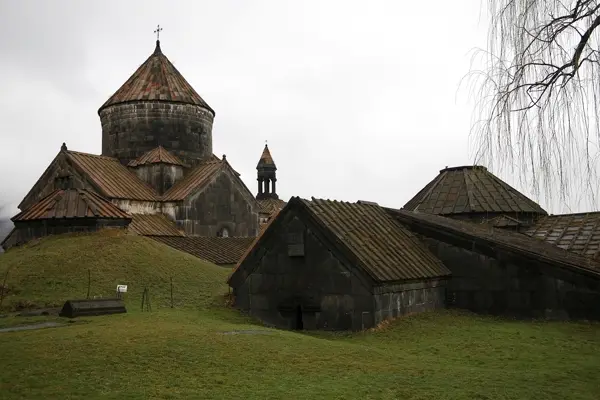
Just past the border the road follows the Debed Canyon. High above it stand the monasteries of Haghpat and Sanahin, both from the 10th century and together a UNESCO World Heritage Site. The road then winds through wooded hills to Dilijan, a small town inside a national park that is often called the Switzerland of Armenia for its forests and wooden houses. Nearby, the monastery of Haghartsin stands in the woods.
Day 9: Lake Sevan
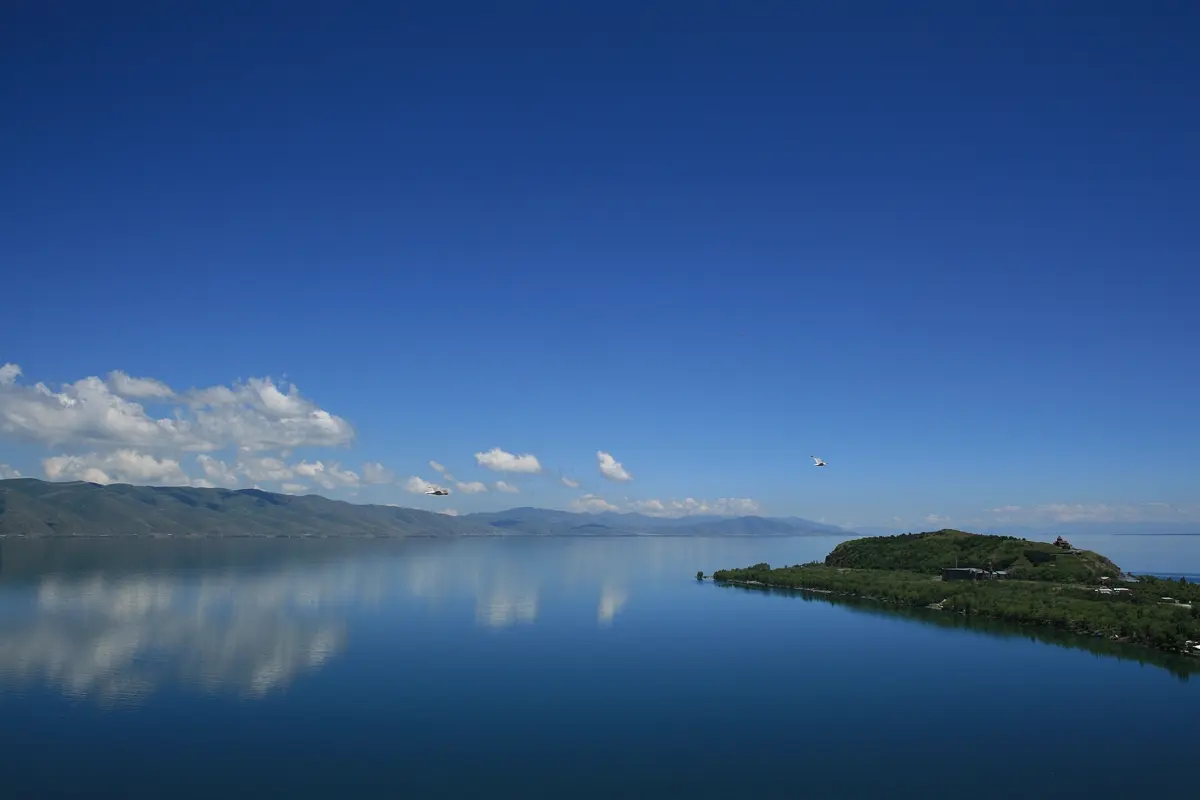
Lake Sevan lies at around 1,900 m and is one of the largest high-altitude lakes in the world. On a peninsula on its northern shore stands Sevanavank Monastery, with two small churches of dark stone; from the steps behind them you look far out over the deep blue water. In high summer locals swim from the beaches, but the water stays fresh. In the afternoon it is just over an hour's drive to Yerevan. For your days in Armenia, either rent a new car in Yerevan – GetRentACar is one place to compare rental cars in Armenia* – or book a driver for the day trips.
Day 10: Yerevan
Yerevan is one of the oldest continuously inhabited cities in the world, but its centre was laid out anew on a grand scale in the 20th century. Many buildings are made of pink tuff stone, which gives the city its warm colour in the evening light. Republic Square with its fountains forms the heart of the city. The Cascade, a giant stairway lined with sculptures, leads up to a viewpoint from which you can see Mount Ararat on clear days. The Matenadaran holds ancient Armenian manuscripts. At weekends the Vernissage art and flea market is worth a visit. Just under half an hour west lies Etchmiadzin with its cathedral, the spiritual centre of the Armenian Apostolic Church, which together with the ruins of Zvartnots is also a UNESCO World Heritage Site.
 Yerevan trip planDay by day, with map and tips
Day 11: Garni and Geghard
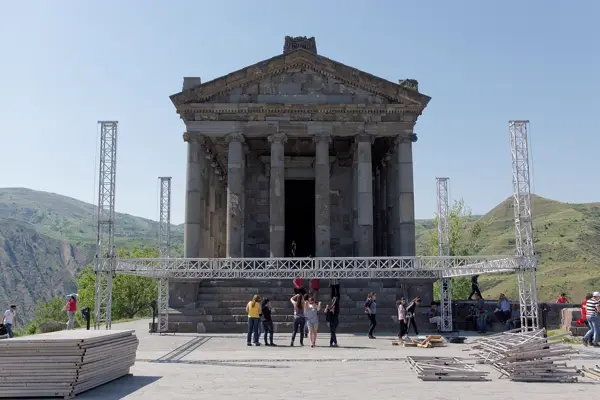
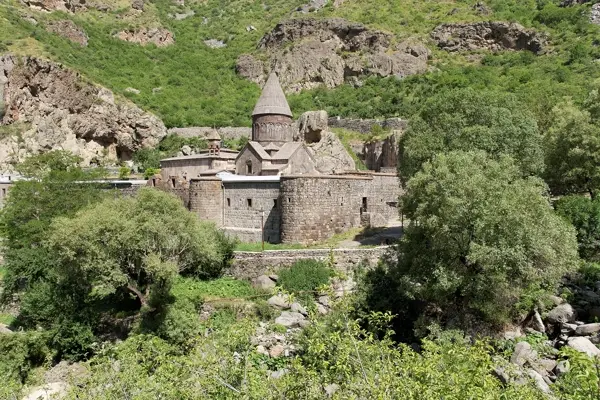
East of Yerevan, above a gorge, stands the Temple of Garni, a colonnaded building in Greco-Roman style from the 1st century – the only surviving structure of its kind in Armenia. Down in the valley below, hexagonal basalt columns form the so-called Symphony of Stones. Just 11 km further on lies Geghard Monastery, whose churches are partly carved straight into the rock; together with the Upper Azat Valley it is a UNESCO World Heritage Site. You can see both in half a day, and many day trips from Yerevan* combine them.
Days 12–13: Khor Virap and departure
About 45 minutes of pure driving south of Yerevan, Khor Virap Monastery stands on a hill in the Ararat Plain. Behind it rises the snow-capped Mount Ararat – the view is clearest early in the morning. After the trip you have the afternoon in Yerevan, and on day 13 you fly home.
Shorter and longer versions: 12 or 14 days
12 days: Combine Garni and Geghard with Khor Virap in one day – 144 km in total, approx. 2:40 h of pure driving – and fly home from Yerevan on day twelve.
14 days: Stay a second day in Stepantsminda for a longer hike, or add a day in Kakheti.
With Batumi (+3 days): Batumi lies on the Black Sea in the far west of Georgia. From Tbilisi via Kutaisi it is 375 km, approx. 5:20 h of pure driving; straight back to Tbilisi it is 362 km, approx. 5:00 h. The train run by Georgian Railway between Tbilisi and Batumi is more relaxed. Batumi has a long seaside boulevard, a large botanical garden and a skyline of modern high-rises. Near Kutaisi, Gelati Monastery is a UNESCO World Heritage Site and worth a stop. The extension fits best after the day in Kakheti, before you continue from Tbilisi to Armenia.
 Batumi trip planDay by day, with map and tips
Best time for Georgia and Armenia
The best months are May, June and September, and to a lesser extent early October. Average daily highs in Tbilisi are then between 22 and 29 °C. July and August are hot: daily highs reach around 31 °C in Tbilisi and almost 34 °C in Yerevan, with hardly any rain. For the mountains around Stepantsminda, though, summer is ideal: from June to September the trails are usually free of snow and daily highs are around 16 to 20 °C. In winter the Jvari Pass can be closed at times because of snow. Batumi is the opposite of Yerevan: it gets a lot of rain all year, more than 300 mm on average in October.
| Month | Day (avg high) | Night (avg low) | Precipitation |
|---|---|---|---|
| January | 7.2 °C | -0.9 °C | 22 mm |
| February | 9.2 °C | 0.4 °C | 25 mm |
| March | 12.4 °C | 3.0 °C | 72 mm |
| April | 18.1 °C | 7.4 °C | 81 mm |
| May | 22.5 °C | 12.0 °C | 101 mm |
| June | 28.6 °C | 17.3 °C | 76 mm |
| July | 30.8 °C | 19.6 °C | 49 mm |
| August | 31.5 °C | 20.3 °C | 31 mm |
| September | 26.0 °C | 16.1 °C | 51 mm |
| October | 18.7 °C | 10.2 °C | 57 mm |
| November | 12.7 °C | 4.3 °C | 48 mm |
| December | 8.2 °C | 0.8 °C | 28 mm |
Climate in Tbilisi: 2015–2024 averages from the ERA5 reanalysis (Open-Meteo), rounded.
How the four places compare in the main travel months (average daily high):
| Place | May | June | July | September | October |
|---|---|---|---|---|---|
| Tbilisi | 22.5 °C | 28.6 °C | 30.8 °C | 26.0 °C | 18.7 °C |
| Yerevan | 22.8 °C | 30.1 °C | 33.6 °C | 28.5 °C | 20.0 °C |
| Stepantsminda | 11.8 °C | 17.7 °C | 19.8 °C | 16.1 °C | 10.5 °C |
| Batumi | 20.6 °C | 24.0 °C | 25.2 °C | 24.2 °C | 20.4 °C |
| Month | Yerevan: day | Yerevan: night | Precipitation |
|---|---|---|---|
| April | 18.4 °C | 6.0 °C | 53 mm |
| May | 22.8 °C | 10.5 °C | 75 mm |
| June | 30.1 °C | 16.6 °C | 21 mm |
| July | 33.6 °C | 20.0 °C | 12 mm |
| August | 33.9 °C | 20.4 °C | 8 mm |
| September | 28.5 °C | 15.6 °C | 15 mm |
| October | 20.0 °C | 8.5 °C | 34 mm |
All values: 2015–2024 averages from the ERA5 reanalysis (Open-Meteo), rounded.
Good to know before you go
- Entry: Georgia and Armenia are not in the EU. Which documents you need and what applies at the borders is set out in your government's official travel advice – read it for both countries shortly before you leave.
- Script and language: Both countries have their own alphabet. Road signs on the main routes are usually also in Latin script, in small places often not – an offline map helps.
- Driving: Both countries drive on the right. The mountain roads are winding, and after storms there can be rockfall. Avoid driving after dark where you can.
- Mobile data: You need a separate solution for each country, for example an eSIM for Georgia and a second one for Armenia.
- Flight: Pure flying time from London to Tbilisi is approx. 5 hours, and similar from Yerevan back. Many connections involve a change, for example in Istanbul.
- Churches and monasteries: Cover shoulders and knees; in Georgian churches women often wear a headscarf – many entrances have scarves ready.
How YesTrip helps with this trip
Create a trip in YesTrip with the stops of this route: the app shows every place on the map, uses AI to plan your days in Tbilisi and Yerevan and shows the weather for your travel days – useful for the day at Kazbek, where it is much cooler up high than in the city. The packing list suggests clothing to match the forecast, from hiking boots for Gergeti to a scarf for the churches. The offline map helps in the mountains and wherever signs are only in Georgian or Armenian script. If you travel with friends, you can share the trip and the expenses in the app. For Tbilisi, Yerevan and Batumi there are our ready-made city plans.
Why Baku is missing from this route is explained in how many days in Baku.
* Ad – Partner link: if you book there, we earn a commission. Your price stays the same.
Free
Plan your trip in 30 seconds.
Tell YesTrip where and when – the app plans day by day with real places on the map, shows the weather, splits costs with your travel companions and guides you to the next stop on the go.
Frequently asked questions
How many days do you need for Georgia and Armenia?
Plan 13 days for the route from Tbilisi via the Georgian Military Road, Stepantsminda and Kakheti to Dilijan, Lake Sevan and Yerevan with Garni, Geghard and Khor Virap. Twelve days work if you combine the day trips from Yerevan into one. Adding Batumi on the Black Sea takes about three more days.
When is the best time to visit Georgia and Armenia?
May, June and September. Average daily highs in Tbilisi are then between 22 and 29 °C. July and August are hot, at around 31 °C in Tbilisi and almost 34 °C in Yerevan, but high summer is the best time for hiking around Mount Kazbek.
Can you travel overland from Georgia to Armenia?
Yes, crossing the land border south of Tbilisi is a common route for travellers. You can go by private transfer, shared taxi or minibus. Check the crossing rules that currently apply in your government's official travel advice before you go.
How long is the drive from Tbilisi to Yerevan?
The direct route is 273 km, approx. 4:30 h of pure driving, plus the time at the border. Taking the detour via the Debed Canyon, Dilijan and Lake Sevan spreads the journey over two relaxed days.
Is the Georgian Military Road worth it?
Yes, it is one of the most impressive drives of the trip. In 162 km and approx. 2:50 h of pure driving you pass Mtskheta, Ananuri fortress and Gudauri and cross the Jvari Pass at almost 2,400 m before reaching Stepantsminda below Mount Kazbek.
Sources
- Driving times: OSRM route calculation based on OpenStreetMap data – project-osrm.org
- Climate: Open-Meteo Historical Weather API (ERA5), averages 2015–2024 – open-meteo.com
- Historical Monuments of Mtskheta: UNESCO World Heritage – whc.unesco.org
- Monasteries of Haghpat and Sanahin: UNESCO World Heritage – whc.unesco.org
- Monastery of Geghard and the Upper Azat Valley: UNESCO World Heritage – whc.unesco.org
- Cathedral and Churches of Echmiatsin and Zvartnots: UNESCO World Heritage – whc.unesco.org
- Gelati Monastery: UNESCO World Heritage – whc.unesco.org
- Qvevri winemaking: UNESCO intangible cultural heritage – ich.unesco.org
- Travel advice for Georgia: UK Foreign Office – www.gov.uk
- Travel advice for Armenia: UK Foreign Office – www.gov.uk
- Trains in Georgia: Georgian Railway – railway.ge
Researched with AI support and checked by our editors. Prices, opening hours and weather can change – please check before you go. YesTrip is not a travel agency. Published: .
More articles
 Road trips & itineraries
Amalfi Coast itinerary: 5 days, no car needed
This 5-day route runs from Pompeii through Sorrento, Positano, Amalfi and Ravello to Salerno, with no car. Travelmar lists the boat from … · 9 min read Road trips & itineraries
Australia East Coast itinerary: 3 weeks by car
This Australia East Coast itinerary takes 21 days from Sydney via Byron Bay, Noosa, K'gari and the Whitsundays to Cairns and Port Douglas, … · 7 min read Road trips & itineraries
Bali itinerary: 2 weeks, 5 bases, no scooter
This 14-day loop covers about 410 km and almost 7 hours of pure driving through Ubud, Sidemen, Amed, Munduk and Uluwatu, by car with a … · 8 min read


