
How many days in Split? Plans for 1–5 days
In short
Two days in Split cover Diocletian's Palace with the Peristyle and the cathedral, the Riva, Marjan hill and the beach at Bačvice. Three days are ideal, adding a day trip to Trogir. With 4 to 5 days, add an island by ferry – Hvar or Brač – or the waterfalls of Krka National Park. The best months are May, June and September (22 to 28 °C by day); July and August are hot and crowded.
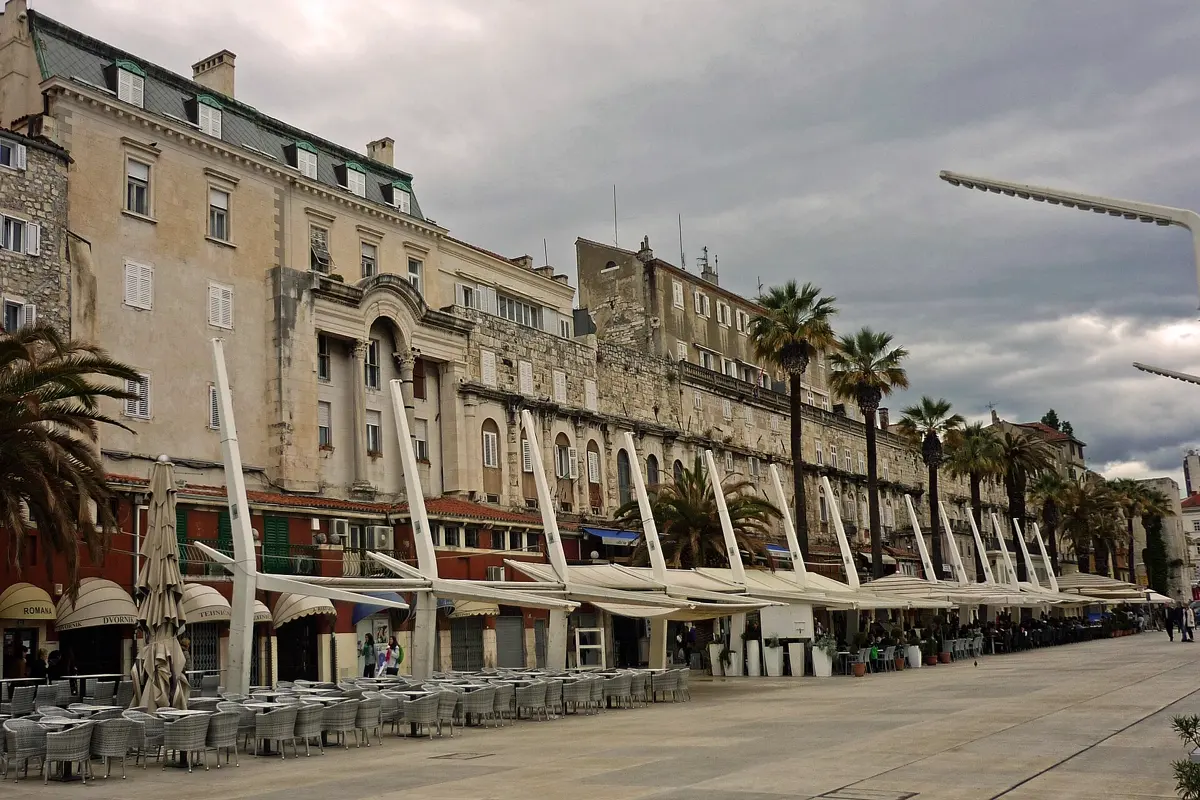
Split grew inside a Roman emperor's retirement home. Around 1,700 years ago, Diocletian built a fortified palace on the Dalmatian coast; today its walls enclose a living old town with houses, bars and shops, a UNESCO World Heritage Site where people still hang their washing between Roman columns. Split is also the main ferry port for the central Dalmatian islands, which is why many people stay a few days. The short answer: 2 days for the city, 3 days are ideal with Trogir, and 4 to 5 days if you add an island or Krka.
How many days in Split? The overview
| Days | What you see | Best for |
|---|---|---|
| 1 day | Diocletian's Palace: the cellars, the Peristyle, the cathedral, the Temple of Jupiter, the Riva | a cruise stop or a stop on a road trip |
| 2 days | plus Marjan hill with the Vidilica viewpoint, the Meštrović Gallery, the beaches of Kašjuni and Bačvice | a weekend, first visit |
| 3 days | plus a day trip to Trogir | the ideal length |
| 4–5 days | plus Hvar or Brač by ferry, or Krka National Park | a beach and island holiday |
| 6+ days | plus Dubrovnik, Šibenik or a longer island hop | anyone who wants Dalmatia, not only Split |
The palace is busiest from late morning to late afternoon, especially when cruise ships are in port. Early mornings and evenings, when the Peristyle fills with locals, show it at its best.
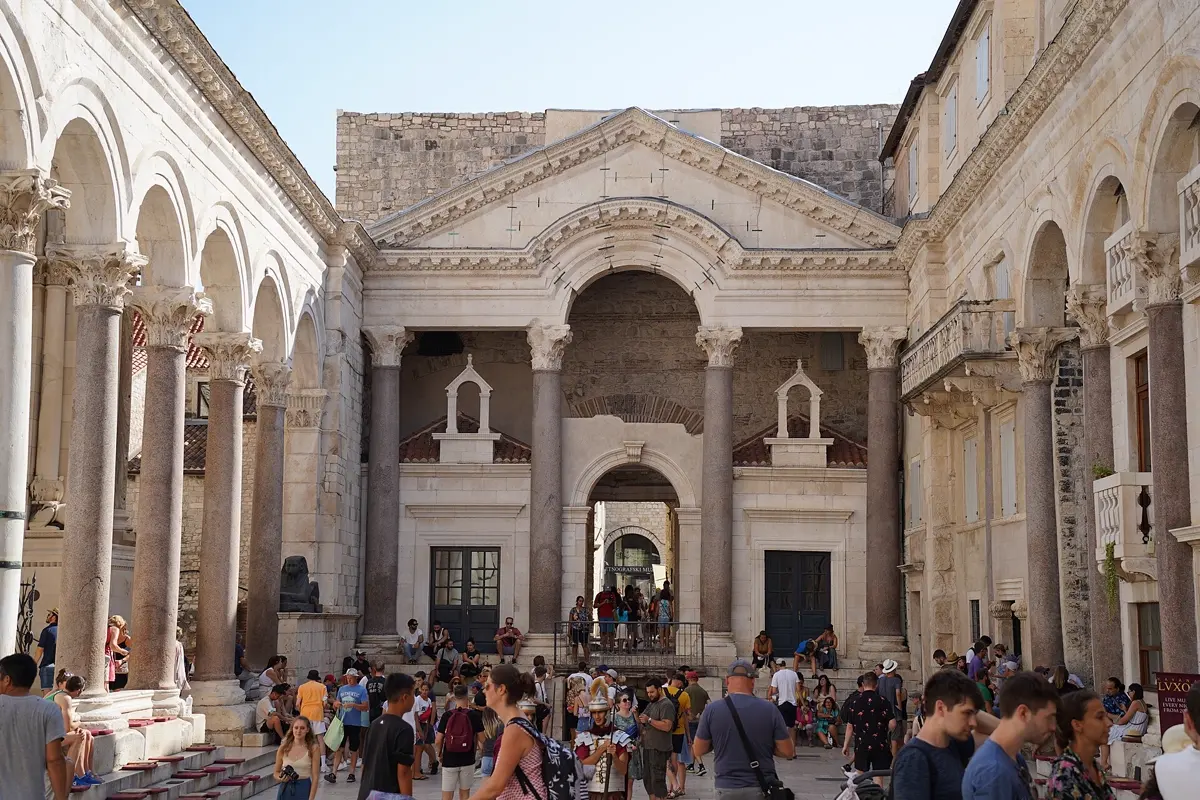
One day in Split: Diocletian's Palace
One day is enough for the palace and the waterfront. Start at the Green Market (Pazar) just outside the eastern wall, then go underground into the cellars of the palace, the vaulted substructures that show the original floor plan of the emperor's apartments above. A staircase leads up to the Peristyle, the colonnaded square at the heart of the palace.
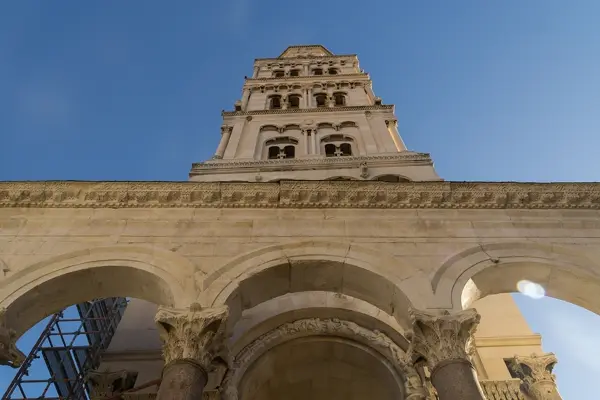
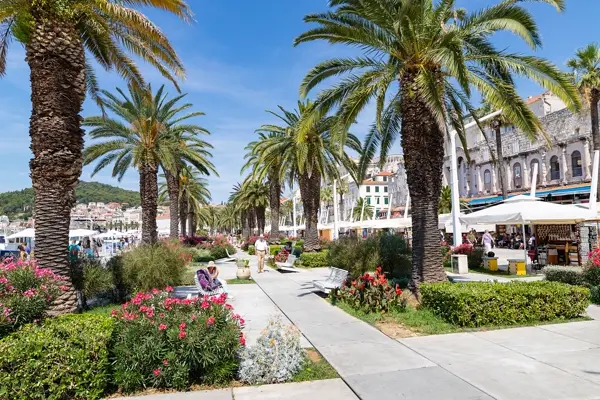
On the Peristyle stands the Cathedral of Saint Domnius, built into Diocletian's own mausoleum, with a Romanesque bell tower you can climb for a view over the roofs and the harbour. A few steps west, the small Temple of Jupiter became the cathedral's baptistery. Leave the palace through the northern Golden Gate, where the giant bronze statue of Gregory of Nin by Ivan Meštrović stands – rubbing its big toe is said to bring luck. In the evening, walk the Riva, the palm-lined promenade along the sea in front of the palace walls.
Two days in Split: Marjan and the beaches
The second day belongs to the green hill west of the old town. Climb the steps from the Varoš district to the Vidilica café and viewpoint, the classic view over the palace, the port and the islands. The paths continue into the Marjan forest park, a peninsula of pine woods with chapels and viewpoints, down to the rocky beach of Kašjuni on its southern side.
On the way back, stop at the Meštrović Gallery, the villa and garden of Croatia's best-known sculptor, and end the day at Bačvice, the sandy city beach east of the port, where locals play picigin, a ball game in shallow water. Tickets for the cathedral, the cellars and boat trips* are also on Tiqets.
Three days in Split: the ideal length
Three days give you the city, the sea and one of the most beautiful small towns on the coast. Our ready-made plan divides it like this:
- Day 1 – Diocletian's Palace: the Green Market, the cellars, the Peristyle, the Cathedral of Saint Domnius, the Temple of Jupiter, the statue of Gregory of Nin.
- Day 2 – Marjan and the beaches: the Vidilica viewpoint, Marjan forest park, Kašjuni beach, the Meštrović Gallery, Bačvice.
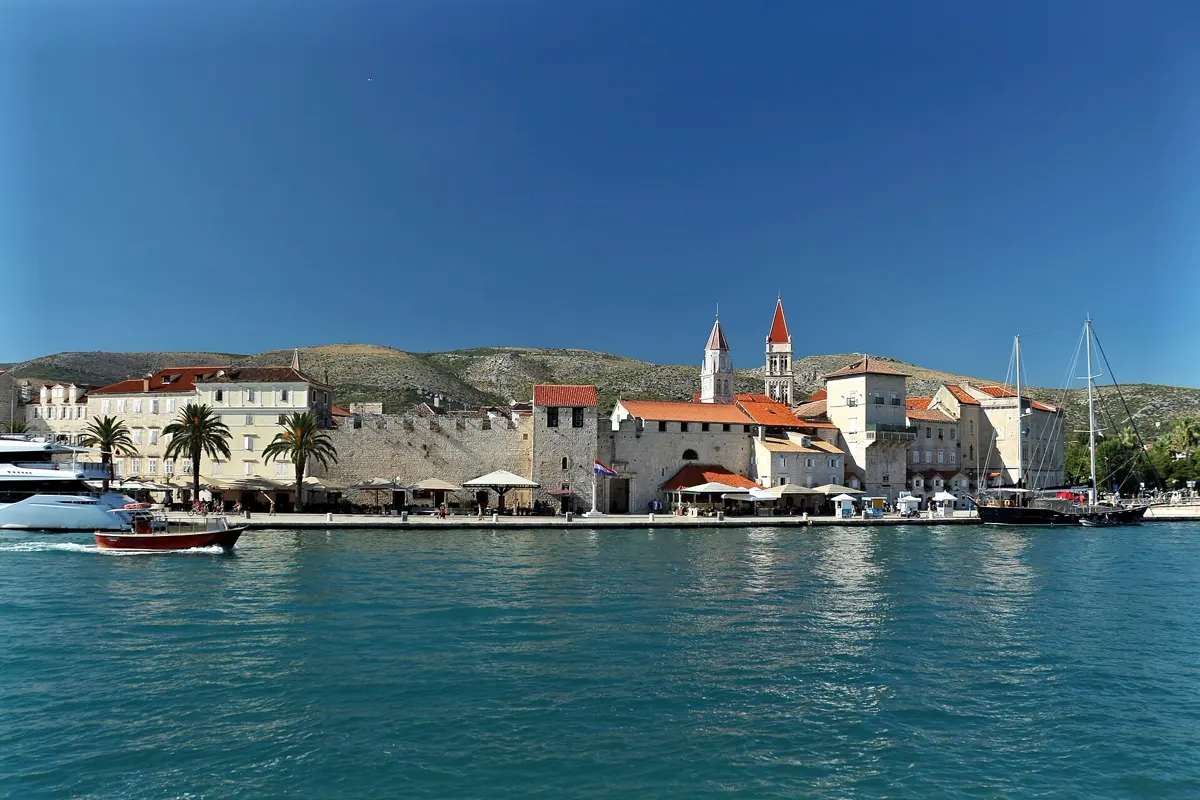
- Day 3 – day trip to Trogir: the Land Gate, the Cathedral of St. Lawrence with its Romanesque portal, the waterfront promenade and the Kamerlengo Fortress.
Trogir, a medieval town on a small island, is itself a UNESCO World Heritage Site. It is about 29 km from Split, around 35 minutes of pure driving time – plan about a third more. Local buses and, in season, boats also connect the two.
Four to five days: Hvar, Brač and Krka
From the fourth day, Split becomes the gateway to the islands. Ferries and fast catamarans leave from the port right next to the old town: Hvar, with its Venetian main square, fortress and lively harbour, and Brač, with the white stone village of Bol and the long pebble spit of Zlatni Rat, both work as a day trip or an overnight stay. Timetables are on the website of the state ferry company Jadrolinija; in summer, book popular crossings early.
Inland, Krka National Park is known for its cascades and wooden walkways over the river. It is about 90 km from Split, around 1 hour 15 minutes of pure driving time. For Krka and the coast, a rental car is convenient; rental cars in Croatia* can be compared on Localrent, and guided day trips from Split* are on Viator. With a week, combine Split with Dubrovnik – see our article on how many days in Dubrovnik.
Where to stay in Split
For a short stay, two areas work best:
- Old town: inside or right next to the palace walls, everything on foot. Atmospheric, but lively at night and with steps and narrow lanes for luggage.
- Varoš: the old fishermen's quarter on the slope west of the palace, quieter, close to Marjan and still only a few minutes from the Riva.
Split Airport lies near Trogir, about 25 km west of the city; airport buses run into town, and for a late arrival with luggage a transfer from Split Airport* can be booked with Welcome Pickups. Visitors from outside the EU, for example from the UK, usually pay less with a travel eSIM from Airalo than with roaming; our eSIM price index compares the prices per gigabyte.
Best time to visit Split
| Month | Day (avg. high) | Night (avg. low) | Rain per month |
|---|---|---|---|
| Jan | 10.8 °C | 3.6 °C | 133 mm |
| Feb | 12.7 °C | 5.2 °C | 108 mm |
| Mar | 14.7 °C | 6.6 °C | 104 mm |
| Apr | 18.0 °C | 9.7 °C | 89 mm |
| May | 22.3 °C | 14.4 °C | 101 mm |
| Jun | 27.7 °C | 18.9 °C | 48 mm |
| Jul | 31.3 °C | 21.8 °C | 23 mm |
| Aug | 31.2 °C | 22.1 °C | 54 mm |
| Sep | 25.9 °C | 17.6 °C | 116 mm |
| Oct | 21.2 °C | 13.5 °C | 123 mm |
| Nov | 16.3 °C | 9.6 °C | 238 mm |
| Dec | 12.7 °C | 5.6 °C | 166 mm |
Averages 2015–2024 from the ERA5 reanalysis (via Open-Meteo), rounded.
The best months for Split are May, June and September, with 22 to 28 °C by day – warm enough for the beach, without the peak of summer. July and August are hot, around 31 °C, very dry and the busiest months of the year, with full ferries and high prices. October is still mild. Winter is mild too, around 11 to 13 °C, but it is the rainy season, especially in November, and many boats and beach bars take a break. More on the season along the whole coast in our article on the best time to visit Croatia.
Split compared: how many days for other cities?
If you are choosing between cities, this is how many days we recommend in this series for a first visit.
Base map: Natural Earth
More in our articles how many days in Dubrovnik and how many days in Ljubljana, our Croatia road trip itinerary, and all cities of the series in the overview how many days in each city.
How YesTrip helps you plan
YesTrip has a ready-made three-day plan for Split with times, short walks and a map for each day, including the day trip to Trogir. With one tap you copy it into the app, then move stops, drop what does not interest you and add your hotel, a ferry to Hvar or a day at Krka. The app shows the weather for your travel days, the packing list suggests sun protection on hot days, and with the offline package you have the map without a connection. YesTrip is free.
 Split trip planDay by day, with map and tips
* Ad – Partner link: if you book there, we earn a commission. Your price stays the same.
Free
Plan your trip in 30 seconds.
Tell YesTrip where and when – the app plans day by day with real places on the map, shows the weather, splits costs with your travel companions and guides you to the next stop on the go.
Frequently asked questions
How many days do you need in Split?
Two days are enough for Diocletian's Palace, the Riva, Marjan hill and a beach. Three days are ideal and add a day trip to Trogir. With four to five days, you can add Hvar, Brač or Krka National Park.
Is 2 days enough for Split?
Yes, for the city itself. In two days you can see the palace with its cellars and cathedral, walk the Riva, climb Marjan and swim at Bačvice. The islands and Trogir need more time.
Can you do Hvar as a day trip from Split?
Yes. Ferries and catamarans connect Split with Hvar several times a day in season, so a day trip works. In July and August, book the crossing in advance and check the return times.
What is the best time to visit Split?
May, June and September, with daytime highs of 22 to 28 °C and fewer crowds than in high summer. July and August are hot, around 31 °C, and very busy. Winter is mild but rainy, especially in November.
Where should I stay in Split for a short trip?
In the old town inside or next to the palace walls if you want to be in the middle of everything, or in Varoš for a quieter area near Marjan, a few minutes from the Riva.
Sources
- Climate data: Open-Meteo Historical Weather API, daily values 2015–2024 – open-meteo.com
- Copernicus ERA5 reanalysis (Hersbach et al. 2020) – cds.climate.copernicus.eu
- Visit Split, official tourism website – visitsplit.com
- UNESCO World Heritage: Historical Complex of Split with the Palace of Diocletian – whc.unesco.org
- Jadrolinija: ferries and catamarans from Split – www.jadrolinija.hr
- Krka National Park, official website – www.np-krka.hr
Researched with AI support and checked by our editors. Prices, opening hours and weather can change – please check before you go. YesTrip is not a travel agency. Published: .
More articles
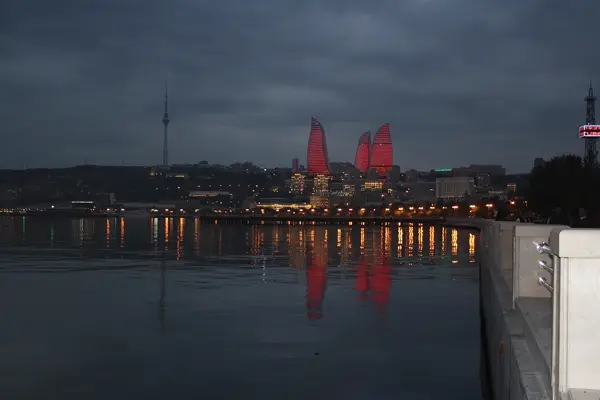 How many days?
How many days in Baku? 3 with Gobustan
Two days are enough for Baku's old town, the Boulevard and the Heydar Aliyev Center. The third belongs to Gobustan, 64 km away, with more … · 6 min read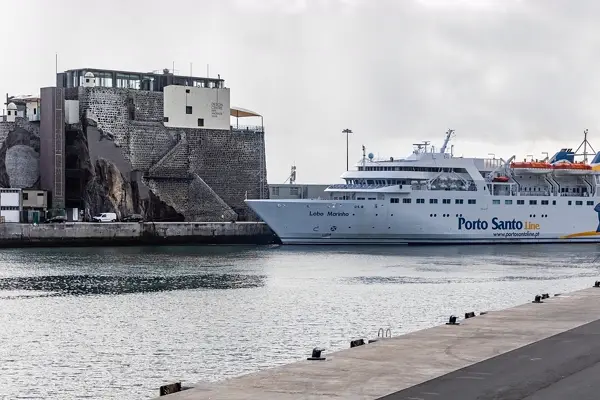 How many days?
How many days in Funchal? 3, or 5+ for Madeira
Two days are enough for Funchal: the old town, the market, the cable car and the gardens at Monte. Day three goes to the mountains, with … · 6 min read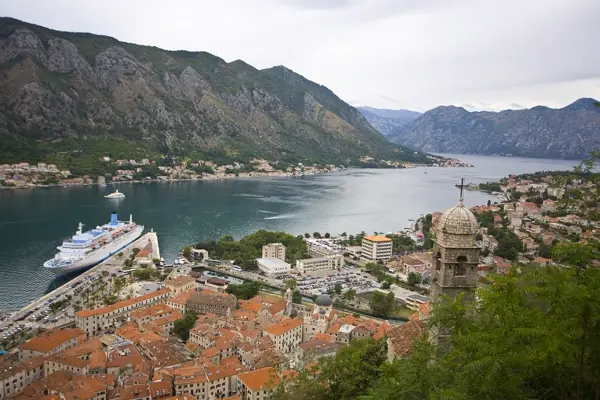 How many days?
How many days in Kotor? 2 with Perast
Two days are enough for Kotor: the old town and about 1,300 steps to the fortress on the first, Perast and the island of Our Lady of the … · 6 min read


