
Croatia road trip: 11-day itinerary
In short
The classic Croatia road trip takes 11 days from Zagreb to the Plitvice Lakes, Zadar, the Krka waterfalls and Split, by ferry to the island of Hvar and on to Dubrovnik – about 680 km of road plus two ferries. No leg takes more than 4.5 hours of pure driving. The best months are May, June and September, with 22 to 28 °C in Split.
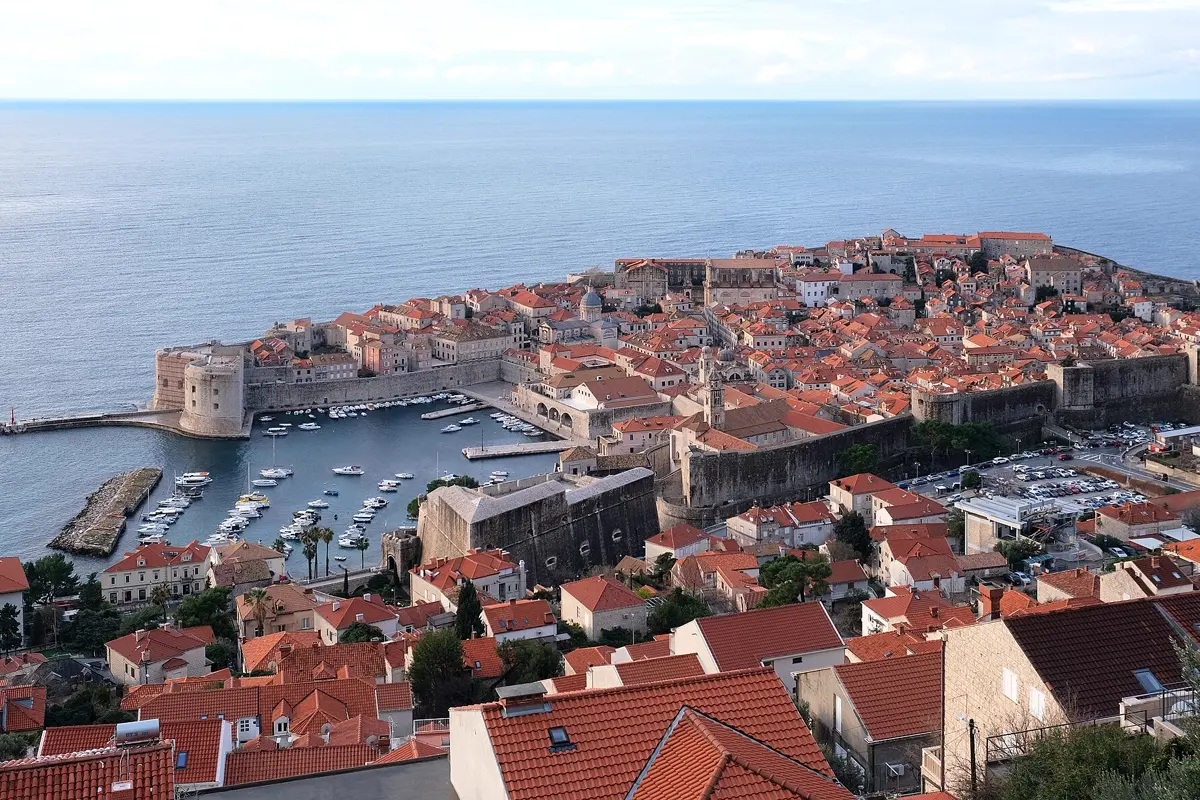
Croatia is ideal for a north-to-south road trip: you land in the capital Zagreb, drive through the hinterland to the Plitvice Lakes and reach the Adriatic at Zadar. From there the route follows the coast past the waterfalls of Krka to Split, crosses by ferry to the island of Hvar and ends in Dubrovnik, where you fly home. This route takes 11 days; versions for 10 and 12 days are further down.
The route at a glance
| Day | Leg | Distance | Pure driving time |
|---|---|---|---|
| 1 | Zagreb | – | – |
| 2 | Zagreb → Plitvice Lakes | 139 km | approx. 2:20 h |
| 3 | Plitvice Lakes → Zadar | 134 km | approx. 2:10 h |
| 4 | Zadar | – | – |
| 5 | Zadar → Krka (Skradin) → Split | 169 km | approx. 2:10 h |
| 6 | Split | – | – |
| 7 | Split → ferry → Stari Grad → Hvar | 24 km | approx. 0:30 h + ferry |
| 8 | Hvar | – | – |
| 9 | Hvar → Sućuraj → ferry → Drvenik → Dubrovnik | 209 km | approx. 4:20 h + ferry |
| 10–11 | Dubrovnik | – | – |
Driving times: route calculation based on OpenStreetMap, without breaks and without waiting at the ferries. With photo stops and summer traffic on the coast, add about a third.
- Zagreb
- Plitvice Lakes
- Zadar
- Krka (Skradin)
- Split
- Stari Grad
- Hvar
- Sućuraj
- Drvenik
- Dubrovnik
Base map: Natural Earth
Day 1: Zagreb
Zagreb is more relaxed and less touristy than the coast. In the Upper Town, Gornji Grad, stands St Mark's Church with its colourful tiled roof showing the coats of arms of Croatia and Zagreb. A short funicular links the upper and lower towns, and in the morning the Dolac market below the cathedral is worth a visit. Pick up the hire car on day two.
Days 2–3: the Plitvice Lakes
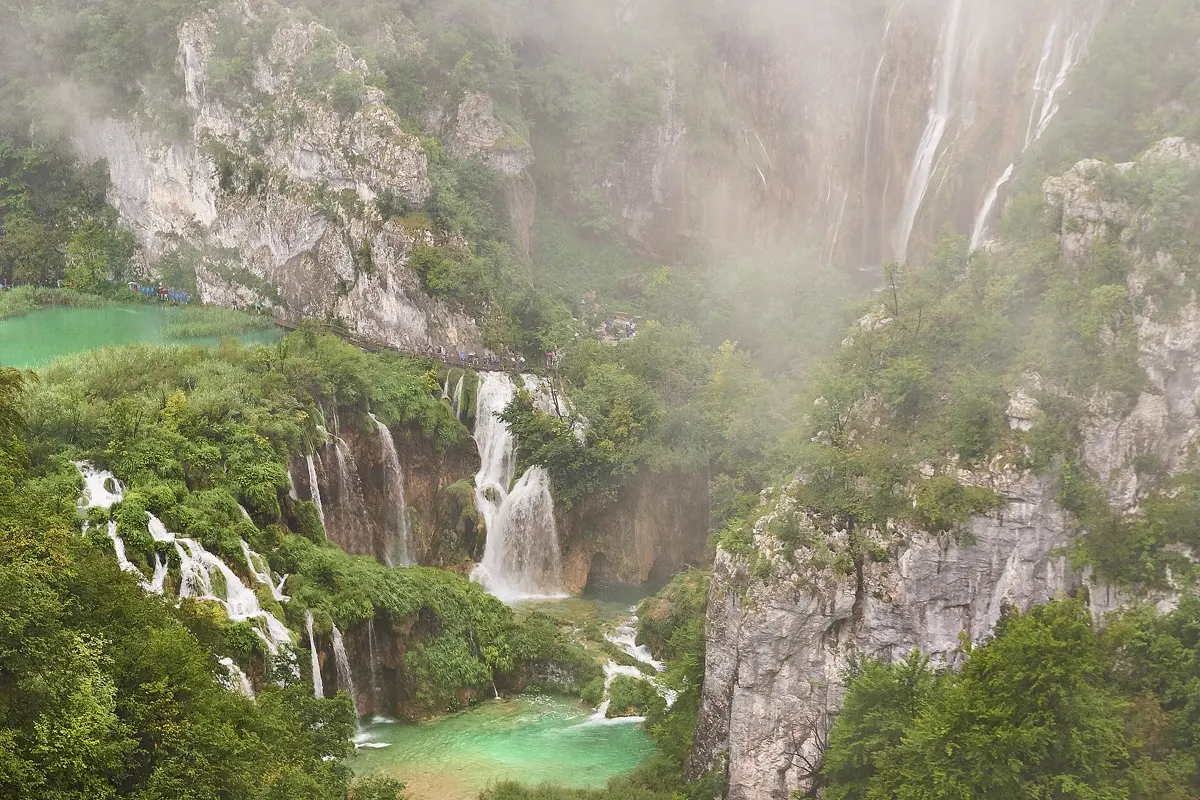
Plitvice Lakes National Park has been a UNESCO World Heritage Site since 1979. Sixteen lakes lie in terraces one above the other, linked by dozens of waterfalls, and wooden boardwalks lead right across the water. Drive there on day two and stay in one of the villages by the park: you will then be at the entrance at opening time the next morning, before the day coaches arrive. The park offers several signposted circuits through the lower and upper lakes; most take half a day. Swimming is forbidden in the park, and in summer you should buy your ticket online in advance. In the afternoon drive on to Zadar.
Day 4: Zadar
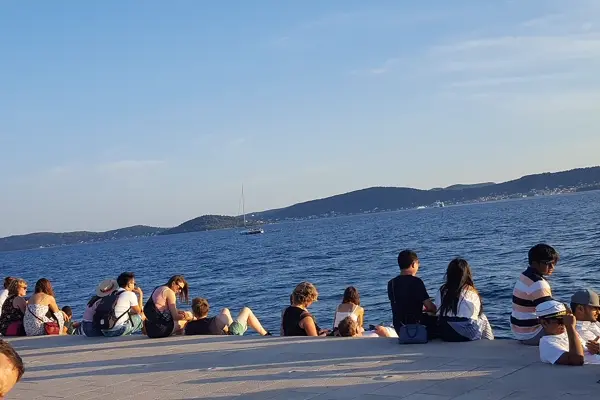
Zadar sits on a peninsula and its old town is almost car-free. Between the Roman forum and the round Church of St Donatus you stroll down to the waterfront. There the Sea Organ plays: waves push air through pipes beneath the marble steps and create notes. Right next to it, the Greeting to the Sun, a circle of solar panels, lights up after sunset.
Days 5–6: Krka and Split
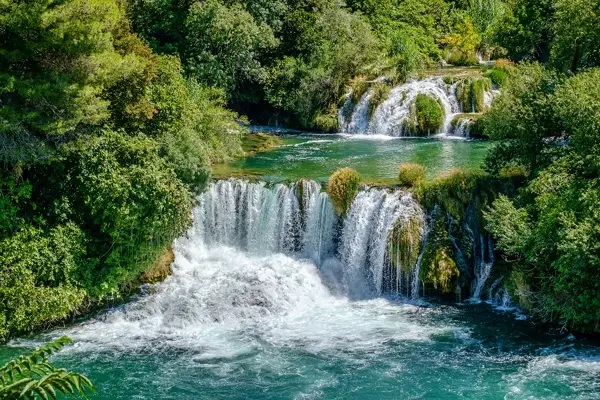
On the way to Split lies Krka National Park. Its best-known sight is Skradinski buk, a wide cascade of travertine steps. Tour boats* run there from Skradin, and a circular path on boardwalks leads through the falls. Swimming is no longer allowed here either. If you have time, stop briefly in Šibenik with its Cathedral of St James, also a UNESCO World Heritage Site.
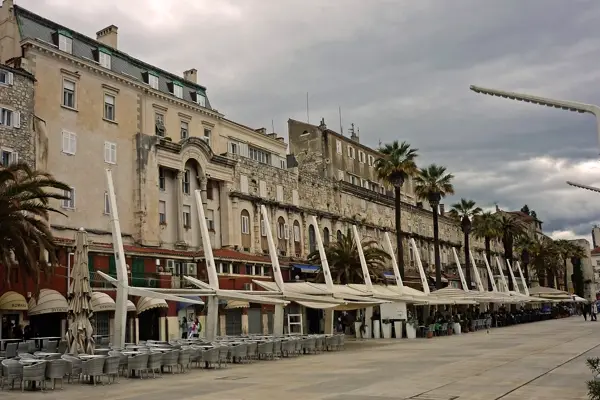
Split grew up around Diocletian's Palace, which a Roman emperor had built as his retirement residence around the year 300. Today people live and work inside the old walls, cafés fill the colonnaded Peristyle, and the cathedral was originally the emperor's mausoleum. In the evening walk along the Riva, the waterfront promenade, or climb Marjan hill above the city. We have a ready-made plan for Split.
 Split trip planDay by day, with map and tips
Days 7–8: Hvar
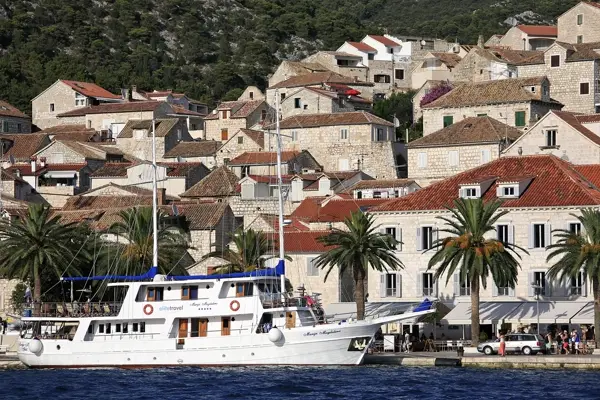
From Split the car ferry of the state shipping line Jadrolinija sails to Stari Grad on Hvar. In summer buy the ticket for your car in advance and be at the port early. Stari Grad is one of the oldest towns in Croatia, and the plain behind it with its ancient field boundaries is a UNESCO World Heritage Site. The main town, Hvar, lies half an hour further on around a bay. From the fortress above the town you look over the harbour and the Pakleni Islands just offshore, which small boats take you to for swimming. Lavender grows in the island's interior.
Day 9: across Hvar and Pelješac to Dubrovnik
Instead of returning to Split, drive the length of the island to Sućuraj at its eastern tip – a narrow, winding road for which our route planner allows two hours. From there a short ferry crosses to Drvenik on the mainland. You then head south along the coast and over the Pelješac Bridge, which since 2022 has linked the mainland to the peninsula. This way you bypass the short coastal strip of Bosnia and Herzegovina at Neum without a border check. On Pelješac lies Ston with its long fortified walls, and oysters are farmed in Mali Ston.
The alternative: take the ferry back to Split and drive from there to Dubrovnik – 235 km, approx. 3:20 h of pure driving.
Days 10–11: Dubrovnik
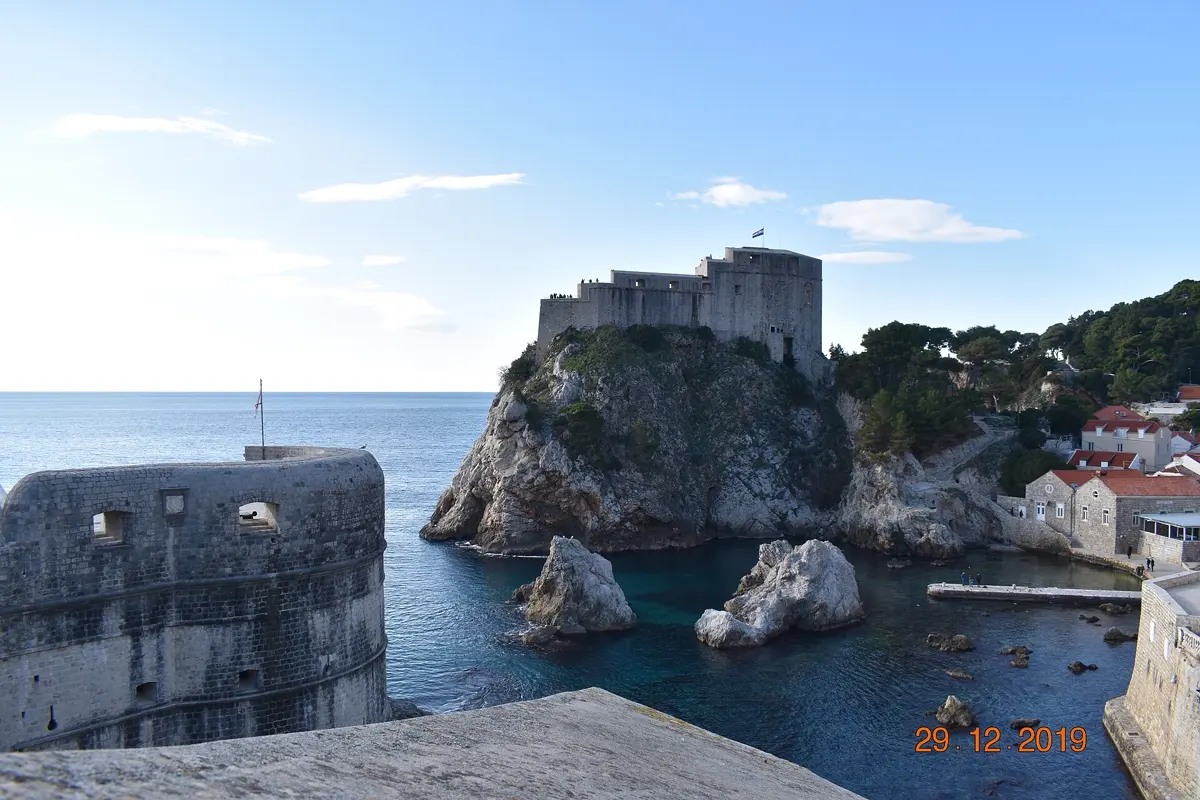
The old town of Dubrovnik is completely enclosed by a medieval wall, and you can walk all the way round the town on top of it – best early in the morning before it gets hot. Through the middle runs the Stradun, the limestone-paved main street. A cable car climbs Mount Srđ for a view over the rooftops, and boats leave the old harbour for the island of Lokrum. The old town is car-free; return the hire car as soon as you arrive.
Shorter and longer versions: 10 or 12 days
10 days: On day five drive from Zadar via Krka to Split and stay only one night in Split, moving on to Hvar the next day.
12 days: Add a day in Split for a boat trip to the islands, or an extra day in Dubrovnik. If you cannot fly home from Dubrovnik: Dubrovnik to Zagreb is 605 km, approx. 7:10 h of pure driving.
Best time for a Croatia road trip
The best months are May, June and September: average daily highs in Split are then between 22 and 28 °C, the sea is warm enough to swim in June and September, and the old towns are emptier than in high summer. In July and August it is hot at around 31 °C, and the ferries and national parks are packed. At the Plitvice Lakes the waterfalls carry the most water in spring. From October the coast gets much wetter, and November is by far the wettest month.
| Month | Day (avg high) | Night (avg low) | Precipitation |
|---|---|---|---|
| January | 10.7 °C | 3.7 °C | 133 mm |
| February | 12.7 °C | 5.2 °C | 108 mm |
| March | 14.7 °C | 6.7 °C | 104 mm |
| April | 18.0 °C | 9.8 °C | 89 mm |
| May | 22.3 °C | 14.5 °C | 101 mm |
| June | 27.7 °C | 19.0 °C | 48 mm |
| July | 31.3 °C | 21.9 °C | 23 mm |
| August | 31.2 °C | 22.2 °C | 54 mm |
| September | 25.9 °C | 17.7 °C | 116 mm |
| October | 21.2 °C | 13.6 °C | 123 mm |
| November | 16.3 °C | 9.7 °C | 238 mm |
| December | 12.7 °C | 5.8 °C | 166 mm |
Climate in Split: 2015–2024 averages from the ERA5 reanalysis (Open-Meteo), rounded. Zagreb and the Plitvice Lakes inland are cooler.
Good to know before you go
- Entry and money: Croatia is in the EU and the Schengen Area, and the currency is the euro. EU and EEA mobile plans roam like at home.
- Tolls: The motorways charge tolls. The motorway operator explains on its website how to pay.
- Ferries: Car ferries to the islands are mostly run by Jadrolinija. In July and August they are often full – book ahead and allow a buffer.
- The border at Neum: With the Pelješac Bridge you don't need to pass through Bosnia and Herzegovina. If you do take the old coast road through Neum, your rental contract must allow the border crossing.
- One-way rental: Picking up in Zagreb and returning in Dubrovnik usually costs a one-way fee. It is often worth it compared with the long drive back.
- Parking: In Split, Hvar and Dubrovnik parking near the old towns is scarce. Choose accommodation with parking or park on the edge.
- Flight: A direct flight* from London to Zagreb takes approx. 2.5 hours, from Dubrovnik back to London approx. 3 hours.
How YesTrip helps with this trip
Create a trip in YesTrip with the stops of this route: the app shows every place on the map, uses AI to plan your days in Zagreb, Zadar and on the islands and shows the weather for your travel days. The packing list suggests clothing to match the forecast – swimwear for the coast, sturdy shoes for the boardwalks at the lakes. The offline map helps in the national parks and on Hvar, and if you travel with friends you can share the trip and the expenses in the app. For Split and Dubrovnik there are our ready-made city plans.
* Ad – Partner link: if you book there, we earn a commission. Your price stays the same.
Free
Plan your trip in 30 seconds.
Tell YesTrip where and when – the app plans day by day with real places on the map, shows the weather, splits costs with your travel companions and guides you to the next stop on the go.
Frequently asked questions
How many days do you need for a Croatia road trip?
Plan 11 days for the route from Zagreb via the Plitvice Lakes, Zadar, Krka, Split and Hvar to Dubrovnik. Ten days work if you stay only one night in Split. With 12 days you have time for a boat trip or an extra day in Dubrovnik.
When is the best time for a road trip in Croatia?
May, June and September. Average daily highs in Split are then between 22 and 28 °C, the sea is warm enough to swim and the ferries and old towns are less crowded than in July and August.
Do you cross a border on the way to Dubrovnik?
Not any more. Since 2022 the Pelješac Bridge bypasses Neum, so you drive from Split to Dubrovnik without leaving Croatia. Only if you take the old coast road do you pass through a short stretch of Bosnia and Herzegovina.
How do you get to Hvar by car?
By car ferry from Split to Stari Grad, or from Drvenik to Sućuraj at the island's eastern tip. Both are run by Jadrolinija; in summer you should buy the ticket in advance.
Can you swim at the Plitvice Lakes and Krka?
No. Swimming is banned in both national parks to protect the fragile travertine barriers. For a swim, head to the coast, which is close to both Zadar and Split.
Sources
- Driving times: OSRM route calculation based on OpenStreetMap data – project-osrm.org
- Climate: Open-Meteo Historical Weather API (ERA5), averages 2015–2024 – open-meteo.com
- Plitvice Lakes National Park: UNESCO World Heritage – whc.unesco.org
- Diocletian's Palace in Split: UNESCO World Heritage – whc.unesco.org
- Old City of Dubrovnik: UNESCO World Heritage – whc.unesco.org
- Ferries: Jadrolinija – www.jadrolinija.hr
- Krka National Park – www.npkrka.hr
Researched with AI support and checked by our editors. Prices, opening hours and weather can change – please check before you go. YesTrip is not a travel agency. Published: .
More articles
 Road trips & itineraries
Amalfi Coast itinerary: 5 days, no car needed
This 5-day route runs from Pompeii through Sorrento, Positano, Amalfi and Ravello to Salerno, with no car. Travelmar lists the boat from … · 9 min read Road trips & itineraries
Australia East Coast itinerary: 3 weeks by car
This Australia East Coast itinerary takes 21 days from Sydney via Byron Bay, Noosa, K'gari and the Whitsundays to Cairns and Port Douglas, … · 7 min read Road trips & itineraries
Bali itinerary: 2 weeks, 5 bases, no scooter
This 14-day loop covers about 410 km and almost 7 hours of pure driving through Ubud, Sidemen, Amed, Munduk and Uluwatu, by car with a … · 8 min read


