
How many days in Seoul? Plans for 2–7 days
In short
You need at least 3 days in Seoul: one each for the palaces and hanok lanes of the old city, the markets and Namsan, and Gangnam with the Han River. Four to five days are ideal, adding Hwaseong Fortress in Suwon (about 1 hour away) and a hike on Bukhansan. The most pleasant months are April, May and October (18 to 23 °C by day).
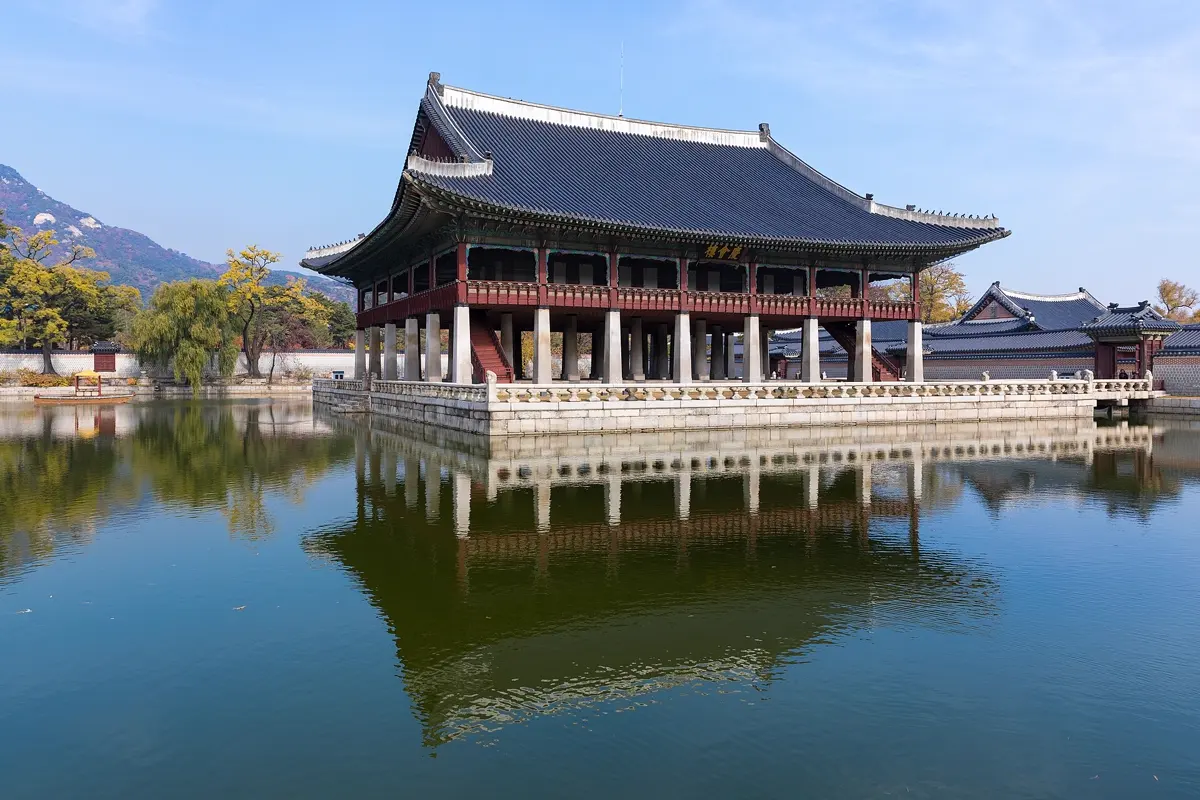
Seoul is a city of contrasts that sit surprisingly close together. North of the Han River stand the royal palaces of the Joseon dynasty, with the hanok lanes of Bukchon and the tea houses of Insadong in between. A few metro stops away are markets such as Gwangjang, where you eat at long counters, and south of the river rise the towers of Gangnam. All around are mountains you reach by metro for a hike. The short answer: 3 days for the classics, 4 to 5 days are ideal, and from 6 days there is time for Busan or Gyeongju.
How many days in Seoul? The overview
| Days | What you see | Best for |
|---|---|---|
| 2 days | Gyeongbokgung, Bukchon, Insadong, Gwangjang Market, N Seoul Tower, Myeongdong | a stopover, the start of a trip through Asia |
| 3 days | plus Changdeokgung, Namdaemun Market, Gangnam, an evening by the Han River | all the city's classics |
| 4–5 days | plus Hwaseong Fortress in Suwon, a hike on Bukhansan, Jongmyo, a museum day | the ideal length |
| 6–7 days | plus Busan by the sea or the old royal city of Gyeongju by KTX | a week of Seoul and Korea |
Worth knowing for planning: each palace closes on one weekday, but not all on the same one – check before you fix your palace day. The Secret Garden of Changdeokgung can only be seen on a guided tour with limited places. And do not count the first day as a full one: direct flights from London to Seoul take about 13 hours, and Korea is 8 hours ahead of the UK in summer and 9 in winter. Most flights land at Incheon airport, about an hour by train from the centre.
Two days in Seoul: palaces and Namsan
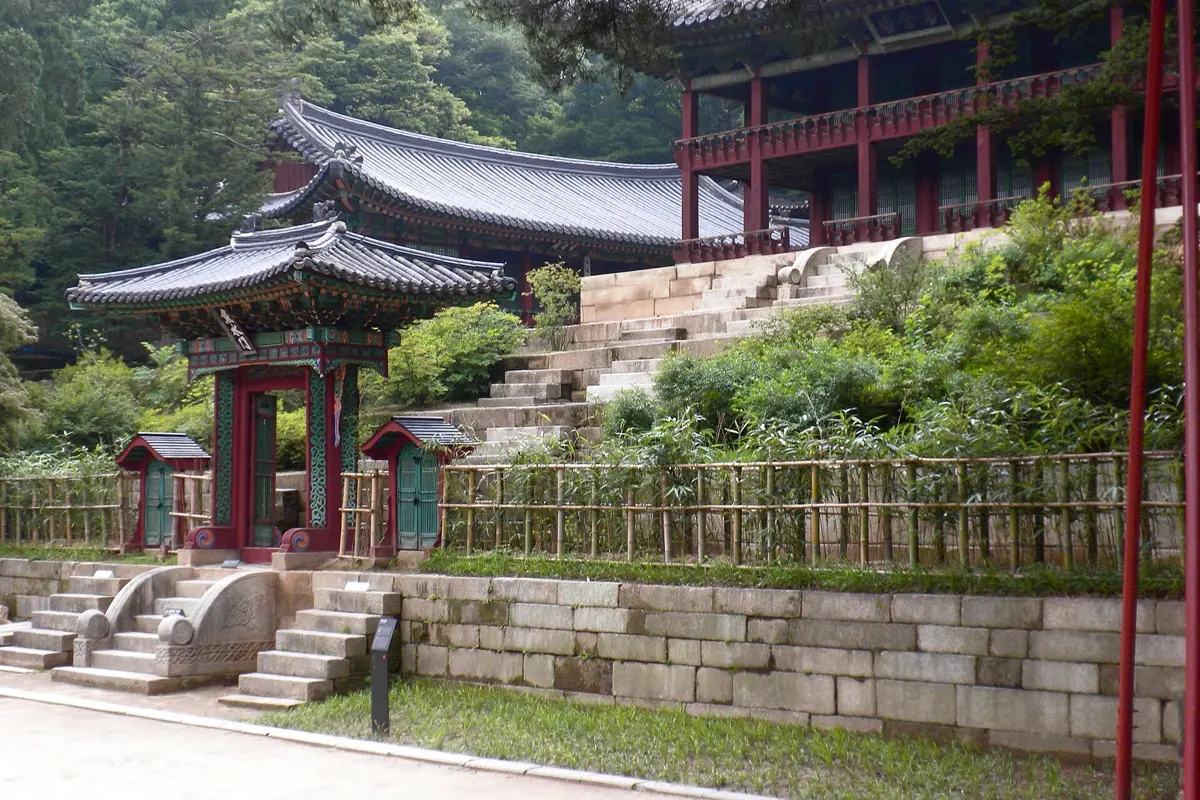
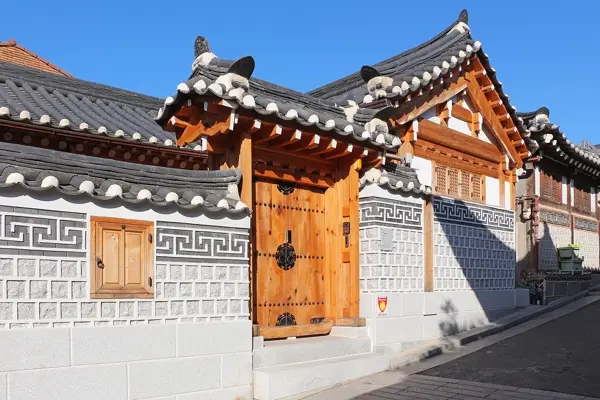
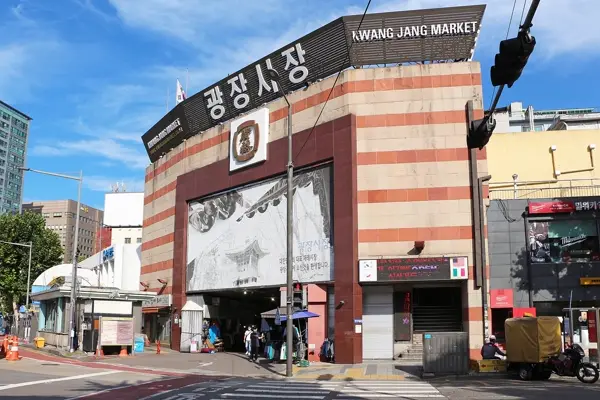
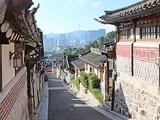
Two days are enough for a first impression if Seoul is a stopover. The first day belongs to the old city. Be at Gyeongbokgung, the largest of the five royal palaces, when it opens and watch the changing of the guard in historical uniforms at Gwanghwamun Gate. Behind the palace, the lanes of Bukchon climb the hill, lined with traditional wooden hanok houses under curved tiled roofs. People live here, so keep your voice down. Lunch is in the side streets of Insadong, and in the evening you eat at Gwangjang Market, one of the oldest markets in the city, with bindaetteok, crispy mung bean pancakes, and mayak gimbap.
On the second day, take the cable car or walk up through the forest on Namsan to the N Seoul Tower, which looks out over the whole city to the mountains. Below lies Myeongdong with its cosmetics shops and many street food stalls in the evening, and to finish, the curved Dongdaemun Design Plaza by Zaha Hadid lights up. Gangnam and the river will have to wait.
Three days in Seoul: all the classics
Three days are the minimum to get a feel for Seoul. Our ready-made plan splits the city into three parts, with each day's stops in walking order:
- Day 1 – Palaces and hanok lanes: Gyeongbokgung, Bukchon, lunch in Insadong, Changdeokgung Palace (a UNESCO World Heritage Site), a walk along the restored Cheonggyecheon stream and Gwangjang Market in the evening.
- Day 2 – Markets, Namsan and Myeongdong: the small Deoksugung Palace in the heart of the centre, Seoullo 7017, an old overpass turned into a walkway, noodle soup at Namdaemun Market, N Seoul Tower, Myeongdong and the Dongdaemun Design Plaza in the evening.
- Day 3 – Gangnam and the Han River: Bongeunsa temple opposite the towers, the book walls of the Starfield Library in COEX, lunch at Noryangjin Fish Market, where you pick your fish downstairs and have it cooked upstairs, an afternoon in Yeouido Hangang Park and, in the evening, Banpo Bridge, where in the warmer months the Moonlight Rainbow Fountain sends lit arcs of water into the river.
Between districts you take the metro; within a district you walk. For a long-haul trip, though, three days are tight: with jet lag at the start, you often get only two and a half real days. Palace tours and tickets for the tower* are on Klook.
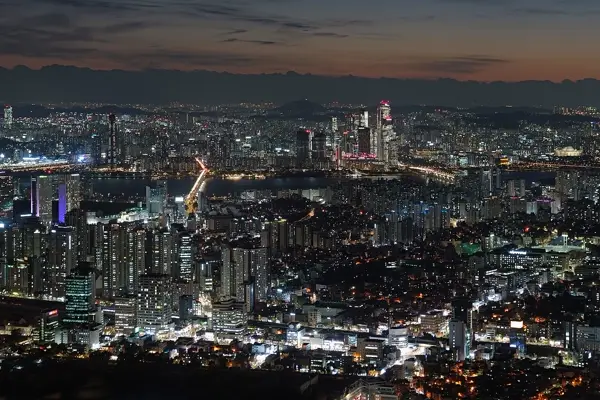
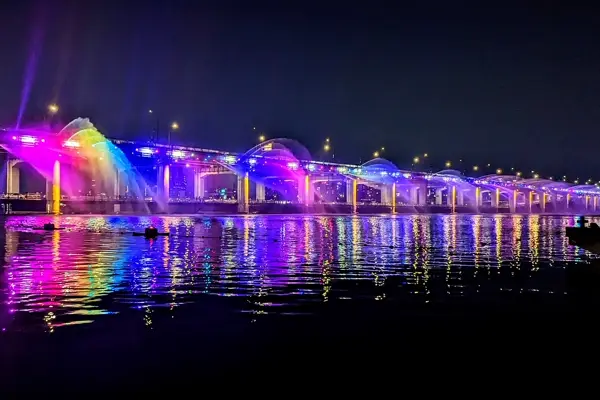
Four to five days: Suwon, Bukhansan and Jongmyo
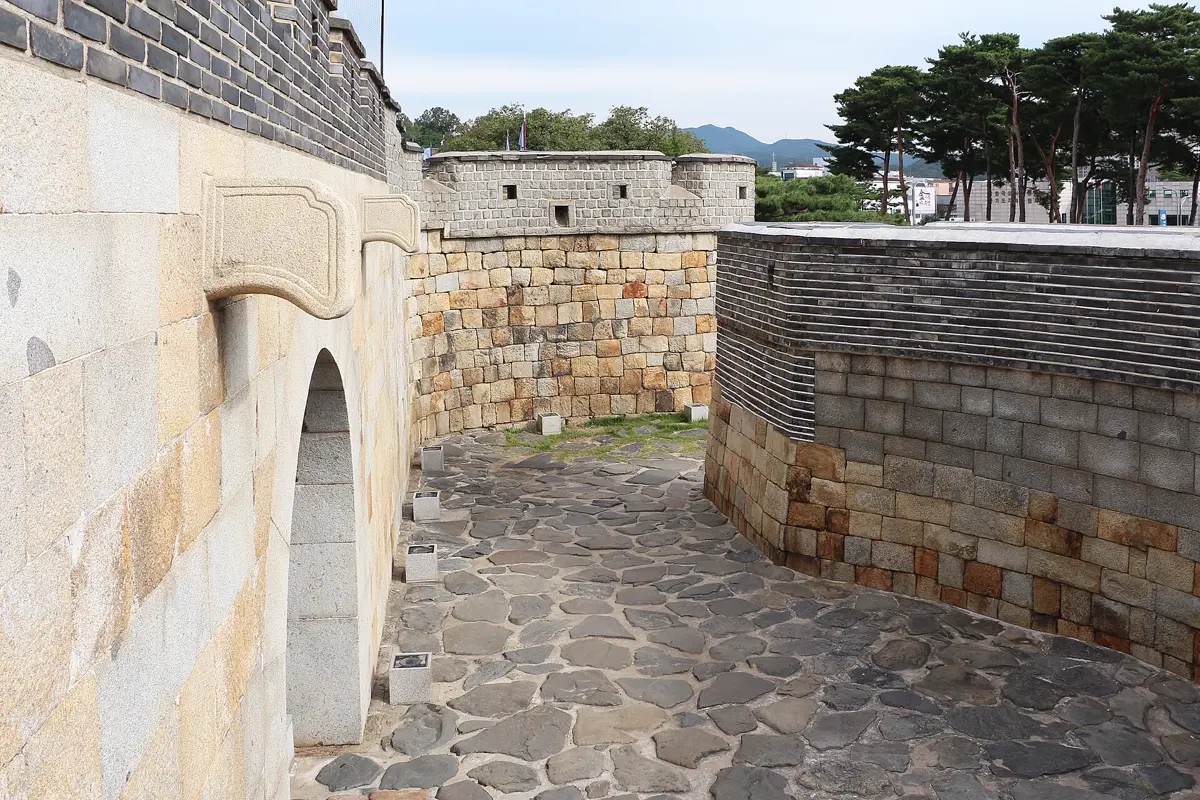
With four or five days Seoul comes together, because now a day trip fits in. The easiest is Suwon to the south, about 1 hour by metro or train. Here stands Hwaseong Fortress, a city wall from the late 18th century with gates, watchtowers and bastions, now a UNESCO World Heritage Site. You can walk a large part of the ring along the top of the wall, looking out over the roofs of the city. Allow half a day to a full day.
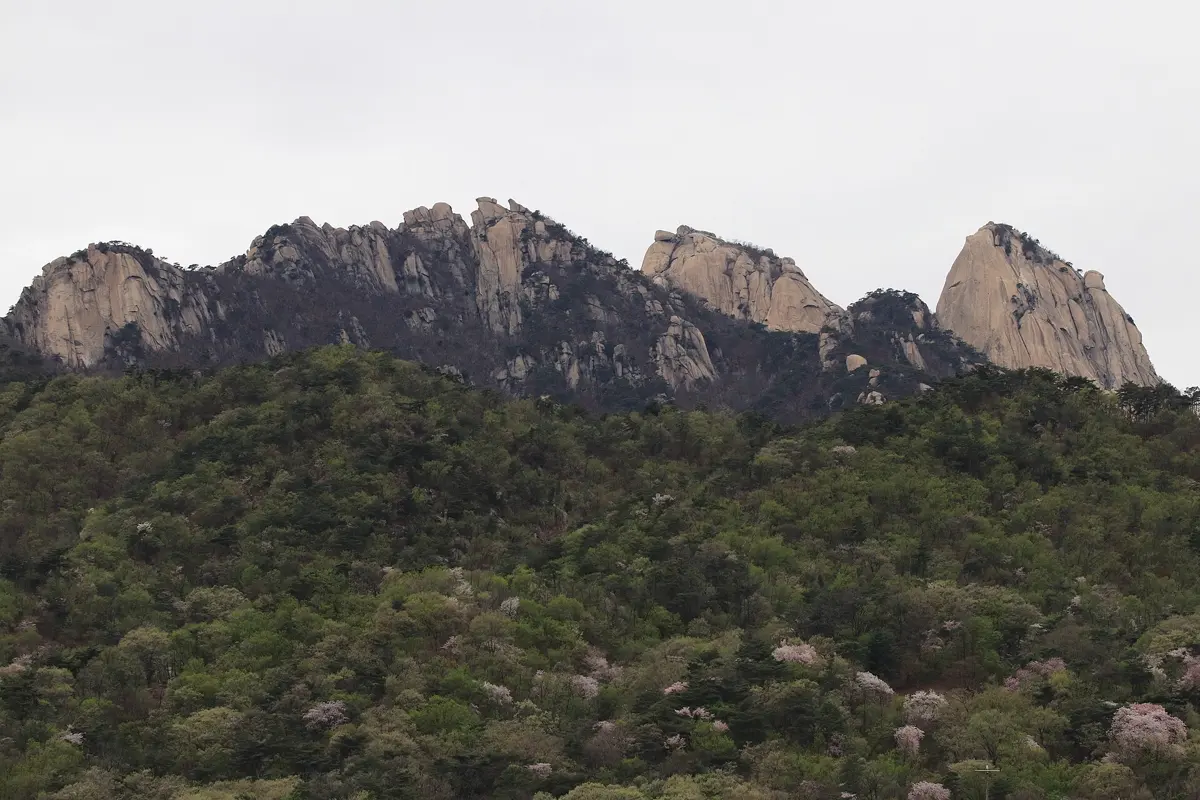
If you like hiking, head to Bukhansan National Park on the northern edge of the city. You reach the granite peaks by metro and bus; the trails are steep and rocky in places but well marked. From the top you look over the whole sea of buildings to the Han River. At weekends the trails are busy, on weekdays quieter. Proper shoes and enough water are a must.
Spend the fifth day in the city, but more slowly. Right next to Changdeokgung lies Jongmyo, the shrine for the ancestors of the royal family, also a UNESCO World Heritage Site and much quieter than the palaces. The National Museum of Korea in Yongsan tells the country's story from the Stone Age to the Joseon era, and in Hongdae you spend the evening in cafés or listening to live music. For the view from the very top, go up the Lotte World Tower in Jamsil, at 555 metres the tallest building in Korea.
Many visitors ask about the Demilitarized Zone (DMZ) north of Seoul. It can only be visited on a guided tour, and the rules on passports, clothing and closing days change from time to time. Check them on the official websites before you book. Guided day trips with pick-up in the centre* are offered, for example, by KKday.
Six days or more: Busan and Gyeongju
If you have a week, leave Seoul for two or three days. The KTX high-speed train runs from Seoul Station to Busan on the south coast in about 2.5 hours. The port city has city beaches such as Haeundae, a big fish market and temples on the coast, and it feels more relaxed than the capital. Halfway there lies Gyeongju, the old capital of the Silla kingdom, with burial mounds in the middle of town, Bulguksa temple and other sites that are part of the UNESCO World Heritage list. Gyeongju and Busan combine well in one loop. You can find KTX and local train connections on 12Go*.
If you are combining Seoul with Japan: the flight between Seoul and Tokyo takes about two and a half hours. Which Asian cities go well together is in our overview of Asia city breaks, and Tokyo has its own article: How many days in Tokyo?.
Where to stay in Seoul
Seoul is big, so stay close to a metro station served by several lines:
- Jongno and Insadong: between the palaces and Bukchon, quiet in the evening. For the first two days of the plan, much is within walking distance.
- Myeongdong: very central, with lots of hotels and good metro links, busy by day and in the evening.
- Hongdae: a student district with cafés, live music and nightlife, right on the rail line from the airport.
The metro is clean, fast and signposted in English. The easiest ticket is a rechargeable T-money card from a convenience store, which works on the metro and buses and which you simply tap at the gate. For routes and walking directions Google Maps hardly works in Korea; Naver Map or KakaoMap are much better. From Incheon airport, the AREX train runs to Seoul Station; if you arrive late with heavy luggage, book a transfer from Incheon to your hotel*, for example with Kiwitaxi.
Best time to visit Seoul
| Month | Day (avg. high) | Night (avg. low) | Rain per month |
|---|---|---|---|
| Jan | 2.0 °C | -7.0 °C | 19 mm |
| Feb | 4.8 °C | -4.7 °C | 27 mm |
| Mar | 11.5 °C | 0.3 °C | 38 mm |
| Apr | 17.7 °C | 6.7 °C | 64 mm |
| May | 22.8 °C | 12.1 °C | 106 mm |
| Jun | 27.0 °C | 17.7 °C | 122 mm |
| Jul | 28.9 °C | 22.1 °C | 313 mm |
| Aug | 29.2 °C | 22.3 °C | 262 mm |
| Sep | 25.3 °C | 17.1 °C | 128 mm |
| Oct | 18.5 °C | 9.1 °C | 74 mm |
| Nov | 11.0 °C | 1.8 °C | 58 mm |
| Dec | 3.2 °C | -5.5 °C | 26 mm |
Averages 2015–2024 from the ERA5 reanalysis (via Open-Meteo), rounded. The values describe a grid cell of about 25 km; in the city centre it can get warmer on summer days.
Seoul is most pleasant in April and May and in October, with 18 to 23 °C by day (late September is still a little warmer at around 25 °C) – good for all the walking and a hike on Bukhansan. In April the cherry trees blossom, and in October the leaves turn around the palaces and in the mountains. Summer is hot and humid: July and August are by far the wettest months at 313 and 262 mm, because the rainy season starts in late June. Keep museums and markets for the rainy days. Winter is dry and clear but cold: in January the average daytime high is 2 °C and the night low -7 °C. If you come in winter, bring a proper winter coat, gloves and a hat.
How YesTrip helps you plan
YesTrip has a ready-made three-day plan for Seoul: palaces and hanok lanes, then markets, Namsan and Myeongdong, and finally Gangnam and the Han River. Each day has times, the stops are in walking order, and the metro tips are included. With one tap you copy the plan into the app and add days for Suwon, Bukhansan or Busan; for those places the AI creates a day plan for you. The app shows the weather for your travel days, the packing list thinks of an umbrella or warm layers and the right plug adapter, and with the offline package you have the map without a connection. YesTrip is free.
 Seoul trip planDay by day, with map and tips
Whether AREX or the limousine bus suits your hotel better is covered in Incheon airport to Seoul.
* Ad – Partner link: if you book there, we earn a commission. Your price stays the same.
Free
Plan your trip in 30 seconds.
Tell YesTrip where and when – the app plans day by day with real places on the map, shows the weather, splits costs with your travel companions and guides you to the next stop on the go.
Frequently asked questions
How many days do you need in Seoul?
You need 3 days for the best-known sights: the palaces and Bukchon, the markets and Namsan, Gangnam and the Han River. Four to five days are ideal, adding Hwaseong Fortress in Suwon and a hike on Bukhansan. From 6 days there is time for Busan or Gyeongju.
Are 3 days enough for Seoul?
For the classics, yes, but it is tight for a long-haul trip. After a flight of about 13 hours and a time difference of 8 to 9 hours from the UK, the first day is often only half a day. A fourth day gives you room for Suwon or bad weather.
Can you visit the DMZ from Seoul?
The Demilitarized Zone north of Seoul can only be visited on a guided tour. The rules on passports, clothing and closing days change, so check them on the official websites before you book.
Is a day trip to Suwon worth it?
Yes, Hwaseong Fortress is a UNESCO World Heritage Site, and you can walk a large part of the ring along the top of its wall. By metro or train it takes about 1 hour from Seoul, and half a day to a full day is enough.
When is the best time to visit Seoul?
April, May and October, with 18 to 23 °C by day; late September is still a little warmer at around 25 °C. July and August are hot and the wettest months, with more than 260 mm of rain each. In January the average night low is -7 °C.
Sources
- Climate data: Open-Meteo Historical Weather API, daily values 2015–2024 – open-meteo.com
- Copernicus ERA5 reanalysis (Hersbach et al. 2020) – cds.climate.copernicus.eu
- UNESCO World Heritage: Changdeokgung Palace Complex – whc.unesco.org
- UNESCO World Heritage: Hwaseong Fortress – whc.unesco.org
- UNESCO World Heritage: Jongmyo Shrine – whc.unesco.org
- UNESCO World Heritage: Gyeongju Historic Areas – whc.unesco.org
- Korea Tourism Organization, official travel portal – english.visitkorea.or.kr
- Entry requirements for South Korea: UK Foreign Travel Advice – www.gov.uk
Researched with AI support and checked by our editors. Prices, opening hours and weather can change – please check before you go. YesTrip is not a travel agency. Published: .
More articles
 How many days?
How many days in Baku? 3 with Gobustan
Two days are enough for Baku's old town, the Boulevard and the Heydar Aliyev Center. The third belongs to Gobustan, 64 km away, with more … · 6 min read How many days?
How many days in Funchal? 3, or 5+ for Madeira
Two days are enough for Funchal: the old town, the market, the cable car and the gardens at Monte. Day three goes to the mountains, with … · 6 min read How many days?
How many days in Kotor? 2 with Perast
Two days are enough for Kotor: the old town and about 1,300 steps to the fortress on the first, Perast and the island of Our Lady of the … · 6 min read


