
How many days in Bologna? Plans for 1–4 days
In short
Two days in Bologna cover Piazza Maggiore, San Petronio, the Archiginnasio, the Two Towers, Santo Stefano, the food lanes of the Quadrilatero and the long portico up to San Luca. Three days are ideal, adding a day trip to Modena. With 4 days, add Parma, Ravenna or Ferrara. The most pleasant months are April to June and September to October.
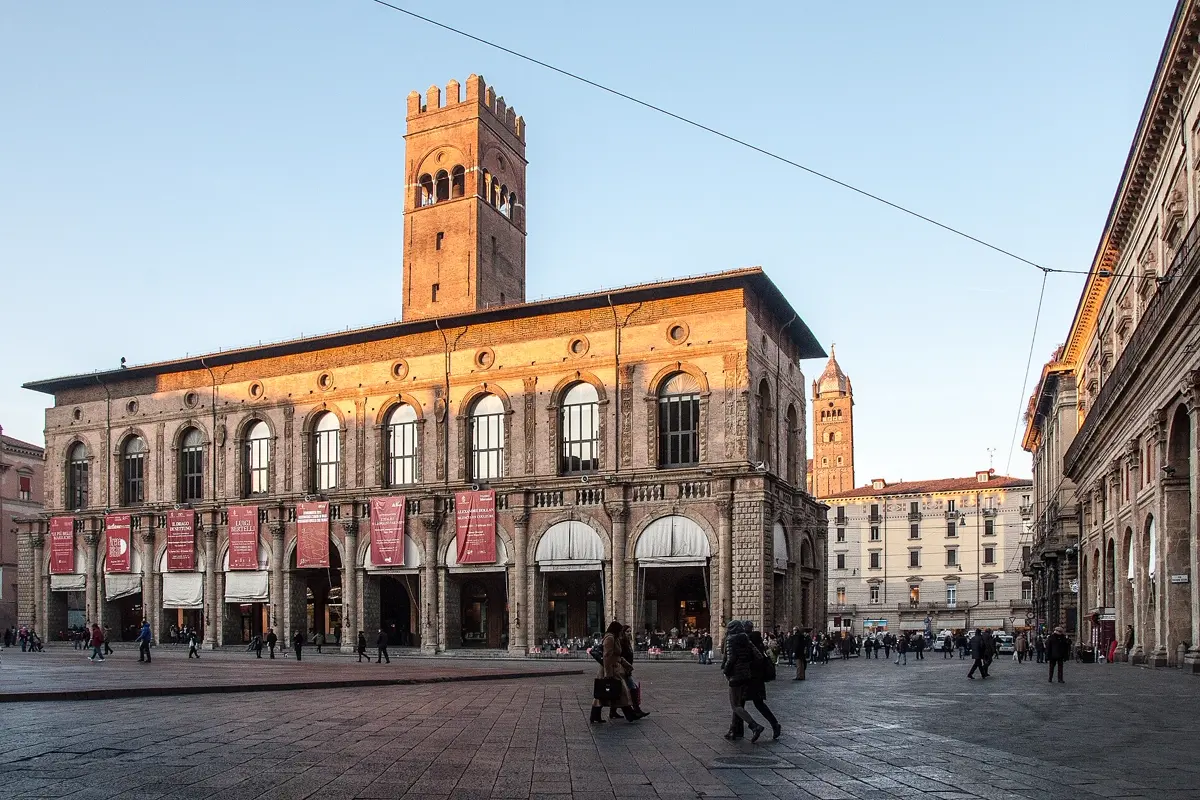
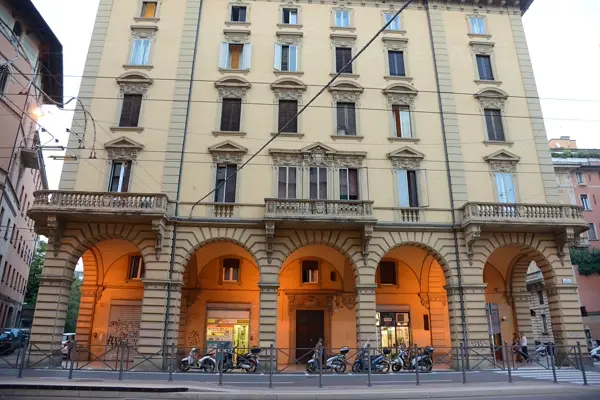
Bologna is a red-brick university city whose old town is lined with porticoes, covered walkways that keep you dry in the rain and shaded in summer; they are a UNESCO World Heritage Site. The centre is compact, and many people come above all to eat: tortellini, tagliatelle al ragù and mortadella were born here. The short answer: 2 days for the essentials, 3 days are ideal with Modena, and from 4 days Parma, Ravenna or Ferrara fit in.
How many days in Bologna? The overview
| Days | What you see | Best for |
|---|---|---|
| 1 day | Piazza Maggiore, the Fountain of Neptune, San Petronio, the Archiginnasio, the Quadrilatero, the Two Towers, Santo Stefano | a stopover or business trip |
| 2 days | plus the portico walk to San Luca, the Mercato delle Erbe, Palazzo Poggi, the Pinacoteca | a weekend, first visit |
| 3 days | plus a day trip to Modena | the ideal length |
| 4 days | plus Parma, Ravenna or Ferrara | return visitors, a long weekend |
| 5+ days | plus Florence, the Apennines or the Adriatic coast | anyone who wants Emilia-Romagna, not only Bologna |
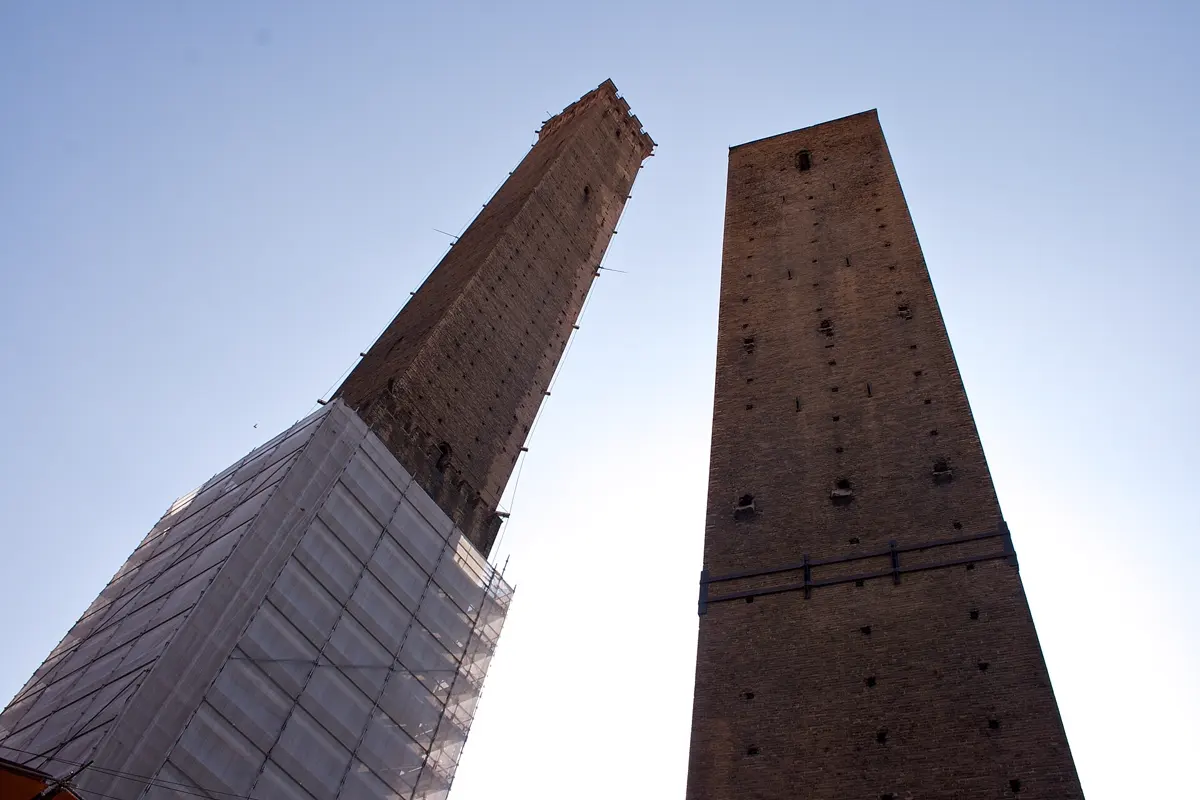
One thing to know before you go: the Asinelli tower, the taller of the Two Towers, has been closed to visitors since late 2023 because of safety works on its leaning neighbour, the Garisenda, and no reopening date has been set. Check Bologna Welcome for news; for a view over the city, the walk up to San Luca is the best alternative.
One day in Bologna: Piazza Maggiore and the Quadrilatero
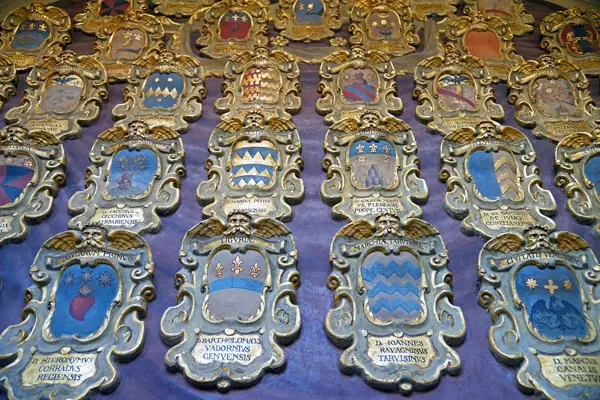
One day is enough for the heart of the old town, almost all of it under the arcades. Start on Piazza Maggiore with Giambologna's Fountain of Neptune, then step into San Petronio, one of the largest churches in Italy, with its unfinished façade and Cassini's long meridian line on the floor. Behind it, the Archiginnasio, the university's former seat, has walls covered in students' coats of arms and a wooden Anatomical Theatre.
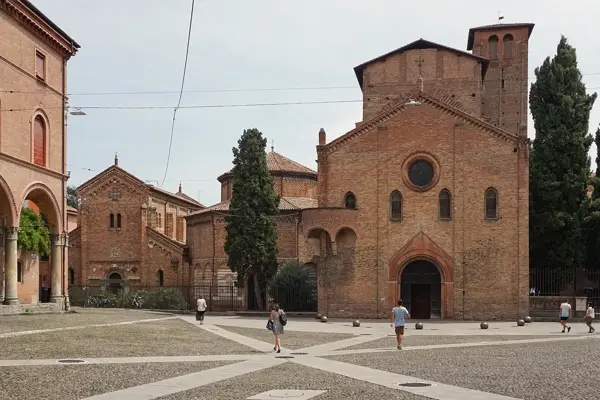
For lunch, lose yourself in the Quadrilatero, medieval lanes of delis and market stalls, with mortadella, tortellini and tagliatelle on every menu. In the afternoon, walk to the Two Towers, the city's landmark, and on to Santo Stefano, a group of interlinked churches known as the Seven Churches, with a quiet triangular square in front.
Two days in Bologna: San Luca and the university quarter
The second day starts with Bologna's great walk: from Porta Saragozza, a portico of almost four kilometres climbs to the Sanctuary of San Luca on the hill above the city, the last stretch steeply uphill. From the top you look out over Bologna and the Apennine hills; buses run back to the centre if your legs have had enough.
Back in town, have lunch at the Mercato delle Erbe, then visit Palazzo Poggi, the university museum with its old anatomy and natural history collections, and the Pinacoteca Nazionale with Raphael's Saint Cecilia. Tickets for food tours and museums in Bologna* are also on Tiqets. With two days you have seen Bologna's churches, arcades, university and kitchen.
Three days in Bologna: the ideal length
Three days leave room for one of Emilia's other cities. Our ready-made plan divides them like this:
- Day 1 – Piazza Maggiore and the Two Towers: the Fountain of Neptune, San Petronio, the Archiginnasio, San Domenico, lunch in the Quadrilatero, the Two Towers, Santo Stefano.
- Day 2 – San Luca and the university quarter: Porta Saragozza, the portico walk to San Luca, the Mercato delle Erbe, Palazzo Poggi, the Pinacoteca.
- Day 3 – Modena: the Enzo Ferrari Museum by the station, the Romanesque cathedral with its tower, the Ghirlandina, and Piazza Grande – together a UNESCO World Heritage Site – the Mercato Albinelli for Parmigiano and balsamic vinegar, and the Ducal Palace.
Trains to Modena are frequent and take well under an hour, so the day needs no planning beyond a timetable check.
Four days or more: Parma, Ravenna and Ferrara
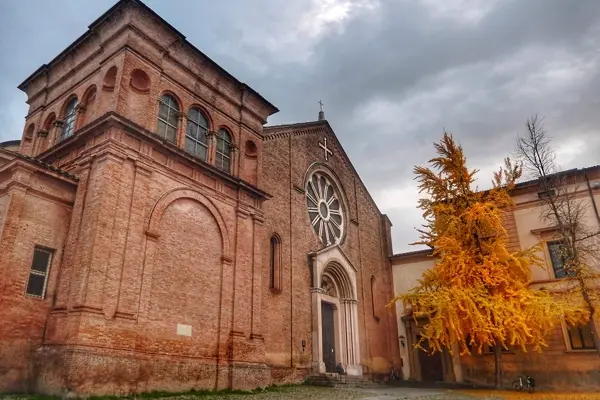
From the fourth day, Bologna is an excellent base for train trips. Parma, to the north-west, has a cathedral with Correggio's dome fresco and is the home of Parma ham and Parmigiano. Ravenna, towards the coast, is known for its early Christian and Byzantine mosaics, among them those of San Vitale, a UNESCO World Heritage Site. Ferrara, the closest of the three, has a moated castle and a Renaissance centre that is easy to explore by bike. Florence is also within reach by high-speed train. Train and bus connections* can be compared on Omio.
Where to stay in Bologna
For a short stay, two areas work best:
- Centro Storico around Piazza Maggiore: in the heart of the old town, with every stop of the first two days on foot. Lively in the evening.
- Near Bologna Centrale: handy for day trips and for arriving, about 15 minutes' walk to Piazza Maggiore.
The Marconi Express people mover links the airport with Bologna Centrale in a few minutes; our guide from Bologna airport to the city centre compares all the options. Visitors from outside the EU, for example from the UK, usually pay less with a travel eSIM for Italy* (Airalo) than with roaming; our eSIM price index compares the prices per gigabyte.
Best time to visit Bologna
| Month | Day (avg. high) | Night (avg. low) | Rain per month |
|---|---|---|---|
| Jan | 8.2 °C | 0.6 °C | 43 mm |
| Feb | 11.2 °C | 2.5 °C | 88 mm |
| Mar | 14.6 °C | 4.7 °C | 58 mm |
| Apr | 18.5 °C | 8.0 °C | 59 mm |
| May | 22.2 °C | 12.6 °C | 132 mm |
| Jun | 28.5 °C | 17.6 °C | 63 mm |
| Jul | 31.9 °C | 20.5 °C | 39 mm |
| Aug | 31.1 °C | 19.9 °C | 49 mm |
| Sep | 25.5 °C | 15.7 °C | 78 mm |
| Oct | 20.0 °C | 11.5 °C | 77 mm |
| Nov | 13.3 °C | 6.1 °C | 92 mm |
| Dec | 9.0 °C | 1.8 °C | 63 mm |
Averages 2015–2024 from the ERA5 reanalysis (via Open-Meteo), rounded.
Bologna is most pleasant from April to June and in September and October, with 18 to 25 °C by day. July and August are hot and humid, with averages above 30 °C, and many locals leave town. Winters are cool and often foggy, with nights close to freezing – but quiet, and the porticoes keep you dry when it rains.
Bologna compared: how many days for other cities?
If you are choosing between cities, this is how many days we recommend in this series for a first visit.
Base map: Natural Earth
More in our articles how many days in Florence and how many days in Venice, and all cities of the series in the overview how many days in each city.
How YesTrip helps you plan
YesTrip has a ready-made three-day plan for Bologna with times, short walks and a map for each day, including the portico walk to San Luca and the day in Modena. With one tap you copy it into the app, then move stops, drop what does not interest you and add your hotel, a food tour or a day in Ravenna. The app shows the weather for your travel days, the packing list suggests a rain jacket when showers are likely, and with the offline package you have the map without a connection. YesTrip is free.
 Bologna trip planDay by day, with map and tips
* Ad – Partner link: if you book there, we earn a commission. Your price stays the same.
Free
Plan your trip in 30 seconds.
Tell YesTrip where and when – the app plans day by day with real places on the map, shows the weather, splits costs with your travel companions and guides you to the next stop on the go.
Frequently asked questions
How many days do you need in Bologna?
Two days are enough for Piazza Maggiore, the Two Towers, Santo Stefano, the Quadrilatero and the walk to San Luca. Three days are ideal and add a day trip to Modena. From four days, Parma, Ravenna or Ferrara are worth it.
Is 2 days enough for Bologna?
Yes, for the city itself. In two days you can see the old town, walk the portico to San Luca and eat your way through the Quadrilatero. Day trips to Modena or Ravenna need a third day or more.
Can you climb the Asinelli tower?
Not at the moment. The tower has been closed since late 2023 because of safety works on the neighbouring Garisenda, and no reopening date has been announced. Bologna Welcome publishes updates.
What should I eat in Bologna?
Tortellini in broth, tagliatelle al ragù – the original of what the world calls spaghetti bolognese – lasagne and mortadella. The Quadrilatero and the Mercato delle Erbe are good places to start.
What is the best time to visit Bologna?
April to June and September to October, with 18 to 25 °C by day. July and August are hot and humid; winter is foggy and cool, but the porticoes keep you dry.
Sources
- Climate data: Open-Meteo Historical Weather API, daily values 2015–2024 – open-meteo.com
- Copernicus ERA5 reanalysis (Hersbach et al. 2020) – cds.climate.copernicus.eu
- Bologna Welcome, official tourism website – www.bolognawelcome.com
- UNESCO World Heritage: The Porticoes of Bologna – whc.unesco.org
- Visit Modena, official tourism website – www.visitmodena.it
- Marconi Express: airport rail link – www.marconiexpress.it
Researched with AI support and checked by our editors. Prices, opening hours and weather can change – please check before you go. YesTrip is not a travel agency. Published: .
More articles
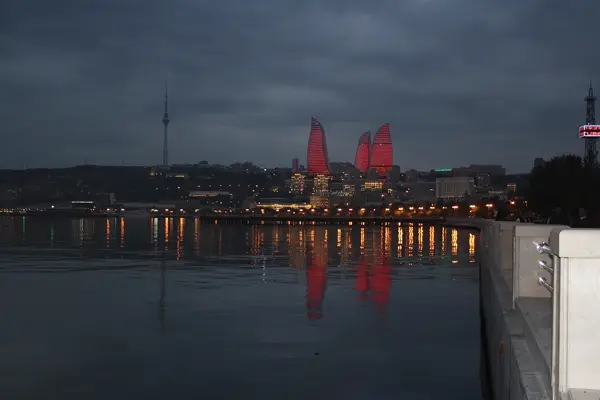 How many days?
How many days in Baku? 3 with Gobustan
Two days are enough for Baku's old town, the Boulevard and the Heydar Aliyev Center. The third belongs to Gobustan, 64 km away, with more … · 6 min read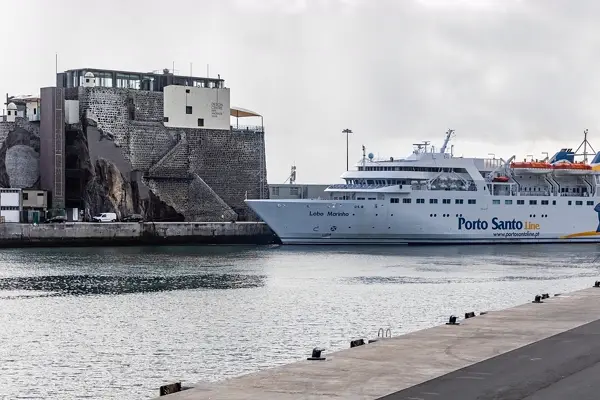 How many days?
How many days in Funchal? 3, or 5+ for Madeira
Two days are enough for Funchal: the old town, the market, the cable car and the gardens at Monte. Day three goes to the mountains, with … · 6 min read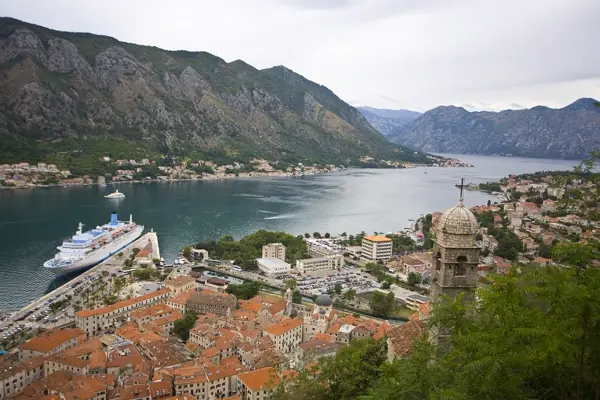 How many days?
How many days in Kotor? 2 with Perast
Two days are enough for Kotor: the old town and about 1,300 steps to the fortress on the first, Perast and the island of Our Lady of the … · 6 min read


