
How many days in Florence? Plans for 1–4 days
In short
Two days in Florence cover the classics – the Duomo, the Uffizi, Ponte Vecchio, Michelangelo's David and Palazzo Pitti with the Boboli Gardens. Three days are ideal, leaving room for a day trip to Siena. With 4 or 5 days, add Pisa, Lucca or Fiesole. The most pleasant months are April, May and October (19 to 23 °C by day).
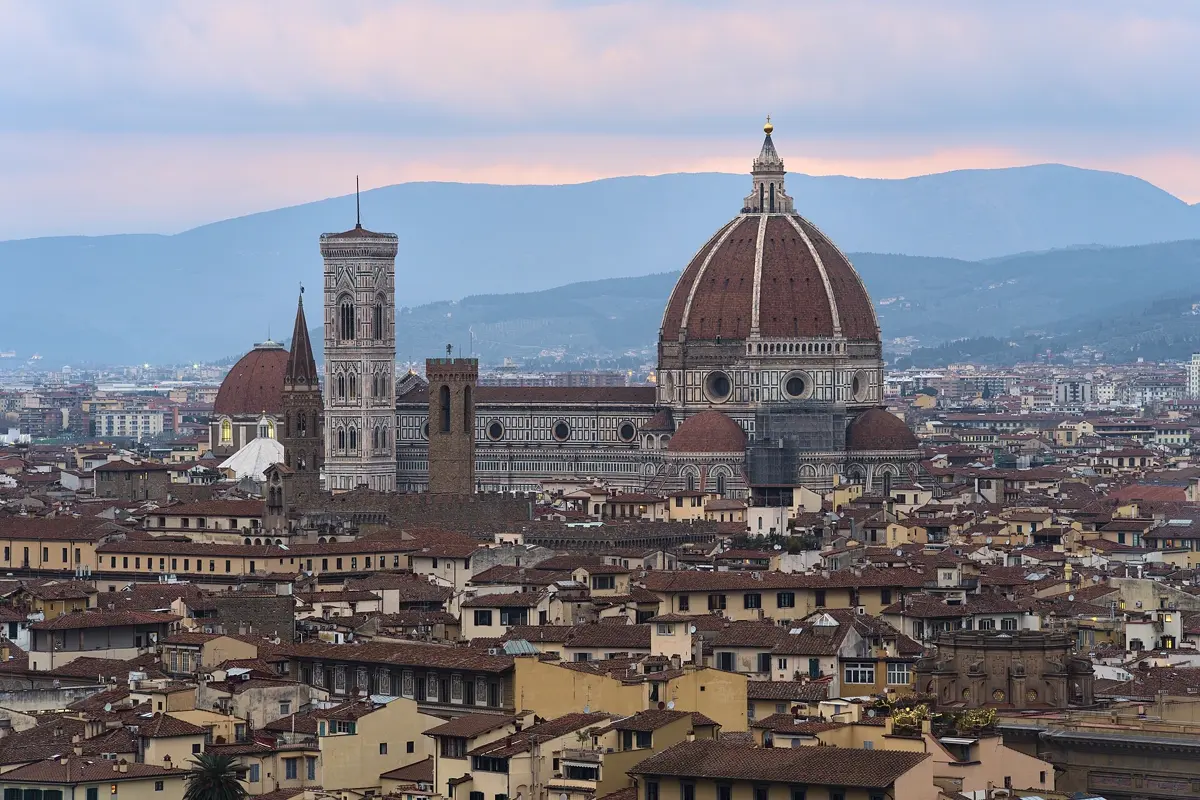
Florence is small, flat and packed with Renaissance art. Almost everything important lies in one historic core you can cross on foot in half an hour: the Duomo with Brunelleschi's dome, the Uffizi, Ponte Vecchio and, across the Arno, Palazzo Pitti. What takes time are the museums, not the walks between them. The short answer: 2 days for the classics, 3 days are ideal with a day in Siena, and from 4 days Pisa, Lucca or Fiesole fit in.
How many days in Florence? The overview
| Days | What you see | Best for |
|---|---|---|
| 1 day | the Duomo and Baptistery from outside, Piazza della Signoria, the Uffizi or the Accademia, Ponte Vecchio, Piazzale Michelangelo | a stopover or cruise call |
| 2 days | the Uffizi and the Accademia with David, the Medici Chapels, Mercato Centrale, Palazzo Pitti, the Boboli Gardens, Santa Croce | a long weekend |
| 3 days | plus a day trip to Siena with Piazza del Campo and the cathedral | the ideal length |
| 4 days | plus Pisa with the Leaning Tower, Lucca, or Fiesole above the city | a relaxed first visit |
| 5+ days | plus a trip into Chianti, San Miniato al Monte, slow hours in Oltrarno | anyone who wants a taste of Tuscany |
A few things matter for planning: book the Uffizi and the Galleria dell'Accademia in advance with a time slot – it saves long queues. Climbing the Duomo's dome also requires a reserved time. Many state museums in Florence, including the Uffizi and the Accademia, close on Mondays – use Monday for a day trip or for churches and squares.
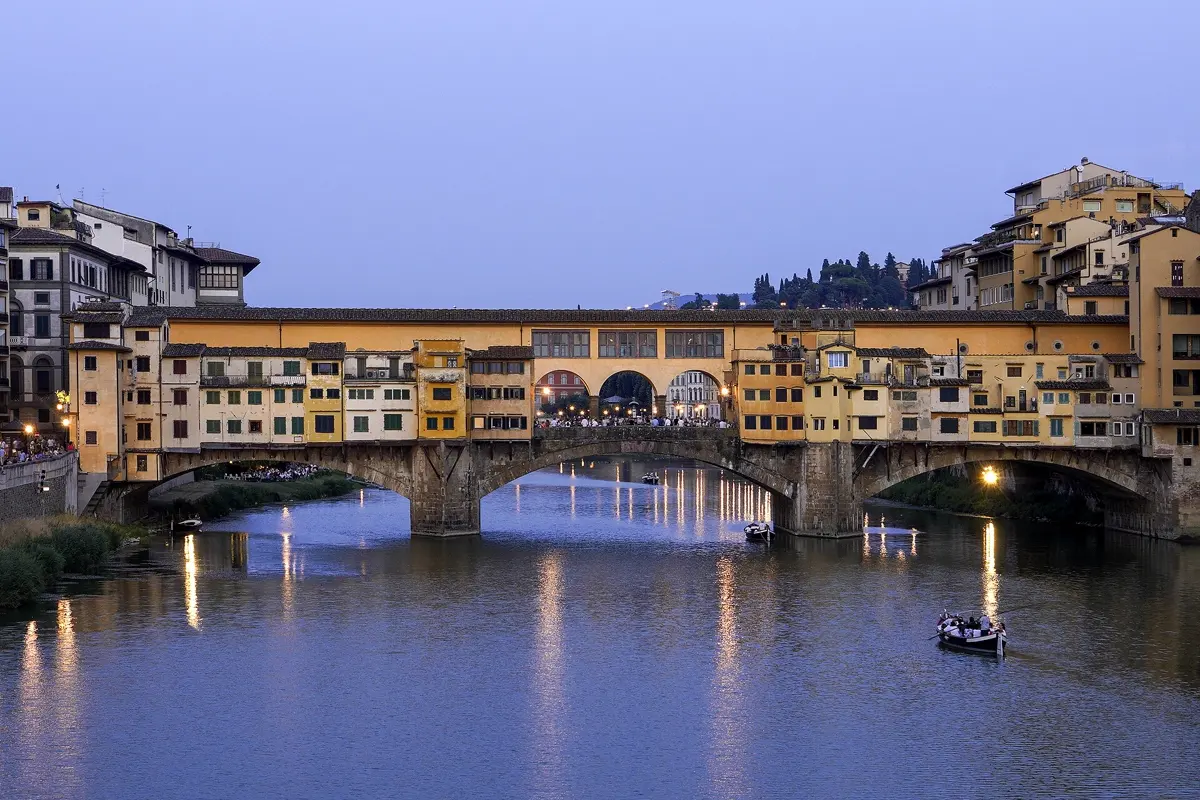
One day in Florence: from the Duomo to Piazzale Michelangelo
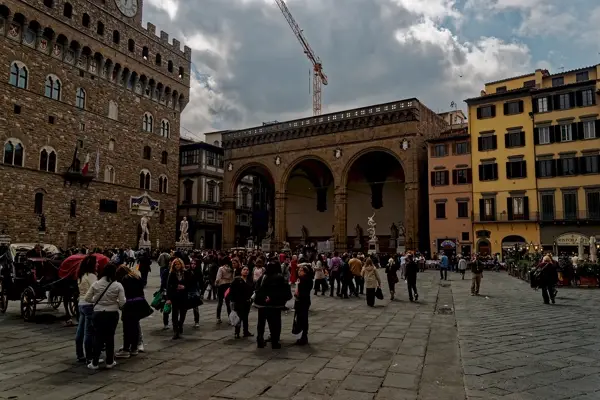
One day is enough for the centre if you choose one big museum. Go early to Santa Maria del Fiore, the cathedral, before the queue builds, then see the octagonal Baptistery with its bronze doors. From there it is a few minutes to Piazza della Signoria with Palazzo Vecchio and the open Loggia dei Lanzi, where statues stand without an entry fee.
Then pick either the Uffizi with Botticelli, Leonardo and Raphael or the Accademia with Michelangelo's David – both in one day gets hectic. In the afternoon cross Ponte Vecchio with its goldsmiths' shops to the other side of the Arno, and at sunset climb the steps to Piazzale Michelangelo, about 20 minutes uphill. The whole city and the dome lie in front of you.
Two days in Florence: the Uffizi and David
With two days you no longer have to choose. The first day belongs to the centre: the Duomo, the Baptistery, Piazza della Signoria, then around three hours in the Uffizi. In the late afternoon Ponte Vecchio and Santa Croce, the church with the tombs of Michelangelo and Galileo. Dinner in the streets around Santa Croce.
The second day starts early at the Galleria dell'Accademia, while the hall with David is still empty. You can find time slots for the Uffizi and the Accademia* at Tiqets, for example. Then the Medici Chapels at San Lorenzo with Michelangelo's sculptures in the New Sacristy, and lunch at Mercato Centrale, the market hall from 1874. In the afternoon cross the Arno into Oltrarno: Palazzo Pitti, the palace of the grand dukes, and the hillside Boboli Gardens. End the day at Piazzale Michelangelo again.
Three days in Florence: the ideal length
Three days are right for a first visit because they leave room for Siena. Our ready-made plan:
- Day 1 – The Duomo, Signoria and the Uffizi: Santa Maria del Fiore, the Baptistery of San Giovanni, Piazza della Signoria, the Uffizi, Ponte Vecchio, Santa Croce in the evening.
- Day 2 – David, the market and Oltrarno: Galleria dell'Accademia, the Medici Chapels, Mercato Centrale, Palazzo Pitti, the Boboli Gardens, sunset at Piazzale Michelangelo.
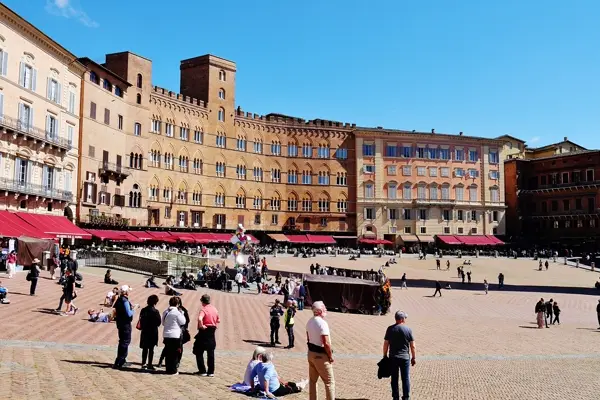
- Day 3 – Day trip to Siena: the brick church of San Domenico with a view of the cathedral, the shell-shaped Piazza del Campo, where the Palio is run twice each summer, the Torre del Mangia town hall tower and Siena Cathedral with its striped marble and the Piccolomini Library.
Siena is about 1 to 1.5 hours away by bus or regional train, depending on the connection. Like Florence, Siena's historic centre is a World Heritage Site and car-free, so you walk everywhere. The number of visitors at the top of the Torre del Mangia is limited, so go early in the day.
Four days or more: Pisa, Lucca and Fiesole
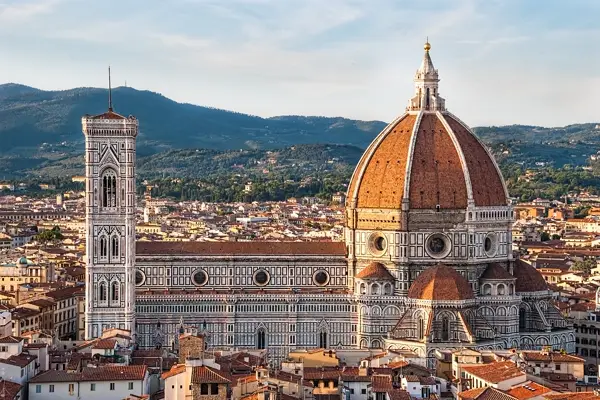
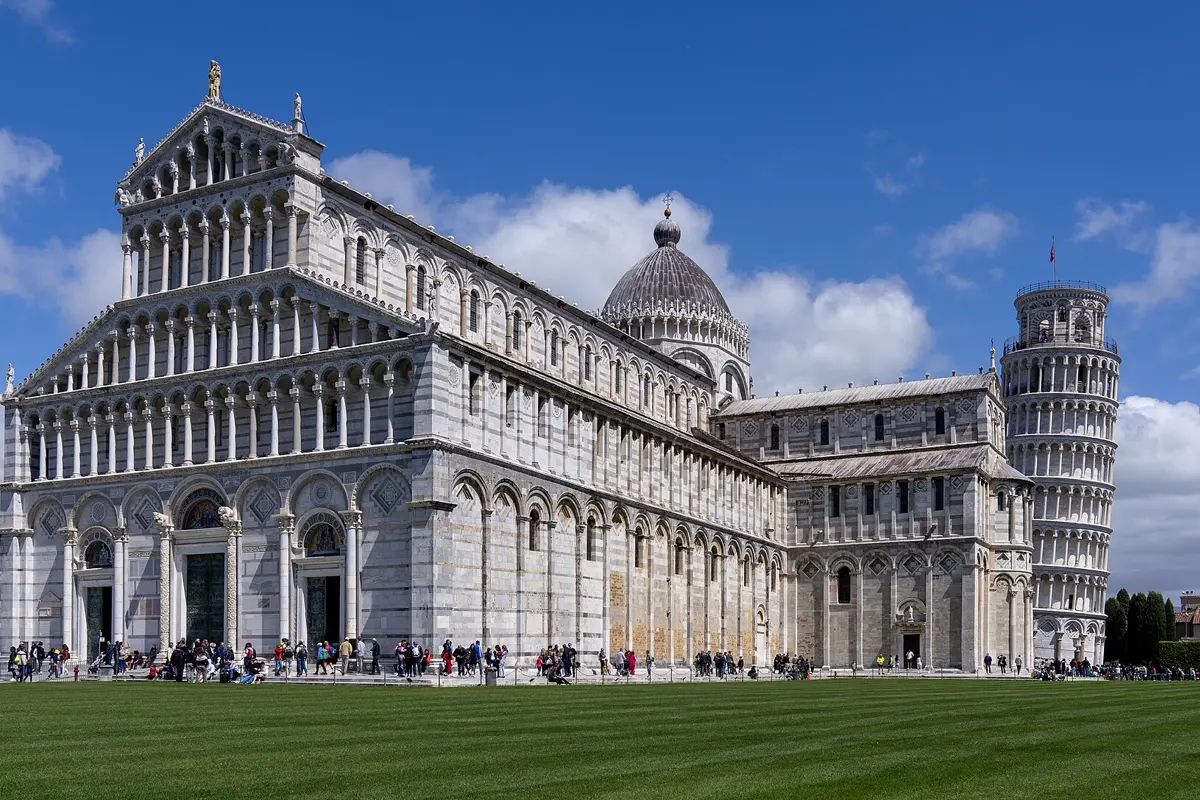
From the fourth day Florence gets calmer, and a second day trip fits in. Pisa is about 1 hour away by regional train. The Leaning Tower stands together with the cathedral and the baptistery on Piazza dei Miracoli, also a World Heritage Site. Two or three hours are enough for the square itself; climbing the tower needs a ticket with a time slot. If you want more, combine Pisa with Lucca, a town whose Renaissance walls carry a path for walkers and cyclists all the way round. You can compare train connections in Tuscany* at Omio, for example.
Closer by is Fiesole on the hill above Florence, reachable by city bus. It has a Roman theatre and a view down over the city – just right for half a day. Between Florence and Siena lies Chianti with wineries and small villages. Without a car, a guided tour is the easiest option, for example one of the guided tours from Florence* on Klook.
With more time in the city itself, visit San Miniato al Monte, the Romanesque church above Piazzale Michelangelo, and spend a slow afternoon in Oltrarno around Piazza Santo Spirito.
Where to stay in Florence
Two areas suit a short stay:
- Around the Duomo: everything within walking distance, ideal for two or three days. More expensive and crowded during the day.
- Oltrarno: the district across the Arno with workshops, trattorias and squares such as Santo Spirito. Quieter and closer to everyday life; you walk to the Duomo across Ponte Vecchio.
You explore the centre entirely on foot; distances are short and flat. You hardly need buses, and only a few cars may enter the old town – a rental car makes no sense for the city itself. A tram runs from the airport to the centre; you can book a transfer from Florence airport to your accommodation* at Welcome Pickups, for example. Arriving by train, you get off at Santa Maria Novella station, a few minutes' walk from the Duomo.
Best time to visit Florence
| Month | Day (avg. high) | Night (avg. low) | Rain per month |
|---|---|---|---|
| Jan | 10.6 °C | 2.0 °C | 74 mm |
| Feb | 12.7 °C | 3.2 °C | 91 mm |
| Mar | 15.3 °C | 4.7 °C | 79 mm |
| Apr | 19.0 °C | 7.2 °C | 74 mm |
| May | 22.5 °C | 11.7 °C | 103 mm |
| Jun | 28.3 °C | 16.1 °C | 55 mm |
| Jul | 32.3 °C | 19.2 °C | 24 mm |
| Aug | 32.1 °C | 19.1 °C | 43 mm |
| Sep | 26.4 °C | 15.2 °C | 111 mm |
| Oct | 21.4 °C | 11.5 °C | 114 mm |
| Nov | 15.4 °C | 7.0 °C | 132 mm |
| Dec | 11.9 °C | 3.4 °C | 104 mm |
Averages 2015–2024 from the ERA5 reanalysis (via Open-Meteo), rounded. The values describe a grid cell of about 25 km; in the Arno valley and the city centre it can get warmer on hot days.
Florence is most pleasant in April, May and October: 19 to 23 °C by day, good for long walks and the climb to Piazzale Michelangelo. In July and August average daytime highs reach 32 °C, the Arno valley traps the heat, and the Uffizi and the Duomo are very crowded. From September on it rains noticeably more – November is the wettest month at 132 mm on average. Winter is cool at 11 to 13 °C by day, but quiet, and the museums are emptier. YesTrip shows you the weather for your actual travel days.
Florence compared: how many days for other cities?
If you are torn between several cities: this is how many days we recommend in this series for a first visit.
Base map: Natural Earth
Florence combines well with Rome and Venice – all three lie on Italy's high-speed rail lines. More in our articles on Rome and Venice.
How YesTrip helps you plan
YesTrip has a ready-made three-day plan for Florence: the Duomo, Signoria and the Uffizi on day one, David, the market and Oltrarno on day two, Siena on day three. Each day covers one part of the city, and the stops have times and are laid out in walking order on a map. With one tap you copy it into the app and adjust it – for example if your Uffizi time slot falls on another day or a Monday is part of your trip. The app shows the weather for your travel days, the packing list suggests matching clothes, and with the offline package you have the map without a connection. YesTrip is free.
 Florence trip planDay by day, with map and tips
If you want the countryside afterwards, our 7-day Tuscany itinerary shows how to add Siena and the Val d'Orcia.
* Ad – Partner link: if you book there, we earn a commission. Your price stays the same.
Free
Plan your trip in 30 seconds.
Tell YesTrip where and when – the app plans day by day with real places on the map, shows the weather, splits costs with your travel companions and guides you to the next stop on the go.
Frequently asked questions
How many days do you need in Florence?
Two days are enough for the Duomo, the Uffizi, Ponte Vecchio, David and Palazzo Pitti. Three days are ideal, leaving room for a day trip to Siena. With four or five days you can add Pisa, Lucca, Fiesole or Chianti.
Is one day enough for Florence?
For a first impression, yes: the Duomo, Piazza della Signoria, Ponte Vecchio and Piazzale Michelangelo are close together. Of the big museums, though, you only manage one in a day – either the Uffizi or the Accademia.
Do I need to book the Uffizi and the Accademia in advance?
Yes, a time slot saves you long queues. Climbing the Duomo's dome also requires a reserved time. Many state museums in Florence, including the Uffizi and the Accademia, close on Mondays.
Siena or Pisa as a day trip?
Siena has the larger old town and fills a whole day. Pisa is about one hour away by regional train, but the Leaning Tower and Piazza dei Miracoli take only two or three hours, so Pisa combines well with Lucca.
When is the best time to visit Florence?
April, May and October, with 19 to 23 °C by day. In July and August average daytime highs reach 32 °C and the city is very crowded. November is the wettest month; winter is cool but quiet.
Sources
- Climate data: Open-Meteo Historical Weather API, daily values 2015–2024 – open-meteo.com
- Copernicus ERA5 reanalysis (Hersbach et al. 2020) – cds.climate.copernicus.eu
- UNESCO World Heritage: Historic Centre of Florence – whc.unesco.org
- UNESCO World Heritage: Historic Centre of Siena – whc.unesco.org
- UNESCO World Heritage: Piazza del Duomo, Pisa – whc.unesco.org
- Uffizi Galleries, official website – www.uffizi.it
Researched with AI support and checked by our editors. Prices, opening hours and weather can change – please check before you go. YesTrip is not a travel agency. Published: .
More articles
 How many days?
How many days in Baku? 3 with Gobustan
Two days are enough for Baku's old town, the Boulevard and the Heydar Aliyev Center. The third belongs to Gobustan, 64 km away, with more … · 6 min read How many days?
How many days in Funchal? 3, or 5+ for Madeira
Two days are enough for Funchal: the old town, the market, the cable car and the gardens at Monte. Day three goes to the mountains, with … · 6 min read How many days?
How many days in Kotor? 2 with Perast
Two days are enough for Kotor: the old town and about 1,300 steps to the fortress on the first, Perast and the island of Our Lady of the … · 6 min read


