
Best day trips from Rome by train
In short
The best day trips from Rome are Ostia Antica (about 30 minutes by train), Tivoli with Villa d'Este and Hadrian's Villa (about 1 hour by train or bus), the hill town of Orvieto (about 1 hour 15 minutes by regional train) and Frascati in the Castelli Romani (about 30 minutes). Naples and Pompeii or Florence are possible by high-speed train, but make for a long day.
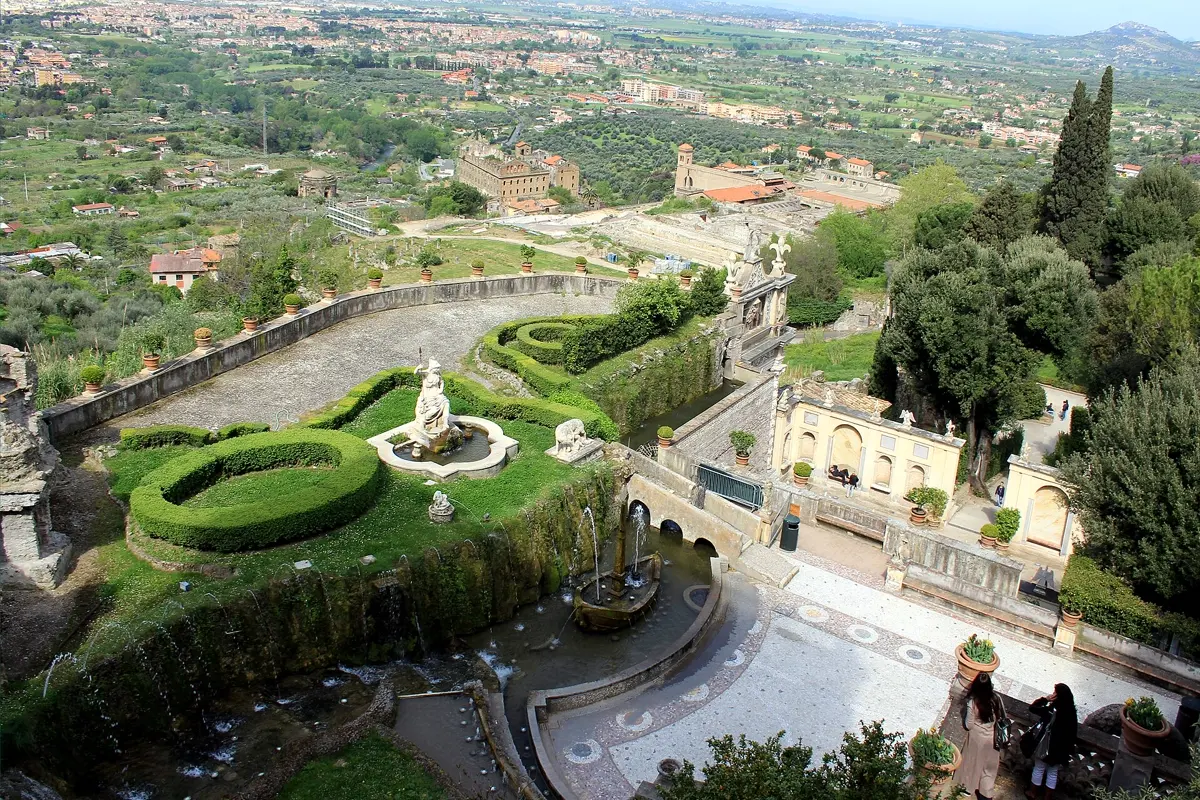
Rome alone can fill a week, but a day outside the city shows a different side of Lazio and Umbria: an ancient port town without the crowds of the Forum, Renaissance gardens full of fountains, a cathedral on a rock and wine towns in the hills. The short answer: Ostia Antica is the easiest trip, Tivoli the most spectacular, Orvieto the most beautiful town and Frascati the most relaxed. All of them work by public transport.
Day trips from Rome at a glance
| Day trip | Travel time one way (approx. min) | Getting there | Time needed |
|---|---|---|---|
| Ostia Antica | 30 | Roma-Lido train | half day |
| Frascati | 30 | regional train from Termini | half day |
| Tivoli | 60 | regional train or Cotral bus | full day |
| Orvieto | 75 | regional train from Termini | full day |
| Naples and Pompeii | 140 | high-speed train, then Circumvesuviana | long full day |
Times are typical direct connections and change with the timetable. For Naples and Pompeii, the time includes the change to the local train in Naples.
Ostia Antica: Rome's ancient port
How to get there: the Roma-Lido suburban railway runs from Porta San Paolo station, next to the Piramide metro stop (line B), to the Ostia Antica stop in about 30 minutes. From there, a footbridge and a short walk lead to the entrance. Check the line's current service before you go: in recent years, parts of the timetable have been changed, and some trains start further out at EUR Magliana.
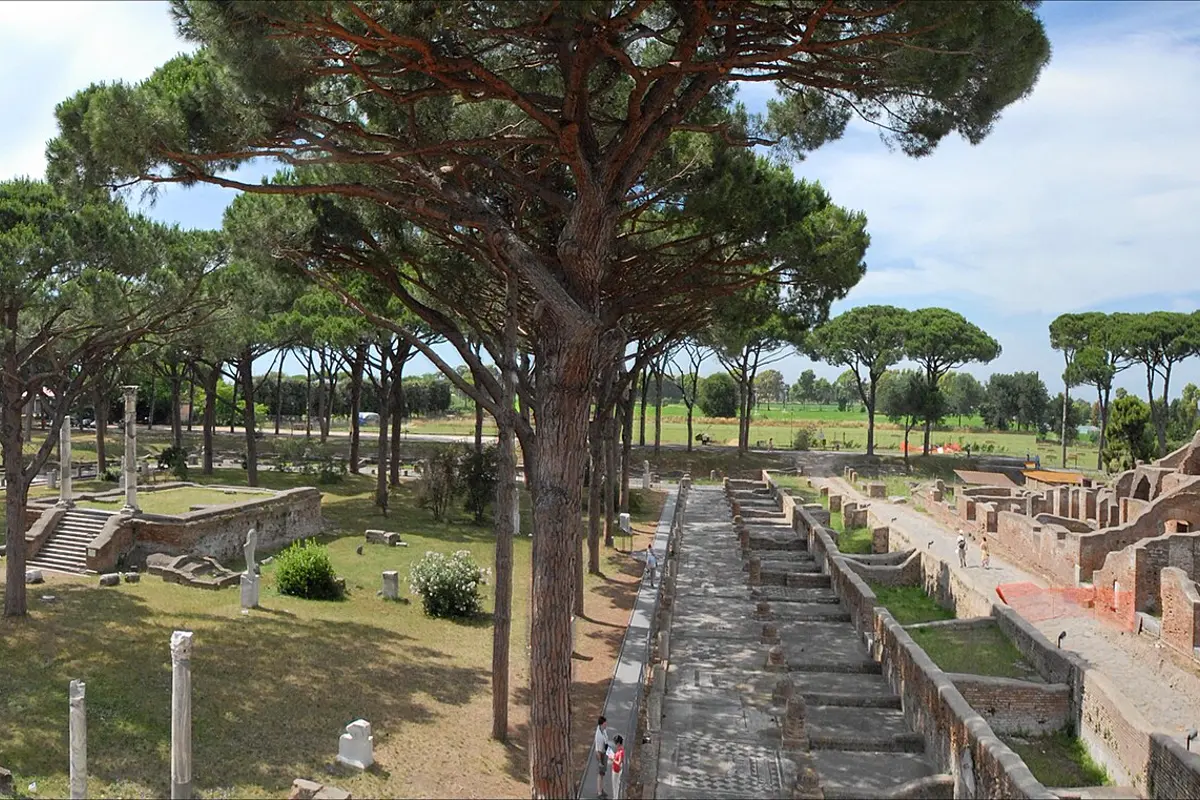
What to see: Ostia was Rome's harbour at the mouth of the Tiber, and its ruins are surprisingly complete: whole streets with houses several storeys high, a theatre that is still used for summer performances, baths with black-and-white floor mosaics, the Piazzale delle Corporazioni with the mosaics of the shipping guilds, and a Roman snack bar, the Thermopolium, with its counter.
How long: half a day. Wear good shoes, bring water and a hat – there is little shade.
Best for: anyone who found the Forum too crowded, families with children who want to climb and explore, photographers.
Tivoli: Villa d'Este and Hadrian's Villa
How to get there: regional trains run from Roma Tiburtina (some from Termini) to Tivoli in about an hour; the station is a walk of about 20 minutes from Villa d'Este. Alternatively, take metro line B to Ponte Mammolo and the Cotral bus to Tivoli, which stops close to the centre. Hadrian's Villa lies in the plain below the town, about 5 km away; local buses connect the two.
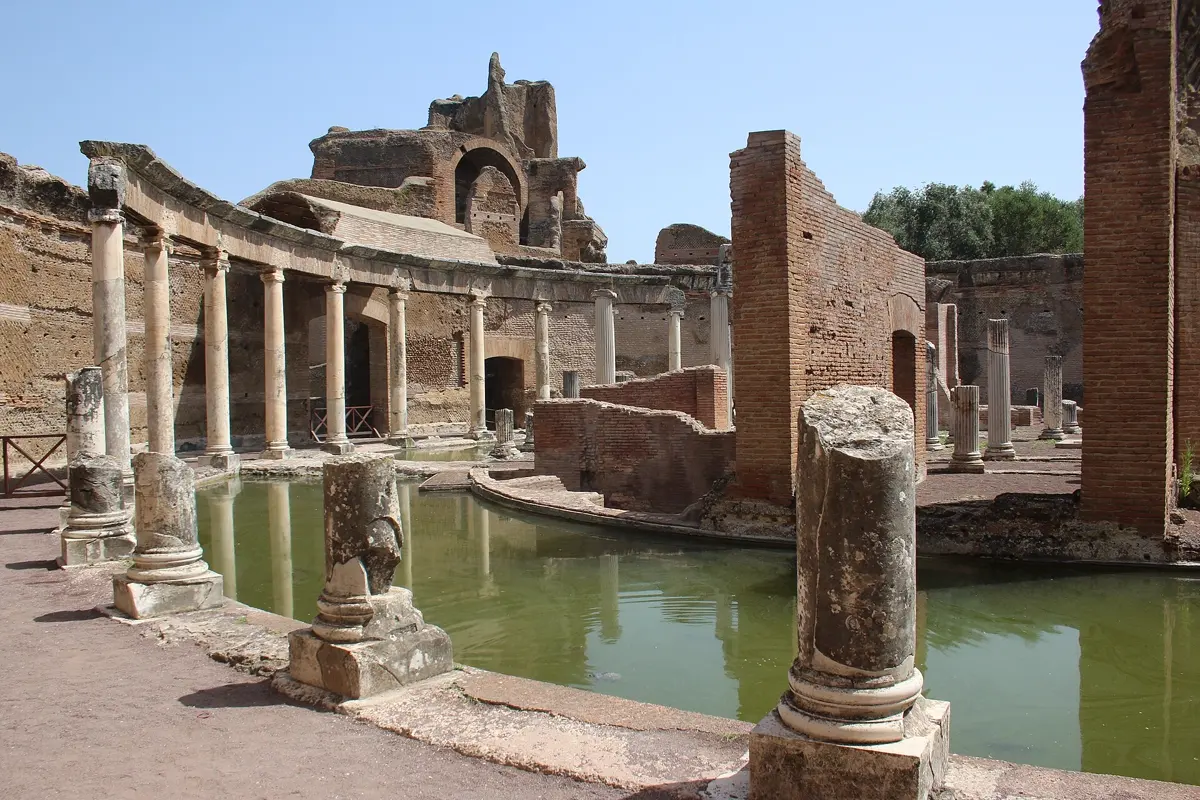
What to see: two UNESCO World Heritage Sites. Villa d'Este is a 16th-century villa whose garden descends the hillside in terraces with hundreds of fountains – the Hundred Fountains, the Fountain of the Organ, which plays music with water pressure, and the Fountain of Neptune. Hadrian's Villa is the vast country residence of Emperor Hadrian, with pools, baths, libraries and the Canopus, a long pool lined with statues.
How long: a full day for both. Villa d'Este alone takes two to three hours; Hadrian's Villa as much again.
Best for: garden lovers, ancient history, anyone who wants a day with more space than in the city. Here a guided tour really helps, because it solves the connection between the two sites, which is the awkward part on public transport. Tours combining both villas* can be compared on Viator; entry tickets for Villa d'Este* are on Tiqets.
Orvieto: a cathedral on a rock
How to get there: regional trains on the line to Florence run from Roma Termini to Orvieto in about 1 hour 15 minutes (some faster, some slower). The station is at the foot of the rock; the funicular across the road takes you up to the town in a few minutes.
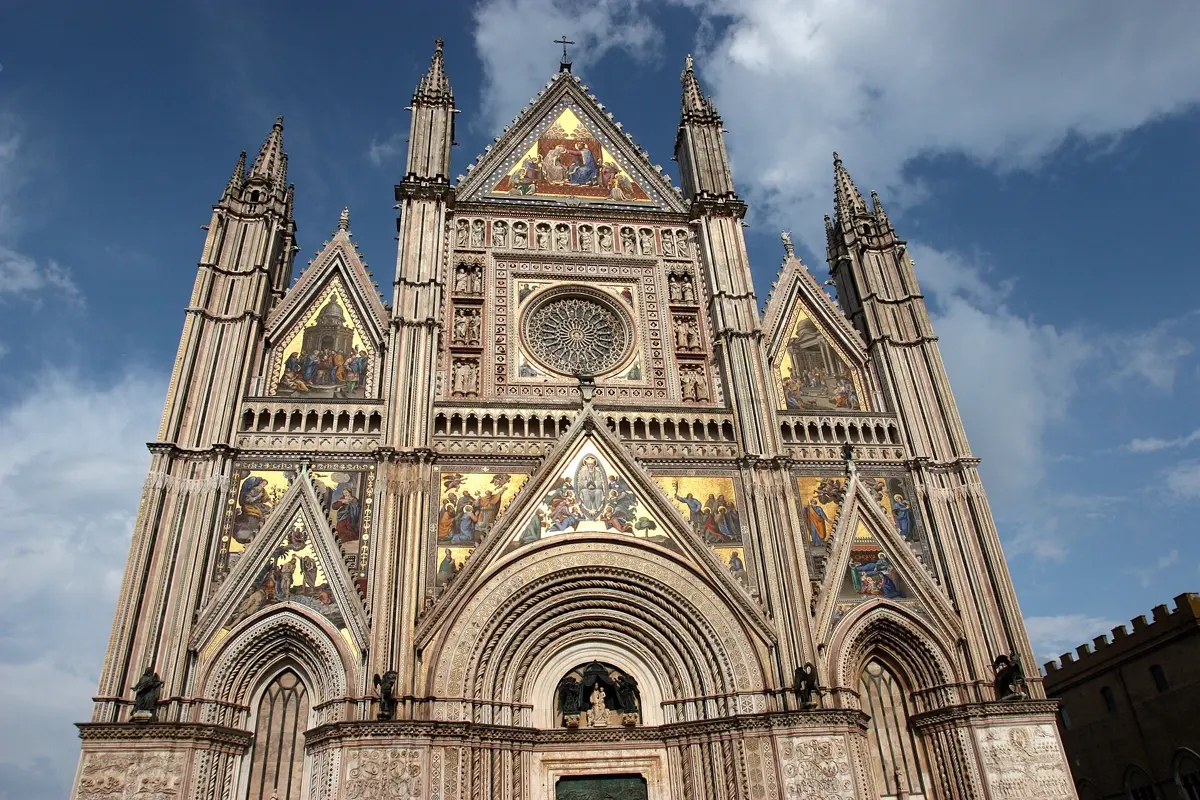
What to see: Orvieto stands on a plateau of volcanic tuff, high above the valley. Its cathedral has one of the most beautiful façades in Italy, with gold mosaics and marble reliefs, and inside, the Chapel of San Brizio with Luca Signorelli's frescoes of the Last Judgement. The Pozzo di San Patrizio is a 16th-century well with two spiral staircases that never meet. Underground, a maze of caves and tunnels has been dug into the tuff; guided tours of Orvieto Underground show part of it.
How long: a full day; the town is small, but the trip and the funicular take time.
Best for: lovers of small Italian towns, art history, food and wine – Orvieto Classico is the local white wine.
Frascati and the Castelli Romani
How to get there: regional trains from Termini to Frascati take about 30 minutes; the station is right below the town.
What to see: Frascati is the best known of the Castelli Romani, the hill towns south-east of Rome where noble families built their summer villas. From the terrace by the station you look back over the plain to Rome. In town, the Villa Aldobrandini with its garden above the centre, the cathedral and the small wine taverns, the fraschette, where you eat porchetta and drink the local white wine. Other towns, such as Castel Gandolfo above Lake Albano, are on separate lines.
How long: half a day; ideal as an afternoon and evening trip.
Best for: food and wine, a calm afternoon after a lot of sightseeing.
Long day trips: Naples, Pompeii and Florence
High-speed trains reach Naples in a little over an hour and Florence in around an hour and a half. Both are possible as a day trip, but each city deserves at least one night. Pompeii from Rome means high-speed train to Naples, then the Circumvesuviana local train – a long but doable day if you start early. If you have the time, it is better to stay in Naples for two or three nights; see our article on day trips from Naples. High-speed train tickets* can be compared on Omio.
Train, bus or guided tour?
For Ostia Antica, Frascati and Orvieto, the train is simple and cheap, and a tour adds little except a guide on site. For Tivoli, a tour is worth considering, because it covers both villas in one day without bus connections. For Pompeii from Rome, a tour saves the planning of two trains and gives you a guide in the excavations – useful, because without explanations it is a large field of stones. If you prefer your own pace, WeGoTrip has audio guides for Rome* and the surroundings.
How many day trips fit into a Rome trip?
With three days, stay in Rome: the Colosseum and the Forum, the Vatican and the old town fill them. From four days, one trip fits – Ostia Antica or Tivoli. With five days or more, two trips. Our article how many days in Rome explains the split, and our 5-day Rome plan already contains Ostia Antica and Tivoli.
A practical tip: many state museums and archaeological sites in Italy close on one weekday, often Monday. Check the official page of each site before you plan the day.
How YesTrip helps you plan
YesTrip has a ready-made plan for Rome, including a five-day version with Ostia Antica and Tivoli and the train connections as notes. With one tap you copy it into the app, swap Tivoli for Orvieto, move a trip to a day when the sites are open and add your hotel. The app shows the weather for your travel days, and with the offline package you have the map of the excavations without a connection. YesTrip is free.
 Rome trip planDay by day, with map and tips
* Ad – Partner link: if you book there, we earn a commission. Your price stays the same.
Free
Plan your trip in 30 seconds.
Tell YesTrip where and when – the app plans day by day with real places on the map, shows the weather, splits costs with your travel companions and guides you to the next stop on the go.
Frequently asked questions
What is the best day trip from Rome?
Tivoli, with Villa d'Este and Hadrian's Villa, two World Heritage Sites. If you want something easier, Ostia Antica is only about 30 minutes away by train and shows a whole Roman town.
How do you get from Rome to Ostia Antica?
Take metro line B to Piramide, walk to Porta San Paolo station and take the Roma-Lido train to the Ostia Antica stop, about 30 minutes. Check the current timetable, as some trains start at EUR Magliana.
Can you visit Villa d'Este and Hadrian's Villa in one day?
Yes. Villa d'Este is in the town of Tivoli, Hadrian's Villa about 5 km below it. Local buses connect them, but a guided tour that covers both is the easiest way.
Is Orvieto worth a day trip from Rome?
Yes. The regional train takes about 1 hour 15 minutes, a funicular takes you up the rock, and the cathedral, the Well of San Patrizio and the underground caves fill a day.
Can you do Pompeii as a day trip from Rome?
Yes, with an early start: the high-speed train to Naples takes a little over an hour, then the Circumvesuviana goes on to Pompeii. It is a long day; staying a night in Naples is more relaxed.
Sources
- Trenitalia: regional and high-speed trains – www.trenitalia.com
- Archaeological Park of Ostia Antica, official website – www.ostiaantica.beniculturali.it
- Villa d'Este, Tivoli: how to get there – www.levillae.com
- UNESCO World Heritage: Villa d'Este, Tivoli – whc.unesco.org
- UNESCO World Heritage: Villa Adriana (Tivoli) – whc.unesco.org
- Cotral: regional buses in Lazio – www.cotralspa.it
Researched with AI support and checked by our editors. Prices, opening hours and weather can change – please check before you go. YesTrip is not a travel agency. Published: .
More articles
 Day trips
 from Athens: Delphi, Hydra, Sounion
From Piraeus, Aegina is 40 minutes by fast ferry and Hydra from 1 hour 30. Cape Sounion is 1 hour 16 of pure driving, Mycenae 1 hour 45 and … · 6 min read Day trips
 from Dublin: Howth to Glendalough
From Dublin, Howth is under 30 minutes by DART and Glendalough about 1 hour 20 on St Kevin's Bus. Powerscourt is 38 minutes and Newgrange 42 … · 6 min read Day trips
 from Krakow: Wieliczka, Zakopane
From Krakow, the Wieliczka Salt Mine is about 25 minutes by train, the Auschwitz-Birkenau Memorial about 65 minutes of pure driving or by … · 6 min read


