
Best day trips from Naples: Pompeii to Capri
In short
The best day trips from Naples are Pompeii (about 40 minutes by Circumvesuviana train), Herculaneum (about 20 minutes), Vesuvius (train to Ercolano, then shuttle bus), Capri (about 50 minutes by hydrofoil), the Amalfi Coast (via Sorrento or by ferry, a long day) and the Royal Palace of Caserta (under an hour by regional train). Pompeii is the one trip not to miss.

Few cities have as many famous places on their doorstep as Naples: two Roman towns buried by Vesuvius, the volcano itself, the island of Capri, the Amalfi Coast and a royal palace to rival Versailles. The short answer: Pompeii is the day trip not to miss, Herculaneum is the smaller, better preserved alternative, Capri is the classic boat trip, and the Amalfi Coast is wonderful but better with a night there than as a rushed day.
Day trips from Naples at a glance
| Day trip | Travel time one way (approx. min) | Getting there | Time needed |
|---|---|---|---|
| Herculaneum | 20 | Circumvesuviana train | half day |
| Pompeii | 40 | Circumvesuviana train | full day |
| Caserta | 45 | regional train | half day |
| Capri | 50 | hydrofoil from Molo Beverello | full day |
| Vesuvius | 60 | train to Ercolano, then shuttle bus | half day |
| Amalfi Coast | 150 | train to Sorrento, then bus or ferry | long full day |
Times are typical connections; the Amalfi Coast depends heavily on traffic and the season. Check timetables and ferry times on the day.
Pompeii: the city under the ash
How to get there: the Circumvesuviana local trains of EAV run from Napoli Porta Nolana and Napoli Garibaldi (below the central station) on the line towards Sorrento. Get off at Pompei Scavi – Villa dei Misteri, right next to the main entrance; the ride takes about 40 minutes.
What to see: the Forum, the House of the Vettii with its frescoes, the House of the Faun, the Lupanar, the bakeries with their millstones, the Amphitheatre, one of the oldest in the Roman world, and on the edge of the site the Villa of the Mysteries with its cycle of red frescoes. Casts of the victims of the eruption of AD 79 are displayed in several places.
How long: a full day. The site is huge; even five hours only cover the main streets. Bring water, sun protection and good shoes – the paving stones are uneven and there is little shade.
Best for: everyone. This is where a guided tour truly helps: without explanations, many houses look alike, and a good guide shows you in two or three hours what you would otherwise search for all day. Guided tours of Pompeii* can be compared on Viator and Pompeii entry tickets* on Tiqets; buy the entry ticket in advance in spring and summer.
Herculaneum: smaller and better preserved
How to get there: the same Circumvesuviana line, stop Ercolano Scavi, about 20 minutes from Naples; from there it is a ten-minute walk downhill to the site. Not every train stops there, so check the timetable.
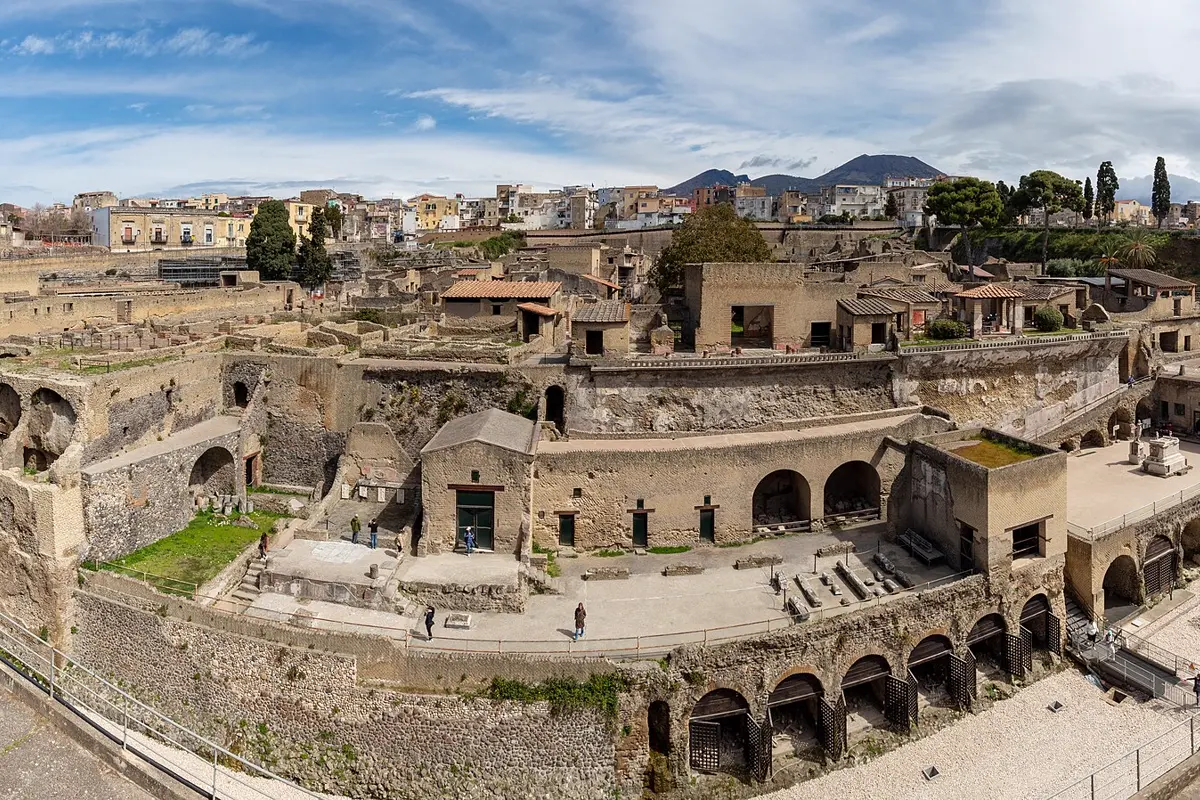
What to see: Herculaneum was buried by the same eruption, but under a deep layer of volcanic mud that also preserved wooden beams, doors and furniture. Houses still have upper floors, mosaics and painted walls; the old boat houses on the former beach held the skeletons of hundreds of people who had fled there.
How long: half a day, three hours on site. Combined with Vesuvius, it makes a full day.
Best for: travellers who find Pompeii too big, families, anyone who wants details rather than distances.
Vesuvius: up to the crater
How to get there: take the Circumvesuviana to Ercolano Scavi; from outside the station, shuttle buses run up to the car park below the crater. From there a gravel path climbs to the crater rim; it is not technically difficult, but steep in places. Entry to the crater path is limited, and tickets are sold online with a time slot on the national park's official website.
What to see: the crater of the most famous volcano in Europe, steam rising from its walls on cool days, and on clear days a view over the whole Gulf of Naples, from Capri to the Sorrento Peninsula.
How long: half a day; most of it is the transfer.
Best for: active travellers and anyone who wants to stand on the volcano after seeing what it did. In bad weather or strong wind, the path is closed – check the official site that morning.
Capri: the island in the Gulf
How to get there: hydrofoils of several companies leave from Molo Beverello, at the port below the Castel Nuovo, and take about 50 minutes to Marina Grande on Capri. Slower ferries leave from the neighbouring Calata di Massa terminal and take longer.
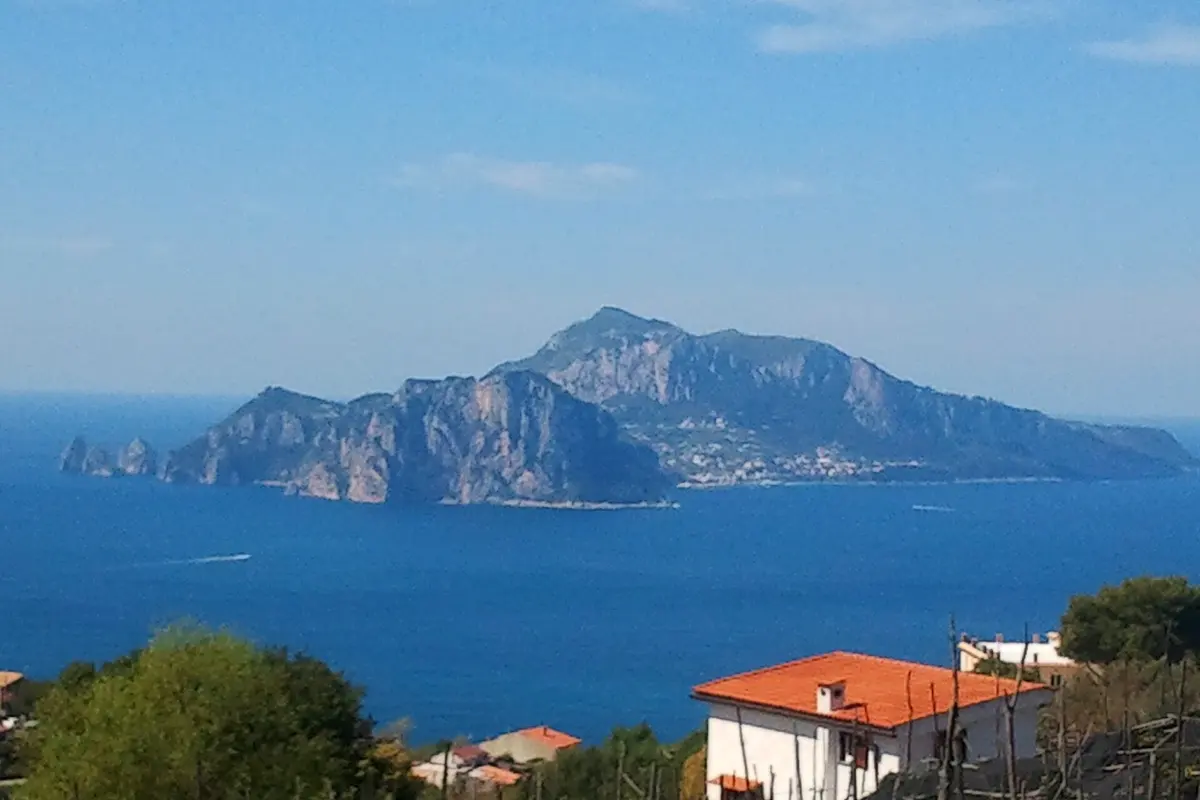
What to see: the Piazzetta in Capri town, reached by funicular from the harbour; the Gardens of Augustus with the view over the Faraglioni rocks; Anacapri with the Villa San Michele and the chairlift up Monte Solaro; and, when the sea is calm, the Blue Grotto by rowing boat.
How long: a full day. Take an early boat – the island is busiest at midday in summer.
Best for: sea views, a boat trip, a day of strolling. A boat tour around the island is the easiest way to see the grottoes and the Faraglioni from the water.
The Amalfi Coast: Positano and Amalfi
How to get there: the Circumvesuviana takes about 70 minutes to Sorrento; from there, SITA buses wind along the coast road to Positano and Amalfi. In summer, ferries also run from Naples and from Sorrento to Positano and Amalfi, which is often more pleasant than the bus on the narrow road. Either way, plan a long day.
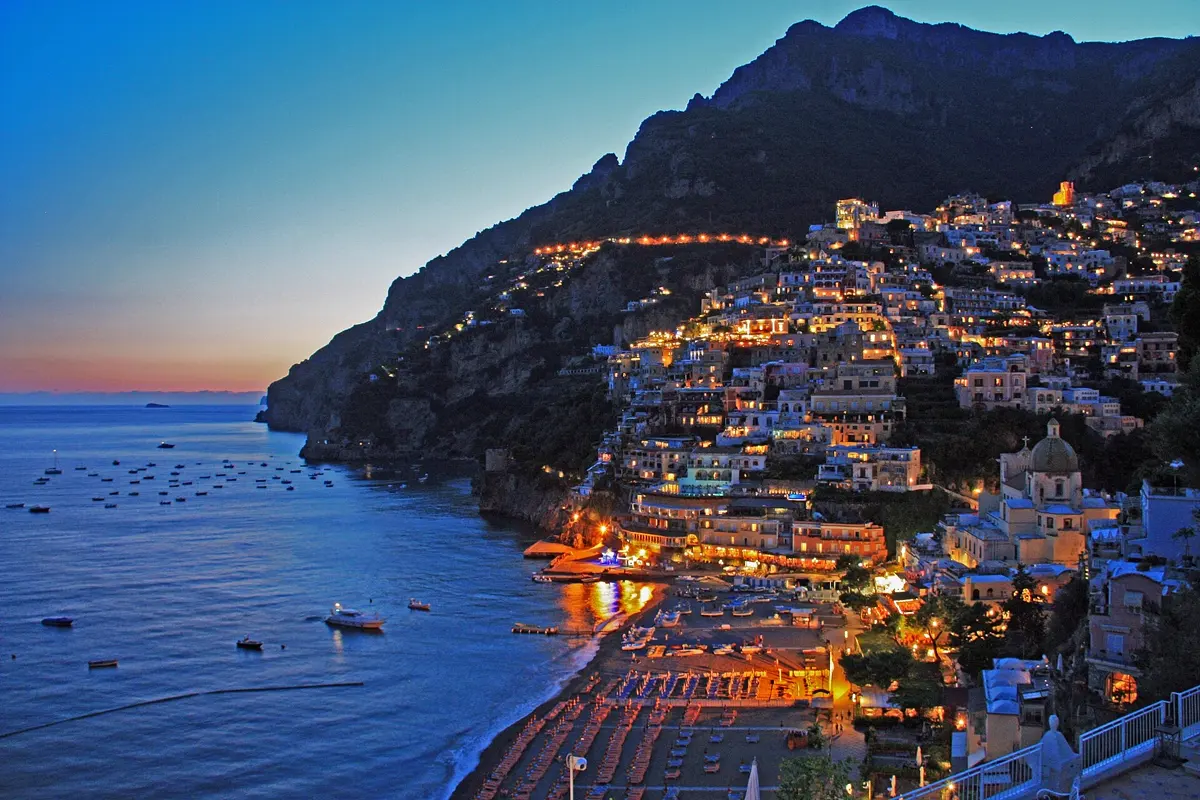
What to see: Positano with its houses stacked up the cliff, Amalfi with its cathedral and its staircase, and up in the hills Ravello with the gardens of Villa Rufolo and Villa Cimbrone. The coast is a UNESCO World Heritage Site.
How long: a full day is the minimum, and it means a lot of time on buses or boats. With the time, stay one or two nights on the coast or in Sorrento.
Best for: views, photographers, couples. If you only have one day, a guided tour by minibus or boat saves the bus queues; tours from Naples and Sorrento can be compared on Viator.
Caserta: the royal palace
How to get there: regional trains run from Napoli Centrale to Caserta in under an hour; the palace is directly opposite the station.
What to see: the Reggia di Caserta, the palace of the Bourbon kings of Naples, one of the largest royal residences in the world, with lavish state rooms and a park that runs for about three kilometres to a waterfall. It is a UNESCO World Heritage Site together with the aqueduct of Vanvitelli and the silk village of San Leucio.
How long: half a day, more if you walk the whole park.
Best for: palaces and gardens, a rainy-day alternative with its indoor rooms.
Train, ferry or guided tour?
For Pompeii, Herculaneum and Caserta, the train is fast and cheap. The Circumvesuviana is a commuter railway: trains can be full, so keep your bag close. For Capri, the hydrofoil is simple; tickets are sold at the port or online. For the Amalfi Coast and for Pompeii with Vesuvius in one day, a guided tour is the more comfortable choice, because it removes the transfers. Trains and ferries* can also be compared on Omio.
How many day trips fit into a Naples trip?
With three days, two days in Naples and one in Pompeii are ideal. With four or five days, add Herculaneum and Vesuvius, or Capri. The Amalfi Coast is better as an extra night. Our article how many days in Naples explains the split.
How YesTrip helps you plan
YesTrip has a ready-made three-day plan for Naples that already includes a day at Pompeii, with the train connection as a note. With one tap you copy it into the app, add Capri or Herculaneum as an extra day and move the trips around the weather. The app shows the forecast for your travel days – important for the boat to Capri and the crater path on Vesuvius – and with the offline package you have the map of the excavations without a connection. YesTrip is free.
 Naples trip planDay by day, with map and tips
The coast deserves more than a day, and our 5-day Amalfi Coast itinerary works with no car at all.
* Ad – Partner link: if you book there, we earn a commission. Your price stays the same.
Free
Plan your trip in 30 seconds.
Tell YesTrip where and when – the app plans day by day with real places on the map, shows the weather, splits costs with your travel companions and guides you to the next stop on the go.
Frequently asked questions
What is the best day trip from Naples?
Pompeii. The Circumvesuviana train takes about 40 minutes to Pompei Scavi, right next to the entrance, and the excavated Roman city fills a whole day.
Pompeii or Herculaneum – which is better?
Pompeii is larger and has more famous buildings, from the Forum to the Villa of the Mysteries. Herculaneum is smaller, quieter and better preserved, with upper floors and wooden beams. With one day only, choose Pompeii; with half a day, Herculaneum.
Can you do Pompeii and Vesuvius in one day?
Yes, but it is a long day. Visit Pompeii in the morning, then take a shuttle to the crater in the afternoon, or book a tour that combines both. Crater tickets are sold online with a time slot.
How long is the ferry from Naples to Capri?
The hydrofoil from Molo Beverello takes about 50 minutes. Slower ferries leave from Calata di Massa and take longer.
Can you do the Amalfi Coast as a day trip from Naples?
Yes, by train to Sorrento and then bus, or by ferry in summer. It is a long day with a lot of travel time; one or two nights on the coast are more relaxed.
Sources
- EAV: Circumvesuviana timetables – www.eavsrl.it
- Archaeological Park of Pompeii, official website – pompeiisites.org
- Archaeological Park of Herculaneum, official website – ercolano.cultura.gov.it
- Vesuvius National Park, official website – www.parconazionaledelvesuvio.it
- Capri tourism: getting from Naples to Capri – www.capri.com
- UNESCO World Heritage: Costiera Amalfitana – whc.unesco.org
- UNESCO World Heritage: Royal Palace at Caserta – whc.unesco.org
Researched with AI support and checked by our editors. Prices, opening hours and weather can change – please check before you go. YesTrip is not a travel agency. Published: .
More articles
 Day trips
 from Athens: Delphi, Hydra, Sounion
From Piraeus, Aegina is 40 minutes by fast ferry and Hydra from 1 hour 30. Cape Sounion is 1 hour 16 of pure driving, Mycenae 1 hour 45 and … · 6 min read Day trips
 from Dublin: Howth to Glendalough
From Dublin, Howth is under 30 minutes by DART and Glendalough about 1 hour 20 on St Kevin's Bus. Powerscourt is 38 minutes and Newgrange 42 … · 6 min read Day trips
 from Krakow: Wieliczka, Zakopane
From Krakow, the Wieliczka Salt Mine is about 25 minutes by train, the Auschwitz-Birkenau Memorial about 65 minutes of pure driving or by … · 6 min read


