
Best time to visit Paris, month by month
In short
The best time to visit Paris is May, June and September, with average daytime highs of 19 to 23 °C and long, light evenings. July and August are the warmest months at 25.5 °C; in winter, days reach only 7 to 10 °C. Rain is spread evenly over the year, 45 to 76 mm a month, so there is no dry season – but also no month to avoid.
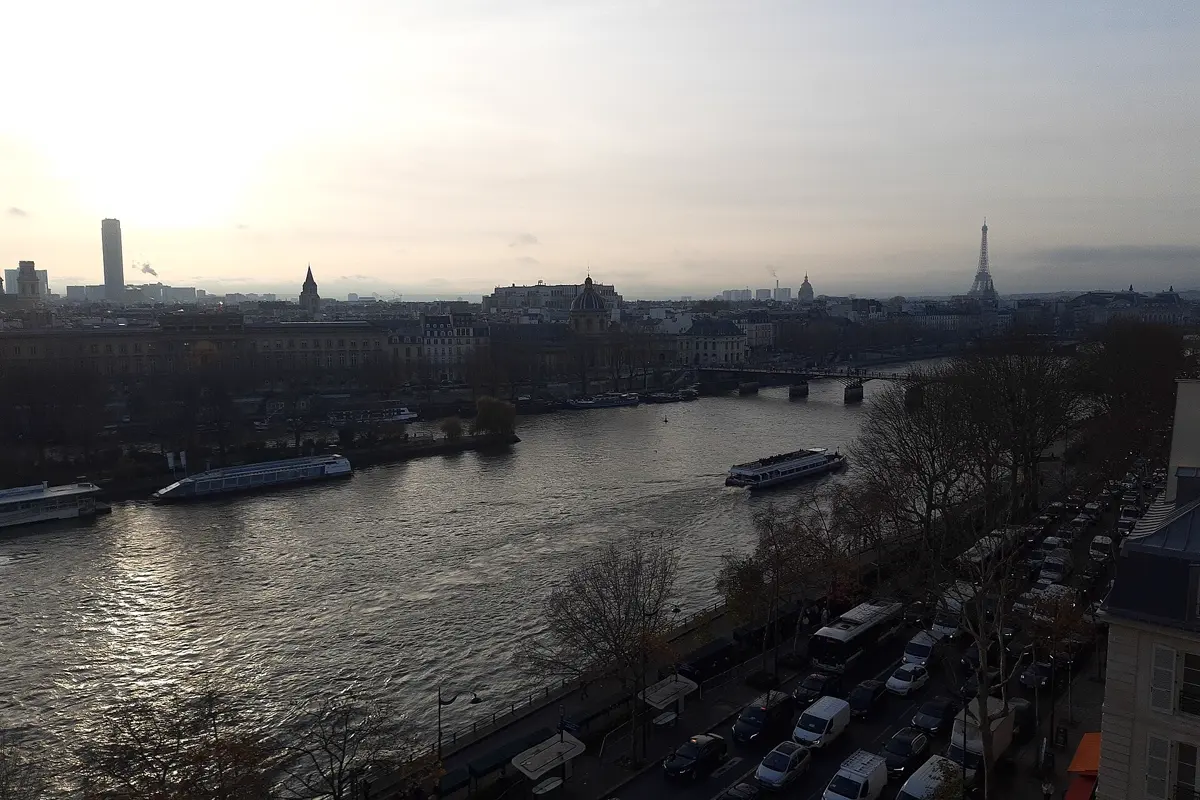
Paris is a year-round city – the museums, cafés and covered passages work in any weather. But the city you picture, with long evenings on the banks of the Seine, picnics in the Luxembourg Gardens and walks through Montmartre, belongs to the warm half of the year. We analysed the weather of 2015 to 2024 for the centre of Paris: how warm does it get by day, how cold at night, and how much rain falls each month?
The short answer
For a first visit, May, June and September are best. Daytime highs are between 19 and 23 °C, the evenings are long and mild, and the parks are at their greenest. July and August are the warmest months, 25.5 °C on average, with hot spells now and then; in August many Parisians are on holiday. Late autumn and winter are grey and cool, 7 to 11 °C by day, but good for museums – and in December the city is lit up for Christmas.
The climate in Paris: all 12 months
| Month | Day (avg. high) | Night (avg. low) | Rain per month |
|---|---|---|---|
| January | 7.3 °C | 1.6 °C | 64 mm |
| February | 9.6 °C | 2.2 °C | 54 mm |
| March | 12.4 °C | 3.8 °C | 72 mm |
| April | 15.7 °C | 5.4 °C | 51 mm |
| May | 19.1 °C | 9.3 °C | 76 mm |
| June | 23.4 °C | 13.3 °C | 69 mm |
| July | 25.5 °C | 15.2 °C | 45 mm |
| August | 25.5 °C | 15.1 °C | 66 mm |
| September | 21.8 °C | 12.2 °C | 60 mm |
| October | 17.1 °C | 9.2 °C | 72 mm |
| November | 11.3 °C | 5.2 °C | 63 mm |
| December | 8.8 °C | 3.4 °C | 76 mm |
Temperature and rain: average of 2015–2024 from the ERA5 reanalysis (via Open-Meteo) for central Paris, rounded. The values describe a grid cell of about 25 km; in the dense city centre, summer nights are often a little warmer.
Two things stand out. Rain is spread remarkably evenly – between 45 mm in July and 76 mm in May and December, there is no wet or dry season. And Paris is mild: summers rarely get extremely hot on average, winters rarely freeze. That makes the weather less of a reason to choose a month than light, crowds and events.
Spring (March to May): Paris in bloom
March is still cool, 12 °C by day. From April the chestnut trees come into leaf and the cafés move their tables outside, although nights are still chilly at 5 °C. May brings 19 °C and long evenings, with the gardens of the Tuileries, the Jardin du Luxembourg and the Jardin des Plantes in full bloom. May is also the wettest month alongside December, mostly as passing showers. Around Easter and on the long weekends in May, the city is busy; book time slots for the Louvre and the Eiffel Tower in advance.
Summer (June to August): long evenings by the Seine
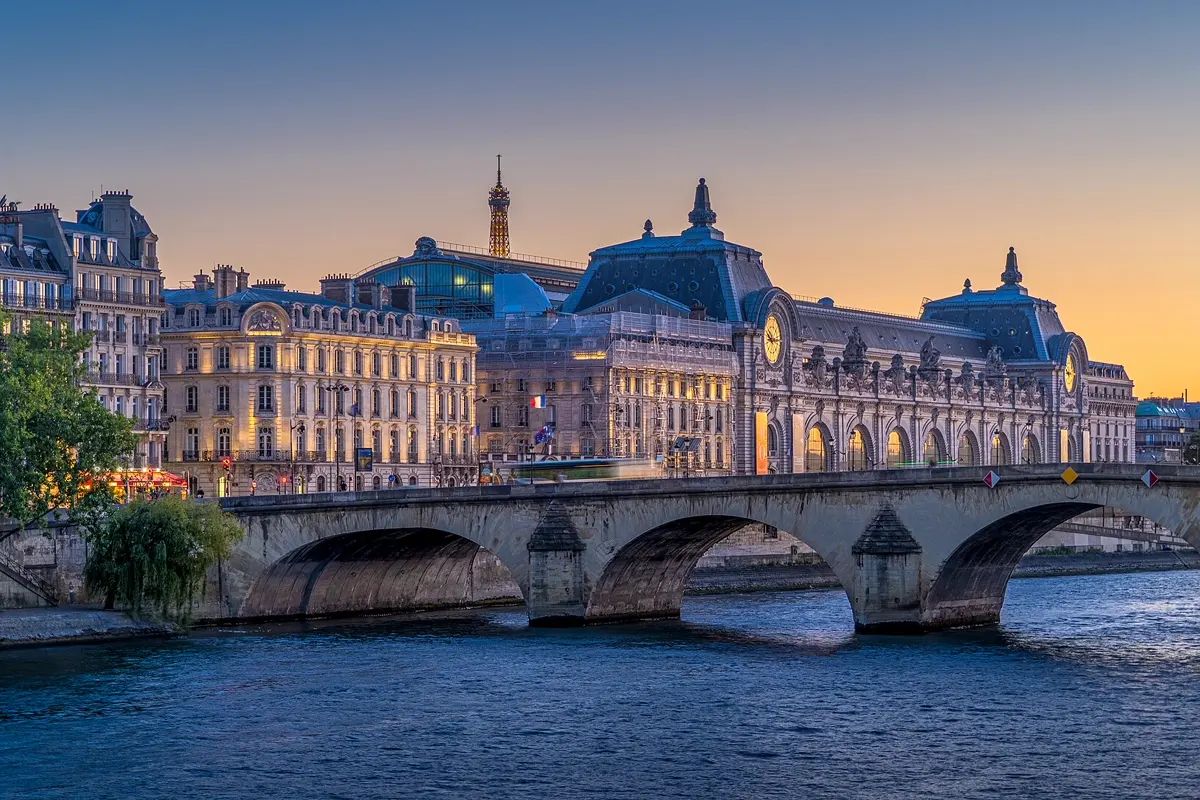
June is perhaps the most beautiful month: 23 °C, light until late in the evening, and on 21 June the Fête de la Musique, when musicians play on streets and squares all over the city. July and August average 25.5 °C, with heatwaves possible in some years; many older buildings and some hotels have no air conditioning, so check before you book. On 14 July, the national holiday, there is a military parade on the Champs-Élysées and fireworks at the Eiffel Tower. In August many Parisians leave: the city is quieter, and some small shops, bakeries and restaurants close for a few weeks, while the museums stay open.
Autumn (September to November): the second best season
September is a favourite with many visitors: still 22 °C, summer crowds gone, Parisians back from holiday and the cultural season starting. October is cooler at 17 °C, with autumn colours in the parks and along the Seine. November is grey and damp at 11 °C – good for museums, covered passages and long lunches, less so for views from the rooftops.

Winter (December to February): museums and lights
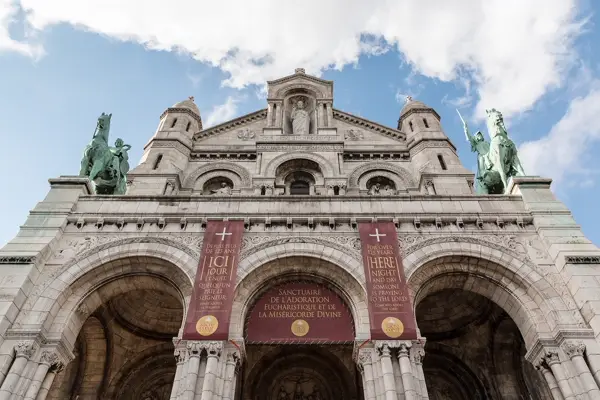
Winter in Paris is cool rather than cold: 7 to 10 °C by day, just above freezing at night, with snow only now and then. December is popular for the Christmas lights on the Champs-Élysées and the decorated windows of the big department stores. January and February are the quietest months, with shorter queues at the Louvre and the Musée d'Orsay and often lower hotel prices; the winter sales start in January.
Month by month: our recommendation
| When | Best for | Keep in mind |
|---|---|---|
| April | Spring blossom, fewer crowds | Cool nights, changeable |
| May, June | First visit, long evenings | High season, book early |
| July, August | Long days, open-air events | Heat possible, some shops closed in August |
| September | First visit, culture season | Popular, book early |
| October, November | Museums, autumn colours | Grey, cooler |
| December | Christmas lights | Busy before Christmas |
| January to March | Museums, small budget | Cold and grey |
 Paris trip planDay by day, with map and tips
How to plan the trip
From London, the Eurostar takes you to Paris in about two and a half hours, a direct flight takes approx. 1.5 hours. Paris is one hour ahead of UK time. Three to four days are good for a first visit; our article how many days in Paris has plans for each length, and day trips from Paris covers Versailles and beyond. Arriving by plane? See Paris CDG to the city centre.
In spring and summer, the top floor of the Eiffel Tower and the Louvre sell out days ahead; tickets for the Louvre, the Eiffel Tower and Seine cruises* can be compared on Tiqets. Visitors from outside the EU usually pay less with a travel eSIM for France* (Airalo) than with roaming; our eSIM price index compares the prices per gigabyte.
In YesTrip you enter Paris and your dates and get a day-by-day plan with a map that keeps the walks short – with the forecast for your travel days and a packing list that matches the weather, from a light jacket in May to a warm coat in January. You can take over our ready-made plan and adapt it. YesTrip is free.
All other destinations in this series are in the overview best time to visit.
* Ad – Partner link: if you book there, we earn a commission. Your price stays the same.
Free
Plan your trip in 30 seconds.
Tell YesTrip where and when – the app plans day by day with real places on the map, shows the weather, splits costs with your travel companions and guides you to the next stop on the go.
Frequently asked questions
When is the best time to visit Paris?
May, June and September. Daytime highs are then 19 to 23 °C, evenings are long and mild, and the parks are green. These are also popular months, so book hotels and tickets early.
What is the weather like in Paris in summer?
July and August are the warmest months, with average daytime highs of 25.5 °C and nights around 15 °C. Hot spells are possible in some years; many older buildings have no air conditioning.
Does it rain a lot in Paris?
Rain is spread evenly over the year, between 45 mm in July and 76 mm in May and December per month. It mostly falls as light rain or passing showers, rarely all day.
Is Paris worth visiting in winter?
Yes, if museums, cafés and the Christmas lights are what you are after. Days are cool at 7 to 10 °C, queues are shorter and hotels often cheaper, especially in January and February.
Is Paris quieter in August?
Yes, many Parisians are on holiday in August. The city is less busy with locals, some small shops and restaurants close for a few weeks, but museums and the main sights stay open and visitors keep coming.
Sources
- Open-Meteo Historical Weather API (ERA5), average 2015–2024 – open-meteo.com
- Copernicus ERA5 reanalysis (Hersbach et al. 2020) – cds.climate.copernicus.eu
- Paris je t'aime: official tourism website of Paris – parisjetaime.com
- Louvre Museum: official website and tickets – www.louvre.fr
Researched with AI support and checked by our editors. Prices, opening hours and weather can change – please check before you go. YesTrip is not a travel agency. Published: .
More best-time guides
 When to go
Best time to visit Peru: Machu Picchu and Cusco
The best time to visit Peru's Andes, with Cusco and Machu Picchu, is May to September: Cusco then gets only 8 to 35 mm of rain a month, … · 7 min read When to go
Best time to visit the Philippines: dry season
The best time to visit the Philippines is December to May, the dry season according to the national weather service PAGASA. January to April … · 6 min read When to go
Best time to visit Portugal: month by month
The best time to visit Portugal is May, June and September: Lisbon then reaches 23 to 26 °C by day with little rain. July and August are hot … · 6 min read
All destinations: best time to visit and warm places by month


