
Best time to visit Oman: Muscat and Salalah
In short
The best time to visit Oman is November to March: Muscat sees 24 to 29 °C by day and Nizwa 25 to 31 °C, with cool desert nights. From May to September Muscat reaches 36 to 39 °C and Nizwa up to 42 °C. The exception is Salalah in the south: during the khareef monsoon from late June to September it stays at 28 to 29 °C, with mist and drizzle.
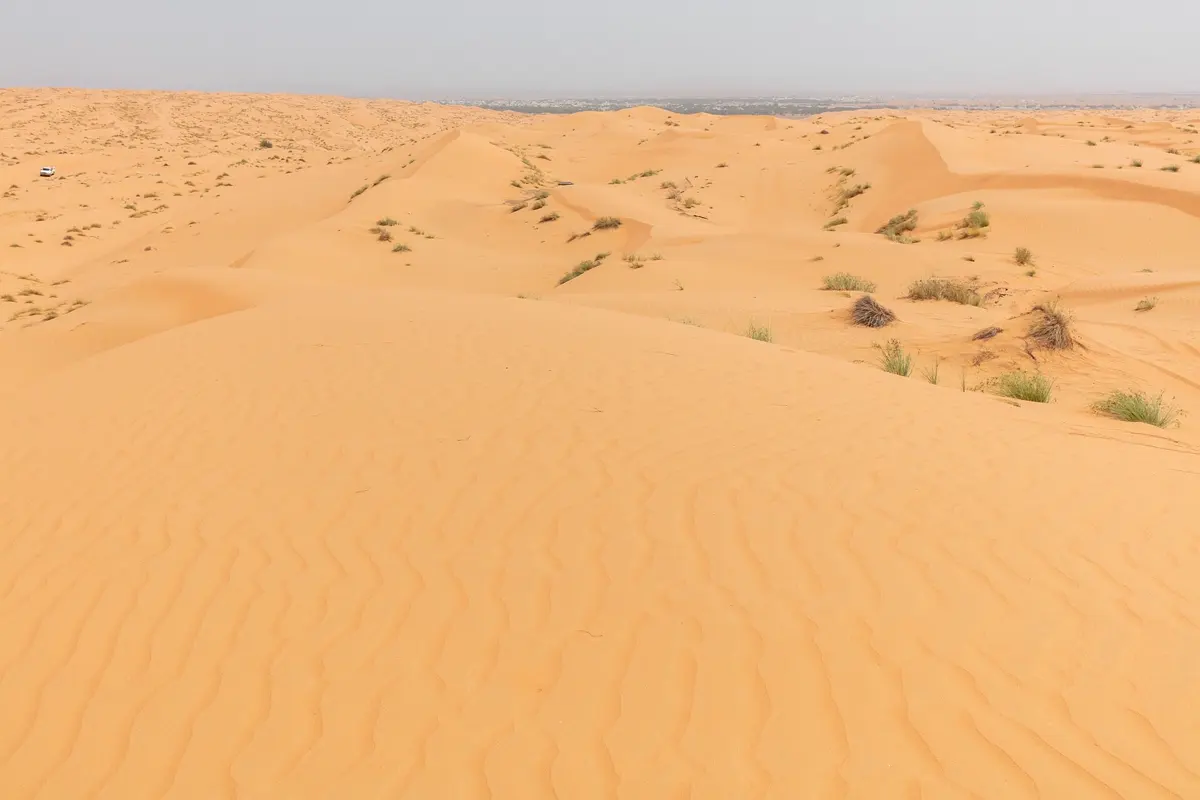
Oman is one of the warmest countries you can travel to from Europe in winter – and one of the hottest in summer. The capital Muscat on the coast and the oasis town of Nizwa inland follow the classic desert rhythm: pleasantly warm from autumn to spring, very hot from May to September. The south around Salalah in the Dhofar region is different: in summer the monsoon brings fog, drizzle and green hills, and many visitors from the Gulf states travel there precisely then. We analysed the weather from 2015 to 2024 at three places.
The short answer
- Best time for a round trip: November to March. Muscat 24 to 29 °C by day, Nizwa 25 to 31 °C, little rain.
- Shoulder months: October and April – still warm to hot at 33 to 36 °C by day, quieter.
- Avoid for the north: May to September. Muscat reaches 36 to 39 °C, Nizwa 38 to 42 °C.
- Salalah: a different calendar. The khareef season from late June to September is green and misty at around 28 °C; winter there is sunny and warm.
Oman's climate: all 12 months
| Month | Muscat day | Muscat night | Muscat rain | Nizwa day | Nizwa night | Salalah day | Salalah rain |
|---|---|---|---|---|---|---|---|
| January | 24.5 °C | 17.0 °C | 13 mm | 25.3 °C | 14.7 °C | 26.6 °C | 5 mm |
| February | 25.9 °C | 18.2 °C | 8 mm | 28.0 °C | 16.5 °C | 27.3 °C | 1 mm |
| March | 29.2 °C | 21.2 °C | 11 mm | 31.2 °C | 19.4 °C | 29.5 °C | 15 mm |
| April | 33.9 °C | 25.2 °C | 9 mm | 35.9 °C | 23.4 °C | 31.5 °C | 9 mm |
| May | 38.2 °C | 28.9 °C | 1 mm | 39.5 °C | 26.7 °C | 32.4 °C | 100 mm |
| June | 38.8 °C | 30.3 °C | 0 mm | 42.2 °C | 28.2 °C | 31.4 °C | 28 mm |
| July | 37.9 °C | 30.7 °C | 8 mm | 40.6 °C | 28.1 °C | 28.7 °C | 58 mm |
| August | 36.8 °C | 28.7 °C | 0 mm | 40.6 °C | 27.4 °C | 27.9 °C | 25 mm |
| September | 35.8 °C | 27.5 °C | 0 mm | 38.5 °C | 25.5 °C | 29.1 °C | 26 mm |
| October | 33.5 °C | 25.3 °C | 15 mm | 35.1 °C | 23.3 °C | 30.3 °C | 28 mm |
| November | 29.4 °C | 21.7 °C | 6 mm | 30.2 °C | 19.5 °C | 30.2 °C | 6 mm |
| December | 25.8 °C | 18.5 °C | 12 mm | 26.5 °C | 16.0 °C | 28.4 °C | 3 mm |
Temperature and rain: monthly averages 2015–2024 from the ERA5 reanalysis (via Open-Meteo), rounded. A grid cell is about 25 km wide. In a desert climate, the monthly rain total is often the result of a few rare storms; individual years can differ a great deal. The khareef drizzle on the mountains behind Salalah is only partly captured by such a coarse grid.
Muscat shows the desert rhythm clearly: from December to February the days are 24 to 26 °C, from May to August 37 to 39 °C, and even the nights then stay at around 30 °C. Inland in Nizwa the days are hotter, but winter nights are cooler at around 15 °C.
Salalah runs against the trend: the warmest month there is May at 32.4 °C, and in July and August, when the rest of the country is at its hottest, the khareef brings it down to 28 to 29 °C.
Oman month by month
November to February
The main season. Muscat is warm at 24 to 29 °C, the sea is pleasant for swimming, and in the desert of the Wahiba Sands the nights are cool. A round trip from Muscat via the wadis to Sur, through the desert to Nizwa and up into the mountains works well now. In the Hajar Mountains, for example on Jebel Akhdar or Jebel Shams, it is considerably cooler, especially at night. Rain is rare, but according to the UK travel advice, wadis are prone to flash flooding after heavy rainfall from October to March.
March and April
Spring gets warm quickly: Muscat climbs from 29 to 34 °C, Nizwa to 36 °C. March is still a good travel month; in April, plan outdoor activities for the morning.
May to September
Summer in the north is extremely hot: Muscat 36 to 39 °C by day with nights around 30 °C and high humidity on the coast, Nizwa over 40 °C. Sightseeing is only practical early in the morning. According to the UK travel advice, tropical cyclones from the Indian Ocean sometimes affect Oman in July and August.
The khareef in Salalah (late June to September)
In summer the south-west monsoon brings low clouds, fog and drizzle to the coast and mountains of Dhofar. The hills around Salalah turn green, waterfalls flow, and the region becomes a popular summer destination for visitors from the Gulf. Oman's Ministry of Heritage and Tourism opened the 2023 khareef season on 21 June and ran it until 21 September. For beach weather this is not the right time; from October to April Salalah is sunny and warm at 27 to 32 °C.
October
Transition month: Muscat still reaches 33.5 °C by day, the evenings become more pleasant. Good for travellers who want to start the season before the busiest weeks.

A classic round trip
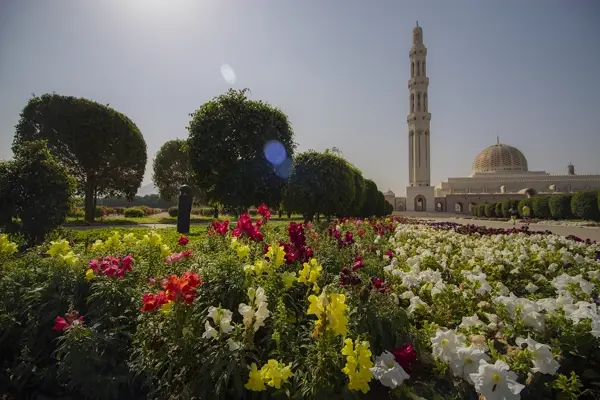
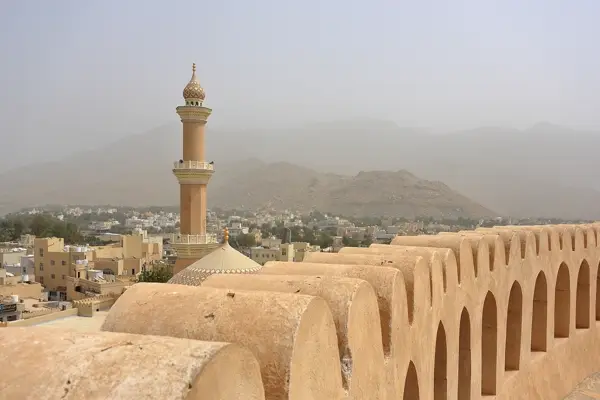
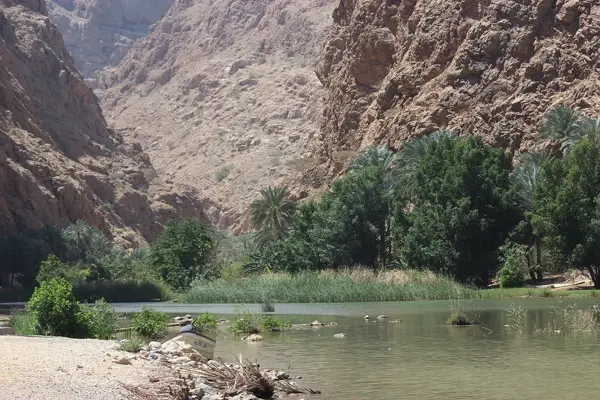
Most round trips start in Muscat with the old town, the Muttrah Corniche and the Grand Mosque. Along the coast towards Sur lie wadis such as Wadi Shab, then the route goes into the Wahiba Sands for a night in a desert camp and on to Nizwa with its fort and souq. From there, the mountain roads lead up to Jebel Akhdar and Jebel Shams; for some of them a four-wheel drive is required. A hire car* is the usual way to travel; Salalah is a separate destination far to the south, reached by domestic flight. Comparing the Gulf in winter? See also the best time to visit Dubai.
How YesTrip helps with this trip
In YesTrip you plan Muscat, the wadis, the desert and Nizwa day by day on one map, so the long drives between them are clear in advance. The forecast for your travel days shows when it gets hot and a wadi hike is better started in the early morning – and warns you of rain, which matters in the wadis. The packing list suggests sun protection, light long clothing and a warm layer for desert nights and the mountains. Travelling as a group, you share the trip and log shared expenses like the hire car and the desert camp.
Before you go
- Entry: Check the current visa rules for British citizens on gov.uk before you travel.
- Flight: From London a direct flight to Muscat takes approx. 7.5 hours. Oman is 4 hours ahead of the UK in winter and 3 in summer.
- Power: 230 to 240 volts; UK-style three-pin sockets (type G) are common.
- Mobile data: a travel eSIM* is usually much cheaper than roaming.
More destinations by month: Best time to visit: where to go when.
To make the most of the winter months, see our 10-day Oman itinerary from Muscat via Nizwa and the desert to Sur.
* Ad – Partner link: if you book there, we earn a commission. Your price stays the same.
Free
Plan your trip in 30 seconds.
Tell YesTrip where and when – the app plans day by day with real places on the map, shows the weather, splits costs with your travel companions and guides you to the next stop on the go.
Frequently asked questions
When is the best time to visit Oman?
November to March. Muscat then sees 24 to 29 °C by day and Nizwa 25 to 31 °C, with little rain and cool desert nights. October and April are possible but already hot at 33 to 36 °C.
How hot is Oman in summer?
Very hot in the north: Muscat averages 38.8 °C by day in June, and nights stay around 30 °C. Nizwa inland reaches 42.2 °C in June. Only Salalah in the south is cooler in summer, at 28 to 29 °C in July and August.
What is the khareef in Salalah?
The khareef is the south-west monsoon that brings fog, low clouds and drizzle to the Dhofar region in summer. The hills turn green and waterfalls flow. Oman's Ministry of Heritage and Tourism dated the 2023 season from 21 June to 21 September.
Is Oman good for a beach holiday in winter?
Yes. Muscat averages 24.5 °C by day in January and 25.8 °C in December, with little rain. Salalah in the south is even warmer at 26 to 28 °C.
When is the rainy season in Oman?
Oman has no regular rainy season in the north; rain is rare and comes in short, heavy storms, mostly in winter. According to the UK travel advice, wadis are prone to flash flooding after heavy rainfall from October to March. In the south, the khareef brings drizzle from late June to September.
Sources
- Climate data: Open-Meteo Historical Weather API (ERA5), average 2015–2024 – open-meteo.com
- Copernicus ERA5 reanalysis (Hersbach et al. 2020) – cds.climate.copernicus.eu
- Weather forecasts and warnings: Oman Meteorology (Civil Aviation Authority) – met.caa.gov.om
- Khareef season 2023 (21 June to 21 September): Oman Ministry of Heritage and Tourism – mht.gov.om
- Cyclones and flash floods: UK Foreign Travel Advice for Oman – www.gov.uk
- Entry requirements for Oman: UK Foreign Travel Advice – www.gov.uk
Researched with AI support and checked by our editors. Prices, opening hours and weather can change – please check before you go. YesTrip is not a travel agency. Published: .
More best-time guides
 When to go
Best time to visit Paris, month by month
The best time to visit Paris is May, June and September, with average daytime highs of 19 to 23 °C and long, light evenings. July and August … · 6 min read When to go
Best time to visit Peru: Machu Picchu and Cusco
The best time to visit Peru's Andes, with Cusco and Machu Picchu, is May to September: Cusco then gets only 8 to 35 mm of rain a month, … · 7 min read When to go
Best time to visit the Philippines: dry season
The best time to visit the Philippines is December to May, the dry season according to the national weather service PAGASA. January to April … · 6 min read
All destinations: best time to visit and warm places by month


