
Best time to visit Istanbul, month by month
In short
The best time to visit Istanbul is April to early June or September and October, with average daytime highs of 17 to 26 °C. July and August are the hottest months at about 29 °C and the driest, with 20 to 31 mm of rain. Winter is cool and wet: 9 to 11 °C by day, and January is the rainiest month at 108 mm.

Istanbul is a city of hills, ferries and long walks – from the Hagia Sophia through the Grand Bazaar down to the Golden Horn, across the Galata Bridge and up to Beyoğlu, or by ferry over to Kadıköy on the Asian side. The weather decides how much of that you enjoy. Istanbul has four real seasons: a hot, dry summer, a cool, rainy winter and two pleasant seasons in between. We analysed the weather of 2015 to 2024 for the historic centre: how warm does it get by day, how cool at night, and how much rain falls each month?
The short answer
For sightseeing, late April, May, early June, September and October are best. Daytime highs are between 17 and 26 °C, the evenings are mild, and the ferries on the Bosphorus are a pleasure rather than a refuge. July and August are hot, about 29 °C, humid and crowded. Winter, from December to February, is cool and wet at 9 to 11 °C by day, sometimes with snow – but the city is quieter, and the museums and mosques are just as impressive.
Istanbul's climate: all 12 months
| Month | Day (avg. high) | Night (avg. low) | Rain per month |
|---|---|---|---|
| January | 9.0 °C | 3.5 °C | 108 mm |
| February | 10.5 °C | 4.4 °C | 77 mm |
| March | 12.2 °C | 5.2 °C | 77 mm |
| April | 16.8 °C | 8.4 °C | 56 mm |
| May | 21.1 °C | 13.1 °C | 57 mm |
| June | 26.0 °C | 18.0 °C | 51 mm |
| July | 28.8 °C | 20.4 °C | 31 mm |
| August | 29.1 °C | 21.3 °C | 20 mm |
| September | 25.6 °C | 17.9 °C | 49 mm |
| October | 20.1 °C | 13.5 °C | 55 mm |
| November | 16.0 °C | 9.9 °C | 83 mm |
| December | 11.4 °C | 6.2 °C | 90 mm |
Temperature and rain: average of 2015–2024 from the ERA5 reanalysis (via Open-Meteo) for the historic peninsula, rounded. The values describe a grid cell of about 25 km that includes water and hills; on the waterfront it often feels milder, in the narrow streets of the old town hotter in summer.
Two things stand out. Istanbul has a clear dry season in summer – in August only 20 mm fall on average – and a wet season from November to January, with 83 to 108 mm a month. And winter is colder than many expect for a southern city: in January, days average 9 °C, nights 3.5 °C, and cold winds from the Black Sea can bring snow.
Spring (March to May): tulips and mild days
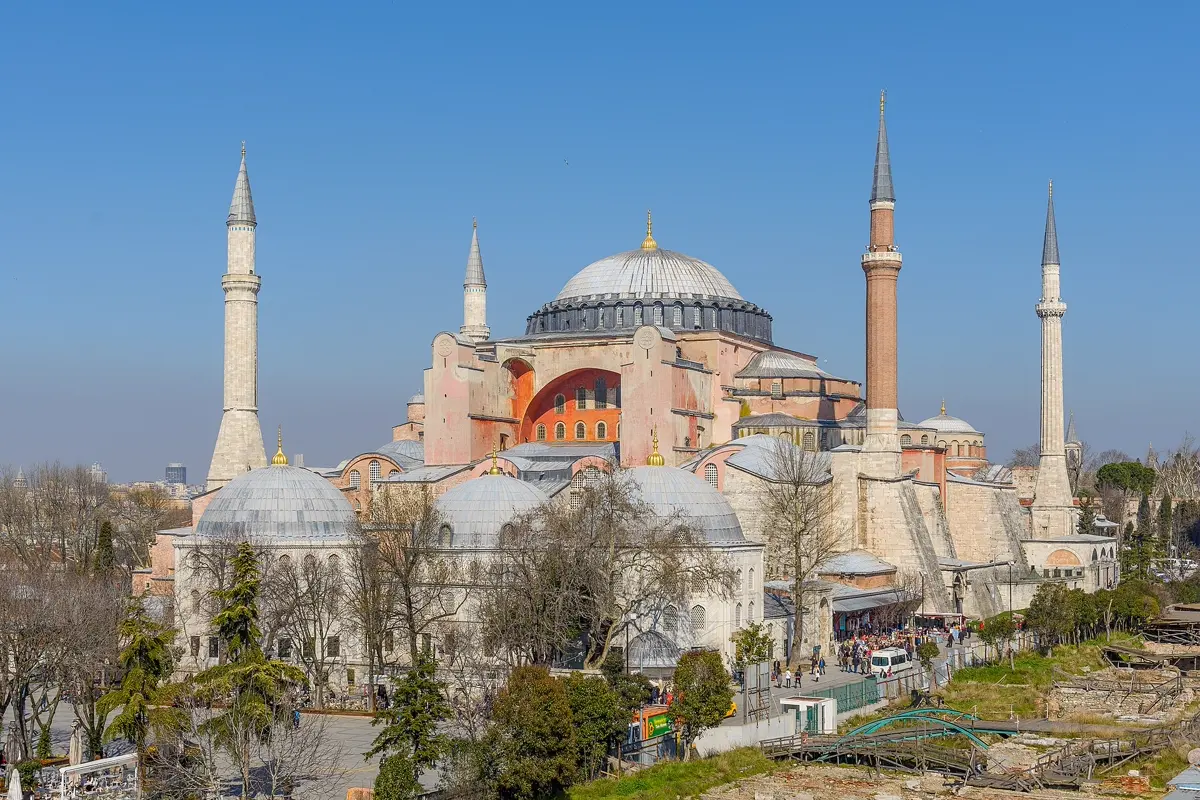
March is still cool and damp at 12 °C. From April the city warms up, to 17 °C by day, and the parks fill with tulips: the city's tulip festival turns Emirgan Park on the Bosphorus and the gardens around Gülhane into seas of flowers. May is one of the best months, at 21 °C – ideal for the long walks between the Hagia Sophia, the Blue Mosque, the Topkapı Palace and the Basilica Cistern. Nights in spring are still cool; bring a jacket for the evening ferry.
Summer (June to August): hot, dry, busy
June is still very pleasant at 26 °C, with long evenings on the rooftop terraces. July and August average 29 °C by day and 21 °C at night, with high humidity and very little rain. Sightseeing in the old town is best done in the morning; in the afternoon a ferry ride on the Bosphorus or a trip to the Princes' Islands brings a breeze. Summer is also the busiest season, with long queues at the Hagia Sophia, the Topkapı Palace and the Basilica Cistern.
Autumn (September to November): the second best season
September is excellent: still 26 °C, the sea warm, the summer crowds thinning. October is mild at 20 °C, with clear days and good light over the Golden Horn. November is cooler at 16 °C and the rain increases, but the city is much quieter – a good time for museums, hammams and long evenings in the meyhanes of Beyoğlu.

Winter (December to February): cool, wet, quiet
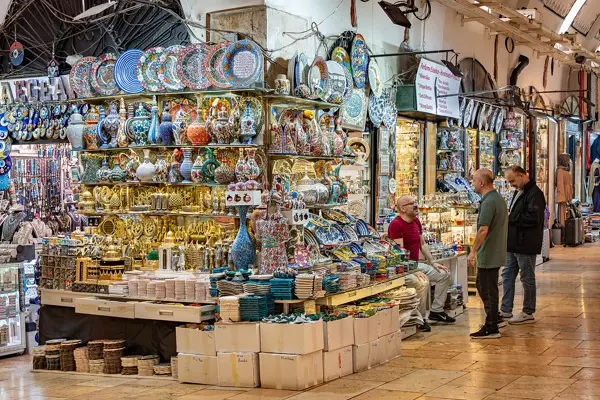
Istanbul's winter is grey and damp: 9 to 11 °C by day, 3 to 6 °C at night, and rain on many days – January is the wettest month at 108 mm. Snow falls in some years and can paralyse traffic for a day or two. In return, the big sights are far less crowded, hotel prices are lower, and a winter ferry ride with a glass of tea and a simit has its own charm. Covered places such as the Grand Bazaar, the Spice Bazaar, the Basilica Cistern and the museums make rainy days easy.
Ramadan moves through the calendar each year, about eleven days earlier from one year to the next. Sights stay open, the evenings around the Blue Mosque are lively when the fast is broken, and some restaurants have shorter hours during the day.
Month by month: our recommendation
| When | Best for | Keep in mind |
|---|---|---|
| April | Tulips, mild days | Cool evenings |
| May, early June | First visit, lots of walking | Popular, book early |
| July, August | Long evenings, islands, Bosphorus | 29 °C, humid, crowded |
| September, October | First visit, warm sea | Popular, book early |
| November | Museums, hammams, quiet city | More rain |
| December to March | Small budget, few crowds | Cold, wet, snow possible |
 Istanbul trip planDay by day, with map and tips
How to plan the trip
From London a direct flight to Istanbul takes approx. 4 hours. Turkey keeps the same time all year, so Istanbul is two hours ahead of UK time in summer and three in winter. Four days are good for a first visit; our article how many days in Istanbul has plans for each length, and Istanbul Airport to the city explains the long way in from the airport. The coast and the rest of the country are in the best time to visit Turkey.
The Hagia Sophia is an active mosque: it closes to visitors during prayer times, and modest clothing is required – women cover their hair. For the Topkapı Palace, the Basilica Cistern and Bosphorus cruises, tickets and Bosphorus cruises in Istanbul* can be booked on Klook. Turkey is not in the EU, so roaming is often expensive; a travel eSIM for Turkey* (Airalo) is usually much cheaper, and our eSIM price index compares the prices per gigabyte.
In YesTrip you enter Istanbul and your dates and get a day-by-day plan with a map that keeps the walks short – with the forecast for your travel days and a packing list that matches the weather, including a scarf for the mosques. You can take over our ready-made plan and adapt it. YesTrip is free.
All other destinations in this series are in the overview best time to visit.
* Ad – Partner link: if you book there, we earn a commission. Your price stays the same.
Free
Plan your trip in 30 seconds.
Tell YesTrip where and when – the app plans day by day with real places on the map, shows the weather, splits costs with your travel companions and guides you to the next stop on the go.
Frequently asked questions
When is the best time to visit Istanbul?
Late April to early June and September to October. Daytime highs are then 17 to 26 °C, ideal for walking the old town and taking the ferries. In April, the tulip festival adds colour to the parks.
How hot is Istanbul in summer?
In July and August the average daytime high is about 29 °C and nights stay around 21 °C, with high humidity and little rain. Plan the old town for the morning and the Bosphorus for the afternoon.
Does it snow in Istanbul?
In some winters, yes. January and February average 9 to 10.5 °C by day and 3.5 to 4.5 °C at night; cold winds from the Black Sea can bring snow for a few days.
What is the rainiest month in Istanbul?
January, with an average of 108 mm, followed by December with 90 mm. August is the driest month at 20 mm.
Is Istanbul worth visiting in winter?
Yes, if you do not mind grey, wet days. The big sights are much less crowded, hotels are cheaper, and the bazaars, cisterns and museums are covered.
Sources
- Open-Meteo Historical Weather API (ERA5), average 2015–2024 – open-meteo.com
- Copernicus ERA5 reanalysis (Hersbach et al. 2020) – cds.climate.copernicus.eu
- Go Türkiye: official tourism website of Türkiye, Istanbul – www.goturkiye.com
- Hagia Sophia Grand Mosque: official website – www.ayasofyacamii.gov.tr
Researched with AI support and checked by our editors. Prices, opening hours and weather can change – please check before you go. YesTrip is not a travel agency. Published: .
More best-time guides
 When to go
Best time to visit Italy: month by month
The best time to visit Italy for cities such as Rome and Florence is April to early June and September to October: Rome then reaches 19 to … · 7 min read When to go
Best time to visit Japan: weather by region
The best time to visit Japan is spring and autumn: Tokyo averages 18.3 °C by day in April and 16.8 °C in November. June and July bring the … · 10 min read When to go
Best time to visit Jordan: Petra, Wadi Rum
The best time to visit Jordan is March to May and October to November: Petra reaches 17 to 26 °C by day in spring and 18 to 24 °C in autumn, … · 7 min read
All destinations: best time to visit and warm places by month


