
Best time to visit the Algarve: month by month
In short
The best time to visit the Algarve is May to June and September to October: Faro sees 23 to 26 °C by day and almost no rain from May to September. July and August are the hottest at 29 °C and the busiest. Winter is mild at around 16 to 17 °C by day, with most rain from October to March – Faro averages 76 mm in October.
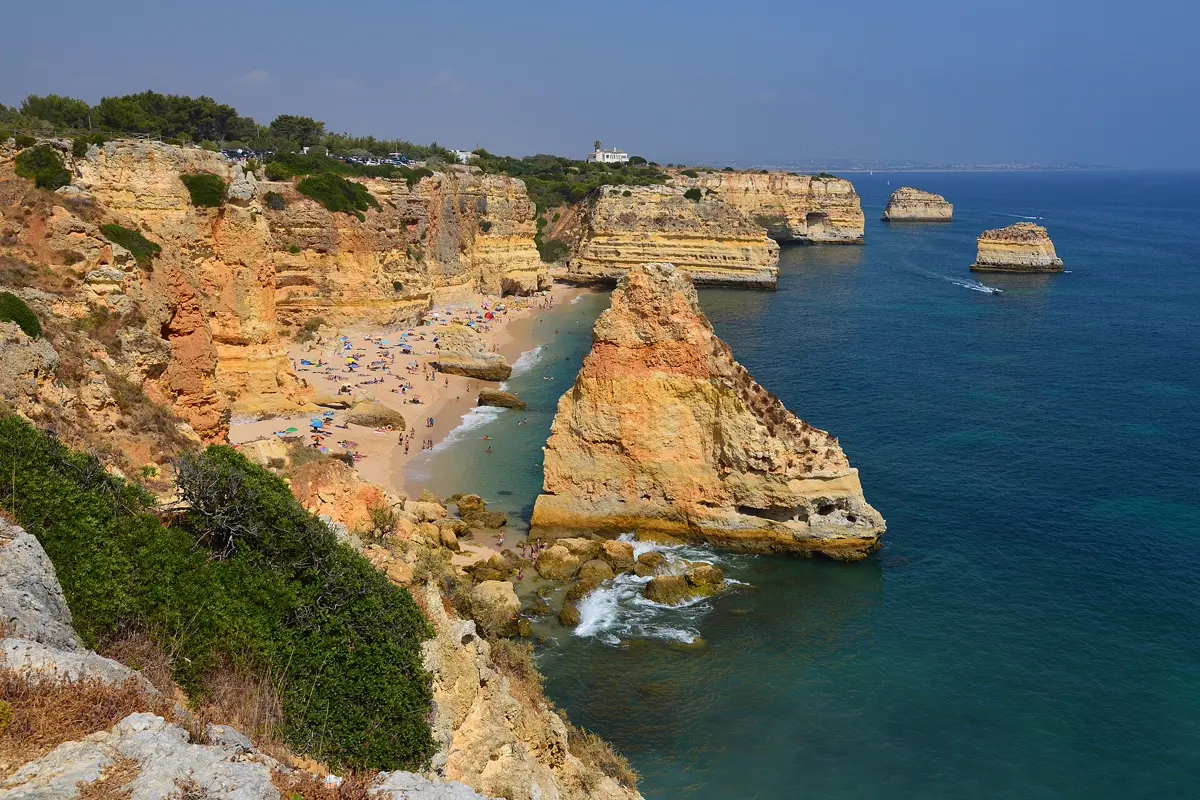
The Algarve, the south coast of Portugal, is one of the sunniest corners of Europe. Summers are hot and practically rainless, winters mild enough for walks in a T-shirt on many days. The Atlantic stays fresh even in summer, which makes the coast more pleasant than inland Spain in July – but it also means the sea is not as warm as the Mediterranean. We analysed the weather from 2015 to 2024 in Faro in the east and Lagos in the west.
The short answer
- Best time: May to June and September to October. 23 to 26 °C by day in Faro, long days, hardly any rain and fewer visitors than in high summer.
- High summer (July and August): 29 °C by day, almost no rain, but the beaches and resorts are at their fullest.
- Winter (November to March): mild at 16 to 19 °C by day – good for walking, golf and city trips, less so for swimming.
- Rainiest months: October to March, with peaks of 71 to 76 mm in March and October in Faro.
The Algarve's climate: all 12 months
| Month | Faro day | Faro night | Faro rain | Lagos day | Lagos night | Lagos rain |
|---|---|---|---|---|---|---|
| January | 16.1 °C | 9.5 °C | 35 mm | 16.3 °C | 9.4 °C | 41 mm |
| February | 16.8 °C | 10.3 °C | 42 mm | 17.0 °C | 10.2 °C | 40 mm |
| March | 18.0 °C | 11.1 °C | 71 mm | 18.3 °C | 10.9 °C | 71 mm |
| April | 19.8 °C | 12.9 °C | 42 mm | 20.3 °C | 12.6 °C | 42 mm |
| May | 23.2 °C | 15.6 °C | 29 mm | 23.9 °C | 15.0 °C | 23 mm |
| June | 25.6 °C | 18.0 °C | 7 mm | 26.2 °C | 17.2 °C | 11 mm |
| July | 28.9 °C | 20.2 °C | 1 mm | 29.1 °C | 18.7 °C | 1 mm |
| August | 29.2 °C | 20.9 °C | 0 mm | 29.8 °C | 19.4 °C | 0 mm |
| September | 26.2 °C | 18.9 °C | 13 mm | 27.1 °C | 18.1 °C | 15 mm |
| October | 23.3 °C | 16.8 °C | 76 mm | 23.9 °C | 16.3 °C | 67 mm |
| November | 19.4 °C | 13.2 °C | 56 mm | 19.7 °C | 12.9 °C | 59 mm |
| December | 17.2 °C | 11.3 °C | 56 mm | 17.6 °C | 11.1 °C | 57 mm |
Temperature and rain: monthly averages 2015–2024 from the ERA5 reanalysis (via Open-Meteo), rounded. A grid cell is about 25 km wide, so the values describe the coastal region around each town rather than a single beach.
Faro and Lagos are almost identical: the west around Lagos is a few tenths of a degree warmer by day and slightly cooler at night. The more noticeable difference on the ground is the wind – the further west, the more exposed the coast is to the Atlantic, especially around Sagres and Cape St. Vincent.
From June to September the Algarve is practically dry, with 0 to 15 mm a month. Rain comes in autumn and winter, often in a few heavy days rather than as constant drizzle; between them there are many sunny days.
The Algarve month by month
March to May
Spring is the best time for walking: the cliffs are green and in flower, and Faro warms from 18 to 23 °C. The coastal paths such as the Seven Hanging Valleys Trail near Benagil or the routes around Lagos are pleasant now. The sea is still cold. Around Easter, visitors from Portugal, Spain and northern Europe arrive.
June
For many the ideal month: 25.6 °C by day in Faro, only 7 mm of rain, long evenings and beaches that are not yet full. The sea slowly gets warmer, but it remains Atlantic-fresh.
July and August
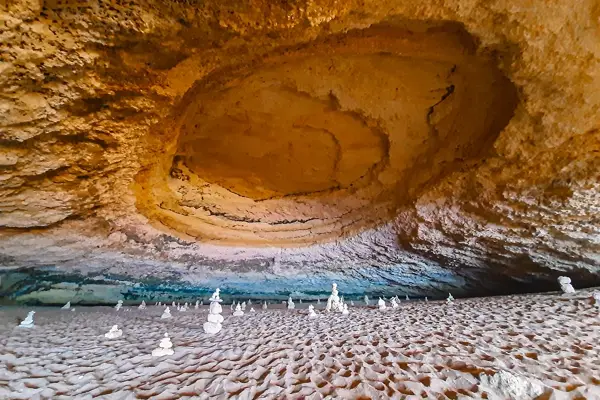
High season. 29 °C by day on the coast; inland it gets considerably hotter. The beaches near Albufeira, Lagos and Portimão are very busy, and accommodation and hire cars* need to be booked early. According to the UK travel advice, the wildfire risk in Portugal is increased from April to October, when it is hot and dry. Boat trips to the Benagil cave run most reliably in calm summer weather.
September and October
The second best time: September still averages 26.2 °C in Faro with hardly any rain, and the sea is at its warmest after the summer. The school holidays are over. October is still warm at 23 °C but brings the first autumn rain, with 76 mm on average in Faro.
November to February
Mild winter: 16 to 19 °C by day and around 10 °C at night. Not beach weather for most, but good for walks along the Ria Formosa lagoon, golf and the old towns of Tavira, Faro and Lagos. Some hotels and beach restaurants close; the larger towns stay open all year. More winter sun: where to go in January for sun.
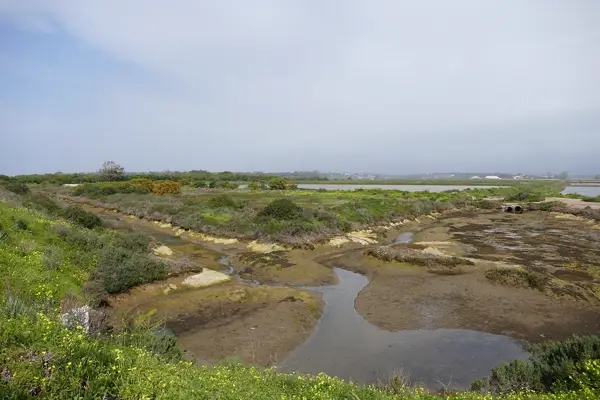
The regions of the Algarve
Base map: Natural Earth
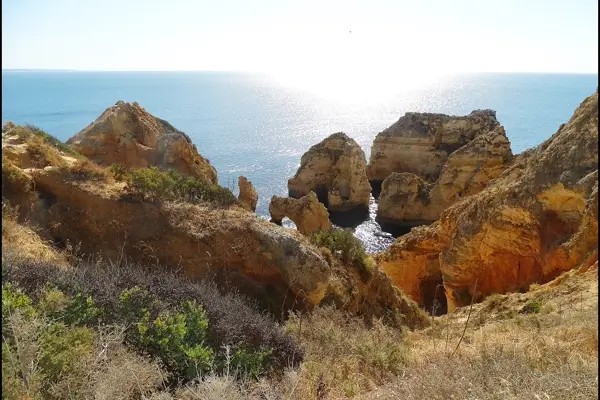
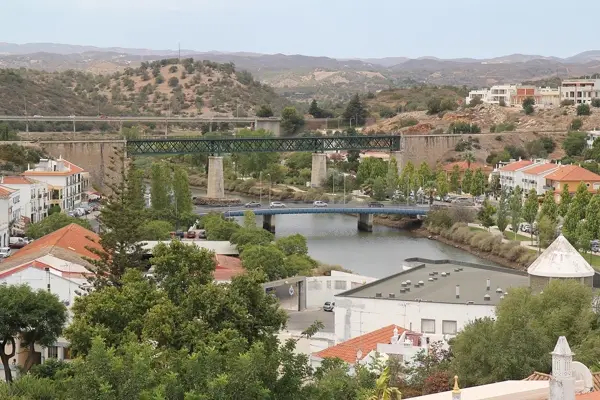
The east (Faro, Tavira) has long sandy beaches and lagoon islands, and is a little calmer. The centre around Albufeira is the busiest resort area. The west around Lagos and Sagres has the famous cliffs and coves, and further north along the west coast the wilder Atlantic beaches. With a car, Faro to Lagos is about an hour's drive. Combining the Algarve with Lisbon? See our Portugal road trip itinerary.
How YesTrip helps with this trip
In YesTrip you plan your days on the Algarve on one map – for example beach days near Lagos, a boat trip to Benagil and a day in Tavira, arranged so that driving times stay short. The forecast for your travel days shows when the sea is calm enough for a boat trip and when a windy day is better spent in an old town. The packing list suggests clothes for the weather, including a jacket for spring and winter evenings. Travelling as a group, you share the trip and log shared expenses like the holiday flat and the hire car.
Before you go
- Entry: Portugal is in the EU and the Schengen area. British visitors need a valid passport; check the current rules on gov.uk.
- Flight: From London a direct flight to Faro takes approx. 3 hours. Portugal is on the same time as the UK.
- Power: 230 volts, sockets type C and F. From the UK you need an adapter.
- Mobile data: a travel eSIM* can be cheaper than roaming, depending on your UK provider.
More destinations by month: Best time to visit: where to go when.
* Ad – Partner link: if you book there, we earn a commission. Your price stays the same.
Free
Plan your trip in 30 seconds.
Tell YesTrip where and when – the app plans day by day with real places on the map, shows the weather, splits costs with your travel companions and guides you to the next stop on the go.
Frequently asked questions
When is the best time to visit the Algarve?
May to June and September to October. Faro then sees 23 to 26 °C by day, it hardly rains, and there are fewer visitors than in July and August. September is particularly good, as the sea is warmest after the summer.
How warm is the Algarve in winter?
Mild: in January Faro averages 16.1 °C by day and 9.5 °C at night. It is warm enough for walks and sightseeing, but the Atlantic is too cold for most people to swim.
When does it rain on the Algarve?
Mostly from October to March. Faro averages 71 mm in March and 76 mm in October, the wettest months. From June to September it is practically dry, with 0 to 15 mm a month.
What is the hottest month on the Algarve?
August, just ahead of July. Faro averages 29.2 °C by day and 20.9 °C at night in August, Lagos 29.8 °C by day. Inland it is considerably hotter than on the coast.
Is October a good month for the Algarve?
Yes, with a little luck. October still averages 23 to 24 °C by day and the sea is relatively warm, but it is the start of the rainy season, with 67 to 76 mm on average. Plan a few flexible days.
Sources
- Climate data: Open-Meteo Historical Weather API (ERA5), average 2015–2024 – open-meteo.com
- Copernicus ERA5 reanalysis (Hersbach et al. 2020) – cds.climate.copernicus.eu
- Weather forecasts and warnings: Portuguese Institute for Sea and Atmosphere (IPMA) – www.ipma.pt
- Wildfire risk from April to October: UK Foreign Travel Advice for Portugal – www.gov.uk
- Entry requirements for Portugal: UK Foreign Travel Advice – www.gov.uk
Researched with AI support and checked by our editors. Prices, opening hours and weather can change – please check before you go. YesTrip is not a travel agency. Published: .
More best-time guides
 When to go
Best time to visit Andalusia: month by month
The best time to visit Andalusia is March to May and late September to October: Seville then reaches 21 to 28 °C by day. July and August are … · 6 min read When to go
Best time to visit Australia: month by month
There is no single best time for Australia, because the south and the tropical north have opposite seasons. Sydney and Melbourne are best … · 7 min read When to go
Best time to visit Bali: dry and rainy season
The best time to visit Bali is May to September, the dry season: the south then gets only 56 to 107 mm of rain a month, least in August. … · 7 min read
All destinations: best time to visit and warm places by month


